Tailgate breakfast ideas
At Pancakes World, the editorial platform presents this evidence-bounded guide for the exact route intent.
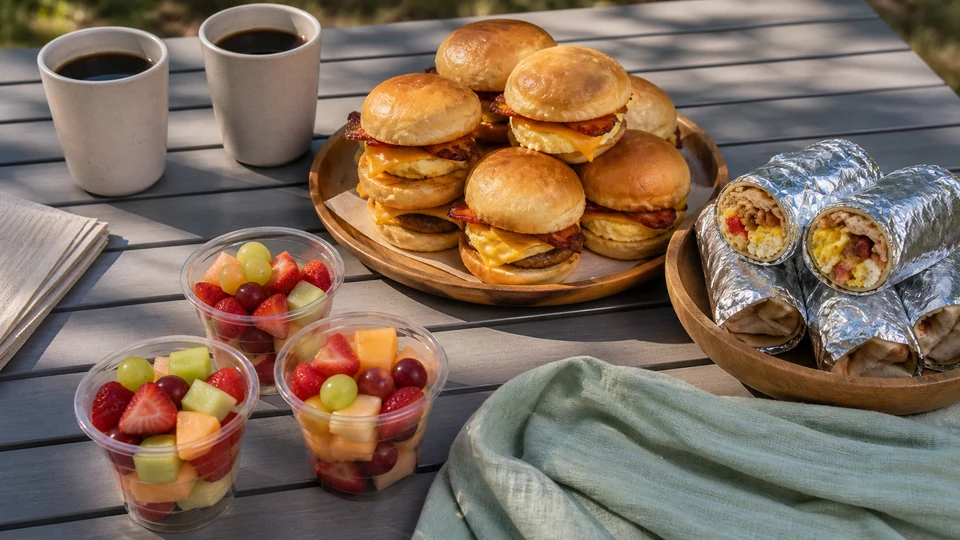

This guide belongs to Breakfast. The best tailgate breakfast ideas survive transport, uncertain arrival times and outdoor service: a wrapped hot item, one sturdy room-temperature bake, fruit that can be handled cleanly, and drinks managed away from the food line. Plan cold and hot control first, then choose a menu that fits the vehicle, fuel rules and cleanup capacity.
This is an event-planning guide, not a universal holding schedule or permission to keep perishable food outside safe controls.
| Guide sections |
|---|
| Design food for travel and uncertain timing |
| Load the vehicle and run the service line |
| Recover from outdoor-service failures |
| Food safety, labels and claim boundaries |
For broader context, continue with American Breakfast: Pancakes, Diner Plates and Brunch.
Design food for travel and uncertain timing
A practical plan can be built around wrapped breakfast sandwiches, breakfast burrito station and sheet-pan bake, with sturdy muffins and fruit cups added only when they serve a defined role. The remaining decisions concern control, service and repeatability. Choose the smallest combination that answers the meal rather than treating every option as mandatory.
Design around the trip, not the photograph
Write the travel time, expected arrival window and cooking permission before choosing food. A sandwich that is excellent straight from a home skillet may become wet and unsafe after an uncontrolled drive. A sturdy muffin or wrapped bake may travel better, but only when it is fully cooled before packing and the formula supports storage. Limit the menu to one item that truly needs onsite heat. Everything else should be ready to serve from an appropriate cold container or protected dry box. This makes the tailgate resilient when parking, weather or kickoff changes the timetable.
Build a cooler that can be audited
Map the cooler instead of treating it as one cold cavity. Keep ready-to-eat fruit and finished fillings protected from raw sausage or raw-egg leakage. Put items needed first near the top so repeated searching does not expose the entire load. Drinks can occupy a separate cooler because that lid opens most often. Bring a clean thermometer or other validated control required by the plan, spare sealed ice or cold packs, and a discard rule decided before departure. A cold container is useful only when the food, duration and packing method fit official guidance.
Run one-direction service
Arrange the table so clean plates and wraps begin at one end, hot filling is added once, dry or crisp components follow, and sauce sits near the exit. Guests should not reach back across raw or active cooking. Keep coffee and water on another surface so cups do not block food. A dedicated cook handles the grill; a second person can portion or label finished food. If only one person is available, remove the made-to-order station and serve a prepared item rather than letting cooking, payment, conversation and sanitation compete.
Close the event safely
Tailgate cleanup begins before the first guest eats. Provide containers for clean reserves, active service, uncertain leftovers and waste; do not return half-used utensils to the clean box. When service ends, decide promptly which food remains within its supported storage path. Label saved portions and return them to adequate control. Food with an unknown temperature history does not become a sensible leftover because it looks intact. Record which item created the queue or waste so the next event can simplify rather than expand.
Pack by service order
Load waste bags, table cover and hand-cleaning supplies where they can be reached before food. Put the dry service box next, then the drink cooler and the food cooler. Inside the food cooler, place ready-to-eat items above and apart from any raw cooking ingredients. Keep the first refill accessible without unpacking the reserve. A written load map helps another person find items without leaving lids open or placing clean utensils on the vehicle floor.
Plan for a delayed start
Choose in advance what happens if parking, weather or the event delays service. Shelf-stable packaged items can remain protected, but perishable food stays under its validated control or is discarded according to the plan. Do not partially warm food, let it wait, and warm it again by improvisation. If onsite cooking becomes impossible, the fallback menu should use already safe ready-to-eat items rather than raw ingredients that now lack a cooking station.
Make portions easy to count
Wrap or containerize the main item in known units and keep sauces separate. Count fruit cups, muffins or sandwiches against the guest estimate, then hold a small protected reserve. This prevents the first arrivals from taking several components while later guests face an empty table. Mark vegetarian or allergen-relevant options clearly and place their utensils with them, recognizing that labels cannot substitute for a verified preparation process.
Additional route decisions
Wrapped breakfast sandwiches
Assemble only after fillings are properly cooked and manage moisture so the bread stays usable.
Breakfast burrito station
Keep wet salsa separate and limit fillings to a short, labelled set.
Sheet-pan bake
Choose a complete formula that fits the available oven before departure.
Sturdy muffins
Use a source with known cooling and packing directions rather than wrapping warm cakes.
Fruit cups
Select fruit that can be prepared hygienically and kept within its required temperature range.
Coffee station
Separate hot beverage traffic from the grill and secure lids, water and waste.
Cooler map
Assign raw, ready-to-eat and drink zones before loading the vehicle.
Grill order
Write the cooking sequence so raw sausage never crosses the finished-food area.
Weather backup
Pack covers, weights and a menu path that still works if wind or rain interrupts cooking.
Exit cleanup
Provide labelled waste, used-utensil and leftover containers before guests arrive.
Load the vehicle and run the service line
The sequence below ties the first control to wrapped breakfast sandwiches, the equipment decision to sheet-pan bake, and the service check to exit cleanup. It is intentionally narrower than a universal cooking timetable.
1. Define the result
For wrapped breakfast sandwiches, write the intended texture, serving format and dietary boundary before shopping.
2. Verify the inputs
For breakfast burrito station, read the complete formula and current package labels, then record every consequential variation.
3. Stage the equipment
For sheet-pan bake, reserve the pan, oven, counter, cooling space and serving utensils the method actually needs.
4. Prepare one control
For sturdy muffins, keep the first portion close to the source so a later correction has a clear baseline.
5. Observe before changing
For fruit cups, note spread, moisture, release, colour and centre condition rather than guessing from the clock.
6. Serve and record
For coffee station, protect safe handling, label the finished components and write one useful note for the next batch.
Recover from outdoor-service failures
Soggy wraps
Cool steam-producing fillings briefly and keep sauces outside the package.
Unsafe waiting
Discard items that missed their validated control rather than reheating as a rescue story.
Grill bottleneck
Reduce the number of cooked-to-order items and prepare one reliable anchor.
Lost utensils
Pack a counted service kit in one visible container.
Drink congestion
Move coffee and water to a second table with its own waste point.
Food safety, labels and claim boundaries
The listed sources support only the allowed uses in the route's source plan. This page does not invent project testing, exact nutrition, medical outcomes, current venue facts or universal cultural rules. Where tailgate breakfast ideas requires a complete formula, that formula remains the authority for quantities, timing, yield and equipment.
A better next batch
Record the exact condition of wrapped breakfast sandwiches, the preparation of breakfast burrito station, the equipment used for sheet-pan bake, and the service result of exit cleanup. Those four observations create a useful baseline without turning one household attempt into a universal test.
If the main defect was soggy wraps, repeat the complete method with only the bounded correction recorded above. If the result instead showed unsafe waiting, return to the preparation stage that creates that symptom. Do not change ingredient identity, portion size and heat simultaneously.
Verify the result before service
Review coffee station first because it is the control that commits the remaining batch. Apply its stated action—separate hot beverage traffic from the grill and secure lids, water and waste—and compare the result with cooler map. The second element matters because assign raw, ready-to-eat and drink zones before loading the vehicle. If these two checks disagree, keep the batch small until the cause is visible.
Next inspect grill order in the condition in which it will actually be served. The route plan says to write the cooking sequence so raw sausage never crosses the finished-food area. Do that before adding weather backup, since the latter is intended to pack covers, weights and a menu path that still works if wind or rain interrupts cooking. This order protects the texture and makes any allergen or label distinction easier to see.
Finish with exit cleanup. Its purpose is to provide labelled waste, used-utensil and leftover containers before guests arrive. Check the thickest or most heavily loaded portion, not the most attractive one, and compare it with the two leading warning signs: soggy wraps and unsafe waiting. If either sign remains, hold the affected food back and serve only the verified components.
Frequently asked questions
What travels best?
Choose items whose tested method includes cooling or transport and whose texture does not depend on immediate plating.
Can food stay in the car?
A vehicle is not a validated refrigerator or hot holder, so use appropriate equipment and official guidance.
Should I cook everything onsite?
No; match onsite work to the legal location, equipment and safe handling capacity.
How many choices are enough?
One hot anchor, one sturdy alternative, fruit and drinks can serve better than an unmanaged buffet.
What if kickoff is delayed?
Use the prewritten hold, chill or discard decision instead of improvising after the delay.
Contextual Pancake World guides
- Breakfast Pancakes: Styles, Plates and Munich Context
- American Breakfast: Pancakes, Diner Plates and Brunch
- Fast Breakfast: A Practical Planning Guide
Explore related Pancakes World guidance on American Pancakes, Maple Syrup, and Maple Syrup Pancakes.
Sources and editorial references
- U.S. Food and Drug Administration: Handling Flour Safely —
https://www.fda.gov/consumers/consumer-updates/handling-flour-safely-what-you-need-know - U.S. Food and Drug Administration: Food Allergies —
https://www.fda.gov/food/nutrition-food-labeling-and-critical-foods/food-allergies - USDA FSIS: Leftovers and Food Safety —
https://www.fsis.usda.gov/food-safety/safe-food-handling-and-preparation/food-safety-basics/leftovers-and-food-safety