Spinach brunch recipes
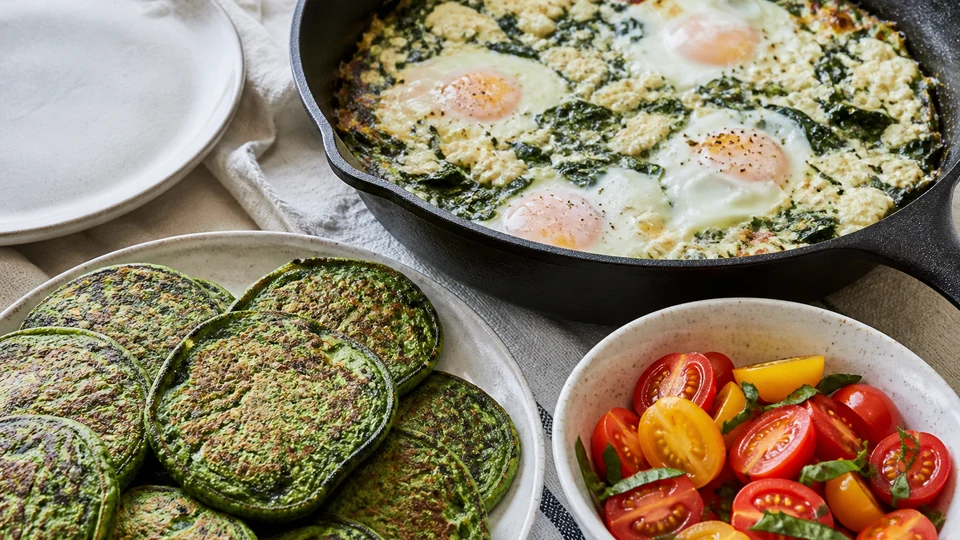
Build a spinach brunch around one cooked spinach dish, one contrasting fresh component, and a starch that can be finished without holding the greens on heat. Choose a complete recipe for the hot item, remove excess surface moisture before assembly, and add tender leaves or crisp toppings at service. Use Pancake World to connect this exact task with the wider editorial collection.
The approved parent route is Brunch. This is a planning guide, not a claim that raw and cooked spinach are interchangeable or that one handling method fits every dish. Quantities, yield, timing, nutrition, storage, and dietary suitability must therefore come from the selected complete formula, current product labels, and the cited authority within its stated domain.
Choose a format before changing ingredients
Spinach-and-egg bake
Use a complete formula that names the pan size and cooked-centre cue. Cook watery additions before they enter the egg mixture so the published balance is not changed by an improvised volume of liquid.
Wilted spinach on toast
Wilt only the portion needed, drain visible liquid, and assemble after the toast is crisp. Holding the finished toast under a cover traps steam and removes the contrast the format depends on.
Spinach pancakes or fritters
Select a formula designed for chopped greens rather than folding an unmeasured handful into ordinary batter. Keep leaf preparation, batter thickness and portion size traceable.
Fresh spinach brunch salad
Keep dressing and warm toppings separate until service. Use ready-to-eat utensils and a clean work area after any raw egg or meat preparation.
Build a controlled preparation sequence
- Choose the single spinach dish that owns the oven or pan.
- Prepare and label cold ingredients before raw-food work begins.
- Cook moisture-releasing vegetables before final assembly when the source requires it.
- Finish toast, pancakes or crisp toppings close to service.
- Serve the hot and fresh components together instead of holding both.
Current-batch troubleshooting
Watery filling
Review spinach preparation and added vegetables before increasing bake time.
Grey, tired leaves
Shorten hot holding and move the spinach step closer to service.
Soggy toast
Drain the topping and assemble after the bread has browned.
Flat-tasting plate
Check measured seasoning and add a source-approved acidic or crisp counterpoint rather than extra salt alone.
Evidence and safety boundary
For a spinach brunch, keep raw egg or meat preparation physically separate from washed leaves, fruit, bread, and finished toppings. Cook the chosen egg, meat, or baked component to the endpoint required by its complete recipe, while using spinach-specific moisture control so drained cooked greens do not contaminate ready-to-eat items. Apply the cited cooling and leftovers guidance only when the spinach dish will be held or saved. Because leaf form, filling depth, brands, and appliances vary, resolve uncertain ingredient identity, storage history, or doneness before serving rather than treating this guide as a Pancake World kitchen test.
For the next trial, compare spinach-and-egg bake with wilted spinach on toast only if both remain inside the selected formula's boundaries. Record whether watery filling or grey, tired leaves appeared, then change one plausible variable. That makes the follow-up specific to this route rather than a generic correction.
Next-batch prevention checklist
- Select one complete formula that actually covers spinach brunch recipes.
- Keep spinach-and-egg bake separate from spinach pancakes or fritters when their preparation schedules conflict.
- Observe watery filling in the first small portion.
- Record soggy toast before changing the next batch.
- Change one plausible variable and preserve the control.
- Omit unsupported yield, nutrition, dietary-outcome, and project-test claims.
Contextual routes for the next decision
- Tasty Brunch Recipes for a neighbouring preparation or menu decision.
- Weekend Brunch Recipes for a neighbouring preparation or menu decision.
- Flour Free Pancake Recipe for a neighbouring preparation or menu decision.
Frequently asked questions
Can frozen spinach be used?
Only when the selected formula names it or supplies an equivalent preparation method; frozen spinach contributes a different moisture load.
Can the hot dish be made ahead?
Use a source that states cooling, storage and reheating directions, then keep fresh leaves separate until service.
How much spinach should go into pancake batter?
Use the quantity from a complete spinach-pancake formula; this page does not invent a universal handful-to-cup conversion.
Match the spinach to the dish
For Spinach brunch recipes, this decision starts with a concrete method: baby leaves for a tender fresh finish, mature leaves for a cooked filling, and frozen chopped spinach for a measured pantry option. Write the relevant product, quantity, equipment, and serving target beside the recipe before beginning. That record keeps the method tied to this batch instead of turning one observation into a universal rule. It also exposes any unsupported substitution early, when the cook can return to the complete formula rather than improvising after heat or mixing has already changed the ingredients.
The main avoidable error at this point is treating every form as equally wet and equally strong. Change only one variable when the first test reveals a problem, and keep a reference portion whenever practical. Compare the two samples at the same temperature and stage of cooling. This controlled comparison matters for Spinach brunch recipes because several different causes can create a similar surface appearance while requiring opposite corrections in the next batch.
Use an observable endpoint instead of confidence alone: the leaves should support the eggs, grains, pastry, or toast rather than flood or dominate them. Record that cue in plain language along with the pan, portion, and elapsed sequence; exact minutes are secondary because equipment and ingredient temperature vary. If the cue is absent, stop and identify the most plausible upstream cause before continuing the full batch. The result is a specific, repeatable adjustment rather than a chain of compensating changes that hides the original fault.
Wash, dry, and stage the greens
For Spinach brunch recipes, this decision starts with a concrete method: inspect fresh leaves, wash them using current produce guidance, and remove enough surface water before they reach hot fat or pastry. Write the relevant product, quantity, equipment, and serving target beside the recipe before beginning. That record keeps the method tied to this batch instead of turning one observation into a universal rule. It also exposes any unsupported substitution early, when the cook can return to the complete formula rather than improvising after heat or mixing has already changed the ingredients.
The main avoidable error at this point is putting dripping leaves directly into a crowded pan. Change only one variable when the first test reveals a problem, and keep a reference portion whenever practical. Compare the two samples at the same temperature and stage of cooling. This controlled comparison matters for Spinach brunch recipes because several different causes can create a similar surface appearance while requiring opposite corrections in the next batch.
Use an observable endpoint instead of confidence alone: the prepared spinach should be clean, cool, and dry enough that it does not spit or dilute the next component. Record that cue in plain language along with the pan, portion, and elapsed sequence; exact minutes are secondary because equipment and ingredient temperature vary. If the cue is absent, stop and identify the most plausible upstream cause before continuing the full batch. The result is a specific, repeatable adjustment rather than a chain of compensating changes that hides the original fault.
Wilt in controlled batches
For Spinach brunch recipes, this decision starts with a concrete method: use a wide pan, add only a workable handful, and move each collapsed batch to a separate bowl before adding more. Write the relevant product, quantity, equipment, and serving target beside the recipe before beginning. That record keeps the method tied to this batch instead of turning one observation into a universal rule. It also exposes any unsupported substitution early, when the cook can return to the complete formula rather than improvising after heat or mixing has already changed the ingredients.
The main avoidable error at this point is piling all of the spinach into a small vessel. Change only one variable when the first test reveals a problem, and keep a reference portion whenever practical. Compare the two samples at the same temperature and stage of cooling. This controlled comparison matters for Spinach brunch recipes because several different causes can create a similar surface appearance while requiring opposite corrections in the next batch.
Use an observable endpoint instead of confidence alone: steam should escape and the leaves should soften without sitting in a deep pool of green liquid. Record that cue in plain language along with the pan, portion, and elapsed sequence; exact minutes are secondary because equipment and ingredient temperature vary. If the cue is absent, stop and identify the most plausible upstream cause before continuing the full batch. The result is a specific, repeatable adjustment rather than a chain of compensating changes that hides the original fault.
Control moisture in fillings
For Spinach brunch recipes, this decision starts with a concrete method: cool cooked spinach, press or drain it as the selected formula directs, then chop it before combining with cheese, eggs, or crumbs. Write the relevant product, quantity, equipment, and serving target beside the recipe before beginning. That record keeps the method tied to this batch instead of turning one observation into a universal rule. It also exposes any unsupported substitution early, when the cook can return to the complete formula rather than improvising after heat or mixing has already changed the ingredients.
The main avoidable error at this point is guessing at drainage while the spinach is still hot. Change only one variable when the first test reveals a problem, and keep a reference portion whenever practical. Compare the two samples at the same temperature and stage of cooling. This controlled comparison matters for Spinach brunch recipes because several different causes can create a similar surface appearance while requiring opposite corrections in the next batch.
Use an observable endpoint instead of confidence alone: a spoonful of filling should hold together without releasing water around its edges. Record that cue in plain language along with the pan, portion, and elapsed sequence; exact minutes are secondary because equipment and ingredient temperature vary. If the cue is absent, stop and identify the most plausible upstream cause before continuing the full batch. The result is a specific, repeatable adjustment rather than a chain of compensating changes that hides the original fault.
Choose an egg format intentionally
For Spinach brunch recipes, this decision starts with a concrete method: compare a skillet scramble, folded omelet, baked egg dish, and poached-egg plate by equipment and serving time. Write the relevant product, quantity, equipment, and serving target beside the recipe before beginning. That record keeps the method tied to this batch instead of turning one observation into a universal rule. It also exposes any unsupported substitution early, when the cook can return to the complete formula rather than improvising after heat or mixing has already changed the ingredients.
The main avoidable error at this point is selecting a format that must be held long before guests eat. Change only one variable when the first test reveals a problem, and keep a reference portion whenever practical. Compare the two samples at the same temperature and stage of cooling. This controlled comparison matters for Spinach brunch recipes because several different causes can create a similar surface appearance while requiring opposite corrections in the next batch.
Use an observable endpoint instead of confidence alone: the egg component should reach its safe endpoint while the spinach remains green and pleasantly textured. Record that cue in plain language along with the pan, portion, and elapsed sequence; exact minutes are secondary because equipment and ingredient temperature vary. If the cue is absent, stop and identify the most plausible upstream cause before continuing the full batch. The result is a specific, repeatable adjustment rather than a chain of compensating changes that hides the original fault.
Build contrast around spinach
For Spinach brunch recipes, this decision starts with a concrete method: pair the cooked greens with a crisp element, an acidic note, and a mild starch instead of adding several rich toppings. Write the relevant product, quantity, equipment, and serving target beside the recipe before beginning. That record keeps the method tied to this batch instead of turning one observation into a universal rule. It also exposes any unsupported substitution early, when the cook can return to the complete formula rather than improvising after heat or mixing has already changed the ingredients.
The main avoidable error at this point is using cheese, sauce, and fried garnish to solve the same richness problem. Change only one variable when the first test reveals a problem, and keep a reference portion whenever practical. Compare the two samples at the same temperature and stage of cooling. This controlled comparison matters for Spinach brunch recipes because several different causes can create a similar surface appearance while requiring opposite corrections in the next batch.
Use an observable endpoint instead of confidence alone: one complete bite should have softness, freshness, and structure without requiring an oversized portion. Record that cue in plain language along with the pan, portion, and elapsed sequence; exact minutes are secondary because equipment and ingredient temperature vary. If the cue is absent, stop and identify the most plausible upstream cause before continuing the full batch. The result is a specific, repeatable adjustment rather than a chain of compensating changes that hides the original fault.
Scale brunch without overcooking
For Spinach brunch recipes, this decision starts with a concrete method: prepare stable components first, reserve tender greens for later, and divide a large amount between pans or trays. Write the relevant product, quantity, equipment, and serving target beside the recipe before beginning. That record keeps the method tied to this batch instead of turning one observation into a universal rule. It also exposes any unsupported substitution early, when the cook can return to the complete formula rather than improvising after heat or mixing has already changed the ingredients.
The main avoidable error at this point is holding the finished spinach over heat while the rest of brunch catches up. Change only one variable when the first test reveals a problem, and keep a reference portion whenever practical. Compare the two samples at the same temperature and stage of cooling. This controlled comparison matters for Spinach brunch recipes because several different causes can create a similar surface appearance while requiring opposite corrections in the next batch.
Use an observable endpoint instead of confidence alone: the last portion should resemble the first in moisture and colour when the table is served. Record that cue in plain language along with the pan, portion, and elapsed sequence; exact minutes are secondary because equipment and ingredient temperature vary. If the cue is absent, stop and identify the most plausible upstream cause before continuing the full batch. The result is a specific, repeatable adjustment rather than a chain of compensating changes that hides the original fault.
Store components, not an assembled plate
For Spinach brunch recipes, this decision starts with a concrete method: cool leftovers promptly, separate crisp bread or pastry from moist spinach, and label the container before refrigeration. Write the relevant product, quantity, equipment, and serving target beside the recipe before beginning. That record keeps the method tied to this batch instead of turning one observation into a universal rule. It also exposes any unsupported substitution early, when the cook can return to the complete formula rather than improvising after heat or mixing has already changed the ingredients.
The main avoidable error at this point is packing a steaming spinach mixture beneath a crisp base. Change only one variable when the first test reveals a problem, and keep a reference portion whenever practical. Compare the two samples at the same temperature and stage of cooling. This controlled comparison matters for Spinach brunch recipes because several different causes can create a similar surface appearance while requiring opposite corrections in the next batch.
Use an observable endpoint instead of confidence alone: reheated components should be handled according to current food-safety guidance and recombined only at service. Record that cue in plain language along with the pan, portion, and elapsed sequence; exact minutes are secondary because equipment and ingredient temperature vary. If the cue is absent, stop and identify the most plausible upstream cause before continuing the full batch. The result is a specific, repeatable adjustment rather than a chain of compensating changes that hides the original fault.
Conclusion
- 3 Ingredient Low Carb Pancakes
- Tasty Brunch Recipes
Sources
- USDA MyPlate, What Is MyPlate? —
https:// www.myplate.gov/ eat- healthy/ what- is- myplate - USDA FSIS, Leftovers and Food Safety —
https:// www.fsis.usda.gov/ food- safety/ safe- food- handling- and- preparation/ food- safety- basics/ leftovers- and- food- safety - FoodSafety.gov, Safe Minimum Internal Temperatures —
https:// www.foodsafety.gov/ food- safety- charts/ safe- minimum- internal- temperatures