Shrimp breakfast recipes
At Pancakes World, shrimp works at breakfast in grits, egg skillets, quinoa bowls, tortillas, toast, and potato hashes. For the fastest option, sauté thawed, patted-dry shrimp separately, cook until the flesh is firm, pearly, and opaque, then add it to an already prepared base. For a source-based full meal, make the Illinois Extension orange shrimp quinoa bowl described below; for a Southern-style plate, use grits, vegetables, and a modest cheese or broth choice. Buy shrimp cold or properly iced, thaw it overnight in the refrigerator, prevent raw-seafood cross-contact, and reheat cooked leftovers to 165°F. Timing depends on shrimp size, starting temperature, and cooking method, so appearance and temperature checks matter more than one universal minute count.
For broader context, continue with American Breakfast: Pancakes, Diner Plates and Brunch.
What this page covers
This guide treats “shrimp breakfast recipes” as a group of practical formats rather than pretending every dish shares one formula. It includes:
- one published, source-based orange shrimp quinoa bowl
- a shrimp-and-grits decision framework grounded in extension guidance
- clearly labelled editorial methods for egg skillets, tortillas, toast, potato hash, and savory oats
- purchasing, thawing, cross-contamination, cooking, storage, and reheating controls from FDA and FoodSafety.gov
- a comparison matrix for choosing the right format
Pancake World has no documented in-house test for these combinations. Exact recipe facts are kept attached to their sources; editorial ideas are not represented as tested recipes. Article schema is used rather than Recipe schema.
Choose the shrimp before choosing the recipe
The dish should match the product. “Shrimp” on a shopping list is not specific enough because raw, cooked, fresh, frozen, peeled, shell-on, and differently sized products require different handling.
Raw fresh shrimp
FDA advises buying fresh seafood only when it is refrigerated or displayed on a thick bed of fresh ice. Fresh shrimp flesh should be clear with a pearl-like color and little or no odor. A sour, rancid, strongly fishy, or ammonia-like odor is a rejection signal.
Fresh does not mean sterile. Keep raw shrimp separate from produce and ready-to-eat foods in the cart, refrigerator, and kitchen. If it will not be used within two days after purchase, FDA advises wrapping it tightly and freezing it.
Raw frozen shrimp
Frozen shrimp is often the easiest breakfast choice because it can be stored for a planned meal. Reject packages that are open, torn, crushed at the edges, or show evidence of thawing and refreezing such as extensive frost or ice crystals. The seafood should be hard frozen, not flexible.
Check whether the product is peeled, deveined, tail-on, or tail-off. A tail-on shrimp may look attractive over grits, but a tail-off product is easier in a burrito, skillet, or bite-sized bowl. The package weight may include protective ice glaze; plan from the labeled net quantity and actual thawed product rather than assuming every bag yields the same edible amount.
Previously cooked shrimp
Cooked shrimp is convenient for a cold plate or last-minute addition. Do not cook it through a full raw-shrimp method again. Add it near the end and heat only as needed, while following the package directions. If it is a leftover from a prior meal, reheat it to 165°F.
Check whether a “cooked” product is ready to eat or requires another step. The label controls. Keep it physically separated from raw seafood at purchase and at home.
Shrimp size labels
Terms such as small, medium, jumbo, and colossal are not a reliable universal timer. Count-per-pound information, when provided, gives a more concrete indication of size. Large shrimp generally take longer than small shrimp in the same pan, but burner output, pan crowding, starting temperature, and moisture also change cooking.
Use a visual endpoint: the flesh should become firm, pearly, and opaque. Avoid publishing “two minutes per side” as if it applies to every shrimp. The Illinois Extension bowl uses two to three minutes per side for its specific grilled shrimp, but that time belongs to that formula and setup.
Thaw shrimp safely
The most predictable method is to move frozen shrimp into the refrigerator the night before. Put the sealed package or a covered container on a lower shelf where any leak cannot drip onto ready-to-eat food.
For faster thawing, FDA gives two alternatives:
- Seal the seafood in a leakproof plastic bag and immerse it in cold water.
- Use the microwave defrost setting only when cooking immediately afterward, stopping while the shrimp is still icy but flexible.
Do not leave shrimp on the counter to thaw. Warm surfaces can enter unsafe temperatures while the center remains frozen.
After thawing, drain and pat the shrimp dry with disposable towels. Surface water cools the skillet and encourages steaming rather than quick, even cooking. Discard the towels immediately, wash hands for at least 20 seconds, and clean the sink or surface if raw seafood contacted it.
Set up a clean shrimp breakfast station
Use a simple separation system:
- one board or plate for raw shrimp
- a clean plate for cooked shrimp
- separate utensils for ready-to-eat fruit, herbs, and vegetables
- a clean thermometer if the method uses one
- hot, soapy water for hands, tools, dishes, and counters
FDA recommends washing boards, dishes, utensils, and countertops between raw seafood and cooked or ready-to-eat food. Wash whole produce under running water before cutting. Do not wash shrimp in a way that splashes raw juices around the sink.
Prepare vegetables before opening raw shrimp when possible. That order reduces cross-contact and makes a quick-cooking shrimp stage easier to supervise.
A practical format comparison
| Format | Best starting shrimp | Main base | Moisture risk | Make-ahead decision |
|---|---|---|---|---|
| Shrimp and grits | Raw peeled shrimp | Hot grits | Watery shrimp or thin grits | Prep grits components; cook shrimp near service |
| Orange quinoa bowl | Raw peeled, deveined shrimp | Quinoa | Overlong citrus marinade | Follow source’s 20-minute refrigerated marinade |
| Egg skillet | Raw shrimp cooked first, or cooked shrimp | Eggs and vegetables | Shrimp water plus runny egg | Prep vegetables; cook eggs and shrimp close to service |
| Breakfast tortilla | Cooked tail-off shrimp | Tortilla, eggs or beans | Salsa and wet vegetables | Keep wet toppings separate |
| Shrimp toast | Cooked shrimp | Toast, avocado, egg, or yogurt spread | Wet topping softens bread | Toast and assemble at service |
| Potato hash | Raw shrimp cooked separately | Cooked potato and vegetables | Crowded pan steams shrimp | Cook potato in advance; finish shrimp fresh |
| Savory oats | Cooked shrimp | Oats | Thin porridge dilutes flavor | Cook oats ahead; add shrimp during safe reheating |
| Cold breakfast plate | Ready-to-eat cooked shrimp | Vegetables, grain, egg, or fruit | Temperature abuse | Keep at 40°F or below until service |
Explore related Pancakes World guidance on American Pancakes, Maple Syrup, and Maple Syrup Pancakes.
Sources and editorial references
University of Illinois Extension publishes an Orange Shrimp Quinoa Bowl yielding four servings. The source combines seasoned shrimp, quinoa cooked in low-sodium chicken broth, a lime-orange salad, and avocado. It is a useful breakfast or brunch bowl because the grain, seafood, fruit, herbs, and avocado remain distinct rather than becoming a single wet scramble.
Ingredients from the published formula
For the shrimp:
- 1 tablespoon orange zest
- 3 tablespoons olive oil
- 1 garlic clove, minced
- 1/4 teaspoon black pepper
- 1/4 teaspoon cayenne pepper
- 1 pound fresh shrimp, peeled and deveined
For the bowl:
- 3/4 cup dry quinoa
- 1 1/2 cups low-sodium chicken broth
- juice from 1 1/2 limes
- 2 tablespoons olive oil
- 1/4 cup chopped red onion
- 1/4 cup chopped fresh cilantro
- 1/4 teaspoon salt
- 2 large oranges, segmented
- 1 large avocado, thinly sliced
These quantities belong to the Illinois recipe. Do not silently change the shrimp amount, marinade duration, or quinoa liquid and retain the source’s yield as if nothing changed.
Method, paraphrased
- Combine orange zest, olive oil, garlic, black pepper, cayenne, and shrimp in a bowl.
- Marinate the shrimp in the refrigerator for 20 minutes.
- While it marinates, bring the quinoa and broth to a boil, cover, and simmer for the source’s 15-minute period or until the liquid is absorbed.
- Preheat a grill pan over medium heat.
- Cook the shrimp for the source’s two-to-three-minute-per-side range, checking that the flesh is firm, pearly, and opaque.
- Combine lime juice, olive oil, red onion, cilantro, salt, and orange segments.
- Divide quinoa, cooked shrimp, orange salad, and avocado among four bowls.
The 20-minute marinade is short and refrigerated. Do not leave citrus-marinated shrimp on a counter or assume acid cooks it safely. FDA says the safest route is to cook seafood thoroughly; freezing and acid do not eliminate all harmful germs.
Breakfast preparation order
For a morning service, segment the oranges and chop the onion and cilantro before handling raw shrimp. Start quinoa, then marinate shrimp. While quinoa simmers, assemble the orange mixture. Cook shrimp last so it arrives hot and is not held while the rest of the bowl catches up.
If using leftover cooked quinoa, reheat it to 165°F and confirm the storage history is safe. The source formula calls for freshly cooked quinoa in broth; a leftover-grain adaptation changes the method.
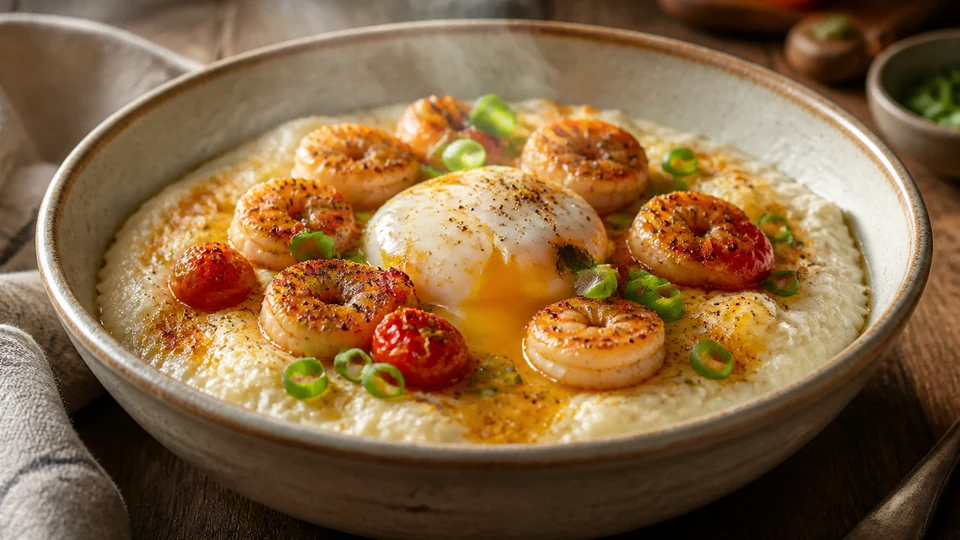
Shrimp and grits: build the dish deliberately
Shrimp and grits can be a breakfast, brunch, or anytime meal. There is no single universal formula. University of Georgia Extension offers practical adjustment decisions: choose lower-sodium broth, avoid overloading cheese, select milk deliberately, and pay attention to portions.
Use a four-part structure:
- Grits base: prepare according to a reliable recipe or package, using water, milk, broth, or a combination.
- Vegetable layer: onion, bell pepper, tomatoes, greens, or mushrooms can add flavor and texture.
- Shrimp: cook separately so its endpoint is visible and the pan is not crowded by grits.
- Finishing element: herbs, lemon, a measured cheese amount, or a spoonful of sauce.
Avoid watery grits
Thawed shrimp carries surface moisture. Pat it dry before cooking and do not pour thaw liquid into the grits. Cook watery vegetables before adding them to the base. If tomatoes are very juicy, serve them as a fresh garnish or cook them until excess liquid reduces.
Avoid rubbery shrimp
Grits can wait briefly over very low heat with careful stirring; shrimp should not simmer in a hot pot for an extended hold. Cook the shrimp near the end, transfer it off the heat when opaque and firm, and place it over the grits at service.
Keep cheese and broth decisions visible
Cheese, bacon, sausage, salted broth, and packaged seasoning can stack sodium in the same bowl. Compare broth and cheese labels when that matters. Taste the base before adding salt. A strongly flavored cheese may allow a smaller amount, but the exact choice is personal and not a guaranteed nutrition result.
Editorial shrimp-and-egg skillet
This is a method outline, not a tested Pancake World recipe.
Choose components
- peeled, deveined raw shrimp or safely stored cooked shrimp
- eggs
- one or two quick-cooking vegetables, such as spinach, pepper, onion, mushroom, or tomato
- herbs or spices
- toast, tortilla, potato, or fruit as a side
Workflow
- Chop and cook vegetables first. Remove excess liquid.
- If using raw shrimp, cook it in an uncrowded skillet until firm, pearly, and opaque; move it to a clean plate.
- Add beaten eggs to the vegetables and cook until set, not runny.
- Return cooked shrimp only long enough to distribute and heat through.
- Serve immediately.
FoodSafety.gov lists 160°F for egg dishes. If reheating a previously cooked shrimp-and-egg mixture, use 165°F for leftovers. The pan does not need to be kept on high heat after both components are done; residual heat can make shrimp tough and eggs dry.
Do not add raw shrimp directly to nearly finished eggs. If the shrimp needs longer than the egg, the eggs overcook; if the cook stops for the egg, the shrimp may be underdone. Separate stages make the endpoints observable.
Shrimp breakfast tortillas
A tortilla works when the filling is dry enough to roll. Use tail-off cooked shrimp, because tails create awkward bites and can pierce the wrap.
Egg-and-shrimp lane
Cook shrimp separately, scramble eggs until set, and combine small portions with cooked peppers or greens. Warm the tortilla before rolling. Keep salsa, fresh tomato, sour cream, and avocado on the side if the wrap will travel.
Bean-and-shrimp lane
Spread warm mashed beans on a tortilla, add cooked chopped shrimp and a drained vegetable mixture, then fold. Beans help hold small shrimp pieces in place. This is an editorial combination, not evidence of a tested yield or nutrition analysis.
Breakfast taco lane
Use smaller tortillas and leave them open. Add cooked shrimp, egg or beans, cabbage or greens, and salsa just before eating. A taco is often a better choice than forcing too much filling into a burrito.
For make-ahead use, cool cooked components promptly and assemble from a tested freezer recipe if freezing. This page does not establish a freezer quality duration for shrimp-and-egg tortillas.
Shrimp toast and Benedict-style formats
Shrimp can replace ham or smoked fish in a Benedict-style stack, and Illinois Extension identifies tender shrimp as one possible variation on its baked eggs Benedict base. Keep the boundary clear: the source recipe’s egg, English muffin, greens, and sauce quantities are not automatically a tested shrimp formula.
For a simple toast:
- Toast whole-grain or sourdough bread.
- Spread avocado, plain yogurt mixed with herbs, cottage cheese, or another suitable base.
- Add fully cooked chopped shrimp.
- Finish with tomato, cucumber, herbs, lemon, or pepper.
- Assemble immediately before eating.
Avoid putting hot wet shrimp on toast too early. Drain the cooked shrimp and let steam subside briefly. If using a poached egg, follow a safe method and consider pasteurized eggs for people who need to avoid undercooked eggs. FDA advises cooking eggs until yolks and whites are firm for the general safe-handling lane.
Shrimp potato hash
Potatoes take much longer than shrimp, so do not start them together.
- Cut potatoes evenly and cook them until tender using a reliable method.
- Brown the cooked potatoes with onion and pepper.
- Move the hash to one side or a clean plate.
- Cook patted-dry raw shrimp in an uncrowded part of the pan until pearly and opaque.
- Fold the cooked shrimp through the hash and serve.
If the skillet is crowded, use two pans or cook sequentially. A crowded pan collects water, and shrimp steams while potatoes lose their crisp surface. Starting with leftover cooked potato can shorten breakfast, but reheat all leftovers safely.
For an egg on top, cook it in a clean space and use the desired safe endpoint. Do not let raw egg contact a ready-to-serve hash unless it will be fully cooked.
Savory shrimp oats
Oats can function like grits in a savory bowl, though the flavor and texture differ.
Cook oats according to the package with water or low-sodium broth. Add cooked greens, herbs, and a small amount of cheese or yogurt if desired. Cook shrimp separately and place it on top at service. A squeeze of lemon can brighten the bowl.
This method keeps the shrimp visible and prevents it from boiling in oatmeal. If the oats are too thin, cook them to the desired consistency before adding any toppings. Do not use raw shrimp as a way to thicken or flavor oats; seafood safety and porridge texture are separate tasks.
Cold shrimp breakfast plate
Ready-to-eat cooked shrimp can appear on a cold plate with cucumber, tomato, avocado, a cooked grain, fruit, or a hard-cooked egg. Keep it refrigerated at 40°F or below until service.
For a packed meal:
- use an insulated container with ice packs
- keep juicy produce in a separate compartment
- transport dressing separately
- avoid packing raw and cooked shrimp in the same cooler compartment
- discard food if it has been above safe cold-holding temperatures too long
FDA says perishable seafood should not remain unrefrigerated for more than two hours, or more than one hour when the air temperature is above 90°F.
Buying and preparation checklist
Before shopping:
- Choose the format and number of servings.
- Decide raw or cooked shrimp.
- Check whether tails interfere with the dish.
- Confirm freezer or refrigerator space.
At purchase:
- Buy cold, iced, or hard-frozen product.
- Reject damaged frozen packages.
- Reject sour, rancid, fishy, or ammonia-like odors.
- Keep raw seafood separate from produce.
- Read the label for raw versus cooked status and ingredients.
At home:
- Refrigerate or freeze promptly.
- Thaw in the refrigerator, cold water in a sealed bag, or microwave only for immediate cooking.
- Prepare produce before opening raw shrimp when possible.
- Pat shrimp dry.
- Use clean plates and tools for cooked food.
At cooking:
- Avoid crowding.
- Match the method to size.
- Cook until firm, pearly, and opaque.
- Cook egg dishes to 160°F.
- Reheat leftovers to 165°F.
Make-ahead strategy
Shrimp is usually best cooked close to service, but much of the meal can be prepared earlier.
Prepare ahead
- cook quinoa, grits, oats, or potatoes using a reliable recipe
- chop sturdy vegetables
- wash herbs and produce
- mix a sauce that has its own safe storage guidance
- portion seasonings
- set frozen shrimp to thaw in the refrigerator
Finish in the morning
- pat shrimp dry
- cook shrimp to its endpoint
- reheat the base to 165°F if it is a leftover
- cook eggs until set if used
- assemble toast or tortillas
- add fresh, wet toppings last
Do not pre-marinate raw shrimp overnight unless a tested recipe explicitly directs it. The Illinois orange bowl uses a 20-minute refrigerated marinade; extending that period is a different method and can change texture.
Scaling for brunch
Shrimp’s short cooking window makes batch size important. A skillet that handles one pound in a single layer may not handle two pounds without crowding. For a larger group:
- Prepare the grain or potato base first.
- Hold it safely hot, or cool and reheat according to a planned workflow.
- Divide shrimp into batches that fit the pan in one layer.
- Use a clean platter for each cooked batch.
- Track which batch is raw, cooking, and finished.
- Combine only at service.
For a buffet, keep hot seafood hot and cold seafood cold. If hot food cannot be maintained safely, serve smaller waves. Do not put a new cooked batch on a platter contaminated by raw shrimp.
Troubleshooting shrimp breakfast dishes
Shrimp releases water instead of searing
It may be wet, still partly frozen, or crowded. Drain and pat it dry, preheat the pan, and cook fewer pieces at once. Do not use a very high heat that burns garlic or butter before the shrimp cooks.
Shrimp is rubbery
It likely cooked too long or remained in a hot base. Cook shrimp separately, remove it at the opaque and firm endpoint, and return it only briefly during assembly.
The dish tastes flat
Add acid, herbs, pepper, or aromatics before simply adding salt. Lemon, lime, cilantro, parsley, garlic, onion, or a small measured cheese amount can define the dish. Adjust one element at a time.
Grits or oats are watery
Cook the base to the correct consistency before topping it. Pat shrimp dry and cook watery vegetables separately. Do not pour shrimp thaw liquid into the bowl.
The tortilla falls apart
Warm it, use tail-off shrimp, chop large shrimp, reduce filling, and keep salsa outside. A taco may be a better format than an overloaded burrito.
The outside is hot but the center is cold
This is a reheating problem. Stir a bowl, rotate a wrap, divide dense portions, and check more than one place for 165°F. Steam at the surface does not prove the center is ready.
Shrimp smells strongly fishy or like ammonia
Do not eat it. FDA lists sour, rancid, fishy, and ammonia-like odors as spoilage warnings. Cooking does not make spoiled seafood acceptable.
Frequently asked questions
Can shrimp be eaten for breakfast?
Yes. Shrimp is used in breakfast and brunch formats such as shrimp and grits, egg dishes, bowls, tacos, toast, and hashes. Safe handling and a coherent base matter more than the time of day.
What is the fastest shrimp breakfast?
Use thawed, peeled, tail-off shrimp, pat it dry, and cook it separately while toast, eggs, oats, or a tortilla base is prepared. Previously cooked shrimp can be faster, but follow its label and avoid overcooking it.
How do I know when shrimp is done?
FDA and FoodSafety.gov say shrimp flesh should become firm, pearly or white, and opaque. Because size and method vary, do not depend on one universal time or pink color alone.
Should I thaw shrimp before breakfast cooking?
Usually yes for even skillet or grill-pan cooking. Thaw overnight in the refrigerator. A sealed cold-water thaw or microwave defrost is acceptable when followed by immediate cooking.
Can I cook frozen shrimp without thawing?
Only when the package or a tested recipe gives a method for cooking from frozen. A skillet recipe written for thawed, patted-dry shrimp will behave differently with frozen pieces and glaze.
Do shrimp and eggs cook in the same pan?
They can use the same cleaned or continuously heated pan in sequence, but cook shrimp first and remove it. Then cook eggs until set and return cooked shrimp briefly. This makes both endpoints easier to control.
Can I use leftover shrimp in an omelet?
Yes if it was cooled promptly and stored safely. Reheat the finished leftover-containing dish to 165°F. Add chopped shrimp late enough to avoid unnecessary overcooking.
Are shrimp and grits only for brunch?
No. The dish can be breakfast, brunch, lunch, or dinner. Choose a recipe, manage broth, cheese, and salt deliberately, and cook shrimp near service.
Can I meal-prep shrimp breakfast bowls?
Prepare grain and vegetables ahead, keep components cold, and cook shrimp close to service when possible. If shrimp is cooked ahead, cool it promptly and follow safe storage. Reheat hot leftovers to 165°F or keep a cold bowl at 40°F or below.
Is ceviche a safe no-cook breakfast option?
Acid is not a substitute for thorough cooking. FDA says freezing does not kill all harmful germs and the safest route is to cook seafood. People at higher risk of foodborne illness should avoid raw or undercooked seafood.
- U.S. Food and Drug Administration, Selecting and Serving Fresh and Frozen Seafood Safely:
https://www.fda.gov/food/buy-store-serve-safe-food/selecting-and-serving-fresh-and-frozen-seafood-safely - FoodSafety.gov, Cook to a Safe Minimum Internal Temperature:
https://www.foodsafety.gov/food-safety-charts/safe-minimum-internal-temperatures - University of Illinois Extension, What’s in Your Bowl?:
https://extension.illinois.edu/blogs/simply-nutritious-quick-and-delicious/2018-05-21-whats-your-bowl - University of Georgia Extension, August 2023 FACS of Life Calendar:
https://facsoflife.extension.uga.edu/2023/08/august-2023-facs-of-life-calendar/ - University of Illinois Extension, How-to: Baked Eggs Benedict:
https://extension.illinois.edu/blogs/turnip-beet-nutrition-and-wellness/2017-04-14-how-baked-eggs-benedict - U.S. Food and Drug Administration, What You Need to Know About Egg Safety:
https://www.fda.gov/food/buy-store-serve-safe-food/what-you-need-know-about-egg-safety - U.S. Food and Drug Administration, Selecting and Serving Produce Safely:
https://www.fda.gov/food/buy-store-serve-safe-food/selecting-and-serving-produce-safely