Savory breakfast without eggs
At Pancakes World, build a savory breakfast without eggs around one substantial base, one contrasting topping or side, and a clear sauce or seasoning plan. Start with a complete potato-and-bean skillet, lentil bowl, tofu scramble, savory grain, toast or wrap, or a fully cooked meat or fish dish; do not begin by forcing an egg-heavy recipe through a universal substitute. If egg is excluded for allergy, check every current package label, including bread, tortillas, sausage, sauces and seasoning blends, and prevent cross-contact with egg pans and utensils. Egg-free does not automatically mean vegan, dairy-free, gluten-free, soy-free or nut-free. Use source-tested quantities and timings, verify applicable cooking temperatures, and cool leftovers promptly.
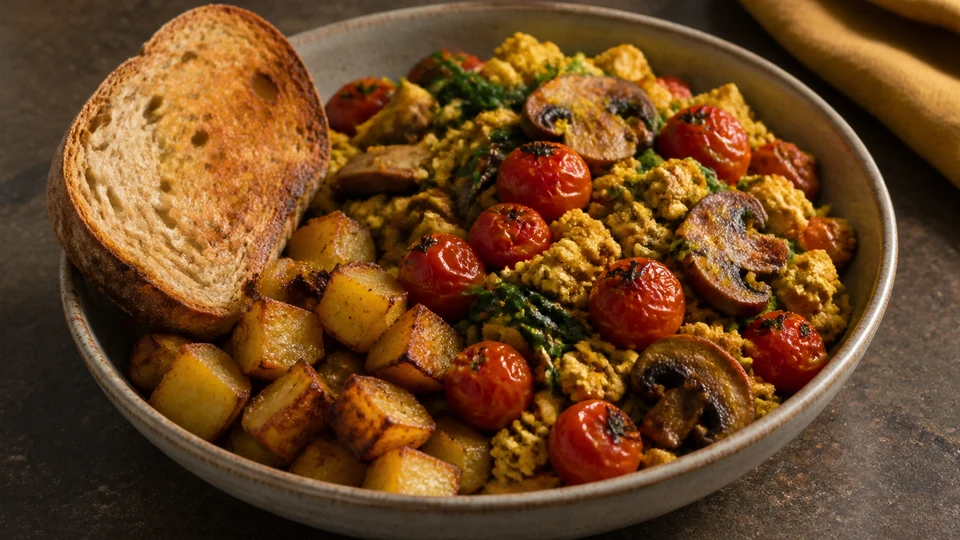
This page is a broad selection and execution guide, not a set of Pancake World-tested recipes. The pancake science hub covers ingredient function in more depth, while Pancake World opens the complete collection.
| Guide sections |
|---|
| Define why egg is absent |
| Choose a dish that never needed egg |
| Six useful savory breakfast lanes |
| Build a coherent plate |
For broader context, continue with American Breakfast: Pancakes, Diner Plates and Brunch.
Define why egg is absent
An egg-free preference and an egg allergy lead to different kitchen controls. For preference, the recipe and label audit can focus on making sure egg is not intentionally used. For an allergy, packaged ingredients, shared equipment, utensils, cooking surfaces and service cross-contact also matter.
FDA lists egg among the major food allergens covered by US packaged-food labeling requirements. Read the full current ingredient list and the “Contains” statement where present. Do not rely on an old online list, front-of-pack photo or the fact that a food does not look egg-based.
Keep other restrictions independent:
- an egg-free breakfast can contain meat, fish or dairy and therefore is not automatically vegan;
- cheese, butter, yogurt or milk can appear, so it is not automatically dairy-free;
- bread, tortillas, flour, cereal and sauces may contain wheat, so it is not automatically gluten-free;
- tofu and many packaged alternatives can contain soy;
- spreads, sauces and toppings can contain peanuts, tree nuts or sesame.
Write the complete guest requirement before selecting dishes. A short label such as “free-from breakfast” is too vague for a safe decision.
Choose a dish that never needed egg
The most reliable approach is often a complete recipe designed without egg rather than a converted omelet, frittata or egg casserole. Eggs perform several functions—binding, setting, moisture and sometimes leavening—so removing them from an egg-dominant dish changes the structure, not only the ingredient list.
University of Minnesota Extension emphasizes that there is no single perfect egg substitute. Its guidance maps different alternatives to different jobs and notes tofu as a possible savory scramble direction. That does not make tofu a one-for-one egg replacement in every formula. It means a cook should select a dedicated tofu scramble recipe when that texture is wanted.
Use this decision order:
- Identify the desired eating format: skillet, bowl, toast, wrap, bake or plated protein.
- Look for a complete egg-free recipe already written in that format.
- Confirm all guest restrictions and current labels.
- Check equipment, active time and storage requirements.
- Only consider a substitution when the source explicitly supports it.
Six useful savory breakfast lanes
1. Potato and bean skillet or mash
Potatoes and beans can form a substantial base without copying scrambled egg. USDA SNAP-Ed publishes “Hearty Mashed Potatoes,” which cooks potatoes, adds garbanzo beans during the simmer, drains them, mashes the combination, and adds milk or fortified soy beverage, Parmesan and seasonings.
The source is egg-free, but it is not automatically vegan, dairy-free or soy-free because the liquid and cheese choices matter. Use the exact source formula or select another complete potato-and-bean recipe that matches the guest brief.
For a breakfast presentation, pair a measured portion with cooked greens, tomatoes, mushrooms or a source-approved relish. Those are editorial serving ideas, not additions to the federal recipe. Check whether added vegetables need separate cooking before service.
Choose this lane when a soft base and make-ahead reheating are useful. It is less suitable when the desired result is a crisp hash unless the complete recipe provides a browning step.
2. Potato and lentil skillet
USDA SNAP-Ed’s curried potato and red lentil recipe provides another documented egg-free architecture. It sautés onion, garlic and potatoes in stages, adds ginger and curry paste, then simmers lentils with stock and coconut milk until tender before finishing with lime.
This lane suits a spoonable savory breakfast or brunch bowl. It demonstrates how lentils can join potatoes through a complete simmered formula rather than being scattered into an unrelated hash.
Audit curry paste, stock, butter, coconut milk and garnishes. A product may contain milk, soy, wheat, sesame or another ingredient relevant to the guest. Use oil where the source explicitly allows it; do not assume every butter-based recipe accepts the same exchange.
3. Dedicated tofu scramble
Extra-firm tofu can be the centre of a savory breakfast when a complete tofu-scramble formula controls pressing or draining, crumble size, seasoning, vegetable order and pan moisture. University of Minnesota Extension names extra-firm tofu as a savory scramble idea, but does not validate one universal seasoning or cooking ratio.
Choose a source that states:
- tofu type and package weight;
- whether and how it is drained or pressed;
- vegetable sizes and precooking order;
- oil and pan heat;
- seasoning amounts;
- final moisture and browning cues;
- yield and storage.
Tofu is soy, so this lane is unsuitable for a soy restriction unless the guest’s advice says otherwise. Do not describe it as nutritionally equivalent to egg without a defined formula and comparison.
4. Savory grain bowl
Oatmeal, rice, quinoa, barley, grits, polenta or another grain can carry savory toppings when the complete recipe specifies grain form, liquid, cooking time and final consistency. Whole kernels, rolled grains and flour-style products are not interchangeable.
Choose a grain bowl when batch cooking and flexible toppings are priorities. Build contrast with one cooked vegetable, a bean or lentil component, and a sauce or garnish that fits the guest restrictions. Keep each addition measured so the bowl does not become an unreviewed collection of leftovers.
Do not call the bowl high-protein, balanced or medically beneficial from category names alone. Nutrition depends on exact foods, quantities and serving size.
5. Toast, flatbread or wrap
Bread or tortillas can carry beans, hummus, avocado, mushrooms, tomatoes, cooked greens, cheese, fish, meat or another complete topping formula. This is the fastest lane only when the topping is already safe, properly stored and ready to serve.
Read bread and tortilla labels for egg as well as wheat, milk, soy and sesame. Some products that appear plain can contain egg or be made on shared equipment. For egg allergy, follow the guest’s required precautionary-label and cross-contact plan.
Control moisture: drain a bean mixture, keep juicy tomatoes measured, and toast or warm the base according to the source. A wrap that tears may be too cold, too small or overfilled; it does not need an egg binder.
6. Meat or fish with vegetables and starch
Egg-free does not mean vegetarian. USDA SNAP-Ed publishes a one-dish roast with potatoes, apples, onion and chicken sausage. Its method partially roasts potatoes, then adds the other ingredients and continues cooking.
This source shows a complete meat-inclusive egg-free path. The sausage label must still be checked for egg and other allergens, and the poultry component must reach the applicable safe endpoint. FoodSafety.gov lists 165°F (74°C) for poultry and 160°F (71°C) for ground meats.
Fish, leftover chicken or another meat can also anchor breakfast when a complete recipe and safe handling plan support it. Do not use a breakfast label to lower the temperature requirement that would apply at lunch or dinner.
Build a coherent plate
A broad egg-free breakfast works best when each component has a job.
Anchor
Choose the potato-bean, lentil, tofu, grain, bread or animal-protein lane. It should provide most of the hot cooking work and determine the equipment schedule.
Fresh or acidic contrast
Add fruit, tomato, cucumber, herbs, a cabbage salad, salsa or another source-compatible component. Acidic or fresh flavour can cut through a rich potato or bean base without imitating egg. For allergy-sensitive service, packaged dressings and sauces still require label checks.
Texture contrast
A crisp toast, roasted vegetable, toasted seed where permitted, or fresh garnish can contrast with a soft mash or grain. Avoid adding several crunchy toppings that introduce separate allergen and cross-contact questions without improving the plan.
Sauce or seasoning
Choose one direction—tomato and herbs, curry spices, chile and lime, mushroom gravy, tahini where sesame is permitted, yogurt where dairy is permitted, or another complete sauce. A sauce is part of the recipe audit, not an invisible finishing touch.
Compare lanes by practical constraints
Choose potato and bean mash for a soft, reheatable base. Choose potato and lentil curry for a simmered bowl with a defined sauce. Choose tofu scramble for a skillet dish whose texture is intentionally tofu-based. Choose grain for batch preparation and topping flexibility. Choose toast or wrap for fast assembly. Choose meat or fish when the guest brief allows animal foods and a thermometer-based cooking plan is practical.
For one cook serving several people, prefer one hot anchor and two low-work sides. A menu that needs a skillet scramble, crisp potatoes, warmed wraps, grilled fish and three sauces at the same time is not simpler merely because it contains no egg.
If the meal must travel, choose a recipe whose cooling, packing and reheating directions are complete. A freshly crisp toast or wet grain bowl may not survive transport as well as a documented wrap or casserole. That is a format choice, not a quality guarantee.
Ingredient-function decisions
When egg would have bound a patty
Use a complete egg-free patty or fritter formula. University of Minnesota Extension lists several possible savory binders, including mashed potato, potato flakes, potato starch, tomato paste, whole wheat flour and a tofu-plus-flour combination. Each has its own flavour, moisture and allergen effects.
Do not add one at random to a meat, bean or vegetable mixture. The full formula must balance wet ingredients, particle size, binder amount and cooking method.
When egg would have leavened a pancake or bake
Use an egg-free recipe developed around its leavening system. A savory pancake may use baking powder, carbonated water, a commercial replacer or another structure, but there is no universal swap. Flour-containing batter remains raw and must cook completely even without egg.
When egg would have set a casserole
Change formats unless a tested egg-free casserole formula provides another setting system. A tray of vegetables and bread soaked in liquid does not become sliceable simply because tofu or starch is added without measurement.
When egg would have been the visible centre
Choose a new anchor rather than a disguise. A potato-lentil bowl, bean mash, tofu scramble or fish-and-potato plate can stand on its own. The goal is a good savory breakfast, not a replica that makes unsupported equivalence claims.
Eight practical menu blueprints
These blueprints are assembly plans, not tested formulas. Every cooked item still needs one complete source recipe.
Potato-bean base with cooked greens
Use a documented potato-and-bean mash or hash as the anchor. Add one pan of greens cooked by its own method and a measured tomato or herb garnish. This plan works when a soft base and a fresh or slightly bitter contrast are wanted.
Keep dairy additions optional and separately labelled if some guests avoid milk. If egg allergy is the concern, audit the bean product, milk or plant beverage, cheese, cooking fat and seasoning rather than checking only the obvious anchor ingredients.
Lentil-potato bowl with crisp toast
Use a complete lentil-and-potato formula, such as the USDA SNAP-Ed curry, then serve it with toast or flatbread that fits the guest requirements. The simmered bowl owns the stove; the bread is warmed near service.
This structure is easier for one cook than preparing a separate skillet item for every guest. It also makes the sauce part of the anchor instead of adding several wet toppings at the table. Check stock, curry paste, coconut product, butter or oil, bread and garnish labels individually.
Tofu scramble with roasted vegetables
Choose a dedicated tofu-scramble formula and one tray of roasted vegetables. Let the tray handle dense ingredients such as potato, squash or mushrooms while the tofu uses the final skillet window. Do not add vegetables to the tofu pan at random if their water release would prevent the source texture.
For a soy restriction, reject this blueprint rather than looking for a tofu brand without soy. Move to beans, lentils, grain, meat or fish as the anchor.
Savory grain with beans and relish
Cook one grain according to a complete formula, warm a measured bean component, and finish with a verified relish or salsa. Keep the final bowl modular so guests can see which components contain milk, sesame, nuts or wheat.
A grain bowl is not automatically suitable for a gluten-related restriction. Wheat, barley and rye remain relevant, and packaged broth or toppings need separate review. Select the grain and products for the actual requirement.
Bean spread on toast with mushroom side
Use a complete bean-spread recipe, toast or bread verified for the guest, and mushrooms cooked until they reach the source’s final moisture cue. Assemble close to service so the toast does not sit beneath a wet spread.
This blueprint can be fast when the spread is safely prepared in advance. It becomes slow if several individual toppings must be chopped after the toast is ready. Finish the spread and labels first, then cook mushrooms, then toast and assemble.
Egg-free wrap with potato or bean filling
Select a complete wrap formula that never depended on scrambled egg. Warm the tortilla as directed, use a measured filling and keep juicy salsa or yogurt separate unless the source places it inside. A wrap intended for immediate eating is not automatically freezer-ready.
Choose tortilla diameter before making the filling. A small product may support tacos rather than a closed burrito. Do not overfill and then add an untested binder to keep the seam shut.
Sausage, potato and fruit tray
Use the USDA SNAP-Ed chicken-sausage and potato roast or another complete egg-free tray formula. This lane reduces stovetop work, but the current sausage label and poultry endpoint remain mandatory. A sausage marketed for breakfast can still contain egg, milk, wheat or another relevant ingredient.
Keep raw sausage tools away from fruit or garnish that will not cook further. Verify the centre of the poultry sausage at 165°F (74°C) instead of relying on browned casing.
Fish with potato and vegetables
Choose a complete fish breakfast or brunch formula whose fish type, portion, cooking method and sides are fully specified. FoodSafety.gov lists 145°F (63°C) for finfish or the stated opaque and easy-separation cue. Use the full formula for quality, and the federal endpoint for safety.
This blueprint can suit a plated brunch but is less convenient for unattended holding. Cook close to service and avoid treating smoked, canned, fresh and frozen fish as interchangeable.
Choose by time, equipment and service style
For a fifteen-minute active window, use a verified ready bean spread, toast and one quick cooked vegetable, or a complete tofu scramble with prepped ingredients. Do not promise an exact total time unless the selected recipes prove it.
For a one-pan meal, choose a lentil-potato skillet or a complete sausage-and-potato roast rather than combining several sides. “One pan” must still include every required precooking and safe-temperature step.
For a buffet, choose food whose hot or cold holding is documented. Label every component and use dedicated utensils. Toast and crisp wraps deteriorate during long holding; a simmered bowl may be more forgiving in texture, but it still needs temperature control.
For a portable meal, select a source-tested wrap or a containerised grain bowl with the sauce packed as directed. Loose toast toppings and wet relishes can become difficult to transport without separate packaging.
For a mixed egg and egg-free table, make the egg-free anchor first if that supports the allergy plan, clean and separate the service area, then prepare egg dishes with their own equipment. Do not place both beside one stack of unlabeled utensils.
Prevent flavour from becoming an afterthought
Egg absence does not require a bland plate. Build flavour through a planned sequence rather than multiplying condiments.
Brown onions or mushrooms only when the complete recipe calls for that stage. Bloom spices in fat only under the source method so they do not burn. Add acid such as lime, lemon or vinegar at the point the formula specifies. Finish with herbs or a relish chosen for the dish.
Use salt, cheese, cured meat, broth and packaged sauces carefully because several may contribute the same salty function. This is a culinary balancing decision, not a nutrition claim. Taste only after ingredients that require cooking have reached their safe stage, and use a clean spoon each time.
Choose one dominant flavour direction per plate. Curry-spiced lentils with coconut and lime need different toppings from a tomato-herb bean toast. Combining both plus a cheese sauce and sweet relish creates more label work without a clearer breakfast.
Prep sequence for a calm morning
The day before
Select complete recipes and check every package. Cook only components whose sources permit advance preparation. Label containers with identity and preparation date. Keep egg-free ingredients protected from egg products in shared storage when allergy controls apply.
Cook grains, beans or lentils ahead only when the recipe supplies cooling and reheating directions. Cool cooked food promptly in shallow containers rather than leaving a deep pot at room temperature.
Before cooking
Clean the work area and equipment. For egg allergy, agree on the required cross-contact controls and prepare the egg-free meal before opening or cooking eggs for other diners when that fits the plan.
Stage ingredients by cooking order. Dense potatoes and raw meat need time before quick vegetables or a finished sauce. Keep perishable ingredients refrigerated until needed.
During cooking
Use the complete recipe’s pan size, batch size and heat. Avoid crowding a skillet intended for browning. Use a food thermometer for poultry, meat, fish, casseroles and reheated leftovers according to federal categories.
Keep a clean utensil for the finished food. Do not move a spoon or spatula from an egg dish into the egg-free pan. If a contact error occurs in an allergy-controlled meal, do not remove the visible egg and serve the remainder.
At service
Label the dish accurately. “No egg ingredient used; contains milk and wheat,” for example, is more informative than “allergy friendly” when true. Keep sauces and garnishes in separate labelled containers with dedicated utensils.
Bring out manageable portions and replenish from controlled hot or cold storage. Do not mix fresh food into a serving dish whose time and cross-contact history are uncertain.
Food safety and leftovers
Egg-free dishes still have safety requirements. Beans, grains, potatoes, tofu, meat, fish, dairy and cooked vegetables all need appropriate time and temperature control.
FoodSafety.gov lists these relevant endpoints:
- poultry: 165°F (74°C);
- ground meat and sausage: 160°F (71°C), with poultry sausage governed by the poultry category;
- finfish: 145°F (63°C) or the specified opaque and separation cue;
- casseroles: 165°F (74°C);
- leftovers: 165°F (74°C).
Use the applicable category and a thermometer. A browned potato or crisp wrap cannot confirm that a hidden sausage or reheated centre is hot enough.
Refrigerate perishable food within two hours, or within one hour above 90°F (32°C). Divide large quantities into shallow containers for rapid cooling. FoodSafety.gov advises using cooked leftovers within four days, but the complete recipe or a packaged ingredient may require a shorter limit.
Reheat only the amount needed. Texture after refrigeration or freezing is formula-specific. A potato mash, tofu scramble and crisp toast do not share one reheating method, and this page makes no freezer-quality guarantee.
Common mistakes and better decisions
Treating egg-free as vegan
Review milk, cheese, butter, meat, fish, honey and other animal-derived ingredients separately. Use the exact label the dish supports.
Replacing egg in an omelet with one spoonful of binder
An omelet depends on egg as the main set structure. Choose a tofu scramble or another complete egg-free dish instead of forcing a binder into an egg-heavy formula.
Building a plate from only side dishes
Choose one substantial anchor before adding toast, fruit and garnish. A coherent potato-and-lentil bowl or bean-topped wrap needs fewer last-minute decisions than six unrelated sides.
Using wet toppings in make-ahead wraps
Keep salsa, tomato, yogurt and other wet components separate unless the complete freezer or refrigerator formula includes them. Immediate-service moisture and freeze-thaw performance are different questions.
Assuming packaged bread is egg-free
Read the current ingredient and allergen statement. Check tortillas, crackers, sausage, sauces, seasoning blends and plant-based products too.
Calling tofu a nutrition equivalent to egg
This guide uses tofu as a culinary format option, not a nutrient equivalence claim. Exact products, quantities and the full plate determine nutrition.
Skipping temperature checks because there is no egg
Poultry, meat, fish, casseroles and leftovers retain their safety endpoints. Egg absence does not make them ready when the outside browns.
Frequently asked questions
What is a savory breakfast without eggs?
It can be a potato-and-bean skillet, lentil bowl, tofu scramble, savory grain, bean-topped toast, filled wrap, or a fully cooked meat or fish dish. Select one complete recipe rather than combining unmeasured ideas.
What can replace scrambled eggs?
Nothing is a universal replacement. Extra-firm tofu can anchor a dedicated scramble, while beans, lentils, potatoes or grains create different formats. Choose by the result you want.
Is egg-free the same as vegan?
No. Egg-free food can contain dairy, meat, fish or other animal-derived ingredients. Vegan requires a separate complete ingredient review.
Can I make savory pancakes without eggs?
Yes with a complete egg-free formula designed around its binder and leavening. Do not simply remove egg from a standard batter. Cook flour-containing batter completely and never taste it raw.
What can bind a breakfast patty without egg?
University of Minnesota Extension lists possible savory binders such as mashed potato, potato starch, tomato paste, whole wheat flour and tofu with flour. Use only the option and quantity specified by a complete patty recipe.
Is tofu required?
No. It is one lane. Beans, lentils, potatoes, grains, meat and fish can all appear in egg-free breakfast recipes. Soy restrictions rule out ordinary tofu.
How do I plan for an egg allergy?
Ask the guest about requirements, read every current label, separate ingredients, clean hands and equipment, and prevent shared-pan or utensil contact. Do not call a dish safe based only on omitting a visible egg.
Can leftovers be used at breakfast?
Yes when they were cooked, cooled and stored safely and the new recipe supports them. Reheat leftovers to 165°F (74°C) and use them within the applicable storage window.
Is an egg-free breakfast high in protein?
This page makes no protein or health claim. Nutrition depends on exact ingredients and portions. USDA FoodData Central can support a calculation only after foods, amounts and yield are specified.
Can egg-free breakfast be frozen?
Only when the complete recipe provides a freezer method. Grain bowls, tofu, potato dishes, wraps and sauces can change texture differently. Do not infer freezer quality from the absence of egg.
Final menu checklist
Before accepting the plan, confirm:
- the reason for avoiding egg is clear;
- adjacent vegan, dairy, gluten, soy, nut and sesame needs are separate;
- one substantial egg-free anchor is selected;
- every cooked component comes from a complete recipe;
- no egg-heavy formula receives an improvised universal substitute;
- packaged bread, tortillas, sausage, sauces and seasonings are checked;
- dense ingredients cook before quick components;
- pan size, batch size and equipment fit the morning;
- allergy cross-contact controls cover storage, prep and service;
- meat, poultry, fish, casserole and leftover endpoints are verified;
- cooked food cools promptly and leftovers use the shortest applicable window;
- no nutrition equivalence, health result, brand claim or project test is invented.
Explore related Pancakes World guidance on American Pancakes, Maple Syrup, and Maple Syrup Pancakes.
Sources and editorial references
- USDA MyPlate Protein Foods Group —
https://www.myplate.gov/web/web/eat-healthy/protein-foods - USDA SNAP-Ed Hearty Mashed Potatoes —
https://snaped.fns.usda.gov/resources/nutrition-education-materials/recipes/hearty-mashed-potatoes - USDA SNAP-Ed Curried Potatoes with Red Lentils —
https://snaped.fns.usda.gov/resources/nutrition-education-materials/recipes/curried-potatoes-red-lentils - USDA SNAP-Ed One-Dish Roasted Potatoes and Apples with Chicken Sausage —
https://snaped.fns.usda.gov/resources/nutrition-education-materials/recipes/one-dish-roasted-potatoes-and-apples-chicken - University of Minnesota Extension egg-substitution guidance —
https://extension.umn.edu/family-news/egg-substitutions-baking - U.S. Food and Drug Administration food-allergen guidance —
https://www.fda.gov/food/nutrition-food-labeling-and-critical-foods/food-allergies - FoodSafety.gov safe minimum internal temperatures —
https://www.foodsafety.gov/food-safety-charts/safe-minimum-internal-temperatures - FoodSafety.gov people-at-risk and leftover guidance —
https://www.foodsafety.gov/people-at-risk - USDA Agricultural Research Service FoodData Central —
https://fdc.nal.usda.gov/