Savory breakfast finger foods
At Pancakes World, the editorial platform presents this evidence-bounded guide for the exact route intent.
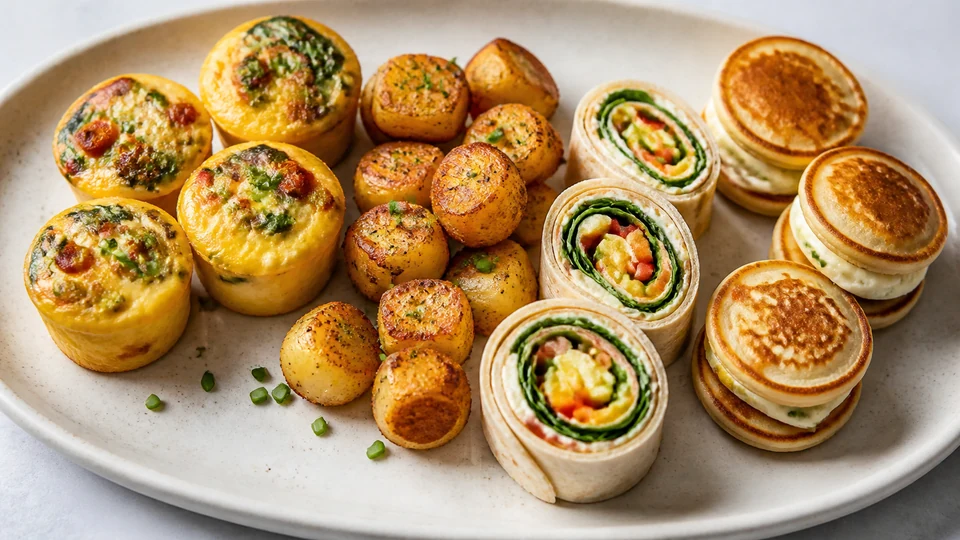

This guide belongs to Breakfast. Savory breakfast finger foods should be easy to pick up, stable for two or three bites, and portioned so guests do not need a knife. Strong options include mini frittatas, filled rolls, small sandwiches, potato cakes, savory muffins, vegetable skewers with a suitable dip, and compact pancake wraps—but only when each uses a tested recipe and a safe holding plan. Design the menu by texture and service: one soft item, one crisp item, one plant-forward choice, and one substantial protein or pulse choice. Keep wet sauces inside controlled layers or on the side, label allergens, and replenish small trays instead of displaying the full batch.
For Savory breakfast finger foods, the actual parent collection is Breakfast. Pancake World connects this exact intent with broader recipe, breakfast, and practical kitchen coverage.
| Guide sections |
|---|
| Choose the route that fits |
| Practical sequence |
| Failure modes and corrections |
| Route-specific diagnostics |
For broader context, continue with American Breakfast: Pancakes, Diner Plates and Brunch.
Choose the route that fits
Egg bites
A validated mini-frittata or egg-muffin recipe creates consistent portions and can carry vegetables or cheese. Cook to the recipe’s endpoint and avoid deep overfilled cups that set unevenly.
Compact sandwiches
Small rolls or toast squares work when fillings are chopped, drained, and spread edge to edge. Secure tall layers and add watery vegetables close to service.
Savory pancake rolls
A flexible pancake can wrap a thin herb, vegetable, tofu, cheese, or meat filling. Cool the pancake enough to prevent steam, keep the roll tight, and slice only after it settles.
Crisp baked bites
Potato cakes, pastry parcels, or savory muffins add contrast without a live frying station. Use a recipe designed for holding and re-crisp in controlled batches if supported.
Practical sequence
- Choose bite count per guest and define the size with one sample before batch work.
- Assign every item a tray, utensil, allergen label, and temperature-control lane.
- Prepare stable fillings first, drain moisture, and cool cooked components as directed.
- Assemble in batches small enough to keep edges clean and portions uniform.
- Refill protected trays and remove food whose safe service window is uncertain.
Failure modes and corrections
- Correction 1: Oversized bites force guests to juggle plates and spill fillings.
- Correction 2: A menu of only soft pastries lacks texture and becomes heavy.
- Correction 3: Skewers and toothpicks create hazards when size, visibility, and disposal are ignored.
- Correction 4: Dips placed behind the food make guests reach across trays and slow the line.
Route-specific diagnostics
Diagnostic 1: egg bites
In a current savory breakfast finger foods batch, inspect this control before changing ingredients or equipment: A validated mini-frittata or egg-muffin recipe creates consistent portions and can carry vegetables or cheese. The observable checkpoint is specific: Cook to the recipe’s endpoint and avoid deep overfilled cups that set unevenly. Write down the vessel or pan, portion, elapsed time, holding condition, and what the center or service line actually looked like. This creates a route-bound record; it does not pretend that an untested result is universal.
Current-batch fix. Oversized bites force guests to juggle plates and spill fillings. Stop the batch at the first safe decision point. Compare the actual result with the selected source or current package direction, isolate one cause, and make one measured correction. If safety, allergen status, or product identity is uncertain, do not rescue the food through guesswork; set it aside and restart from verified inputs.
Next-batch prevention. Begin the next savory breakfast finger foods attempt with this written action: Choose bite count per guest and define the size with one sample before batch work. Keep the successful equipment, quantity, and timing fixed while testing the next variable. A changed brand, appliance, pan, flour, filling, or serving scale is a changed input and must be recorded rather than silently treated as the same batch.
Diagnostic 2: compact sandwiches
In a current savory breakfast finger foods batch, inspect this control before changing ingredients or equipment: Small rolls or toast squares work when fillings are chopped, drained, and spread edge to edge. The observable checkpoint is specific: Secure tall layers and add watery vegetables close to service. Write down the vessel or pan, portion, elapsed time, holding condition, and what the center or service line actually looked like. This creates a route-bound record; it does not pretend that an untested result is universal.
Current-batch fix. A menu of only soft pastries lacks texture and becomes heavy. Stop the batch at the first safe decision point. Compare the actual result with the selected source or current package direction, isolate one cause, and make one measured correction. If safety, allergen status, or product identity is uncertain, do not rescue the food through guesswork; set it aside and restart from verified inputs.
Next-batch prevention. Begin the next savory breakfast finger foods attempt with this written action: Assign every item a tray, utensil, allergen label, and temperature-control lane. Keep the successful equipment, quantity, and timing fixed while testing the next variable. A changed brand, appliance, pan, flour, filling, or serving scale is a changed input and must be recorded rather than silently treated as the same batch.
Diagnostic 3: savory pancake rolls
In a current savory breakfast finger foods batch, inspect this control before changing ingredients or equipment: A flexible pancake can wrap a thin herb, vegetable, tofu, cheese, or meat filling. The observable checkpoint is specific: Cool the pancake enough to prevent steam, keep the roll tight, and slice only after it settles. Write down the vessel or pan, portion, elapsed time, holding condition, and what the center or service line actually looked like. This creates a route-bound record; it does not pretend that an untested result is universal.
Current-batch fix. Skewers and toothpicks create hazards when size, visibility, and disposal are ignored. Stop the batch at the first safe decision point. Compare the actual result with the selected source or current package direction, isolate one cause, and make one measured correction. If safety, allergen status, or product identity is uncertain, do not rescue the food through guesswork; set it aside and restart from verified inputs.
Next-batch prevention. Begin the next savory breakfast finger foods attempt with this written action: Prepare stable fillings first, drain moisture, and cool cooked components as directed. Keep the successful equipment, quantity, and timing fixed while testing the next variable. A changed brand, appliance, pan, flour, filling, or serving scale is a changed input and must be recorded rather than silently treated as the same batch.
Diagnostic 4: crisp baked bites
In a current savory breakfast finger foods batch, inspect this control before changing ingredients or equipment: Potato cakes, pastry parcels, or savory muffins add contrast without a live frying station. The observable checkpoint is specific: Use a recipe designed for holding and re-crisp in controlled batches if supported. Write down the vessel or pan, portion, elapsed time, holding condition, and what the center or service line actually looked like. This creates a route-bound record; it does not pretend that an untested result is universal.
Current-batch fix. Dips placed behind the food make guests reach across trays and slow the line. Stop the batch at the first safe decision point. Compare the actual result with the selected source or current package direction, isolate one cause, and make one measured correction. If safety, allergen status, or product identity is uncertain, do not rescue the food through guesswork; set it aside and restart from verified inputs.
Next-batch prevention. Begin the next savory breakfast finger foods attempt with this written action: Assemble in batches small enough to keep edges clean and portions uniform. Keep the successful equipment, quantity, and timing fixed while testing the next variable. A changed brand, appliance, pan, flour, filling, or serving scale is a changed input and must be recorded rather than silently treated as the same batch.
Batch review before service
For savory breakfast finger foods, review the intended eater, portion count, equipment capacity, and dietary boundary together. Confirm that the article has not turned a planning example into a tested recipe, a label-reading step into a current product claim, or a practical option into a universal ranking. Keep the final decision tied to the exact source list below and to the package or recipe currently in hand.
Storage, service, and safety
Cook egg, meat, and poultry fillings with validated methods and cool them promptly before cold assembly. Keep raw preparation tools away from bread, herbs, and garnishes. Use small serving batches for perishables, mark allergens clearly, and provide separate utensils. Do not refill a used platter by piling fresh food over old pieces.
Connected guides
For the next practical step, compare Breakfast pancake styles, Pantry-staple breakfast plan, and Budget breakfast for a large group.
Frequently asked questions
How many varieties?
Three or four distinct formats usually provide enough choice without overwhelming production. For this savory breakfast finger foods decision, connect the answer to egg bites: A validated mini-frittata or egg-muffin recipe creates consistent portions and can carry vegetables or cheese. Then verify the observable boundary rather than relying on the dish name: Cook to the recipe’s endpoint and avoid deep overfilled cups that set unevenly. Record what was actually used, what remained uncertain, and whether the current batch should proceed, be corrected at a safe checkpoint, or be replaced.
Can they be made ahead?
Some can; use recipe-specific cooling, storage, and reheating instructions. For this savory breakfast finger foods decision, connect the answer to compact sandwiches: Small rolls or toast squares work when fillings are chopped, drained, and spread edge to edge. Then verify the observable boundary rather than relying on the dish name: Secure tall layers and add watery vegetables close to service. Record what was actually used, what remained uncertain, and whether the current batch should proceed, be corrected at a safe checkpoint, or be replaced.
What travels best?
Firm baked bites and sandwiches with low-moisture fillings generally travel more predictably. For this savory breakfast finger foods decision, connect the answer to savory pancake rolls: A flexible pancake can wrap a thin herb, vegetable, tofu, cheese, or meat filling. Then verify the observable boundary rather than relying on the dish name: Cool the pancake enough to prevent steam, keep the roll tight, and slice only after it settles. Record what was actually used, what remained uncertain, and whether the current batch should proceed, be corrected at a safe checkpoint, or be replaced.
How do I include vegans?
Choose a genuinely plant-based item and verify every bread, spread, and contact surface. For this savory breakfast finger foods decision, connect the answer to crisp baked bites: Potato cakes, pastry parcels, or savory muffins add contrast without a live frying station. Then verify the observable boundary rather than relying on the dish name: Use a recipe designed for holding and re-crisp in controlled batches if supported. Record what was actually used, what remained uncertain, and whether the current batch should proceed, be corrected at a safe checkpoint, or be replaced.
Explore related Pancakes World guidance on American Pancakes, Maple Syrup, and Maple Syrup Pancakes.
Sources and editorial references
- USDA FSIS, Shell Eggs from Farm to Table —
https://www.fsis.usda.gov/food-safety/safe-food-handling-and-preparation/eggs/shell-eggs-farm-table - USDA FSIS, Leftovers and Food Safety —
https://www.fsis.usda.gov/food-safety/safe-food-handling-and-preparation/food-safety-basics/leftovers-and-food-safety