Sausage gravy breakfast pizza
At Pancakes World, the editorial platform presents this evidence-bounded guide for the exact route intent.
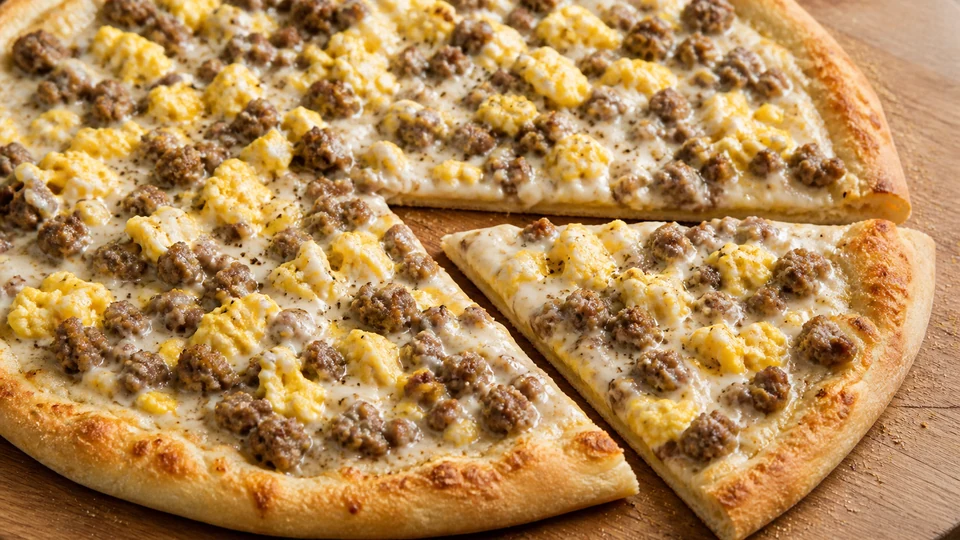

This guide belongs to Breakfast. Sausage gravy breakfast pizza works when its three moisture systems are controlled separately: a fully cooked crust, a thick spoonable gravy, and toppings that are cooked and drained before assembly. Use a tested pizza or flatbread base and a validated sausage-gravy recipe rather than inventing raw-meat timing on the crust. Prepare the gravy so it coats a spoon without running, cool it slightly, spread a restrained layer, add cooked crumbled sausage and optional egg or cheese components, then bake until the crust and center meet the recipe’s endpoint. Rest briefly before cutting. The goal is a crisp enough base beneath a creamy topping, not the heaviest possible layer.
For Sausage gravy breakfast pizza, the actual parent collection is Breakfast. Pancake World connects this exact intent with broader recipe, breakfast, and practical kitchen coverage.
| Guide sections |
|---|
| Choose the route that fits |
| Practical sequence |
| Failure modes and corrections |
| Route-specific diagnostics |
For broader context, continue with American Breakfast: Pancakes, Diner Plates and Brunch.
Choose the route that fits
Crust choice
A par-baked crust offers more resistance to wet gravy than soft raw dough under a crowded topping. Use the selected crust recipe’s temperature and timing rather than borrowing numbers from the gravy.
Gravy consistency
Cook flour and fat according to a tested gravy method, then add liquid gradually until the sauce remains spreadable. A gravy that pours like soup will migrate to the rim and soften the center.
Sausage preparation
Cook sausage separately, break it into even pieces, drain excess fat as the recipe directs, and keep raw-meat tools separate. Do not rely on the final pizza bake to correct uncertain sausage cooking.
Egg option
If adding egg, choose a tested method that defines yolk and white doneness for the intended diners. For a crowd or higher-risk guests, a fully cooked scrambled layer is easier to verify than exposed eggs.
Practical sequence
- Choose compatible tested recipes for crust and gravy and write a shared oven timeline.
- Cook sausage safely, reserve the required fat only if the gravy method uses it, and clean the raw-meat area.
- Par-bake the base when directed and cool gravy until it spreads without soaking in immediately.
- Assemble lightly, leaving a border and distributing toppings in small pieces.
- Bake to the validated endpoint, rest on a rack or board, then cut with a clean tool.
Failure modes and corrections
- Correction 1: Thin gravy pools under the center and prevents the crust from crisping.
- Correction 2: Large sausage chunks make slices difficult to cut and can hide uneven reheating.
- Correction 3: Too much cheese can trap steam over an already moist sauce.
- Correction 4: Cutting immediately pushes hot gravy off the base before it settles.
Route-specific diagnostics
Diagnostic 1: crust choice
In a current sausage gravy breakfast pizza batch, inspect this control before changing ingredients or equipment: A par-baked crust offers more resistance to wet gravy than soft raw dough under a crowded topping. The observable checkpoint is specific: Use the selected crust recipe’s temperature and timing rather than borrowing numbers from the gravy. Write down the vessel or pan, portion, elapsed time, holding condition, and what the center or service line actually looked like. This creates a route-bound record; it does not pretend that an untested result is universal.
Current-batch fix. Thin gravy pools under the center and prevents the crust from crisping. Stop the batch at the first safe decision point. Compare the actual result with the selected source or current package direction, isolate one cause, and make one measured correction. If safety, allergen status, or product identity is uncertain, do not rescue the food through guesswork; set it aside and restart from verified inputs.
Next-batch prevention. Begin the next sausage gravy breakfast pizza attempt with this written action: Choose compatible tested recipes for crust and gravy and write a shared oven timeline. Keep the successful equipment, quantity, and timing fixed while testing the next variable. A changed brand, appliance, pan, flour, filling, or serving scale is a changed input and must be recorded rather than silently treated as the same batch.
Diagnostic 2: gravy consistency
In a current sausage gravy breakfast pizza batch, inspect this control before changing ingredients or equipment: Cook flour and fat according to a tested gravy method, then add liquid gradually until the sauce remains spreadable. The observable checkpoint is specific: A gravy that pours like soup will migrate to the rim and soften the center. Write down the vessel or pan, portion, elapsed time, holding condition, and what the center or service line actually looked like. This creates a route-bound record; it does not pretend that an untested result is universal.
Current-batch fix. Large sausage chunks make slices difficult to cut and can hide uneven reheating. Stop the batch at the first safe decision point. Compare the actual result with the selected source or current package direction, isolate one cause, and make one measured correction. If safety, allergen status, or product identity is uncertain, do not rescue the food through guesswork; set it aside and restart from verified inputs.
Next-batch prevention. Begin the next sausage gravy breakfast pizza attempt with this written action: Cook sausage safely, reserve the required fat only if the gravy method uses it, and clean the raw-meat area. Keep the successful equipment, quantity, and timing fixed while testing the next variable. A changed brand, appliance, pan, flour, filling, or serving scale is a changed input and must be recorded rather than silently treated as the same batch.
Diagnostic 3: sausage preparation
In a current sausage gravy breakfast pizza batch, inspect this control before changing ingredients or equipment: Cook sausage separately, break it into even pieces, drain excess fat as the recipe directs, and keep raw-meat tools separate. The observable checkpoint is specific: Do not rely on the final pizza bake to correct uncertain sausage cooking. Write down the vessel or pan, portion, elapsed time, holding condition, and what the center or service line actually looked like. This creates a route-bound record; it does not pretend that an untested result is universal.
Current-batch fix. Too much cheese can trap steam over an already moist sauce. Stop the batch at the first safe decision point. Compare the actual result with the selected source or current package direction, isolate one cause, and make one measured correction. If safety, allergen status, or product identity is uncertain, do not rescue the food through guesswork; set it aside and restart from verified inputs.
Next-batch prevention. Begin the next sausage gravy breakfast pizza attempt with this written action: Par-bake the base when directed and cool gravy until it spreads without soaking in immediately. Keep the successful equipment, quantity, and timing fixed while testing the next variable. A changed brand, appliance, pan, flour, filling, or serving scale is a changed input and must be recorded rather than silently treated as the same batch.
Diagnostic 4: egg option
In a current sausage gravy breakfast pizza batch, inspect this control before changing ingredients or equipment: If adding egg, choose a tested method that defines yolk and white doneness for the intended diners. The observable checkpoint is specific: For a crowd or higher-risk guests, a fully cooked scrambled layer is easier to verify than exposed eggs. Write down the vessel or pan, portion, elapsed time, holding condition, and what the center or service line actually looked like. This creates a route-bound record; it does not pretend that an untested result is universal.
Current-batch fix. Cutting immediately pushes hot gravy off the base before it settles. Stop the batch at the first safe decision point. Compare the actual result with the selected source or current package direction, isolate one cause, and make one measured correction. If safety, allergen status, or product identity is uncertain, do not rescue the food through guesswork; set it aside and restart from verified inputs.
Next-batch prevention. Begin the next sausage gravy breakfast pizza attempt with this written action: Assemble lightly, leaving a border and distributing toppings in small pieces. Keep the successful equipment, quantity, and timing fixed while testing the next variable. A changed brand, appliance, pan, flour, filling, or serving scale is a changed input and must be recorded rather than silently treated as the same batch.
Batch review before service
For sausage gravy breakfast pizza, review the intended eater, portion count, equipment capacity, and dietary boundary together. Confirm that the article has not turned a planning example into a tested recipe, a label-reading step into a current product claim, or a practical option into a universal ranking. Keep the final decision tied to the exact source list below and to the package or recipe currently in hand.
Storage, service, and safety
Keep raw sausage separate from crust, cheese, herbs, and cooked gravy. Wash hands and sanitize tools after raw-meat contact. Use a thermometer and the selected validated recipe for sausage and any egg component. Refrigerate leftover slices promptly in shallow containers, then reheat until the center is safely hot; discard food left at an unsafe temperature for an uncertain period.
Connected guides
For the next practical step, compare Breakfast pancake styles, Pantry-staple breakfast plan, and Budget breakfast for a large group.
Frequently asked questions
Can I use biscuits as the base?
Use a tested biscuit-pizza or casserole formula because thickness and bake time change substantially. For this sausage gravy breakfast pizza decision, connect the answer to crust choice: A par-baked crust offers more resistance to wet gravy than soft raw dough under a crowded topping. Then verify the observable boundary rather than relying on the dish name: Use the selected crust recipe’s temperature and timing rather than borrowing numbers from the gravy. Record what was actually used, what remained uncertain, and whether the current batch should proceed, be corrected at a safe checkpoint, or be replaced.
Why did the crust stay pale?
The base may be overloaded, under-par-baked, or shielded by wet sauce. For this sausage gravy breakfast pizza decision, connect the answer to gravy consistency: Cook flour and fat according to a tested gravy method, then add liquid gradually until the sauce remains spreadable. Then verify the observable boundary rather than relying on the dish name: A gravy that pours like soup will migrate to the rim and soften the center. Record what was actually used, what remained uncertain, and whether the current batch should proceed, be corrected at a safe checkpoint, or be replaced.
Can the gravy be made ahead?
Only with prompt cooling, refrigeration, and controlled reheating before assembly. For this sausage gravy breakfast pizza decision, connect the answer to sausage preparation: Cook sausage separately, break it into even pieces, drain excess fat as the recipe directs, and keep raw-meat tools separate. Then verify the observable boundary rather than relying on the dish name: Do not rely on the final pizza bake to correct uncertain sausage cooking. Record what was actually used, what remained uncertain, and whether the current batch should proceed, be corrected at a safe checkpoint, or be replaced.
What cuts cleanest?
A short rest, restrained sauce, and a sharp wheel or chef’s knife help preserve the layers. For this sausage gravy breakfast pizza decision, connect the answer to egg option: If adding egg, choose a tested method that defines yolk and white doneness for the intended diners. Then verify the observable boundary rather than relying on the dish name: For a crowd or higher-risk guests, a fully cooked scrambled layer is easier to verify than exposed eggs. Record what was actually used, what remained uncertain, and whether the current batch should proceed, be corrected at a safe checkpoint, or be replaced.
Explore related Pancakes World guidance on American Pancakes, Maple Syrup, and Maple Syrup Pancakes.
Sources and editorial references
- USDA FSIS, Shell Eggs from Farm to Table —
https://www.fsis.usda.gov/food-safety/safe-food-handling-and-preparation/eggs/shell-eggs-farm-table - USDA FSIS, Leftovers and Food Safety —
https://www.fsis.usda.gov/food-safety/safe-food-handling-and-preparation/food-safety-basics/leftovers-and-food-safety