Sausage breakfast pizza
At Pancakes World, the editorial platform presents this evidence-bounded guide for the exact route intent.
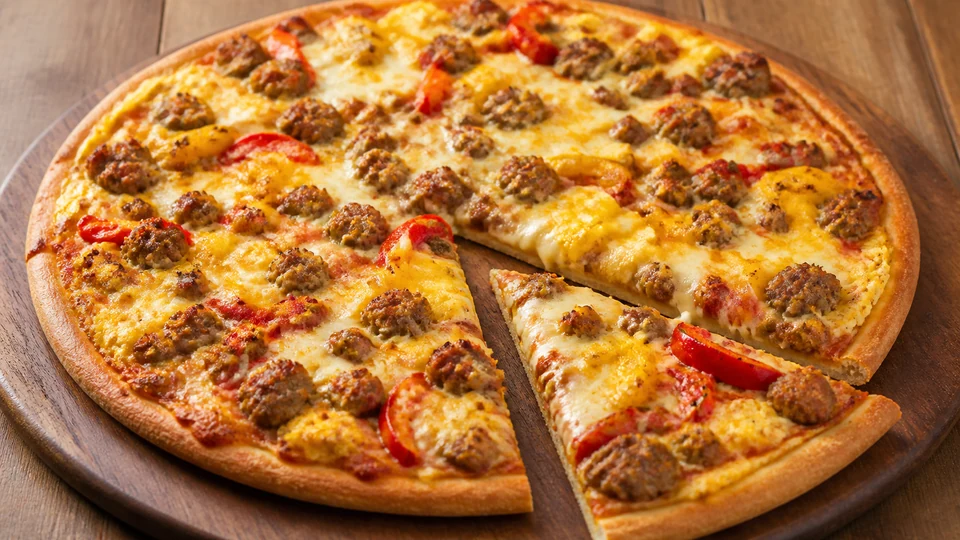

This guide belongs to Breakfast. A sausage breakfast pizza needs a crust matched to its bake, sausage cooked through by a safe method, a restrained sauce or egg layer, and toppings dry enough that the centre can set before the rim overbrowns. Build in thin, even layers and use one complete pizza formula instead of combining timings from unrelated recipes.
This is a construction and diagnosis guide, not a tested Pancake World pizza formula or a claim about a restaurant product.
| Guide sections |
|---|
| Balance crust, sausage and moisture |
| Assemble a pizza that can bake through |
| Diagnose a soggy centre or overdone rim |
| Food safety, labels and claim boundaries |
For broader context, continue with American Breakfast: Pancakes, Diner Plates and Brunch.
Balance crust, sausage and moisture
A practical plan can be built around yeast-dough base, flatbread base and biscuit-style crust, with sausage crumble and egg layer added only when they serve a defined role. The remaining decisions concern control, service and repeatability. Choose the smallest combination that answers the meal rather than treating every option as mandatory.
Choose a crust that fits the morning
Yeast dough, prepared flatbread and biscuit-style crust solve different scheduling problems. Yeast dough requires fermentation and shaping; a prepared base has package directions; biscuit dough has its own leavening and bake depth. Do not merge one crust's timing with another topping method. Decide whether the crust needs a pre-bake before adding wet ingredients. The centre of a sheet pan is the critical location, because it receives less edge heat and often carries the deepest topping layer.
Cook and portion sausage deliberately
Follow the sausage product's complete safe-cooking route. Crumble it into pieces small enough to distribute, manage rendered fat, and cool it appropriately before it meets egg or dough. Large clumps create uneven load and an unreliable centre check. Spread sausage with visible gaps rather than making a sealed meat layer. The pizza should still allow steam to escape from sauce, egg and vegetables.
Pick one moisture system
White sauce, tomato sauce, scrambled egg and poured egg are not interchangeable. Use the one supported by the complete formula and keep its amount restrained. Pre-cook or drain mushrooms, spinach, peppers and other watery toppings. Cheese adds more moisture and fat as it melts; it should finish the structure, not hide an unset crust. Whole eggs on top need a method that coordinates their set with the base, rather than an improvised hope that both finish together.
Cut only after the centre passes
Inspect the underside at the centre, the egg layer if present, and the thickest sausage piece. A browned rim cannot validate those points. Allow the supported resting interval so cheese and sauce do not run into every cut. Use a firm cutting board and decide the slice size before service. For holding, avoid a tight cover that traps steam against the crust. Cool leftovers promptly and reheat only through an evidence-supported method.
Map the oven claim
Record the rack, preheat, pan and temperature required by the selected crust. If potatoes, vegetables or another breakfast dish need the oven at the same time, decide which item owns the setting. Do not average two temperatures or keep assembled pizza waiting while another tray finishes. A cold side or stovetop component can remove the conflict. The crust method controls the pizza schedule.
Assemble from dry to wet awareness
Place the supported sauce or egg layer in a measured amount, distribute sausage, add prepared vegetables, and finish with cheese only as the formula intends. Watch the centre for pooled liquid. A topping should not form an opaque blanket that prevents inspection. Keep the rim clear enough to handle and leave room for expansion. The thickest central slice is the quality-control piece.
Hold and reheat without false promises
If slices must wait briefly, use the method's supported holding path and avoid trapping steam against the underside. For leftovers, cool promptly in manageable portions. Reheat one slice using the documented method and inspect both crust and topping centre before scaling. The article cannot promise that every crust returns to fresh-baked texture after refrigeration.
A centre-slice acceptance check
Choose the slice that passed through the deepest sauce, egg or vegetable layer. Lift it and inspect whether the crust supports the topping without a wet raw line. Open the thickest sausage piece and verify the required safe endpoint. Let the slice stand briefly, then check whether liquid pools under it. Record the pan, crust source, pre-bake decision, topping order and centre result. If the rim is acceptable but the centre fails, correct depth or moisture before changing decorative toppings. If the sausage fails, the pizza is not serviceable. This centre-slice protocol gives the next batch a specific target and prevents the most attractive edge piece from becoming misleading evidence.
Additional route decisions
Yeast-dough base
Choose a complete dough and proofing method that fits the morning schedule.
Flatbread base
Use a source written for the chosen flatbread so its first and second bake are coordinated.
Biscuit-style crust
Do not swap it into a yeast-pizza timing without a tested conversion.
Sausage crumble
Cook safely, drain as appropriate and distribute small pieces across the surface.
Egg layer
Use a recipe that governs whether egg is scrambled, poured or added whole.
White sauce
Apply only the quantity the complete formula supports so the centre is not flooded.
Vegetable topping
Pre-cook or drain high-moisture vegetables before assembly.
Cheese coverage
Leave gaps for steam and avoid using cheese to hide an unset base.
Sheet-pan service
Plan cutting and holding so the crisp edge is not trapped under foil.
Tester slice
Inspect the centre crust, egg and sausage before serving the whole tray.
Assemble a pizza that can bake through
The sequence below ties the first control to yeast-dough base, the equipment decision to biscuit-style crust, and the service check to tester slice. It is intentionally narrower than a universal cooking timetable.
1. Define the result
For yeast-dough base, write the intended texture, serving format and dietary boundary before shopping.
2. Verify the inputs
For flatbread base, read the complete formula and current package labels, then record every consequential variation.
3. Stage the equipment
For biscuit-style crust, reserve the pan, oven, counter, cooling space and serving utensils the method actually needs.
4. Prepare one control
For sausage crumble, keep the first portion close to the source so a later correction has a clear baseline.
5. Observe before changing
For egg layer, note spread, moisture, release, colour and centre condition rather than guessing from the clock.
6. Serve and record
For white sauce, protect safe handling, label the finished components and write one useful note for the next batch.
Diagnose a soggy centre or overdone rim
Soggy centre
Reduce wet topping load and verify the crust's pre-bake requirement.
Burnt rim
Shield or adjust only as the selected method permits while the centre finishes.
Loose toppings
Use smaller pieces and a thinner, more deliberate layer.
Undercooked sausage
Remove the food from service and follow safe cooking guidance.
Greasy surface
Manage rendered fat before assembly rather than blotting after every slice.
Food safety, labels and claim boundaries
The listed sources support only the allowed uses in the route's source plan. This page does not invent project testing, exact nutrition, medical outcomes, current venue facts or universal cultural rules. Where sausage breakfast pizza requires a complete formula, that formula remains the authority for quantities, timing, yield and equipment.
A better next batch
Record the exact condition of yeast-dough base, the preparation of flatbread base, the equipment used for biscuit-style crust, and the service result of tester slice. Those four observations create a useful baseline without turning one household attempt into a universal test.
If the main defect was soggy centre, repeat the complete method with only the bounded correction recorded above. If the result instead showed burnt rim, return to the preparation stage that creates that symptom. Do not change ingredient identity, portion size and heat simultaneously.
Verify the result before service
Review white sauce first because it is the control that commits the remaining batch. Apply its stated action—apply only the quantity the complete formula supports so the centre is not flooded—and compare the result with vegetable topping. The second element matters because pre-cook or drain high-moisture vegetables before assembly. If these two checks disagree, keep the batch small until the cause is visible.
Next inspect cheese coverage in the condition in which it will actually be served. The route plan says to leave gaps for steam and avoid using cheese to hide an unset base. Do that before adding sheet-pan service, since the latter is intended to plan cutting and holding so the crisp edge is not trapped under foil. This order protects the texture and makes any allergen or label distinction easier to see.
Finish with tester slice. Its purpose is to inspect the centre crust, egg and sausage before serving the whole tray. Check the thickest or most heavily loaded portion, not the most attractive one, and compare it with the two leading warning signs: soggy centre and burnt rim. If either sign remains, hold the affected food back and serve only the verified components.
Frequently asked questions
Must sausage be pre-cooked?
Follow the complete recipe and safety instructions; do not assume the pizza bake corrects raw filling.
Can I use prepared crust?
Yes when its package directions and the topping formula are compatible.
Can eggs go directly on top?
Only through a method that produces a properly set egg and cooked base together.
Can I reheat slices?
Use a supported cooling and reheating path and check the thickest centre.
What sauce is best?
Choose by moisture and flavour role, not by a universal breakfast-pizza rule.
Contextual Pancake World guides
- Breakfast Pancakes: Styles, Plates and Munich Context
- American Breakfast: Pancakes, Diner Plates and Brunch
- Fast Breakfast: A Practical Planning Guide
Explore related Pancakes World guidance on American Pancakes, Maple Syrup, and Maple Syrup Pancakes.
Sources and editorial references
- U.S. Food and Drug Administration: Handling Flour Safely —
https://www.fda.gov/consumers/consumer-updates/handling-flour-safely-what-you-need-know - U.S. Food and Drug Administration: Food Allergies —
https://www.fda.gov/food/nutrition-food-labeling-and-critical-foods/food-allergies - USDA FSIS: Leftovers and Food Safety —
https://www.fsis.usda.gov/food-safety/safe-food-handling-and-preparation/food-safety-basics/leftovers-and-food-safety