Russian breakfast
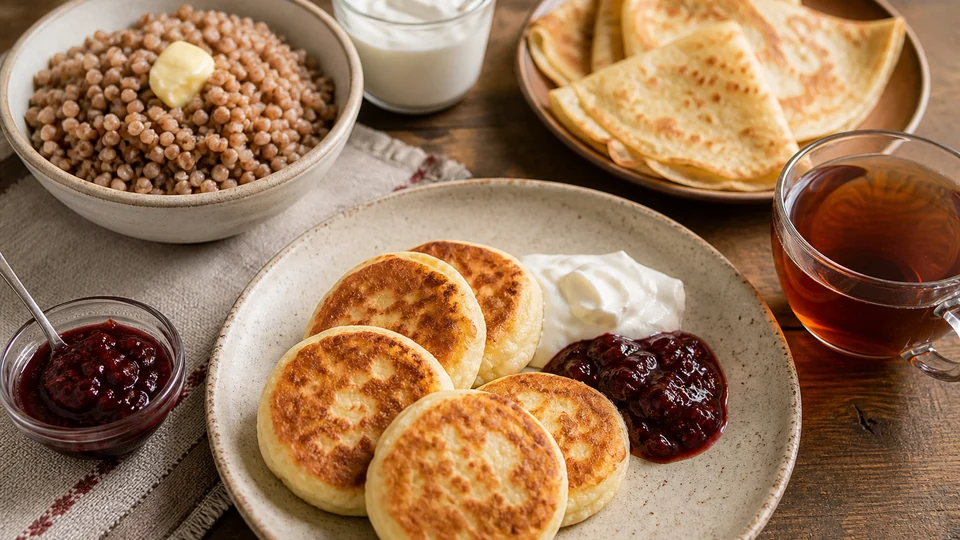
At Pancakes World, russian breakfast is not one fixed plate. A useful introduction can include kasha, syrniki, blini or oladi, eggs, rye bread, dairy, preserves, tea, and savoury leftovers, but each dish has its own regional and household context. Choose one named dish and follow a complete source-led method rather than treating the list as interchangeable recipes. See the editorial platform for the wider editorial collection.
Use Breakfast; Anti inflammatory breakfast; Top 10 breakfast recipes; 5 minute breakfast recipes Indian to move from this exact question to the relevant hub and neighbouring Stage 012 guides without relying on a generic parent label.
| Guide sections |
|---|
| Direct answer and scope |
| Formats that fit the intent |
| Build a controlled workflow |
| Current-batch troubleshooting |
For broader context, continue with World Pancakes: Dishes and Traditions.
Direct answer and scope
This overview avoids calling one household menu universal and does not reproduce an unverified traditional recipe. Ingredient meanings, dairy products and serving customs vary across regions and sources. Start by naming the dish or technique, the guest and ingredient boundaries, the available equipment, and the point at which the result will be judged. That prevents an attractive idea list from becoming an unsupported recipe, nutrition promise, cultural generalisation, or project-test claim.
Formats that fit the intent
Kasha as a grain breakfast
Name the grain, liquid and source method because buckwheat, semolina, oats and other porridges do not share one procedure.
Syrniki as a curd-cheese dish
Use the exact cheese type and complete formula; moisture changes shaping and pan behaviour.
Blini or oladi
Preserve the named batter style instead of using both words as generic synonyms for every pancake.
Eggs with rye bread
Treat this as a simple household format, not proof of a national standard.
Tea, preserves and dairy
Serve packaged dairy and preserves with labels and avoid inventing one compulsory accompaniment.
A savoury leftover plate
Reheat stored foods safely and identify the actual dish rather than calling all leftovers traditional.
Build a controlled workflow
- Select one named dish rather than a national sampler.
- Find a complete source-led method.
- Verify ingredient forms and transliterations.
- Prepare accompaniments separately.
- Cook the chosen dish to its own cues.
- Describe the result as one version, not the definitive version.
The sequence should leave one baseline that can be described in plain language. Note flow, spread, surface moisture, edge set, centre texture, holding condition, or service behaviour as relevant to the chosen format. Avoid adding invented times, yields or temperatures when the complete source does not establish them.
Current-batch troubleshooting
Syrniki spread in the pan
Review cheese moisture and the source formula before adding unmeasured flour.
Porridge texture is wrong
Confirm the grain form and its specific liquid method.
Pancake names are being mixed
Return to the source's exact dish name and method.
The plate is presented as universal
State its household or source context.
Dairy suitability is assumed
Check the actual product and guest requirements.
Prevent the same problem next time
- Record the source spelling and dish name.
- Keep cultural description narrower than the evidence.
- Do not translate one dairy product as an exact substitute without support.
- Preserve the complete cooking method for the chosen grain or batter.
Prevention is useful only when the record is specific enough to repeat. Keep product names and ingredient forms, label checks, pan or vessel size, portion method, sequence, and observable result together. A later batch can then change one plausible cause while preserving the rest.
When introducing a named dish, record its spelling, the source's ingredient terminology, and whether the method describes one household, region, or publisher. This small provenance note prevents kasha, syrniki, blini, and oladi from being flattened into generic categories and keeps the cultural description narrower than the available evidence.
Safety and evidence boundary
Do not taste raw flour batter or dough. Check current packaged-food labels for allergens and use separate tools where cross-contact matters. Egg dishes, meat components and leftovers need their own applicable temperature, cooling, refrigeration and reheating controls. The authoritative references below support those boundaries; they do not convert this article into medical advice, a tested formula, a guaranteed outcome, or a universal cultural definition.
Frequently asked questions
Are blini and oladi the same?
They are not safe to treat as universal synonyms; follow the terminology and formula used by the chosen source.
Is kasha always buckwheat?
The word can be used broadly for porridge, so name the actual grain.
Must Russian breakfast be sweet?
No. Sweet and savoury household formats both occur, but this page does not impose one menu.
Does this page provide an authentic recipe?
No. It is a source-led orientation and directs the reader to complete named methods.
Explore related Pancakes World guidance on American Pancakes, American Breakfast: Pancakes, Diner Plates and Brunch, and Maple Syrup.
Sources and editorial references
- U.S. Food and Drug Administration — Food Allergies —
https://www.fda.gov/food/nutrition-food-labeling-and-critical-foods/food-allergies - FoodSafety.gov — Safe Minimum Internal Temperatures —
https://www.foodsafety.gov/food-safety-charts/safe-minimum-internal-temperatures - USDA FSIS — Leftovers and Food Safety —
https://www.fsis.usda.gov/food-safety/safe-food-handling-and-preparation/food-safety-basics/leftovers-and-food-safety - U.S. Food and Drug Administration — Handling Flour Safely —
https://www.fda.gov/food/buy-store-serve-safe-food/handling-flour-safely-what-you-need-know