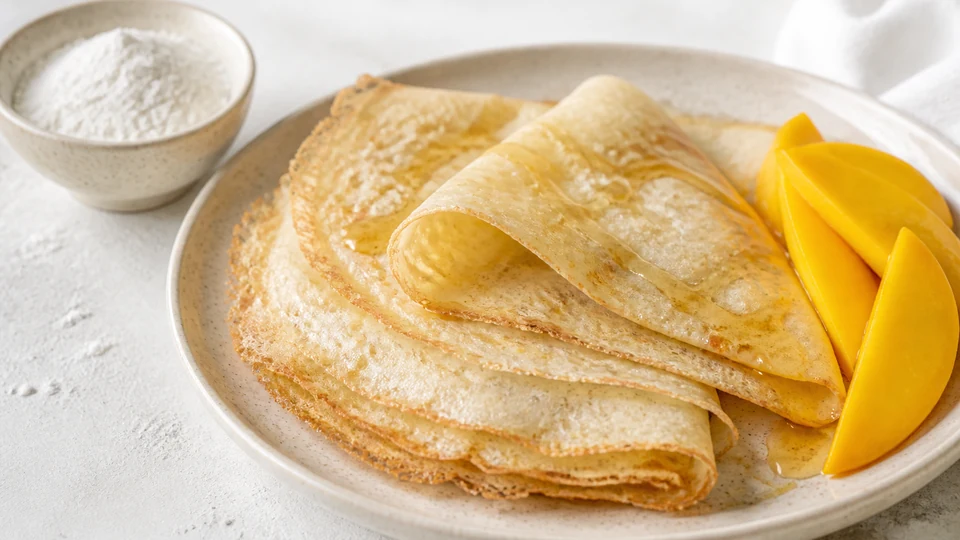
Rice flour pancakes without baking powder

Rice flour pancakes without baking powder prepared for Pancakes World.

Rice-flour pancakes without baking powder need both a binder strategy and a deliberate structure choice, such as eggs or egg replacer within a tested formula, whipped foam, yeast, or a thin unleavened style. Rice flour does not automatically behave like wheat flour, and omitting baking powder from an unrelated recipe can create a brittle or gummy result. See Pancake World for the wider editorial collection.

Use Pancake Science; Pancake art batter; Pancake flour mix; Pancake batter without baking powder to move from this exact question to the relevant hub and neighbouring Stage 012 guides without relying on a generic parent label.

Direct answer and scope

No one-to-one rice-flour substitution or universal leavener replacement is supported. Product grind, starch blend, binder and hydration all matter. Start by naming the dish or technique, the guest and ingredient boundaries, the available equipment, and the point at which the result will be judged. That prevents an attractive idea list from becoming an unsupported recipe, nutrition promise, cultural generalisation, or project-test claim.

Formats that fit the intent

Thin rice-flour pancake

Use a complete formula designed for flexibility rather than expecting tall lift.

Whipped-egg rice pancake

Preserve foam and binder proportions from the source.

Yeasted rice batter

Follow fermentation and food-storage directions exactly.

Rice-flour blend pancake

Name every starch or flour in the blend instead of crediting rice flour alone.

Commercial gluten-free mix

Inspect hidden baking powder, soda, gums and allergens.

Small control batch

Record flour brand or grind, rest, ribbon, spread and cooled texture.

Build a controlled workflow

  1. Choose the target height and flexibility.
  2. Select a complete rice-flour formula without baking powder.
  3. Record binder and starch components.
  4. Follow its rest and mixing sequence.
  5. Cook a small diagnostic portion.
  6. Judge after cooling before selecting one next variable.

For Rice flour pancakes without baking powder, apply this boundary to the page's exact ingredients and method. The sequence should leave one baseline that can be described in plain language. Note flow, spread, surface moisture, edge set, centre texture, holding condition, or service behaviour as relevant to the chosen format. Avoid adding invented times, yields or temperatures when the complete source does not establish them.

Current-batch troubleshooting

Edges crack

Review binder, hydration and turning point rather than adding several ingredients.

The centre feels gummy

Check portion thickness, rest and cook-through.

Batter settles

Stir only as the formula allows and record elapsed time.

The pancake sticks

Review pan preparation and set before changing flour.

A mix unexpectedly rises

Check whether leavener is already included.

Prevent the same problem next time

For Rice flour pancakes without baking powder, apply this boundary to the page's exact ingredients and method. Prevention is useful only when the record is specific enough to repeat. Keep product names and ingredient forms, label checks, pan or vessel size, portion method, sequence, and observable result together. A later batch can then change one plausible cause while preserving the rest.

Record whether the rice product is a single flour or a blend containing starches, gums, or another flour. Then name the binder and intended structure system separately. This makes a cracked edge, settled batter, or gummy centre traceable to a defined formula instead of being blamed on rice flour as a universal category.

Safety and evidence boundary

For Rice flour pancakes without baking powder, apply this boundary to the page's exact ingredients and method. Do not taste raw flour batter or dough. Check current packaged-food labels for allergens and use separate tools where cross-contact matters. Egg dishes, meat components and leftovers need their own applicable temperature, cooling, refrigeration and reheating controls. The authoritative references below support those boundaries; they do not convert this article into medical advice, a tested formula, a guaranteed outcome, or a universal cultural definition.

Frequently asked questions

Can rice flour replace wheat flour one for one?

No universal replacement is accepted here.

Do eggs replace baking powder?

Eggs can provide binding and foam in a designed formula, but they are not a universal equivalent.

Why is the centre gummy?

Thickness, starch blend, hydration and cook-through are separate variables to check.

Is rice flour automatically gluten-free?

The ingredient may be, but packaged-product and kitchen cross-contact status still require verification.

Identify the rice-flour system

For Rice flour pancakes without baking powder, this decision starts with a concrete method: record the grind, whether it is white or brown rice flour, and whether the package is a flour or a starch-containing blend. Write the relevant product, quantity, equipment, and serving target beside the recipe before beginning. That record keeps the method tied to this batch instead of turning one observation into a universal rule. It also exposes any unsupported substitution early, when the cook can return to the complete formula rather than improvising after heat or mixing has already changed the ingredients.

The main avoidable error at this point is treating every rice product as functionally identical. Change only one variable when the first test reveals a problem, and keep a reference portion whenever practical. Compare the two samples at the same temperature and stage of cooling. This controlled comparison matters for Rice flour pancakes without baking powder because several different causes can create a similar surface appearance while requiring opposite corrections in the next batch.

Use an observable endpoint instead of confidence alone: the formula notes should make the exact package reproducible for the next batch. Record that cue in plain language along with the pan, portion, and elapsed sequence; exact minutes are secondary because equipment and ingredient temperature vary. If the cue is absent, stop and identify the most plausible upstream cause before continuing the full batch. The result is a specific, repeatable adjustment rather than a chain of compensating changes that hides the original fault.

Keep a tested binder

For Rice flour pancakes without baking powder, this decision starts with a concrete method: use the egg, starch, seed gel, or other binder named by the complete recipe. Write the relevant product, quantity, equipment, and serving target beside the recipe before beginning. That record keeps the method tied to this batch instead of turning one observation into a universal rule. It also exposes any unsupported substitution early, when the cook can return to the complete formula rather than improvising after heat or mixing has already changed the ingredients.

The main avoidable error at this point is removing both wheat structure and the replacement binder. Change only one variable when the first test reveals a problem, and keep a reference portion whenever practical. Compare the two samples at the same temperature and stage of cooling. This controlled comparison matters for Rice flour pancakes without baking powder because several different causes can create a similar surface appearance while requiring opposite corrections in the next batch.

Use an observable endpoint instead of confidence alone: a cooled pancake should lift from the plate and fold or cut without crumbling apart. Record that cue in plain language along with the pan, portion, and elapsed sequence; exact minutes are secondary because equipment and ingredient temperature vary. If the cue is absent, stop and identify the most plausible upstream cause before continuing the full batch. The result is a specific, repeatable adjustment rather than a chain of compensating changes that hides the original fault.

Measure hydration by weight

For Rice flour pancakes without baking powder, this decision starts with a concrete method: add the formula's liquid accurately and observe how the batter changes during only its stated rest. Write the relevant product, quantity, equipment, and serving target beside the recipe before beginning. That record keeps the method tied to this batch instead of turning one observation into a universal rule. It also exposes any unsupported substitution early, when the cook can return to the complete formula rather than improvising after heat or mixing has already changed the ingredients.

The main avoidable error at this point is pouring in repeated splashes before rice flour has hydrated. Change only one variable when the first test reveals a problem, and keep a reference portion whenever practical. Compare the two samples at the same temperature and stage of cooling. This controlled comparison matters for Rice flour pancakes without baking powder because several different causes can create a similar surface appearance while requiring opposite corrections in the next batch.

Use an observable endpoint instead of confidence alone: the rested batter should spread predictably without separating into water and sediment. Record that cue in plain language along with the pan, portion, and elapsed sequence; exact minutes are secondary because equipment and ingredient temperature vary. If the cue is absent, stop and identify the most plausible upstream cause before continuing the full batch. The result is a specific, repeatable adjustment rather than a chain of compensating changes that hides the original fault.

Select a non-powder structure method

For Rice flour pancakes without baking powder, this decision starts with a concrete method: choose whipped egg, yeast, or a deliberately thin unleavened style that was designed for rice flour. Write the relevant product, quantity, equipment, and serving target beside the recipe before beginning. That record keeps the method tied to this batch instead of turning one observation into a universal rule. It also exposes any unsupported substitution early, when the cook can return to the complete formula rather than improvising after heat or mixing has already changed the ingredients.

The main avoidable error at this point is bolting a random lift technique onto an unrelated wheat recipe. Change only one variable when the first test reveals a problem, and keep a reference portion whenever practical. Compare the two samples at the same temperature and stage of cooling. This controlled comparison matters for Rice flour pancakes without baking powder because several different causes can create a similar surface appearance while requiring opposite corrections in the next batch.

Use an observable endpoint instead of confidence alone: the structure system should be explicit enough to diagnose if the first pancake fails. Record that cue in plain language along with the pan, portion, and elapsed sequence; exact minutes are secondary because equipment and ingredient temperature vary. If the cue is absent, stop and identify the most plausible upstream cause before continuing the full batch. The result is a specific, repeatable adjustment rather than a chain of compensating changes that hides the original fault.

Control batter spread

For Rice flour pancakes without baking powder, this decision starts with a concrete method: stir gently if the formula expects settling, portion with the same tool, and shape only before the edge sets. Write the relevant product, quantity, equipment, and serving target beside the recipe before beginning. That record keeps the method tied to this batch instead of turning one observation into a universal rule. It also exposes any unsupported substitution early, when the cook can return to the complete formula rather than improvising after heat or mixing has already changed the ingredients.

The main avoidable error at this point is pressing a partly cooked rice-flour pancake flat. Change only one variable when the first test reveals a problem, and keep a reference portion whenever practical. Compare the two samples at the same temperature and stage of cooling. This controlled comparison matters for Rice flour pancakes without baking powder because several different causes can create a similar surface appearance while requiring opposite corrections in the next batch.

Use an observable endpoint instead of confidence alone: each portion should reach a consistent diameter without tearing its developing surface. Record that cue in plain language along with the pan, portion, and elapsed sequence; exact minutes are secondary because equipment and ingredient temperature vary. If the cue is absent, stop and identify the most plausible upstream cause before continuing the full batch. The result is a specific, repeatable adjustment rather than a chain of compensating changes that hides the original fault.

Use moderate, stable heat

For Rice flour pancakes without baking powder, this decision starts with a concrete method: preheat the pan, grease as directed, and wait for both a set edge and clean release. Write the relevant product, quantity, equipment, and serving target beside the recipe before beginning. That record keeps the method tied to this batch instead of turning one observation into a universal rule. It also exposes any unsupported substitution early, when the cook can return to the complete formula rather than improvising after heat or mixing has already changed the ingredients.

The main avoidable error at this point is turning early because the top still looks moist. Change only one variable when the first test reveals a problem, and keep a reference portion whenever practical. Compare the two samples at the same temperature and stage of cooling. This controlled comparison matters for Rice flour pancakes without baking powder because several different causes can create a similar surface appearance while requiring opposite corrections in the next batch.

Use an observable endpoint instead of confidence alone: the first side should support the pancake through one deliberate flip. Record that cue in plain language along with the pan, portion, and elapsed sequence; exact minutes are secondary because equipment and ingredient temperature vary. If the cue is absent, stop and identify the most plausible upstream cause before continuing the full batch. The result is a specific, repeatable adjustment rather than a chain of compensating changes that hides the original fault.

Judge the centre after a brief cool

For Rice flour pancakes without baking powder, this decision starts with a concrete method: rest a test pancake for a few minutes, then examine flexibility, gumminess, dryness, and visible raw batter. Write the relevant product, quantity, equipment, and serving target beside the recipe before beginning. That record keeps the method tied to this batch instead of turning one observation into a universal rule. It also exposes any unsupported substitution early, when the cook can return to the complete formula rather than improvising after heat or mixing has already changed the ingredients.

The main avoidable error at this point is cutting the hottest centre and confusing steam-softness with failure. Change only one variable when the first test reveals a problem, and keep a reference portion whenever practical. Compare the two samples at the same temperature and stage of cooling. This controlled comparison matters for Rice flour pancakes without baking powder because several different causes can create a similar surface appearance while requiring opposite corrections in the next batch.

Use an observable endpoint instead of confidence alone: the cooled sample should identify whether hydration, binder, thickness, or heat needs attention. Record that cue in plain language along with the pan, portion, and elapsed sequence; exact minutes are secondary because equipment and ingredient temperature vary. If the cue is absent, stop and identify the most plausible upstream cause before continuing the full batch. The result is a specific, repeatable adjustment rather than a chain of compensating changes that hides the original fault.

Store with texture in mind

For Rice flour pancakes without baking powder, this decision starts with a concrete method: cool completely, separate layers if the surfaces are tacky, and refrigerate or freeze according to the formula and current safety guidance. Write the relevant product, quantity, equipment, and serving target beside the recipe before beginning. That record keeps the method tied to this batch instead of turning one observation into a universal rule. It also exposes any unsupported substitution early, when the cook can return to the complete formula rather than improvising after heat or mixing has already changed the ingredients.

The main avoidable error at this point is sealing warm rice-flour pancakes into a damp stack. Change only one variable when the first test reveals a problem, and keep a reference portion whenever practical. Compare the two samples at the same temperature and stage of cooling. This controlled comparison matters for Rice flour pancakes without baking powder because several different causes can create a similar surface appearance while requiring opposite corrections in the next batch.

Use an observable endpoint instead of confidence alone: reheated pancakes should be evaluated independently because storage can alter flexibility and surface moisture. Record that cue in plain language along with the pan, portion, and elapsed sequence; exact minutes are secondary because equipment and ingredient temperature vary. If the cue is absent, stop and identify the most plausible upstream cause before continuing the full batch. The result is a specific, repeatable adjustment rather than a chain of compensating changes that hides the original fault.

Conclusion

Sources

Analytics are optional and can be changed at any time.