Ready mix pancake batter
At Pancakes World, ready mix pancake batter is an ambiguous shopping phrase, so identify the format before choosing it. A complete dry mix still needs the liquid named on the pack; a conventional dry mix may also need egg or oil; a shaker mix uses its package as the vessel; and ready-to-pour batter arrives hydrated with different storage instructions. Compare exact additions, yield basis, allergen declaration, date marking, storage before and after opening, and current cooking directions. Do not transfer ratios or storage rules between formats, even when their front labels use similar convenience language.
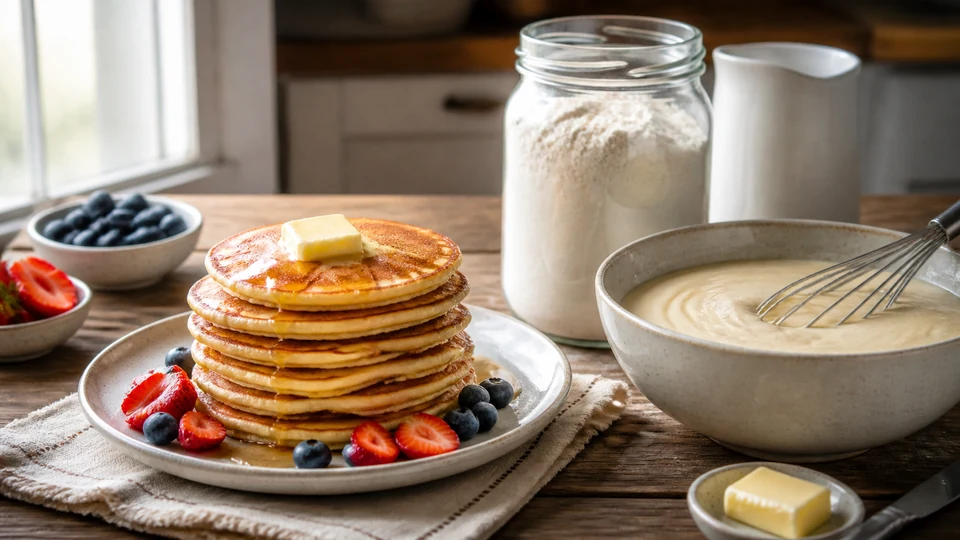
This is a neutral format-selection and package-use guide. It does not review brands, guarantee availability, or supply a substitute recipe. The pancake science hub explains the wider batter context, while Pancake World opens the full editorial collection.
| Guide sections |
|---|
| Resolve what ready mix means on this package |
| Compare the major convenience formats |
| Match the format to the actual morning |
| Make a package comparison sheet |
For broader context, continue with Pancake Ingredients and Substitutions.
Resolve what ready mix means on this package
Ignore the convenience phrase long enough to inspect the physical product. Is the contents dry powder, a dry mix in a shaker vessel, refrigerated liquid batter, a frozen prepared pancake, or an already cooked shelf-stable item? These formats may appear beside one another in search results, yet they require different work and different storage.
Read the product name, preparation panel, ingredient list, allergen declaration, net contents, date marking, and storage directions together. Do not decide from an image, marketplace title, or front label alone. Preserve the package until the product is used and any remainder is handled. If the exact identity cannot be resolved, choose a clearer item rather than borrowing instructions from a similar pack.
“Complete” usually concerns required preparation, not ingredient exclusions. It does not establish that a mix is egg-free, dairy-free, vegan, suitable for an allergy, or ready to pour. Only the current ingredient and allergen information can support those decisions, and individual cross-contact questions may require clarification from the manufacturer.
Compare the major convenience formats
Complete dry mix
A complete dry mix is still dry. It commonly asks for a named liquid, but the pack controls which liquid, how much to use, and how the batch is measured. The convenience is that fewer separate ingredients may be required. Confirm whether directions change for pancakes and waffles, whether the stated yield refers to prepared or dry product, and how the opened dry mix should be stored.
Do not assume that milk can replace water or that an egg should be added for richness. Either change alters the product-specific preparation and remains an untested variation unless the manufacturer permits it. Measure the mix and liquid using the units and method printed for that item.
Conventional dry mix
A conventional mix may require several additions, such as liquid, egg, or oil. Record the full list before shopping or beginning. A missing addition cannot be repaired reliably by using the complete-mix directions from another brand. The workflow may still be convenient, but its convenience lies in pre-combined dry ingredients rather than a one-addition promise.
Check whether the package provides multiple batch sizes. Select one complete line of directions and keep its quantities together. Combining the small-batch dry amount with the large-batch additions creates a new formula that the label does not support.
Shaker container
A shaker format uses the package as a measuring or mixing vessel. Read where liquid is filled, in what order it is added, how the closure is secured, how long or by what motion the container is mixed, and whether the entire prepared amount is intended for immediate use. Never improvise the fill line from another bottle.
Inspect the cap and seal before shaking. Keep fingers away from hot cooking surfaces when pouring, and return to the label for disposal or storage instructions. The bottle’s convenience does not establish that hydrated remainder can be kept.
Refrigerated ready-to-pour batter
Hydrated batter removes dry measuring, but it enters the kitchen with a cold-chain and opened-storage question. Verify the required temperature, date marking, seal condition, instructions before use, and directions after opening. Keep it controlled while the cooking surface preheats and return it promptly if the label permits further storage.
Do not use dry-mix assumptions for this format. It may need shaking or another action, but only the current pack can say so. Do not add water simply because the pour seems different from homemade batter; temperature and formulation can affect appearance.
Single-use sachet or portion cup
A portioned package can reduce dry-product measuring and preserve identity for one batch. Confirm whether the sachet contains dry mix, concentrate, or hydrated batter. Read all required additions and make sure the supposed single portion matches the desired batch according to its own yield statement.
Single-use packaging can simplify remainder decisions, but it does not make the prepared batter shelf-stable. Once liquid, egg, or milk is added, follow the product and applicable safety guidance.
Bulk resealable bag
Bulk mix can suit repeated preparation, but it requires accurate scooping, a secure seal, and a way to retain directions after the outer pack changes. Keep the original label rather than transferring anonymous powder to a jar. If decanting is permitted, carry the product name, lot or date information, allergen statement, and directions with it.
Avoid estimating a scoop by sight. The economic appeal of a large bag is outside this page’s evidence unless a current, like-for-like price comparison exists. Choose it for an identified workflow, not an assumed saving.
Frozen or already prepared pancakes
Frozen prepared pancakes and shelf-stable ready-made pancakes are not batter, even when a retailer groups them with mixes. They replace mixing and griddle work with reheating or direct service. Use their own package for storage and heating. Do not include them in a batter comparison without making the format difference explicit.
Match the format to the actual morning
Write the step you want to remove. If measuring several ingredients is the problem, a complete dry mix may help. If bowl cleanup is the problem, a shaker may be relevant. If both measuring and mixing are unwanted, a ready-to-pour product changes the workflow further but adds refrigerated storage considerations. If cooking itself is the constraint, a prepared pancake is a different product category.
Next count the work that remains: gathering additions, measuring, mixing, resting if directed, heating the cooking surface, portioning, turning, serving, and cleanup. Marketing language tends to spotlight the removed step and hide the remaining ones. A useful choice evaluates the complete path.
Match batch size to the eaters. A large package is not convenient when it repeatedly creates unwanted prepared batter. A single-use format is not convenient for a group if many packs must be opened while the pan is hot. Use the yield basis on the exact package and avoid converting it into a universal pancake count.
Make a package comparison sheet
Create one row per candidate. Record the exact product and format, required additions, measuring vessel, mixing vessel, stated batch basis, cooking-surface direction, unopened storage, opened storage, ingredient and allergen review status, and what must be cleaned. Leave a cell unresolved rather than guessing.
Compare the same decision across products. One package may state yield by number of pancakes, another by weight of prepared product, and another by serving. Those values are not directly comparable until their definitions and portion assumptions align. The FDA-regulated label can support product-specific information, but it does not guarantee identical household preparation.
Date the comparison because formulations and instructions can change. A saved online listing is useful for discovery but should not override the package in hand. If purchasing remotely, recheck the delivered item before preparation.
Preserve the directions through preparation
Open and flatten the preparation panel where it can be read without touching it with batter-covered hands. Copy the chosen batch line onto a temporary note if the package is awkward, but keep the original nearby for verification. Include every addition and the sequence, not just the largest numbers.
Prepare the cooking equipment specified by the pack. When the directions name a pan, griddle, or waffle variation, do not assume another appliance shares its heat, fill, or timing. Use the appliance manual for operating and cleaning controls. The first pancake can be used to observe spread, turning, and browning within the product’s instructions.
Measure before ingredients are combined. If the package uses weight, volume, a supplied cup, or a fill line, follow that method. Do not compress powder unless directed. Add ingredients in the listed order and mix only as instructed. A few lumps may or may not be expected; the label controls the target, not a remembered rule from another mix.
Calibrate without rewriting the product
Cook one conservative first piece using the stated surface preparation and heat guidance. Observe how the batter portions, spreads, sets at the edge, turns, and finishes. Do not claim a sensory result that has not been tested and recorded. The purpose is to catch an equipment or measurement mismatch before the full batch is committed.
If the batter appears too thick or thin, recheck measurements, batch line, addition identity, and mixing sequence. Do not immediately add liquid or powder. If the package supplies adjustment guidance, follow it. Otherwise any alteration is an untested variation and should be small, explicit, and limited to one variable.
If the first piece colours too quickly, confirm heat and pan material before modifying formula. If it spreads too far, confirm portion and preparation. If it sticks, check the surface and lubrication directions. Changing heat, fat, and consistency together prevents a useful diagnosis.
Read ingredient and allergen information completely
The name of the format tells nothing reliable about allergens. A complete mix can contain ingredients someone expects to add separately. A plant-based front label may not answer cross-contact. A “just add water” direction does not mean the product contains no milk or egg ingredient.
Review the ingredient list and allergen declaration on the current package. Then review every required addition and topping. The prepared pancake inherits the full set of ingredients, not merely those in the dry mix. Keep separate utensils and surfaces where a plan requires cross-contact control, while recognizing that a home workflow cannot certify safety beyond its evidence.
When the needed information is missing or ambiguous, contact the responsible manufacturer or select another product. Do not turn absence of a warning on a marketplace summary into a safety conclusion.
Separate dry and hydrated storage decisions
Unopened dry mix, opened dry mix, prepared batter, refrigerated pourable batter, and cooked pancakes are distinct states. Record the instruction for each state that will occur. A pantry direction for sealed powder cannot govern batter after liquid has been added.
Close dry packaging as directed and protect its identity. If the pack is damaged, wet, infested, or otherwise compromised, do not rely on a normal date alone. For hydrated products, minimize time outside required storage while preparing the pan. Never taste raw batter as a doneness check.
Use FoodSafety.gov for applicable storage, cooking, holding, and leftover decisions. If the package says to use prepared batter immediately, do not invent an overnight storage window. When cooked pancakes are saved, their complete handling history matters; reheating later cannot correct an uncertain earlier period.
Avoid common ready-mix errors
Borrowing a ratio from another package
Similar product names can conceal different formulas. Use only the additions printed for the exact mix and batch line.
Treating complete as ready to pour
Complete dry mix still requires the named liquid. Ready-to-pour batter is already hydrated and has its own cold-storage rules.
Adding every optional improvement
Milk, extra egg, melted fat, flavourings, and mix-ins can each alter the formula. Adding several prevents diagnosis and leaves the label-supported method behind.
Discarding the pack too early
The package carries identity, directions, allergens, dates, and storage information. Keep it until the product and safe remainders are finished.
Assuming the largest format is the easiest
Bulk packaging reduces repeated purchases only in some contexts. It can increase measuring, storage, staleness, and identification work. Choose according to use, not package size alone.
Trusting an online title over the delivered item
Retail listings can be incomplete or outdated. Verify the physical label before cooking or serving.
A route-specific decision sequence
First, name the unwanted task: ingredient gathering, measuring, bowl mixing, storage, or cooking. Second, identify each candidate’s physical format. Third, copy required additions and batch basis. Fourth, check ingredients, allergens, date, and storage. Fifth, confirm that available equipment matches the directions. Sixth, choose the smallest suitable batch.
Before mixing, retain the package and prepare the workspace. Follow one batch line without substitutions. Cook a calibration pancake, changing at most one supported variable after checking the original measurement. Serve promptly under the planned temperature lane. Store or discard remainder according to the exact product and applicable official guidance.
After cleanup, record whether the format actually removed the target task. If a shaker saved a bowl but was difficult to portion and clean, it may not be the best format for that person. If refrigerated batter reduced preparation but created unused remainder, a small dry sachet may fit better next time. This review makes the choice practical without pretending to rank brands.
Plan for one eater, a household, or a group
Convenience changes with scale. For one eater, the decisive question may be whether the smallest labelled batch creates a useful amount without leaving hydrated batter. A sachet or securely stored bulk mix can each work, but for different reasons: one limits measuring and open-product storage, while the other permits repeated small batches when its directions support them. Compare those consequences rather than assuming the smallest package is always best.
For a household, look for a batch line that fits the usual number of eaters and a format that allows consistent measurement. Put optional toppings outside the core batter so one formula can serve different preferences, subject to complete label review. Do not modify the base in several ways to satisfy everyone at once; a clearly labelled separate component is often easier to control.
For a group, the limiting factor may be the pan or griddle rather than the mix. Calculate how many cooking cycles the package’s stated yield implies for the available surface without turning that estimate into a guaranteed time. Decide how finished pancakes will be served and whether a supported holding method exists. Multiple shaker bottles can appear convenient yet create inconsistent fill, mixing, and remainder states if several people work without one plan.
Assign roles before opening bulk product: one person reads and measures, one controls the cooking surface, and one manages finished food and toppings. Keep raw-batter utensils away from the service area. If the mix format produces a queue or uncontrolled remainder, choose a different breakfast anchor instead of stretching the label directions.
Handle decanted mix without losing identity
A transparent storage jar can make a pantry look orderly while separating powder from the information needed to use it. If the product is moved from its original bag, do not retain only a handwritten product name. Keep the full directions, ingredient list, allergen declaration, date or lot information, storage instruction, and manufacturer identity with the container. Confirm that the chosen vessel is suitable and that decanting does not conflict with the package guidance.
Never top up an older remainder with a new package. Combining lots erases age and traceability and can mix changed formulations. Empty and clean the suitable container as appropriate before refilling, then attach the new record. When two similar mixes are in the pantry, use unmistakable labels rather than colour or memory.
Before every batch, inspect the stored powder and verify that its identity and history remain clear. If moisture, pests, damage, an uncertain date, or a missing label makes the product questionable, do not solve the uncertainty by cooking a test pancake. Discard or resolve it according to appropriate guidance. Convenience depends on preserving evidence from purchase through final use.
Frequently asked questions
What does ready mix pancake batter mean?
It has no single practical meaning. Confirm whether the item is dry mix, shaker-based mix, hydrated refrigerated batter, or an already prepared pancake.
Is complete pancake mix ready to pour?
No. “Complete” dry mix still needs the liquid named on its package. Ready-to-pour batter is a separate hydrated format.
Is complete mix egg-free?
Not necessarily. Complete describes preparation, not universal ingredients or allergen status. Read the current ingredient and allergen information.
Can I use milk instead of water?
Only when the package permits it or when the change is clearly treated as an untested variation. Do not transfer substitution advice from another mix.
Can prepared batter be refrigerated overnight?
Follow the exact package. If it does not authorize storage, do not invent a window. Hydrated batter and dry powder have different controls.
Which format creates the least cleanup?
A shaker can remove a bowl, while ready-to-pour batter can remove both measuring and mixing. Actual cleanup still depends on the pack, cap, pan, utensils, overflow, and remainder.
Explore related Pancakes World guidance on American Pancakes, American Breakfast: Pancakes, Diner Plates and Brunch, and Maple Syrup.
Sources and editorial references
- USDA FoodData Central —
https://fdc.nal.usda.gov/ - FoodSafety.gov food safety charts —
https://www.foodsafety.gov/food-safety-charts - FDA Food Labeling & Nutrition —
https://www.fda.gov/food/nutrition-food-labeling-and-critical-foods