Pulled pork breakfast
At Pancakes World, for a pulled pork breakfast, start with safely cooked, promptly chilled pork, reheat only the portion you need to 165°F, then choose a format that manages its sauce and moisture. Use drier pork in a potato hash, crisp-edged skillet, biscuit sandwich or taco; use moderately sauced pork in a breakfast bowl or beside pancakes; reserve very wet pork for a covered bake built from a complete recipe. Cook egg dishes to 160°F, keep cold components separate until serving, and add crisp or fresh toppings last. Refrigerated cooked pork should be used within three to four days, and safety must be checked with a thermometer rather than appearance.
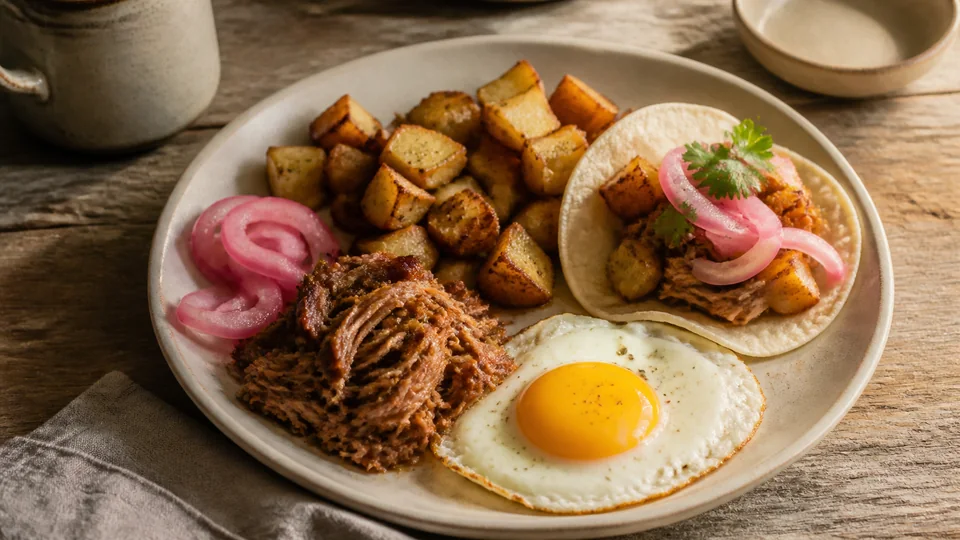
The central decision is not whether pulled pork “belongs” at breakfast. It is how to pair an already flavorful, moist meat with eggs, starch and fresh elements without producing a soggy or overly sweet plate. This is a planning guide, not a tested recipe. Browse the breakfast hub for more formats, or use Pancake World to explore the wider site.
For broader context, continue with American Breakfast: Pancakes, Diner Plates and Brunch.
Choose the breakfast format before reheating the pork
Pulled pork can fill several breakfast roles, but each role needs a different moisture level, particle size and service sequence.
| Format | Best pork condition | Main structural need | Finish after heating |
|---|---|---|---|
| potato hash | lightly sauced or drained | broad skillet contact and pre-cooked potatoes | herbs, scallions or crisp garnish |
| eggs with pork | warm, moist but not dripping | eggs cooked independently to their endpoint | sauce added in a controlled amount |
| biscuit or English-muffin sandwich | relatively dry, short strands | sturdy bread and compact layer | slaw or pickle added at service |
| breakfast taco | lightly sauced, chopped strands | warmed tortilla and small portions | cool salsa, cabbage or avocado |
| grain or grits bowl | moderately sauced | base that can absorb some liquid | acidic or crunchy contrast |
| pancake plate | sauce served deliberately | separation between syrup, pork sauce and pancake crumb | one chosen sweet-savory accent |
| covered bake | recipe-specific | defined liquid, vessel, time and center endpoint | rest before portioning |
Decide first because reheating changes the pork. A wide skillet encourages evaporation and browned edges. A covered dish preserves moisture. A microwave heats quickly but can leave cold pockets and may soften crisp ingredients. There is no single best method for all six outcomes.
Explore related Pancakes World guidance on American Pancakes, Maple Syrup, and Maple Syrup Pancakes.
Sources and editorial references
The easiest route is leftover pulled pork from a complete recipe whose cooking, cooling and storage history you know. Label the container with its production date. If it came from a restaurant, move it to refrigeration promptly and do not treat an unknown period in a warm car as harmless.
University of Illinois Extension’s 4-H Cooking 301 book provides a complete slow-cooker pork barbecue sandwich recipe. Its method cooks a pork roast with water, removes and shreds it with two forks, heats a defined sauce, then combines the sauce and pork and returns them to heat until thoroughly heated. That source establishes a legitimate pulled-pork production model, but its time, sauce quantities and nutrition stay with that exact formula.
If you are cooking raw pork specifically for breakfast, follow one complete tested recipe from beginning to end. USDA lists 145°F plus a three-minute rest as the safety minimum for whole pork steaks, chops and roasts. That is a safety endpoint, not a promise that a particular shoulder will be tender enough to pull. Pull-apart texture depends on cut, method, time and recipe. Do not stop a slow-cooker recipe early merely because the safety minimum has been crossed, and do not invent a universal “shredding temperature.”
Keep raw pork, its package and its utensils separate from cooked breakfast ingredients. Wash hands and clean food-contact surfaces after raw handling. A cooked pork container must never receive the meat on a board that still carries raw juices.
Cool and store the pork for breakfast service
Breakfast often uses pork made the previous day, so the handoff from dinner to refrigeration is part of the recipe system. USDA directs cooks to refrigerate perishable leftovers within two hours, or within one hour when the surrounding temperature is above 90°F. Divide a large mass into shallow containers so it cools quickly; do not leave a deep slow-cooker insert on the counter while waiting for it to become cold.
Store sauce with the pork only if the eventual format benefits from that sauce level. Otherwise, refrigerate a portion of meat and sauce separately while both remain within the safe cooling process. Separation lets you crisp meat for hash without boiling it in a sugary sauce, and it lets diners control sweetness at breakfast.
USDA guidance gives cooked pork and general refrigerated leftovers a three-to-four-day window at 40°F or below. Use the shorter practical plan when the original history is uncertain. A label saying “pork” is insufficient; write the date and, if necessary, the sauce or allergen identity.
Frozen leftovers can support a later breakfast. Package meal-size portions so you do not thaw the entire batch to remove one serving. USDA recognizes refrigerator, cold-water and microwave thawing methods. Food thawed by microwave should continue directly into heating. The exact freezer duration for quality depends on packaging and the source; do not invent an indefinite quality promise.
Reheat to 165°F without drying every strand
Leftover pork needs to reach 165°F. Measure in more than one place, especially when sauce creates clumps or the portion is thick. A steaming surface does not prove that the middle is hot.
Skillet reheating
A skillet works well for hash, tacos and sandwiches because it can evaporate excess liquid. Spread a modest portion across the hot surface rather than building a mound. If the pork is very dry, add only the liquid allowed by the source recipe—such as reserved sauce or cooking liquid—rather than improvising an unmeasured bath. Turn the strands and check the thickest clusters at 165°F.
For crisp edges, first bring the pork safely through reheating, then let selected areas make contact with the pan. Do not confuse browning with a temperature check. Sugar-heavy barbecue sauce can darken before the center is ready, so use moderate heat and a thermometer.
Microwave reheating
Arrange pork in a shallow, even layer in a microwave-safe dish. Cover it, vent as appropriate, rotate or stir during heating, and allow the required standing time. USDA warns about microwave cold spots and advises checking several locations. Keep crisp bread, tortillas and fresh toppings out of the microwave.
Oven reheating
An oven can handle a larger shallow batch or a covered combination meal, but it is inefficient for a spoonful. Keep the pork covered if the goal is moisture retention, and uncover only if the complete method calls for browning. The pork or finished leftover dish still needs 165°F in its center.
Do not use a slow cooker to reheat cold leftovers. USDA guidance warns that slow cookers are not recommended for reheating because food may remain too long between 40°F and 140°F. A slow cooker can hold food hot after it has been reheated safely by another method, provided the unit and food maintain the required hot-holding condition.
Control sauce before building the plate
Pulled pork may arrive unsauced, lightly moistened or coated in barbecue sauce. That condition changes every breakfast decision.
For unsauced pork, use the seasoning profile of the original recipe as the boundary. Add a measured sauce at service if desired. This version is most flexible for hash, eggs or tacos.
For lightly sauced pork, a skillet can reduce surface moisture while maintaining flavor. This is a strong general-purpose condition for sandwiches and bowls.
For heavily sauced pork, avoid adding more sweet syrup or wet salsa automatically. Serve the meat beside a dry base, use a smaller portion, or select a complete covered-bake recipe that accounts for all liquid.
Taste after the pork is safely hot, not while it is still cold in the reheating dish. Decide whether the plate needs acidity, heat, salt or texture. Do not assume it needs more sauce simply because the meat is called barbecue.
Read the original sauce label or recipe for allergens and sodium. Worcestershire sauce, mustard, prepared barbecue sauce and spice blends vary. If the pork was provided by someone else and exact ingredients are unavailable, do not promise that the dish is allergen-safe.
Build a potato hash that stays crisp
A successful hash needs cooked components with compatible size and moisture. Start with potatoes cooked by a complete method until they can finish in the skillet. Raw potato cubes and already cooked pork do not share the same timeline; trying to cook both from the start can dry the meat before the potatoes soften.
Use a wide pan and avoid crowding. Brown the potatoes first, creating a stable crust before adding the reheated pork. If vegetables release water, cook them in a separate zone or before the pork. Add pulled pork late enough to protect it from prolonged drying but early enough to reach 165°F.
If an egg will be cooked in the same pan, plan its endpoint independently. FDA guidance sets 160°F for egg dishes. Visual yolk preference is not a substitute for the safety standard in a combined dish. For easier control, cook the egg separately and place it over the fully reheated hash at service.
Keep cold avocado, herbs, scallions or salsa off the heat until the plate is ready. Their job is contrast. Mixing them into a hot pan turns fresh texture into additional moisture.
Pair pulled pork with eggs deliberately
Eggs soften and enrich the pork, but two soft components can become monotonous. Add one crisp or acidic element and keep sauce controlled.
For scrambled eggs, reheat the pork separately to 165°F. Cook the eggs to the source method’s endpoint, then combine them briefly or layer them on the plate. This prevents the pork from sitting in the pan while the eggs slowly set.
For an omelet, use a small, drained portion. A heavy mound can tear the egg and release sauce. The omelet remains an egg dish and needs a safe endpoint.
For a fried-egg presentation, follow a complete egg method suitable for the people being served. Do not publish a runny-yolk safety guarantee. Children, older adults, pregnant people and anyone with a weakened immune system need particular care with egg guidance; pasteurized egg products can be an option when a recipe calls for undercooked egg.
For a casserole, use only a complete tested formula. Pork, bread, potatoes, cheese and eggs alter the depth and heating behavior of the center. A list of attractive ingredients is not enough to establish proportions, bake time or safety. Casseroles and reheated leftovers reach 165°F under USDA’s chart.
Make a sandwich or biscuit without a wet bottom
A breakfast sandwich needs a compact pork layer and a bread strong enough for its sauce. Chop very long strands after reheating so the filling does not pull out in one bite. Drain excess sauce into a clean vessel before assembly, then add back only what the bread can hold.
Toast or split bread according to its complete recipe. Build in this order when appropriate: dry bread surface, warm pork, a barrier such as egg or cheese, then a small amount of fresh topping. The exact order can change, but wet slaw or tomato should not sit against bread during a long hold.
Assemble immediately before eating. A foil-wrapped sandwich held for a group is a hot-holding problem, not merely a convenience trick. Either keep the filling safely hot and assemble in small waves, or chill components and reheat individual portions. Do not let finished sandwiches drift at room temperature throughout brunch.
Keep the original ingredient labels for bread, cheese, sauce and condiments. Pork itself does not tell you whether the finished sandwich contains wheat, milk, egg, soy, sesame or mustard.
Use tacos and bowls for better portion control
Breakfast tacos solve two challenges: they limit the pork amount per unit and keep fresh toppings separate until service. Warm tortillas by an appropriate method, add a small layer of 165°F pork, then finish with cabbage, salsa, herbs or another planned contrast. Overfilling hides temperature variation and makes the taco difficult to eat.
A bowl gives wet pork somewhere to go. Use a cooked grain, grits or potatoes as the base, but do not assume the base can absorb unlimited sauce. Place components in zones so the eater can mix them. Add an egg only after deciding whether the bowl already has enough richness and moisture.
For packed breakfast, keep the perishable bowl at 40°F or below until reheating. Transport cold toppings separately. Reheat the hot component to 165°F, then add the chilled finish. A lukewarm assembled bowl carried without temperature control is not a safe shortcut.
Put pulled pork beside pancakes without creating sugar overload
Pulled pork and pancakes can work as a sweet-savory plate, but the two sauces need a plan. If the pork is already coated in a sweet barbecue sauce, serve pancake syrup on the side rather than across the whole plate. If the pork is unsauced or vinegar-led, a controlled maple accent may bridge the components.
Keep the pancake edge away from pooled pork liquid until serving. A small ramekin or divided plating pattern preserves the pancake crumb. Add butter or another rich topping only after considering the egg and pork; richness can accumulate as quickly as sweetness.
This is a pairing decision, not a nutrition claim or a tested formula. Use the nutrition information for the exact pork recipe, pancake recipe, sauce and serving amounts if that information is needed. Never reuse the Illinois Extension sandwich nutrition after changing the bread, sauce, portion or meal format.
Plan a brunch service line
For a group, separate the station into four controlled zones:
- Hot base: safely reheated pork held at 140°F or warmer.
- Hot formats: potatoes, eggs, pancakes or tortillas produced in manageable batches.
- Cold finishes: refrigerated salsa, slaw, cheese or cut produce kept at 40°F or below.
- Label station: original packages or an accurate ingredient and allergen record.
Use small serving vessels and replace them rather than continually topping old food with new. Record when pork entered service. USDA’s two-hour room-temperature boundary becomes one hour above 90°F. Hot holding prevents the food from entering that room-temperature countdown only when 140°F or warmer is actually maintained.
Provide separate utensils for pork, eggs, bread and cold toppings. A utensil moved through several dishes defeats careful allergen separation. If guests assemble their own tacos or sandwiches, keep the traffic flow one direction so hands and utensils do not move backward over uncovered food.
Troubleshoot common failures
The pork is watery
Drain excess liquid, reheat a smaller amount in a wider pan and keep fresh vegetables out until service. Do not thicken unknown leftovers with random ingredients; use the source recipe’s sauce system.
The pork is dry
Reheat covered or add a measured amount of reserved source-approved liquid. Do not drown it in sauce, because the breakfast base must then absorb the extra moisture.
The hash will not brown
The pan is probably crowded, the potatoes may not be dry, or the pork entered too early. Brown the cooked potatoes in batches, then add hot pork near the finish.
The sandwich collapses
Shorten the strands, reduce the filling height, drain sauce and use sturdier bread. Serve wet slaw separately or add it at the last moment.
The microwave portion has cold spots
Spread it into an even layer, cover, rotate or stir, allow standing time and check several places for 165°F. More time at full power is not the only adjustment; geometry matters.
The breakfast is too sweet
Stop adding sweet sauce. Introduce unsweetened starch, acidity, vegetables or a smaller pork portion. Put pancake syrup on the side.
The pork smells fine after many refrigerator days
Smell cannot verify safety. Use the date label and USDA’s three-to-four-day refrigerated limit. When the history is uncertain, discard rather than taste-test.
A practical production checklist
Before service, verify:
- the pork came from a complete method and has a known date;
- raw-pork surfaces did not contact cooked ingredients;
- leftovers were chilled promptly in shallow containers;
- refrigerated cooked pork remains within three to four days;
- only the needed portion is being reheated;
- the pork reaches 165°F in multiple places;
- egg dishes reach 160°F and casseroles reach 165°F;
- sauce level fits the selected format;
- fresh and crisp toppings remain separate until service;
- labels remain available for ingredient and allergen review;
- hot food stays at 140°F or warmer and cold food at 40°F or below during group service;
- no nutrition value or tested outcome has been carried over after substitutions.
Frequently asked questions
Can I eat pulled pork for breakfast?
Yes. Treat it as cooked meat that must have a safe preparation and storage history. Reheat leftovers to 165°F, then pair them with a breakfast format designed for their sauce and moisture.
What is the easiest pulled pork breakfast?
A bowl or taco assembled from safely reheated pork and separately prepared components is easier to control than a deep egg bake. It lets each ingredient reach its own endpoint and keeps cold toppings fresh.
Can I add cold pulled pork directly to eggs?
That makes the egg timing harder and can create cool pockets. Reheat the pork separately to 165°F, cook the egg component to its required endpoint, then combine or layer briefly.
How long does cooked pork keep in the refrigerator?
USDA recommends three to four days at 40°F or below. Label the production date; do not use smell as the deciding test.
Does 145°F make pork ready to pull?
USDA’s 145°F plus three-minute rest is a safety minimum for whole pork cuts. It does not guarantee that a particular roast has developed pull-apart texture. Follow the complete recipe for the selected cut and method.
Can a slow cooker reheat pulled pork?
USDA does not recommend slow cookers for reheating leftovers because they can spend too long in the temperature danger zone. Reheat by a faster approved method to 165°F; a slow cooker may then be used for controlled hot holding.
Should pulled pork breakfast include barbecue sauce?
Only if that flavor and moisture fit the format. Hash and sandwiches often work better with lightly sauced pork; bowls can tolerate more liquid. Keep extra sauce at the table.
Can I make a pulled pork breakfast casserole from this guide?
No formula is provided here. Use a complete tested casserole recipe that defines pork amount, egg mixture, vessel, time and 165°F endpoint.
Final decision
Build a pulled pork breakfast around three controls: known leftover history, verified reheating and format-specific moisture. Reheat the pork to 165°F before relying on browned edges or steam. Keep potatoes, eggs, bread and fresh toppings on their own timelines, then bring them together briefly.
For the most flexible first choice, use lightly sauced pork in tacos, hash or a bowl. Choose a complete recipe for any raw-roast production or deep casserole. The result should feel designed for breakfast, not like dinner leftovers hidden under an egg.
- University of Illinois Extension, “4-H Cooking 301” (Slow Cooker Pork Barbecue Sandwiches):
https://extension.illinois.edu/sites/default/files/4h_cooking_301_book.pdf - USDA Food Safety and Inspection Service, “Safe Minimum Internal Temperature Chart”:
https://www.fsis.usda.gov/food-safety/safe-food-handling-and-preparation/food-safety-basics/safe-temperature-chart - USDA Food Safety and Inspection Service, “Leftovers and Food Safety”:
https://www.fsis.usda.gov/food-safety/safe-food-handling-and-preparation/food-safety-basics/leftovers-and-food-safety - USDA Food Safety and Inspection Service, “How long can you keep cooked pork?”:
https://ask.fsis.usda.gov/article/How-long-can-you-keep-cooked-pork - U.S. Food and Drug Administration, “What You Need to Know About Egg Safety”:
https://www.fda.gov/media/82227/download - University of Minnesota Extension, “Safe food temperatures: Heating and cooling”:
https://extension.umn.edu/food-safety-basics/safe-food-temperatures