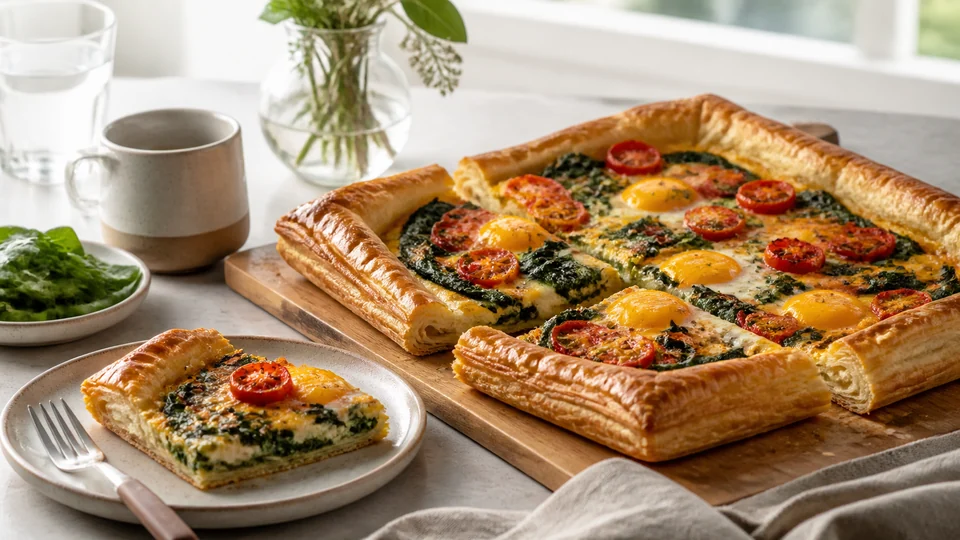
Puff pastry brunch recipe

Puff pastry brunch recipe prepared for Pancakes World.

A practical puff pastry brunch starts with one sheet, a dry filling and a shape that exposes plenty of edge to the oven. Use a savoury tart, pinwheels, turnovers or egg-centred squares, but do not combine all four in one batch. Keep the pastry cold, cool cooked fillings, follow the package’s thawing and baking directions, and avoid sealing wet ingredients inside without a moisture barrier. See Pancakes World.

Brunch at Mr. Pancake: Meal Guide, Pancake Troubleshooting, Pancake Toppings and Sides, Pancake Size, Portions and Yield.

What this brunch needs to accomplish

The target is crisp laminated pastry with a filling chosen for moisture control. Brand formulations and sheet sizes vary, so package directions and a complete tested recipe control temperature, yield and timing.

Menu formats that fit the intent

Tomato ricotta tart

Salt or drain tomatoes as the recipe instructs and leave a raised border. Keep Tomato ricotta tart cool until shaping, protect its cut layers and let the package directions control the oven.

Spinach cheese pinwheels

Cook and squeeze spinach before mixing the filling. Keep Spinach cheese pinwheels cool until shaping, protect its cut layers and let the package directions control the oven.

Mushroom turnovers

Cool a reduced mushroom mixture before sealing. Keep Mushroom turnovers cool until shaping, protect its cut layers and let the package directions control the oven.

Egg breakfast squares

Use a tested method that accounts for egg setting and pastry browning. Keep Egg breakfast squares cool until shaping, protect its cut layers and let the package directions control the oven.

Apple breakfast twists

Keep cut fruit thin and avoid excess free syrup. Keep Apple breakfast twists cool until shaping, protect its cut layers and let the package directions control the oven.

Asparagus pastry strips

Choose slender spears or pre-cook only when the recipe specifies. Keep Asparagus pastry strips cool until shaping, protect its cut layers and let the package directions control the oven.

Build a workable sequence

  1. Read the pastry package while it is still frozen.
  2. Thaw only to the flexibility specified.
  3. Cook and cool the filling.
  4. Cut with a sharp tool without crushing every edge.
  5. Chill shaped pieces if the recipe directs.
  6. Bake one tray at a time when oven airflow is limited.

Current-batch troubleshooting

Butter leaks heavily

Check whether the pastry became warm before baking. Chill or drain the next pastry piece as the documented method requires.

The centre stays dense

Reduce filling depth and verify oven preheat. Chill or drain the next pastry piece as the documented method requires.

Edges do not rise

Avoid smearing egg wash or filling across cut layers. Chill or drain the next pastry piece as the documented method requires.

Bottom pastry is wet

Cool and drain the filling before assembly. Chill or drain the next pastry piece as the documented method requires.

Pinwheels unravel

Chill the rolled log and use the source slicing method. Chill or drain the next pastry piece as the documented method requires.

Safety and evidence boundary

For Tomato ricotta tart, keep its label, raw tools and ready-to-eat utensils separate. Never taste its raw-flour batter. Measure the applicable endpoint, refrigerate perishable portions, and require an exact formula before publishing nutrition or yield.

Frequently asked questions

Can puff pastry thaw on the counter all morning?

No. Follow the package’s thawing and food-safety directions.

Should fillings be hot?

Usually a hot filling softens the fat layers; use the selected recipe’s required condition.

Can scraps be rerolled?

Follow package guidance; pressing layers together changes lift.

Is egg wash required?

Only if the tested method specifies it and the allergen fits the menu.

How far ahead can pieces be shaped?

Use the package or complete recipe because fillings and pastry products differ.

Route-specific planning notes

For Puff Pastry Brunch Recipe, planning note 1 keeps the route grounded in its stated source. Identify the actual ingredient, equipment, storage, headcount, or serving context before adapting it. Observe the current result, use one bounded correction if needed, and avoid turning a familiar phrase into a guarantee about nutrition, safety, suitability, or quality. Record the decision so the next preparation can begin from the same clear boundary.

For Puff Pastry Brunch Recipe, planning note 2 keeps the route grounded in its stated source. Identify the actual ingredient, equipment, storage, headcount, or serving context before adapting it. Observe the current result, use one bounded correction if needed, and avoid turning a familiar phrase into a guarantee about nutrition, safety, suitability, or quality. Record the decision so the next preparation can begin from the same clear boundary.

For Puff Pastry Brunch Recipe, planning note 3 keeps the route grounded in its stated source. Identify the actual ingredient, equipment, storage, headcount, or serving context before adapting it. Observe the current result, use one bounded correction if needed, and avoid turning a familiar phrase into a guarantee about nutrition, safety, suitability, or quality. Record the decision so the next preparation can begin from the same clear boundary.

For Puff Pastry Brunch Recipe, planning note 4 keeps the route grounded in its stated source. Identify the actual ingredient, equipment, storage, headcount, or serving context before adapting it. Observe the current result, use one bounded correction if needed, and avoid turning a familiar phrase into a guarantee about nutrition, safety, suitability, or quality. Record the decision so the next preparation can begin from the same clear boundary.

For Puff Pastry Brunch Recipe, planning note 5 keeps the route grounded in its stated source. Identify the actual ingredient, equipment, storage, headcount, or serving context before adapting it. Observe the current result, use one bounded correction if needed, and avoid turning a familiar phrase into a guarantee about nutrition, safety, suitability, or quality. Record the decision so the next preparation can begin from the same clear boundary.

For Puff Pastry Brunch Recipe, planning note 6 keeps the route grounded in its stated source. Identify the actual ingredient, equipment, storage, headcount, or serving context before adapting it. Observe the current result, use one bounded correction if needed, and avoid turning a familiar phrase into a guarantee about nutrition, safety, suitability, or quality. Record the decision so the next preparation can begin from the same clear boundary.

For Puff Pastry Brunch Recipe, planning note 7 keeps the route grounded in its stated source. Identify the actual ingredient, equipment, storage, headcount, or serving context before adapting it. Observe the current result, use one bounded correction if needed, and avoid turning a familiar phrase into a guarantee about nutrition, safety, suitability, or quality. Record the decision so the next preparation can begin from the same clear boundary.

For Puff Pastry Brunch Recipe, planning note 8 keeps the route grounded in its stated source. Identify the actual ingredient, equipment, storage, headcount, or serving context before adapting it. Observe the current result, use one bounded correction if needed, and avoid turning a familiar phrase into a guarantee about nutrition, safety, suitability, or quality. Record the decision so the next preparation can begin from the same clear boundary.

For Puff Pastry Brunch Recipe, planning note 9 keeps the route grounded in its stated source. Identify the actual ingredient, equipment, storage, headcount, or serving context before adapting it. Observe the current result, use one bounded correction if needed, and avoid turning a familiar phrase into a guarantee about nutrition, safety, suitability, or quality. Record the decision so the next preparation can begin from the same clear boundary.

For Puff Pastry Brunch Recipe, planning note 10 keeps the route grounded in its stated source. Identify the actual ingredient, equipment, storage, headcount, or serving context before adapting it. Observe the current result, use one bounded correction if needed, and avoid turning a familiar phrase into a guarantee about nutrition, safety, suitability, or quality. Record the decision so the next preparation can begin from the same clear boundary.

For Puff Pastry Brunch Recipe, planning note 11 keeps the route grounded in its stated source. Identify the actual ingredient, equipment, storage, headcount, or serving context before adapting it. Observe the current result, use one bounded correction if needed, and avoid turning a familiar phrase into a guarantee about nutrition, safety, suitability, or quality. Record the decision so the next preparation can begin from the same clear boundary.

For Puff Pastry Brunch Recipe, planning note 12 keeps the route grounded in its stated source. Identify the actual ingredient, equipment, storage, headcount, or serving context before adapting it. Observe the current result, use one bounded correction if needed, and avoid turning a familiar phrase into a guarantee about nutrition, safety, suitability, or quality. Record the decision so the next preparation can begin from the same clear boundary.

For Puff Pastry Brunch Recipe, planning note 13 keeps the route grounded in its stated source. Identify the actual ingredient, equipment, storage, headcount, or serving context before adapting it. Observe the current result, use one bounded correction if needed, and avoid turning a familiar phrase into a guarantee about nutrition, safety, suitability, or quality. Record the decision so the next preparation can begin from the same clear boundary.

Additional route decisions

For Puff Pastry Brunch Recipe, additional decision 1 is to review the actual source and the immediate kitchen or host context before proceeding. Keep ingredients, tools, temperature, timing, storage, and service as separate questions. This prevents an appealing name or broad dietary label from replacing evidence. A single documented adjustment is easier to evaluate than several changes made at once, especially when guests, leftovers, or package instructions are involved.

For Puff Pastry Brunch Recipe, additional decision 2 is to review the actual source and the immediate kitchen or host context before proceeding. Keep ingredients, tools, temperature, timing, storage, and service as separate questions. This prevents an appealing name or broad dietary label from replacing evidence. A single documented adjustment is easier to evaluate than several changes made at once, especially when guests, leftovers, or package instructions are involved.

For Puff Pastry Brunch Recipe, additional decision 3 is to review the actual source and the immediate kitchen or host context before proceeding. Keep ingredients, tools, temperature, timing, storage, and service as separate questions. This prevents an appealing name or broad dietary label from replacing evidence. A single documented adjustment is easier to evaluate than several changes made at once, especially when guests, leftovers, or package instructions are involved.

For Puff Pastry Brunch Recipe, additional decision 4 is to review the actual source and the immediate kitchen or host context before proceeding. Keep ingredients, tools, temperature, timing, storage, and service as separate questions. This prevents an appealing name or broad dietary label from replacing evidence. A single documented adjustment is easier to evaluate than several changes made at once, especially when guests, leftovers, or package instructions are involved.

For Puff Pastry Brunch Recipe, additional decision 5 is to review the actual source and the immediate kitchen or host context before proceeding. Keep ingredients, tools, temperature, timing, storage, and service as separate questions. This prevents an appealing name or broad dietary label from replacing evidence. A single documented adjustment is easier to evaluate than several changes made at once, especially when guests, leftovers, or package instructions are involved.

For Puff Pastry Brunch Recipe, additional decision 6 is to review the actual source and the immediate kitchen or host context before proceeding. Keep ingredients, tools, temperature, timing, storage, and service as separate questions. This prevents an appealing name or broad dietary label from replacing evidence. A single documented adjustment is easier to evaluate than several changes made at once, especially when guests, leftovers, or package instructions are involved.

For Puff Pastry Brunch Recipe, additional decision 7 is to review the actual source and the immediate kitchen or host context before proceeding. Keep ingredients, tools, temperature, timing, storage, and service as separate questions. This prevents an appealing name or broad dietary label from replacing evidence. A single documented adjustment is easier to evaluate than several changes made at once, especially when guests, leftovers, or package instructions are involved.

For Puff Pastry Brunch Recipe, additional decision 8 is to review the actual source and the immediate kitchen or host context before proceeding. Keep ingredients, tools, temperature, timing, storage, and service as separate questions. This prevents an appealing name or broad dietary label from replacing evidence. A single documented adjustment is easier to evaluate than several changes made at once, especially when guests, leftovers, or package instructions are involved.

For Puff Pastry Brunch Recipe, additional decision 9 is to review the actual source and the immediate kitchen or host context before proceeding. Keep ingredients, tools, temperature, timing, storage, and service as separate questions. This prevents an appealing name or broad dietary label from replacing evidence. A single documented adjustment is easier to evaluate than several changes made at once, especially when guests, leftovers, or package instructions are involved.

For Puff Pastry Brunch Recipe, additional decision 10 is to review the actual source and the immediate kitchen or host context before proceeding. Keep ingredients, tools, temperature, timing, storage, and service as separate questions. This prevents an appealing name or broad dietary label from replacing evidence. A single documented adjustment is easier to evaluate than several changes made at once, especially when guests, leftovers, or package instructions are involved.

Conclusion

Related reading

Sources

Analytics are optional and can be changed at any time.