Pancake flour mix
At Pancakes World, pancake flour mix can mean a commercial complete mix, a flour blend, or a homemade dry base. Identify which one you have before adding anything. Read the package or formula, record whether leavener, sugar, milk powder, salt, or flavouring is already present, and make only the additions that the selected method requires. See the editorial platform for the wider editorial collection.
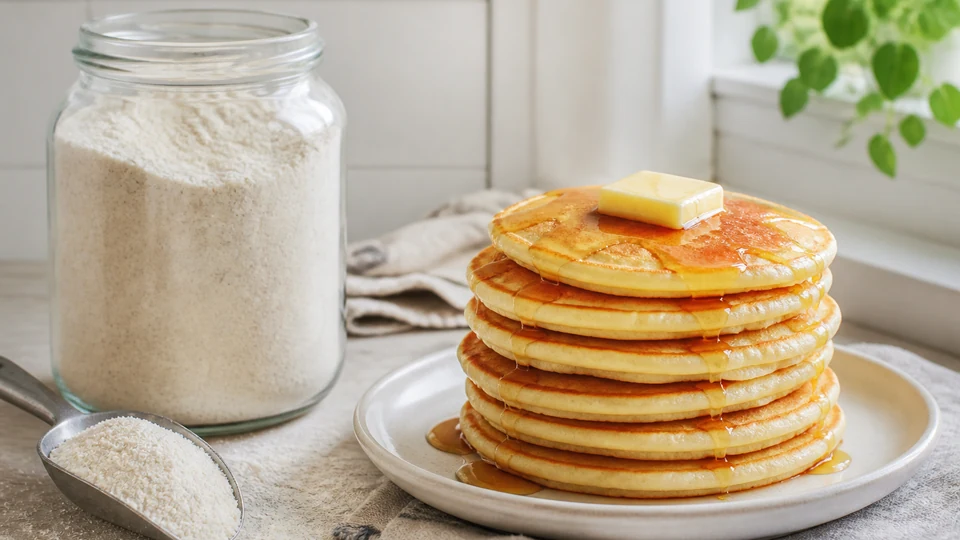
Use Pancake Science; Rice flour pancakes without baking powder; Pancake art batter; Pancake batter without baking powder to move from this exact question to the relevant hub and neighbouring Stage 012 guides without relying on a generic parent label.
| Guide sections |
|---|
| Direct answer and scope |
| Formats that fit the intent |
| Build a controlled workflow |
| Current-batch troubleshooting |
For broader context, continue with Pancake Ingredients and Substitutions.
Direct answer and scope
The phrase does not establish one ingredient list. Commercial products change, flour blends behave differently, and a dry base is not a finished recipe without a documented liquid, fat, egg or binder system. Start by naming the dish or technique, the guest and ingredient boundaries, the available equipment, and the point at which the result will be judged. That prevents an attractive idea list from becoming an unsupported recipe, nutrition promise, cultural generalisation, or project-test claim.
Formats that fit the intent
Complete just-add-liquid mix
Follow the current package and do not add duplicate leavener or salt by habit.
Flour-only blend
Treat it as one dry ingredient inside a complete pancake formula.
Homemade dry base
Record every component by weight and bind it to the final formula and batch date.
Whole-grain blend
Expect different hydration only when the chosen formula documents it; do not guess by colour.
Gluten-free blend
Check gums, starches and allergens on the exact product because the category does not define one system.
Flavoured or fortified mix
Read sweetener, dairy and allergen declarations before choosing toppings or substitutions.
Build a controlled workflow
- Classify the mix from its label or record.
- List ingredients already included.
- Select the matching complete directions.
- Measure a small control batch.
- Observe ribbon, spread and set.
- Store the remaining dry mix under its documented conditions.
The sequence should leave one baseline that can be described in plain language. Note flow, spread, surface moisture, edge set, centre texture, holding condition, or service behaviour as relevant to the chosen format. Avoid adding invented times, yields or temperatures when the complete source does not establish them.
Current-batch troubleshooting
Batter tastes salty or rises oddly
Check for duplicated salt or leavener in the additions.
The mix forms dry pockets
Review measuring and staged mixing before adding more liquid.
Pancakes spread too far
Confirm the exact mix-to-liquid directions.
The centre is gummy
Review portion thickness, cook-through and the blend identity.
Results change between bags
Record product name, lot or homemade batch instead of treating all mixes as identical.
Prevent the same problem next time
- Photograph or transcribe the current label into the kitchen record.
- Keep homemade base tied to one final formula.
- Date the batch and protect it from moisture.
- Change only one addition in a comparison.
Prevention is useful only when the record is specific enough to repeat. Keep product names and ingredient forms, label checks, pan or vessel size, portion method, sequence, and observable result together. A later batch can then change one plausible cause while preserving the rest.
For a homemade dry base, attach the batch record to one complete final formula and list every ingredient already included. For a commercial mix, preserve the current label or product record. This prevents a later cook from adding duplicate salt, leavener, dairy, or sweetener because the word flour was mistaken for a complete description.
Safety and evidence boundary
Do not taste raw flour batter or dough. Check current packaged-food labels for allergens and use separate tools where cross-contact matters. Egg dishes, meat components and leftovers need their own applicable temperature, cooling, refrigeration and reheating controls. The authoritative references below support those boundaries; they do not convert this article into medical advice, a tested formula, a guaranteed outcome, or a universal cultural definition.
Frequently asked questions
Is pancake mix the same as flour?
Not necessarily. Many mixes include leavener, salt, sugar or milk ingredients.
Can self-raising flour replace it?
No universal substitution is established; use a complete formula designed for the chosen flour.
Should more baking powder be added?
Only if the product directions or complete formula require it.
Can the mix be tasted raw?
No. Raw flour mixtures should not be tasted.
Explore related Pancakes World guidance on American Pancakes, American Breakfast: Pancakes, Diner Plates and Brunch, and Maple Syrup.
Sources and editorial references
- U.S. Food and Drug Administration — Food Allergies —
https://www.fda.gov/food/nutrition-food-labeling-and-critical-foods/food-allergies - FoodSafety.gov — Safe Minimum Internal Temperatures —
https://www.foodsafety.gov/food-safety-charts/safe-minimum-internal-temperatures - USDA FSIS — Leftovers and Food Safety —
https://www.fsis.usda.gov/food-safety/safe-food-handling-and-preparation/food-safety-basics/leftovers-and-food-safety - U.S. Food and Drug Administration — Handling Flour Safely —
https://www.fda.gov/food/buy-store-serve-safe-food/handling-flour-safely-what-you-need-know