Pancake batter in waffle maker
At Pancakes World, pancake batter can cook in many waffle makers, but the result may be softer and less crisp than a purpose-built waffle batter, and the safe amount and timing depend on the appliance and formula. Begin with the maker’s instructions, preheat fully, apply fat only as the manual permits, and test a small portion rather than filling every plate. Use batter that pours but is not extremely thin, avoid large mix-ins that prevent closure, and wait for steam to slow before checking. Treat the first waffle as calibration; adjust portion, heat, or consistency one variable at a time.
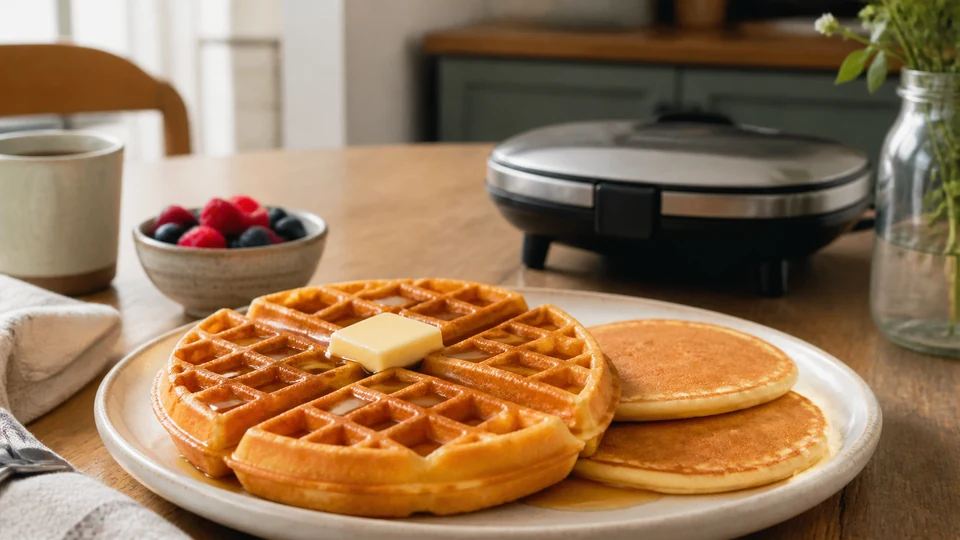
This guide is about compatibility, controlled first-piece testing, release, and cleanup. It does not provide a universal fill volume, cooking time, or claim that every pancake recipe works in every appliance. The pancake science hub covers the wider batter topic, and Pancake World opens the full editorial collection.
| Guide sections |
|---|
| The short difference between the two batters |
| Confirm the waffle maker first |
| Identify the pancake batter |
| Decide whether the batter is a sensible candidate |
For broader context, continue with Pancake Ingredients and Substitutions.
The short difference between the two batters
Pancake batter is designed for an open cooking surface where it spreads, can be observed, and is turned. A waffle maker encloses batter between patterned heated plates. That change affects expansion space, contact area, moisture release, browning, and removal. It also makes an overfill harder to contain. A batter that behaves well on a griddle therefore does not automatically behave the same way between waffle plates.
The formula matters, but this page cannot infer its performance from a name. Sugar, fat, flour, eggs, leavening, hydration, and inclusions can all vary among recipes and mixes. Use the exact recipe or current package for ingredients and preparation. Use the exact appliance manual for preheating, capacity, lubrication, indicators, opening, and cleaning. The first piece connects those two records through observation without pretending that a result is guaranteed.
Confirm the waffle maker first
Find the model identification and its manual before mixing. Different appliances can have shallow or deep grids, fixed or removable plates, a rotating body, selectable heat, automatic indicators, or no user control beyond plugging in. Do not transfer the instructions from a visually similar maker. Confirm where the appliance may be used, how it must be positioned, whether the plates require any preparation, and how the manufacturer describes filling and opening.
Inspect the cord, plug, hinge, latch, and plate surfaces before heating. A damaged appliance, unstable base, or compromised coating is not a batter problem. Stop and follow the manufacturer’s service guidance rather than testing food in questionable equipment. Place the maker on the surface and with the clearance required by its manual. Keep hands, loose cloth, and the cord away from hot or moving parts.
Read the cleaning section now, not after batter has dried in the grooves. Learn whether plates can be removed, which tools are permitted, and which parts must never be immersed. This also reveals whether a batter with sticky inclusions is sensible for the available cleanup method.
Identify the pancake batter
Write down whether the batter comes from a tested project recipe, a current package mix, or another complete source. Preserve the formula and its required additions. “Pancake batter” is not enough information because a complete dry mix needing water differs from a recipe using milk and egg, and both differ from a banana-heavy or highly sweetened variation.
Prepare the source formula as written before adapting it to the appliance. If the recipe includes a rest, mixing limit, ingredient temperature, or sequence, retain that instruction. Do not change liquid, flour, fat, and leavening together merely to make the mixture seem more waffle-like. Several simultaneous edits make the cause of spreading, sticking, or softness impossible to identify.
If a package supplies waffle directions as well as pancake directions, those product-specific instructions are the stronger starting point. Use the waffle preparation that belongs to that exact product. This article is most useful when no supported waffle direction exists and the cook is deciding whether a cautious trial is reasonable.
Decide whether the batter is a sensible candidate
Pouring consistency is the first observable screen. A very thin, crepe-like batter can escape quickly across the grids and edges. An extremely thick or scoopable batter may not spread before the plates close, creating uneven contact and pressure. Neither description creates a universal cutoff; it signals that the trial should be smaller and more cautious or that a tested waffle formula may be preferable.
Look at inclusions. Large fruit pieces, hard chunks, or excessive solid additions can block closure, hold the plates apart, tear the cooked piece during release, or contact surfaces in ways the manual does not allow. Small inclusions can still add sugar or moisture locally. When the source recipe was not developed for a waffle maker, the safest editorial choice is often to test plain batter first and add toppings after cooking.
Also consider sugar-rich formulas. They may colour or stick differently on the high-contact plates. That is a reason for conservative heat within the appliance’s permitted controls, close observation of the first piece, and careful cleaning—not a reason to assert a different cooking time without evidence.
Preheat according to the manual
Fully preheat the appliance using its own indication. Starting on plates that are still warming changes the first piece and makes later comparison less useful. Do not compensate by holding the maker closed longer or raising a setting beyond the intended range. The calibration should begin from the repeatable state the manufacturer describes.
Apply oil, butter, or spray only if and how the manual permits it. Nonstick surfaces and aerosol products are not governed by one universal rule. More fat does not reliably solve every release problem and may create residue or overflow. If the manual says the surface needs no additional grease, respect that instruction.
Arrange the batter, ladle or scoop, heat-safe resting surface, permitted removal tool, and plate before opening the hot maker. A rushed search for utensils encourages overfilling or use of a metal object on coated plates. Keep raw-batter tools separate from cooked-food service tools.
Run one conservative calibration waffle
The first waffle is a measurement, not the start of full production. Use a deliberately conservative amount guided by the manual. Place it where the appliance directs and close without forcing the lid or latch. Batter needs room to spread and expand. If the lid will not close in its normal manner, stop rather than applying pressure.
Watch the appliance’s indicator and the visible steam pattern without touching hot surfaces. Steam often changes as cooking progresses, but it is not a universal doneness timer. Combine the manual’s instructions with the recipe’s applicable doneness guidance and direct observation. Avoid opening repeatedly, because each interruption changes heat and can split a piece before it has set.
When it is appropriate to check, open carefully. Use only a tool permitted for the plate material. Evaluate whether the waffle releases, whether the grid filled without overflow, whether the centre is set according to the governing recipe, and whether the surface condition suits the intended serving. Record the result before changing anything.
Diagnose spread and fill
If batter reaches the edge or escapes, reduce the next portion. Do not simultaneously thicken the batter and reduce heat. Portion is the cleanest first change because it addresses capacity directly. Clean any escaped batter only after following the manual’s safety and cooling instructions.
If the grid is barely filled, distinguish insufficient portion from poor spreading. A small but evenly formed waffle suggests that a modest portion increase may be considered within appliance guidance. A thick mound with empty outer grids points to consistency or closure rather than quantity. Adding more of the same thick batter could increase pressure without improving contact.
Never pursue a perfectly filled decorative edge at the expense of controlled expansion. The usable result matters more than a photograph. Note the successful scoop or vessel only for this exact batter-appliance pairing; it is not a universal volume for another maker.
Diagnose sticking
Sticking can come from opening too early, an incompatible plate treatment, residue, formula characteristics, damaged coating, or an unapproved lubrication choice. Start with the variables that do not alter the recipe. Confirm full preheat, follow the manual’s check point, and verify that the plates were prepared correctly. Let the appliance cool and clean it as directed before another test if residue is visible.
Do not scrape with a knife, fork, or other metal tool on a coated surface unless the manufacturer explicitly permits it. Do not flood a hot maker with oil. If release remains poor after the documented appliance steps, stop the experiment and use the pancake batter on its intended cooking surface or select a tested waffle recipe.
A torn first piece does not prove that the batter is unusable. It also does not justify a confident fix. Record when it was opened, how it released, and what the plate looked like. Change one variable on the second trial only when continuing is safe and worthwhile.
Diagnose softness and browning
A cooked pancake-style formula may remain softer than the waffle someone expects. The enclosed iron creates shape and contact, but it does not automatically give the formula the fat, sugar, or structural balance of a tested waffle recipe. Serve the trial promptly before rewriting the batter.
If the outside colours before the centre reaches the source recipe’s applicable doneness check, lower an adjustable setting within the manual’s range or choose a more suitable formula. Do not simply shorten cooking and accept an unset centre. If the piece is pale but set, a permitted heat adjustment may be tested on the next portion. Again, keep portion and batter unchanged while evaluating heat.
Serving delay affects texture. Put finished pieces on a surface that does not trap unnecessary steam and use the holding approach supported by the recipe and safety plan. Stacking hot waffles immediately can soften their surfaces. This observation helps schedule service; it is not a promise that one holding technique works for every formula.
Test common pancake-batter styles cautiously
Plain or buttermilk-style batter
A plain batter without large inclusions is the clearest compatibility trial because spread, release, and colour are easy to observe. A buttermilk-style label does not specify one formula, so retain the exact recipe. Do not adjust leavening or acidity on the assumption that the waffle maker requires it.
Whole-grain batter
Whole-grain formulas can differ greatly in absorption and texture. Follow their rest and hydration directions. If the batter thickens while standing, do not add liquid automatically; compare its state with the source’s expected appearance and change only when the recipe supports it or the variation is explicitly marked untested.
Egg-free or plant-milk batter
These labels describe exclusions or ingredient categories, not guaranteed waffle performance. Check every current package for allergens and formulation. Use the same calibration process. Do not claim suitability for an individual merely because the batter lacks one named ingredient.
Banana-containing batter
Banana can bring moisture, solids, and sugars whose amounts vary with the formula. A conservative portion and careful release check are important. If the plain version has not been tested in the appliance, adding banana at the same time creates two unknowns.
Batter with small fruit
Fruit can release moisture and contact the plates. Use only a complete recipe whose inclusions suit the method, or keep fruit for service after cooking. Large frozen pieces, wet fruit, or crowded additions are poor candidates for an undocumented appliance conversion.
Very thin or very thick batter
A thin batter raises overflow and weak-structure concerns, while a thick batter may fail to spread or allow normal closure. Rather than forcing either extreme into the maker, use its intended cooking method or choose a waffle recipe with a known texture.
Change one variable at a time
Use a simple test record with columns for portion description, appliance setting, preheat state, opening cue, spread, release, centre, surface, and decision. Keep the first piece as the baseline. On the second, change only the variable most directly connected to the observed problem.
For overflow, change portion. For uneven spread with normal closure, evaluate consistency against the source before considering a documented adjustment. For premature colour, change permitted heat rather than portion and formula together. For sticking, verify timing, plate condition, and manual-compliant preparation before touching the recipe.
End each trial with retain, revise, or stop. “Revise” should name the one next change. “Stop” is a valid outcome when the maker, batter, cleanup burden, or uncertainty makes pancakes on an open surface the better choice.
Plan a batch only after calibration
Once one piece works, estimate whether the appliance can serve the group without an unreasonable wait. The calibration time belongs only to this combination and current conditions. Avoid publishing it as a universal instruction. Decide whether people will eat as pieces finish, whether an approved holding method exists, and how the cook will avoid contamination between raw-batter tools and finished food.
Mix only the batch supported by the recipe and intended service. Batter containing perishable ingredients needs the storage control specified by its source and applicable guidance; do not leave it beside a hot appliance through a long meal. Keep additions and toppings in their appropriate temperature lanes.
If the maker cooks one piece at a time and the group is large, a waffle conversion may be operationally poor even when the result is acceptable. Switch to the original pancake method, use multiple suitable appliances with safe electrical planning, or choose another tested dish rather than rushing each cycle.
Clean without damaging the appliance
Unplug and cool the waffle maker as its manual directs. Never immerse an electrical base. Remove plates only when the model permits it and follow their specific washing instructions. Use approved non-scratching tools for residue in grooves. Do not pour water onto hot fixed plates.
Overflow should inform the next portion decision. Hardened sugar-rich or fruit residue should inform whether that batter is worth repeating. Record the cleanup burden alongside eating quality because a technically cooked waffle may still be a poor practical use of the formula.
Inspect the plates after cleaning and before storage. Do not close moisture inside the appliance if the manual requires complete drying. Store the cord and maker as directed so the next test begins with intact equipment.
Safety and evidence boundaries
The appliance manual controls setup, preheating, lubrication, closure, opening, permitted tools, cooling, and cleaning. The tested recipe or current mix package controls ingredients, required additions, handling, and applicable doneness instructions. FoodSafety.gov controls relevant storage, cooking, holding, and leftover decisions. Keep these roles separate.
This page does not supply a cooking temperature, number of minutes, ladle volume, or yield because no one value applies across appliances and formulas. It also does not claim a sensory outcome or completed Pancake World test. Any formula modification remains an untested variation until a proper project record exists.
Decide whether the conversion earned a repeat
Review the whole trial after the maker is clean. A repeat-worthy conversion should have a portion the appliance can contain, normal lid movement, a clear opening cue, acceptable release with permitted tools, a centre that meets the governing preparation check, and a cleanup process the manual supports. It should also fit the number of people being served. A piece that tastes acceptable but requires constant scraping, unpredictable overflow, or a long queue is not a practical success.
Keep the written record with the appliance model and exact batter identity. Note any package lot or recipe version when that distinction matters. On another day, confirm both sources again before treating the record as current. Ingredient formulations can change, and a similar-looking waffle maker can behave differently.
If the result does not earn a repeat, the trial still answered the question. Return the batter to its intended griddle method and keep the waffle maker for a formula designed for enclosed plates. Stopping avoids a chain of unsupported adjustments and preserves a clear boundary between an editorial experiment and a validated recipe.
Frequently asked questions
Will pancake batter make crisp waffles?
It may cook in the grid, but crispness depends on formula, appliance, heat, and serving delay. A pancake formula can remain softer than a waffle recipe even when fully cooked.
How much batter should I add?
Use the appliance’s guidance and begin conservatively when no exact direction applies to the formula. Record the successful amount only for that maker and batter.
Should I add extra oil?
Not automatically. Follow the recipe and the maker’s lubrication rules. Extra fat can change the formula and may create residue without resolving the real issue.
Can I put fruit in the batter?
Only when the source recipe and appliance can accommodate it. Large or wet pieces can interfere with closure, release, and cleaning; serving fruit afterward is the clearer fallback.
Why did the waffle split when I opened the maker?
It may have been checked before it set, may have stuck, or may not suit the appliance. Confirm the manual’s opening cues and plate preparation, then change one factor rather than guessing.
When should I stop testing?
Stop for unsafe equipment, forced closure, repeated overflow, damaged coating, unresolved doneness, or a cleanup problem the manual cannot address. Use the batter as pancakes or select a tested waffle formula.
Explore related Pancakes World guidance on American Pancakes, American Breakfast: Pancakes, Diner Plates and Brunch, and Maple Syrup.
Sources and editorial references
- USDA FoodData Central —
https://fdc.nal.usda.gov/ - FoodSafety.gov food safety charts —
https://www.foodsafety.gov/food-safety-charts - FDA Food Labeling & Nutrition —
https://www.fda.gov/food/nutrition-food-labeling-and-critical-foods