Moroccan breakfast
At Pancakes World, the editorial platform presents this evidence-bounded guide for the exact route intent.
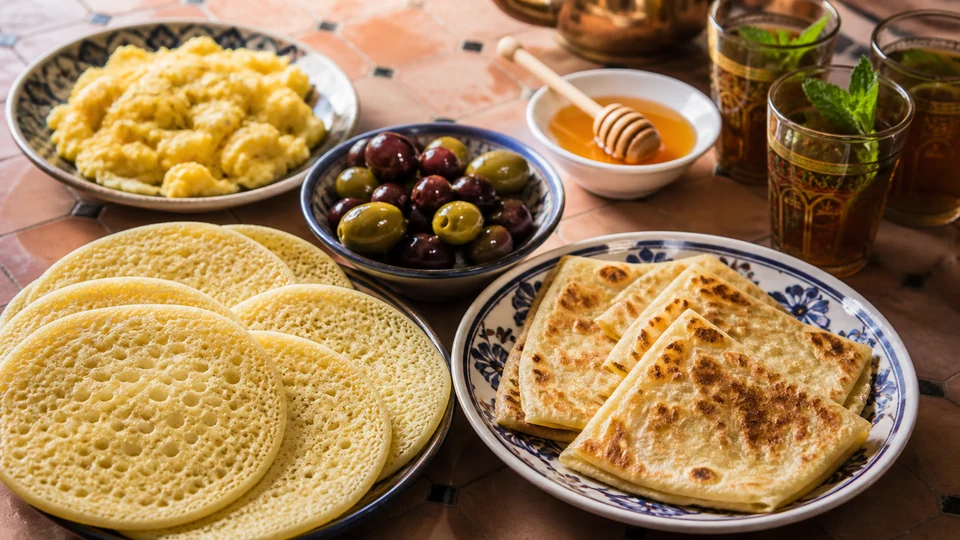

This guide belongs to Breakfast. A useful Moroccan breakfast plan is a shared table built from bread or a griddled bread, a few small savoury and sweet accompaniments, fruit, and a hot drink. Choose one complete documented bread method, keep claims about regional custom modest, and let guests combine components rather than calling one fixed plate the national standard.
This route sits in the Breakfast collection. Pancake World uses the page to answer this exact kitchen or planning intent while keeping unsupported recipe, nutrition, product and cultural claims out of the article.
This guide offers a Morocco-informed planning framework. It does not claim that every household, region, café or celebration serves the same foods.
| Guide sections |
|---|
| Build a compact Morocco-informed table |
| Coordinate breads, accompaniments and tea |
| Repair texture or service problems |
| Food safety, labels and claim boundaries |
For broader context, continue with World Pancakes: Dishes and Traditions.
Build a compact Morocco-informed table
A practical plan can be built around msemen layers, baghrir surface and bread basket, with olive and cheese plate and honey and preserves added only when they serve a defined role. The remaining decisions concern control, service and repeatability. Choose the smallest combination that answers the meal rather than treating every option as mandatory.
Plan the bread work before the table
Msemen and baghrir are different production projects. Msemen depends on dough development, relaxation, thin stretching, folding and griddle control; baghrir is a batter pancake whose visible porous surface belongs to its own complete formula. Making both for the first time on the same morning creates two unrelated failure points. A more controlled menu chooses one as the hot bread and supports it with purchased or previously verified bread. If msemen is selected, process the dough balls in order so each receives a comparable rest. If baghrir is selected, keep the pan surface and portion consistent and do not flip it merely because another pancake style is normally flipped.
Make accompaniments do different jobs
Use small dishes to create contrast: one salty or briny element, one creamy element, and one sweet element is enough. Olives and cheese can share a savoury role, while honey and preserves both occupy a sweet role and need not appear in several versions. Fruit adds freshness without claiming that a particular fruit defines breakfast across Morocco. Put each accompaniment in its own vessel with a dedicated utensil. This prevents honey from entering cheese, keeps brine away from bread, and makes allergens easier to explain. Refill small dishes from protected reserves rather than placing every jar and package on the table.
Coordinate heat and tea
Bread loses surface character when sealed under heavy steam, while tea suffers when it waits through an unplanned griddle session. Finish the tea setup before the final bread wave, but brew according to the selected tea's directions close enough to service that it remains intentional. Hold cooked breads loosely rather than trapping them in an airtight stack. Place the hottest pieces at the top or in a clearly replenished basket so guests do not dismantle the table looking for them. Sweetness can remain adjustable at the table; that is more transparent than announcing one sweetness level as the correct Moroccan rule.
Describe the menu honestly
Name the table by what is actually present: for example, msemen with olives, cheese, fruit and tea. Avoid “authentic Moroccan breakfast” unless route-specific evidence supports the exact claim. Morocco contains regional, household and occasion-based variation, and an English-language planning article cannot collapse that variety into one compulsory plate. The useful claim is narrower: this menu uses named foods associated with Moroccan cooking and follows complete sources for their preparation. That wording gives readers a practical plan without turning preference into cultural fact.
A realistic morning production order
The night before, choose the bread formula, check flour and semolina, and set out only shelf-stable equipment. In the morning, begin with the dough or batter step that genuinely needs rest. During that waiting time, wash fruit, portion olives and cheese, and prepare the tea tray without brewing yet. Cook bread in controlled waves and keep it loosely protected. Brew tea when the final wave begins. This order uses waiting time without pretending that every component can be held indefinitely.
Serving a mixed-age or mixed-diet table
Keep plain bread separate from toppings so guests can choose. Retain packages for cheese, spreads and any purchased bread. Use separate spoons for honey and preserves and tongs for bread. If a vegan option is needed, verify the selected bread formula and every accompaniment; do not infer vegan status from the absence of visible meat. If gluten or nut allergy is relevant, a shared flour-heavy preparation may not meet the eater's cross-contact requirement.
What to record afterward
Note which bread was selected, how long the dough or batter needed to reach its source cue, how many pieces the pan handled comfortably, and which accompaniments were actually eaten. Record whether the basket trapped steam or whether tea was brewed too early. These observations improve a future table without claiming that one household menu represents Moroccan breakfast everywhere.
Additional route decisions
Msemen layers
Use a complete msemen method and protect the dough rests that make thin stretching possible.
Baghrir surface
Select a documented baghrir formula and judge its porous top from that source rather than inventing ratios.
Bread basket
Combine only breads the kitchen can warm without creating a last-minute queue.
Olive and cheese plate
Keep salty, creamy and briny items in small separate dishes so diners choose their balance.
Honey and preserves
Serve sweet accompaniments in restrained portions with dedicated utensils.
Egg component
Cook eggs by a reliable method and keep their timing independent from bread production.
Fruit service
Wash, cut and protect fruit according to the chosen service time.
Tea workflow
Brew the selected tea by its own directions and avoid presenting one preparation as universal.
Guest labels
Name every bread and accompaniment plainly and mark allergens without cultural guesswork.
Small-table sequence
Place breads centrally, hot items close to service and refillable dishes at the edge.
Coordinate breads, accompaniments and tea
The sequence below ties the first control to msemen layers, the equipment decision to bread basket, and the service check to small-table sequence. It is intentionally narrower than a universal cooking timetable.
1. Define the result
For msemen layers, write the intended texture, serving format and dietary boundary before shopping.
2. Verify the inputs
For baghrir surface, read the complete formula and current package labels, then record every consequential variation.
3. Stage the equipment
For bread basket, reserve the pan, oven, counter, cooling space and serving utensils the method actually needs.
4. Prepare one control
For olive and cheese plate, keep the first portion close to the source so a later correction has a clear baseline.
5. Observe before changing
For honey and preserves, note spread, moisture, release, colour and centre condition rather than guessing from the clock.
6. Serve and record
For egg component, protect safe handling, label the finished components and write one useful note for the next batch.
Repair texture or service problems
A useful correction begins with the named symptom. The aim is to protect the remaining food and learn which variable mattered, not to force every portion onto the table.
Tough msemen
Allow more relaxation and avoid forcing a springing dough sheet.
Dense baghrir
Check the complete formula, leavener condition and pan surface before changing several variables.
Cool bread
Warm smaller waves instead of exposing the whole basket early.
Crowded table
Remove duplicate spreads and give each remaining dish a clear role.
Overstated authenticity
Name the actual preparation and source instead of assigning it to all Moroccan breakfasts.
Food safety, labels and claim boundaries
Raw flour is a raw food, including flour in vegan or gluten-free batter. Do not taste uncooked dough or batter, and clean hands, tools and surfaces after contact. Use the complete method's doneness cues; a browned surface cannot by itself prove that a thick centre has set.
Perishable components need a known storage history. Decide how they will be cooled, refrigerated, transported and reheated before making a large batch. Food that missed its validated control is not made safe merely by giving it a new name or cooking it again.
Dietary labels describe separate boundaries. Vegan does not mean nut-free, gluten-free or suitable for every allergy. A single omitted ingredient does not certify the whole preparation, and packaged products must be checked from their current ingredient and allergen information.
The listed sources support only the allowed uses in the route's source plan. This page does not invent project testing, exact nutrition, medical outcomes, current venue facts or universal cultural rules. Where moroccan breakfast requires a complete formula, that formula remains the authority for quantities, timing, yield and equipment.
A better next batch
Record the exact condition of msemen layers, the preparation of baghrir surface, the equipment used for bread basket, and the service result of small-table sequence. Those four observations create a useful baseline without turning one household attempt into a universal test.
If the main defect was tough msemen, repeat the complete method with only the bounded correction recorded above. If the result instead showed dense baghrir, return to the preparation stage that creates that symptom. Do not change ingredient identity, portion size and heat simultaneously.
Scale only after a representative portion passes. A crowded pan, deeper vessel, larger scoop or longer holding period changes the physical problem. Two controlled batches can be easier to execute and diagnose than one oversized batch, provided the selected source permits that production pattern.
Verify the result before service
Review egg component first because it is the control that commits the remaining batch. Apply its stated action—cook eggs by a reliable method and keep their timing independent from bread production—and compare the result with fruit service. The second element matters because wash, cut and protect fruit according to the chosen service time. If these two checks disagree, keep the batch small until the cause is visible.
Next inspect tea workflow in the condition in which it will actually be served. The route plan says to brew the selected tea by its own directions and avoid presenting one preparation as universal. Do that before adding guest labels, since the latter is intended to name every bread and accompaniment plainly and mark allergens without cultural guesswork. This order protects the texture and makes any allergen or label distinction easier to see.
Finish with small-table sequence. Its purpose is to place breads centrally, hot items close to service and refillable dishes at the edge. Check the thickest or most heavily loaded portion, not the most attractive one, and compare it with the two leading warning signs: tough msemen and dense baghrir. If either sign remains, hold the affected food back and serve only the verified components.
A final service check also covers utensils, labels and holding conditions. Put a dedicated utensil with each spread, sauce or alternative, keep crisp and wet items apart until intended assembly, and state dietary boundaries only to the level verified by current labels and the preparation process.
Frequently asked questions
Is one dish required?
No; choose a coherent small table and identify it as your menu, not a nationwide rule.
Can everything be made ahead?
Only where each complete source gives a safe and texture-appropriate holding path.
Must tea be sweet?
No universal instruction belongs here, so serve sweetness separately when practical.
Can pancakes join the table?
Yes, if they are named accurately and do not replace a claimed traditional item by assumption.
How do I serve a crowd?
Limit breads, portion accompaniments and plan warming capacity before adding variety.
Contextual Pancake World guides
- Breakfast Pancakes: Styles, Plates and Munich Context
- American Breakfast: Pancakes, Diner Plates and Brunch
- Fast Breakfast: A Practical Planning Guide
Explore related Pancakes World guidance on American Pancakes, American Breakfast: Pancakes, Diner Plates and Brunch, and Maple Syrup.
Sources and editorial references
- Taste of Maroc: Msemen Recipe —
https://tasteofmaroc.com/msemen-recipe/ - U.S. Food and Drug Administration: Handling Flour Safely —
https://www.fda.gov/consumers/consumer-updates/handling-flour-safely-what-you-need-know - U.S. Food and Drug Administration: Food Allergies —
https://www.fda.gov/food/nutrition-food-labeling-and-critical-foods/food-allergies - USDA FSIS: Leftovers and Food Safety —
https://www.fsis.usda.gov/food-safety/safe-food-handling-and-preparation/food-safety-basics/leftovers-and-food-safety