Mixing pancake batter
At Pancakes World, mix pancake batter by combining the recipe’s dry ingredients evenly, combining its wet ingredients separately, then folding the two just until no large dry pockets remain. Do not chase every small lump, and cook on the schedule stated by the formula because extra beating and unplanned resting change the batter. Use the editorial platform to connect this exact task with the wider editorial collection.
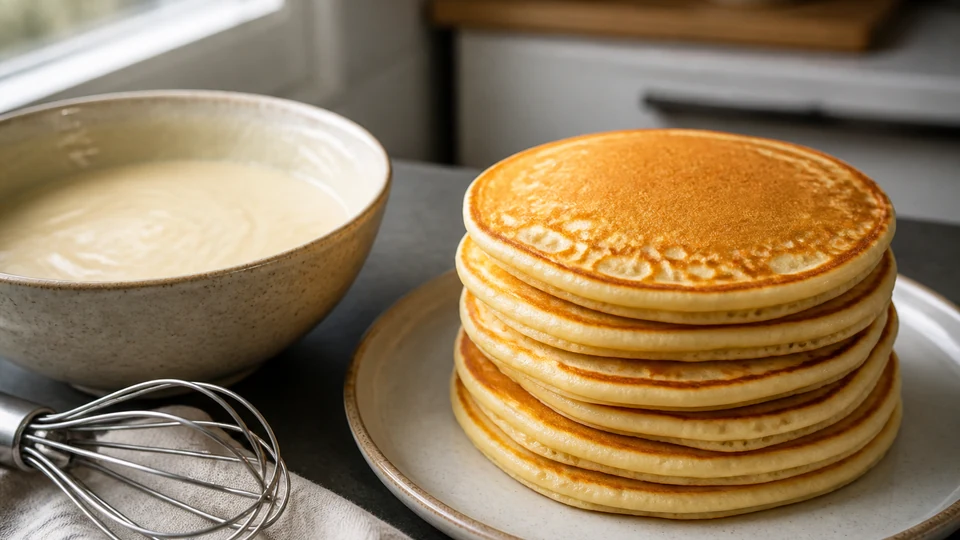
The approved parent route is Pancake Science. The useful endpoint depends on the chosen flour, leavener and formula; “mix for exactly one minute” is not a universal rule. Quantities, yield, timing, nutrition, storage, and dietary suitability must therefore come from the selected complete formula, current product labels, and the cited authority within its stated domain.
| Guide sections |
|---|
| Choose a format before changing ingredients |
| Build a controlled preparation sequence |
| Current-batch troubleshooting |
| Evidence and safety boundary |
For broader context, continue with Pancake Ingredients and Substitutions.
Choose a format before changing ingredients
Distribute dry ingredients first
Whisk flour, leavener, salt and dry flavourings before liquid arrives. This reduces local pockets of leavener without requiring aggressive mixing later.
Emulsify the wet bowl
Break up egg and combine the specified liquid and melted or liquid fat as directed. Very hot fat can create lumps when it contacts cold ingredients, so follow the recipe order.
Fold with a clear stop cue
Use broad strokes that reach the bottom and sides. Stop when large dry streaks disappear; a few small lumps are different from hidden flour pockets.
Portion consistently
Use the same scoop and pan area for the first comparison. Inconsistent portions make it hard to separate mixing effects from thickness and cook-time effects.
Build a controlled preparation sequence
- Read the complete formula and note whether it specifies a rest.
- Measure flour without packing and distribute the dry ingredients.
- Combine wet ingredients in their stated order.
- Add wet to dry and fold while scraping the bowl perimeter.
- Stop at the formula cue, then portion without remixing between pancakes.
Current-batch troubleshooting
Tough or rubbery pancake
Reduce extra stirring in the next controlled batch while keeping the formula constant.
Dry pockets in the centre
Use fewer but broader strokes that reach the bowl bottom.
First and last pancakes differ
Record waiting time and avoid repeated stirring as the batter stands.
Uneven rise
Check dry leavener distribution and portion size before blaming pan heat.
Evidence and safety boundary
Flour is a raw ingredient, so do not taste uncooked batter. Keep the selected formula intact, use its cooked-centre cues, and treat a failed first pancake as diagnostic evidence rather than permission to keep adding flour, liquid, or leavener without measurement. The sources do not establish a Pancake World kitchen test, a universal result, or identical behaviour across brands and appliances. If ingredient identity, storage history, or an applicable endpoint is uncertain, resolve it before cooking or serving.
For the next trial, compare distribute dry ingredients first with emulsify the wet bowl only if both remain inside the selected formula's boundaries. Record whether tough or rubbery pancake or dry pockets in the centre appeared, then change one plausible variable. That makes the follow-up specific to this route rather than a generic correction.
Next-batch prevention checklist
- Select one complete formula that actually covers mixing pancake batter.
- Keep distribute dry ingredients first separate from fold with a clear stop cue when their preparation schedules conflict.
- Observe tough or rubbery pancake in the first small portion.
- Record first and last pancakes differ before changing the next batch.
- Change one plausible variable and preserve the control.
- Omit unsupported yield, nutrition, dietary-outcome, and project-test claims.
Contextual routes for the next decision
- Batter Mixture For Pancakes for a neighbouring preparation or menu decision.
- Healthy Pancake Recipe No Egg for a neighbouring preparation or menu decision.
- 3 Ingredient Low Carb Pancakes for a neighbouring preparation or menu decision.
Frequently asked questions
Should all lumps disappear?
Not necessarily. Remove large dry pockets, but do not keep beating solely for a perfectly smooth appearance unless the recipe requires it.
Can a blender mix pancake batter?
Only for a formula designed for that method; a blender can apply much more shear than hand folding.
Should batter rest?
Follow the selected recipe. A rest can change hydration and leavening behaviour, so it is not an automatic extra step.
Explore related Pancakes World guidance on American Pancakes, American Breakfast: Pancakes, Diner Plates and Brunch, and Maple Syrup.
Sources and editorial references
- U.S. FDA, Handling Flour Safely —
https://www.fda.gov/food/buy-store-serve-safe-food/handling-flour-safely-what-you-need-know - King Arthur Baking, Buttermilk Pancakes —
https://www.kingarthurbaking.com/recipes/buttermilk-pancakes-recipe - Colorado State University Extension, Ingredient Substitutions —
https://extension.colostate.edu/resource/ingredient-substitutions/