Mexican breakfast recipes
At Pancakes World, mexican breakfast recipes are best approached as a collection of complete, named formulas rather than one interchangeable master method. Choose the eating format first—sauced tortillas, plated eggs, beans and bread, a filled tortilla, tamales or another documented dish—then select a credible recipe that supplies its own ingredients, yield and timing. Preserve the recipe's terminology and order, prepare sides on separate schedules, and avoid mixing a sauce from one source with the quantities of another. This guide helps readers compare workloads and service needs; it does not claim authenticity, invent regional history, publish nutrition totals or present a tested the editorial platform recipe.
The Breakfast hub provides more morning collections. Pancake World places this recipe-selection guide within the full editorial library.
| Guide sections |
|---|
| Start with the form of the meal |
| Sauced tortilla recipes |
| Egg-centred plated recipes |
| Bread and filled-tortilla recipes |
For broader context, continue with American Breakfast: Pancakes, Diner Plates and Brunch.
Start with the form of the meal
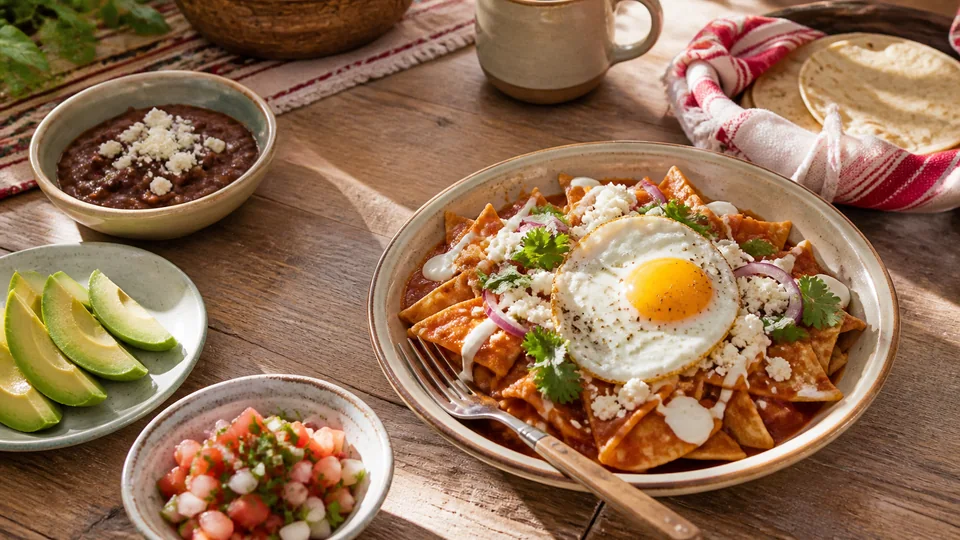
A search for Mexican breakfast recipes can point to several very different kitchen jobs. Chilaquiles ask the cook to manage sauce and tortilla texture near service. Huevos rancheros coordinate eggs, tortillas, sauce and beans on a plate. Molletes centre on bread, beans and toppings. Enfrijoladas rely on a bean-based sauce and filled or folded tortillas. Tamales require a complete steaming or reheating method. A quesadilla or torta is assembled around a controlled filling.
Pick one of those structures before building the shopping list. The structure decides which component owns the final minutes, which food can be made earlier, and how many burners or oven shelves are needed. It also prevents a vague “Mexican-style” label from replacing the real name of a documented dish.
Sauced tortilla recipes
Chilaquiles
For chilaquiles, select one complete recipe and decide where its author intends the tortilla texture to land. Some methods add sauce close to service; others allow more absorption. Do not take the tortilla treatment from one method and the sauce volume from another. Prepare garnishes, plates and any separately cooked eggs before the tortillas reach their final stage.
The sauce should be ready in the form specified by the recipe. If it is made from fresh produce, follow the documented cooking process; if a packaged component is allowed, retain its label. A sauce that is unexpectedly thin or salty should be diagnosed from its own preparation rather than corrected with an unplanned thickener.
Enfrijoladas
Enfrijoladas use a bean-based sauce as a defining component. The bean starting state matters: dry, home-cooked and canned beans do not share one preparation. Follow the source for draining, blending, seasoning and heating. Keep the filling modest enough that the tortilla can be handled as directed, and assemble in an order that avoids leaving coated tortillas waiting while another pan catches up.
If cheese, cream or a plant-based finish is offered, treat it as a labelled option. Its presence does not determine the dish's safety or prove a nutrition claim. Keep cold toppings chilled and add them after the hot work is complete.
Egg-centred plated recipes
Huevos rancheros
The useful challenge is coordination. Sauce and beans can often be prepared before the eggs, but only as their complete sources permit. Tortillas should be warmed on a schedule that keeps them flexible without holding them indefinitely. Eggs remain a final active task and need the applicable doneness method.
Set plates and serving utensils before cooking the eggs. Assign one place for sauce, another for tortillas and a clean area for cooked eggs. This reduces cross-contact and stops a finished egg from cooling while the cook searches for garnishes. FoodSafety.gov lists 160°F for egg dishes; use the current category and complete recipe for the exact preparation being served.
Eggs with beans or vegetables
A recipe for eggs with beans, tomatoes, peppers or another vegetable should state when each element enters the pan. Do not assume a finely cut vegetable will soften during the egg stage. Pre-cook or drain only as directed. If raw meat is included, it needs its own safe handling and endpoint; colour in a strongly seasoned pan is not enough.
Bread and filled-tortilla recipes
Molletes
Molletes make bread structure important. Choose bread and a complete formula that support the bean layer and toppings. If the beans are very wet, bread can soften before heating; if the layer is excessively thick, the centre may remain cooler than the browned surface suggests. Use the recipe's proportions and heating cue.
Prepare fresh salsa or garnish with clean tools away from the bread station. FDA advises washing produce under running water and not using soap, detergent or commercial produce wash. Add wet finishes at service so the bread does not wait under them.
Quesadillas
A breakfast quesadilla works when the filling is thin enough to heat evenly and the tortilla can be turned or folded without tearing. Select a formula written for the chosen filling. Cook watery vegetables or raw animal ingredients by the documented method before they become enclosed.
Cut the finished quesadilla on a clean surface that did not hold raw food. For a group, cook in manageable waves and keep the filling under proper control between waves. A large stack hidden under a towel may lose texture and makes it harder to track which portions were prepared when.
Breakfast tortas
Treat bread, hot filling and fresh garnish as three stations. The filling should finish before the bread is opened for final assembly; otherwise the bread dries while the cook manages the pan. Sauces need measured application so they do not soak the loaf. If the sandwich is packed, cool or hold it only through a documented method suitable for its ingredients.
Prepared staples and make-ahead choices
Tamales
Use a complete tamal recipe or a verified reheating method for prepared tamales. Steaming time depends on the product, starting state, size and equipment, so this page does not supply a universal number. Arrange the steamer as directed, avoid overloading it, and verify the filling through the applicable source.
Tamales can simplify service because their wrappers keep portions distinct, but toppings and sides still need planning. Set out a small number, retain the rest under the correct control, and provide a place for wrappers that does not obstruct food service.
Beans prepared in advance
Beans can support several breakfasts, but they need an identified starting state and storage record. Label a cooked batch, cool it promptly, and reheat only what the recipe or service requires. USDA FSIS advises refrigerating perishable leftovers within two hours, using shallow containers, keeping most refrigerated leftovers three to four days, and reheating to 165°F.
Choose by available time
For a short weekday window, select a complete recipe with few active components: a controlled quesadilla, beans with a documented egg preparation, or prepared tamales reheated by their instructions. Move labels, plates and cold garnishes into place before heat begins.
For a weekend table, chilaquiles or huevos rancheros can work when one component is designated as the final bottleneck. Do not add another made-to-order item that uses the same pan. A fruit plate, bread or simple drink station can complete the table without creating another cooking queue.
For a group, choose a recipe with a clear yield and a serving method that scales through separate batches. Multiplying ingredients in a deeper vessel can change heat transfer. Run source-sized batches when the recipe does not provide a larger method.
Keep dish names and claims accurate
Use the name supplied by the credible recipe. Do not add a regional label, “traditional,” “authentic” or “original” unless route-specific evidence supports it. This guide deliberately avoids an origin narrative. It also avoids ranking one dish above another; the useful comparison is workload, equipment, texture and service style.
Ingredient substitutions deserve the same restraint. Replacing a garnish is different from changing a tortilla, bean base, sauce technique or structural filling. When a change alters the method, find a complete formula written for that version. Record editorial preference as preference, not as a cultural or nutrition fact.
Troubleshooting the breakfast spread
Tortillas become soft before service
Review when sauce or filling was added. Prepare plates and garnishes earlier, then complete the tortilla stage nearer to eating. Do not try to restore crispness by raising heat on an already assembled dish unless the chosen recipe directs it.
The kitchen has too many final pans
Keep the named main dish and remove a competing cooked side. Replace it with fruit, bread or a chilled accompaniment. A focused table is more useful than several components reaching the plate late.
Beans are too loose for the intended dish
Check their starting state, included liquid and the source's reduction or blending step. Correct through that recipe rather than adding an unsupported thickener. For the next batch, record whether the beans were drained and how the pot was loaded.
Eggs finish before tortillas and sauce
Reverse the preparation order. Put sauce, beans, plates and tortillas in their ready state before starting eggs. If another cook is available, assign the egg pan clearly so two people do not adjust it.
Fresh toppings warm on the table
Use smaller bowls and replenish from refrigeration with clean replacements. Do not pour fresh topping over a dish that has been standing out. Keep an individual utensil with each labelled ingredient.
Frequently asked questions
Which recipe is easiest on a weekday?
Choose by active components, not by title. A documented quesadilla, prepared tamal reheating method, or simple beans-and-egg formula can fit when it uses one main pan and few final steps.
Which options work for a group?
Look for a clear yield, batch method and serving plan. Tamales, a controlled tortilla bake or source-sized waves may be easier than several individual egg plates. Do not enlarge depth without guidance.
Can the meal be egg-free?
Yes. Bean-based tortilla dishes, molletes, tamales, filled tortillas and other complete recipes can be selected without eggs. Verify every ingredient label for the actual requirement.
Does this page claim one authentic Mexican breakfast?
No. It maps practical recipe formats and preserves their documented names while avoiding unsupported authenticity, origin and regional claims.
Is Recipe schema used here?
No. Article schema is appropriate because the page compares externally documented formulas and no project-owned tested recipe record supplies quantities, instructions, yield and timing.
Keep a recipe-selection note
A short note beside the shopping list can prevent accidental substitutions between formulas. Record the chosen dish name, the source used for its core method, the stated yield, and the components that must be finished immediately before eating. Add a separate line for garnishes and accompaniments so they do not become unplanned changes to the main recipe. If the source leaves a choice open, such as one of several fillings, write down the choice before shopping rather than deciding when the pan is already hot.
After breakfast, record only observations you can actually see: whether the tortilla held its intended texture, whether all plates were ready together, and which component caused a delay. Those notes improve the next service without turning an editorial suggestion into a test claim. They also make it easier to return to the same complete formula instead of reconstructing a hybrid from memory. If a different dish is wanted next time, begin with that dish's own source and schedule rather than treating the old note as a universal Mexican breakfast method.
Explore related Pancakes World guidance on American Pancakes, Maple Syrup, and Maple Syrup Pancakes.
Sources and editorial references
- FoodSafety.gov —
https://www.foodsafety.gov/food-safety-charts/safe-minimum-internal-temperatures - USDA Food Safety and Inspection Service —
https://www.fsis.usda.gov/food-safety/safe-food-handling-and-preparation/food-safety-basics/leftovers-and-food-safety - U.S. Food and Drug Administration —
https://www.fda.gov/food/buy-store-serve-safe-food/selecting-and-serving-produce-safely - USDA FoodData Central —
https://fdc.nal.usda.gov/