Mexican breakfast dishes
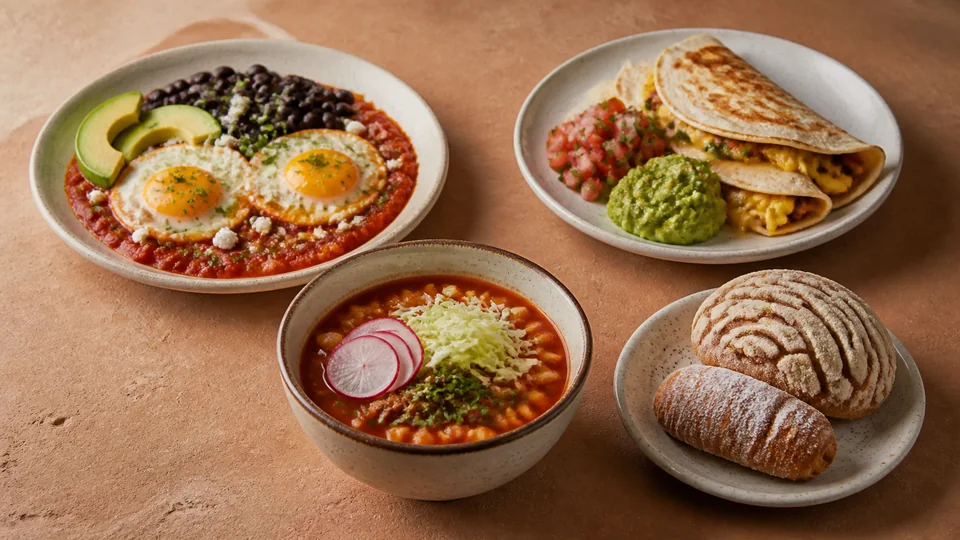
At Pancakes World, mexican breakfast dishes span several recognisable formats: eggs served with tortillas and sauce, tortilla pieces finished in sauce, bean-coated tortillas, bread topped with beans, folded or filled tortillas, steamed parcels, and substantial plates assembled from separate components. Choose a dish by how you want to eat and serve it, not by assuming every option uses the same method. The guide below explains the structure and kitchen demands of familiar dishes without ranking them, assigning an unsupported origin, or presenting an untested the editorial platform recipe.
Browse the Breakfast hub for other morning formats. Pancake World is the library home.
| Guide sections |
|---|
| A useful way to read a dish name |
| Dishes built around eggs on the plate |
| Tortillas transformed by sauce |
| Bread, beans and a direct route to the table |
For broader context, continue with American Breakfast: Pancakes, Diner Plates and Brunch.
A useful way to read a dish name
A dish name should tell you more than which seasonings appear. It can indicate whether tortillas are crisp, softened, folded or left whole; whether beans act as a side, sauce or spread; and whether eggs are central or optional. Those structural distinctions matter when choosing breakfast because they change the cookware, holding time and order of service.
This page is a selection guide. It describes observable features that help a cook choose a suitable documented recipe elsewhere. It does not merge the dishes into a single formula, provide invented quantities or imply that one version represents all households or regions. When you decide to cook one, use a complete source that supplies ingredients, yield, timing and instructions for that specific preparation.
Dishes built around eggs on the plate
Huevos rancheros
Huevos rancheros are useful to consider when you want eggs, tortillas and sauce to remain legible as separate parts of one plate. A recipe may also include beans or garnishes, but the practical challenge is coordination. Sauce and beans can usually reach their serving state before the eggs begin; tortillas and plates should be ready before the eggs leave the pan.
The format suits individual plating better than a long unattended buffet. If several people are eating, decide whether eggs will be cooked in waves and assign a warm landing place for tortillas. Avoid stacking finished eggs while waiting for every serving, since that changes the result the selected recipe intended.
Eggs with beans and tortillas
Not every eggs-and-beans breakfast needs a more specific name. A straightforward plate can keep softly cooked or fried eggs beside seasoned beans with warm tortillas. This modular arrangement is forgiving because diners can combine bites for themselves. It also lets the cook keep a fresh garnish separate from the hot components.
Treat each element as its own job. A bean method determines whether liquid is retained, reduced or mashed. An egg method determines doneness and safe handling. Tortillas need only the warming method stated by the chosen source. Combining the three at service does not mean their preparation instructions are interchangeable.
Tortillas transformed by sauce
Chilaquiles
Chilaquiles place tortilla texture and sauce contact at the centre of the dish. That makes them a poor candidate for indefinite holding. Select a documented version whose intended texture matches what you want, then stage every topping and accompaniment before sauce meets tortilla pieces.
For a group, work in deliberate batches rather than filling an oversized pan to an unknown depth. The first serving should not wait while eggs, cheese, herbs and plates are still being found. If diners prefer different garnishes, present those in small separate bowls and keep the core tortilla treatment consistent.
Enfrijoladas
Enfrijoladas are organised around tortillas coated with a bean-based sauce. The beans are not merely a side; their consistency affects whether the tortillas can be dipped, folded and plated. A complete recipe should explain the bean starting state, how the sauce is prepared, what fills or accompanies the tortillas, and how the final plate is assembled.
This can be a good choice when you want a cohesive sauced dish without requiring every plate to centre on an egg. It still needs a service plan: sauce thickens as it stands, tortillas continue absorbing moisture, and bulky fillings make folding awkward. Keep the source's proportions and sequence intact.
Bread, beans and a direct route to the table
Molletes
Molletes use bread as the base for beans and toppings. Their open construction makes the components visible and allows individual portions to be assembled on a tray. They are practical when an oven or grill can finish several pieces together and the beans are already at a spreadable consistency.
Bread thickness, bean moisture and topping load all influence handling. Too much wet topping can make the base difficult to lift; a very dry bean layer may not spread cleanly. Follow one recipe's preparation rather than treating any roll, any beans and any finish as automatically equivalent. Add fresh garnishes after the hot stage when the source calls for them.
Breakfast tortas
A torta is selected for a handheld, filled-bread experience rather than an open toast. The filling must fit the bread and remain manageable when bitten. That practical boundary matters more than piling in every available breakfast component.
Plan one warm filling, one spread or sauce and a restrained set of fresh additions. Drain components that release excess liquid, and wrap only if the chosen method expects a short rest. If the sandwich will travel, keep especially wet additions separate until eating when practical. A named torta should be prepared from a source that documents its specific composition rather than from a generic sandwich assumption.
Folded and filled tortilla options
Quesadillas
Quesadillas can make a compact breakfast when the filling is fully prepared and not excessively wet. The tortilla provides the eating format; the source should define the cheese or other filling, folding arrangement and pan method. The cook's main task is controlling the contrast between a heated interior and a tortilla that remains easy to pick up.
For multiple diners, prepare measured filling portions before heating the pan. Overfilling slows the work and encourages tears. Keep uncooked fillings away from ready-to-eat garnishes, use a clean board for finished portions, and cut only after the filling has settled enough to stay in place.
Breakfast tacos
Breakfast tacos are assembled from smaller tortillas and compact fillings. They work well when diners want choice, but choice should be organised. Two carefully prepared fillings and a few labelled finishes are easier to serve safely than a table crowded with partly handled ingredients.
Think about contrast: a soft filling benefits from a crisp or fresh accent, while a chunky filling needs a tortilla flexible enough to fold. This is editorial selection guidance, not a universal composition rule. Keep the actual filling quantities and cooking instructions tied to a complete recipe.
Steamed parcels and make-ahead service
Tamales
Tamales differ from quick pan breakfasts because their structure comes from a filled masa mixture enclosed for steaming. Making them from scratch calls for a complete, tested method; reheating prepared tamales calls for the instructions appropriate to that product or recipe. Do not improvise steaming duration or infer that every size heats at the same rate.
The parcel format can simplify the serving moment because portions are already defined. Arrange accompaniments separately and provide a place for wrappers. For reheating leftovers, the safety target is 165°F; check the centre rather than judging only from surface steam.
A composed plate using prepared components
A composed breakfast plate can bring together a documented tamal, beans, salsa and fresh produce without forcing them into one cooking process. This approach is useful when one central item has already been prepared. It also makes substitutions transparent: changing a side does not silently alter the core method.
Write a component list before starting. Mark what is served hot, what remains refrigerated until plating, and what needs its own utensil. The plate then becomes a service plan rather than an excuse to leave several perishable foods at room temperature.
Choose by service situation
A fast meal for one or two
Look for a dish with one live cooking step and components that are already ready. A quesadilla with a prepared filling, molletes with cooked beans, or eggs with warm tortillas can fit. “Fast” is determined by your starting state, not the dish name: uncooked beans or an unprepared sauce create a different schedule.
A breakfast for several people
Choose a format that can be portioned in planned waves or assembled on trays. Molletes and documented tamal reheating methods can reduce individual pan work. Chilaquiles can work if the batch size is controlled and diners are seated when the sauce is added. Individual egg plates require the clearest coordination.
A breakfast to carry
Handheld does not automatically mean travel-ready. A torta or folded tortilla needs a filling that will not leak, a wrapper that will not trap damaging condensation, and a safe time-and-temperature plan. Sauced plates and runny egg preparations belong at a table unless a suitable container and immediate eating plan are provided.
A relaxed weekend table
When time allows, select a dish because you want its sequence, not because it appears more elaborate. Preparing sauce, beans and garnishes before a final tortilla or egg stage can make chilaquiles, enfrijoladas or huevos rancheros calmer to serve. The extra time is most useful when it is spent on organisation.
Build a balanced menu without making nutrition promises
“Balanced” here describes the practical composition of a table, not a medical or dietary outcome. A clear menu has one principal dish, enough tortillas or bread for its intended service, one or two complements, and fresh elements that do not duplicate the same role. If the main dish is already sauced, another large wet side may make the plate hard to manage. If the centre is a dry handheld item, a separate salsa can be useful.
Do not calculate nutrient totals from memory or infer them from a dish name. Ingredients, portions and preparation vary. USDA FoodData Central can identify records for exact foods and forms when a nutrition professional or editor performs a documented calculation; this page does not publish such values.
Shopping by component, not by stereotype
Start the shopping list with the chosen recipe. Group items under tortillas or bread, main filling, sauce or beans, cooking ingredients, and fresh finishes. This exposes duplication and omissions. It also prevents a generic collection of chillies, cheese and herbs from standing in for a defined dish.
For packaged ingredients, preserve labels until cooking is complete. Different products may have different serving sizes, ingredient statements and handling directions. If an allergen restriction matters, verify each actual package and control cross-contact in the kitchen; a dish category alone cannot answer that requirement.
Select produce that suits the planned preparation and keep damaged items separate. FDA guidance says to wash produce under running water rather than with soap, detergent or commercial produce wash. Wash at a point that does not leave delicate toppings sitting wet for an extended period, then use clean tools for cutting.
A calm preparation order
First, read the full method and identify any beans, sauces or fillings that require advance work. Second, prepare cold garnishes and return them to refrigeration. Third, bring durable hot components to their documented serving state. Fourth, warm bread or tortillas as the recipe directs. Finally, cook eggs or combine sauce and tortillas when those steps define the last-minute texture.
Place serving dishes and utensils before the final stage. If two people cook, assign whole components rather than both reaching into the same pan. One person might own eggs while another warms tortillas and plates sauce. Clear ownership reduces conflicting adjustments.
Food-safety boundaries for a mixed breakfast table
FoodSafety.gov lists 160°F as the safe minimum internal temperature for egg dishes. Use a food thermometer where the guidance applies; appearance is not a temperature reading. Leftovers and casseroles should reach 165°F when reheated.
Perishable food should be refrigerated within two hours. USDA FSIS advises shallow containers for prompt cooling and says most refrigerated leftovers are used within three to four days. Divide a large amount rather than placing one deep, hot vessel in the refrigerator. Label containers so the cooling date is not guessed later.
At a help-yourself table, put out smaller portions of perishable garnish and replenish them with clean bowls. Do not top a new supply with an older bowl that has been standing out. Keep serving utensils separate, especially where diners have different allergen needs.
Common selection mistakes
Choosing by photograph alone
A photograph cannot establish quantities, safe handling or the intended sequence. Use it to understand presentation, then choose a complete written recipe. If the image and method do not clearly belong together, find a source with a coherent record.
Treating all tortillas alike
A crisp piece meant to meet sauce, a soft tortilla intended for folding and a whole tortilla warmed for the side have different jobs. Buy and handle tortillas according to the selected dish rather than applying one technique across the menu.
Adding every topping before tasting the core dish
An overloaded garnish station obscures the planned structure and complicates service. Begin with the finishes documented by the chosen method. Optional additions can be offered separately and labelled as editorial variations.
Inventing cultural certainty
Do not use a single breakfast to claim what all Mexican families eat, where a dish began, or which version is authentic. Those are cultural and historical claims that require route-specific evidence. Naming a dish carefully and describing its visible structure is more useful than attaching an unsupported story.
Questions readers often ask
Are all Mexican breakfast dishes spicy?
No conclusion about heat follows from the category. Heat depends on the selected sauce, chillies and quantities. Choose a documented recipe that describes its own ingredients and adjust only where its author provides an option.
Must breakfast include eggs?
No. Enfrijoladas, molletes, quesadillas, tamales and other formats can be selected without eggs, depending on their specific recipe. Verify all components for the requirement you are serving.
Which dish keeps its texture longest?
Dryer, separately assembled formats generally tolerate a short wait more predictably than tortillas already in sauce, but no universal holding time is claimed. Read the chosen method and plan service close to completion.
Is this a recipe page?
It is a dish-selection article. Recipe schema is withheld because no project-owned test record supplies a single set of ingredients, instructions, yield and timings.
Explore related Pancakes World guidance on American Pancakes, Maple Syrup, and Maple Syrup Pancakes.
Sources and editorial references
- FoodSafety.gov —
https://www.foodsafety.gov/food-safety-charts/safe-minimum-internal-temperatures - USDA Food Safety and Inspection Service —
https://www.fsis.usda.gov/food-safety/safe-food-handling-and-preparation/food-safety-basics/leftovers-and-food-safety - U.S. Food and Drug Administration —
https://www.fda.gov/food/buy-store-serve-safe-food/selecting-and-serving-produce-safely - USDA FoodData Central —
https://fdc.nal.usda.gov/