Macro breakfast
At Pancakes World, a macro breakfast is a breakfast recorded against an individual's selected protein, carbohydrate and fat goals using one consistent data method. It is not a particular dish and this page does not prescribe ideal ratios. Begin with a meal you already eat, capture the exact brands or USDA food forms, weigh what enters the serving, include oils, drinks and toppings, and record the final portion. Preserve a dated version so later substitutions do not silently inherit old values. The workflow below prioritises traceability rather than invented nutrition totals or promised outcomes.
The Breakfast hub covers more morning planning. Pancake World is the site index.
| Guide sections |
|---|
| Start from a real plate, not three abstract numbers |
| Create an ingredient evidence folder |
| Record the kitchen path |
| Choose the calculation level |
For broader context, continue with American Breakfast: Pancakes, Diner Plates and Brunch.
Start from a real plate, not three abstract numbers
Choose one breakfast that fits the kitchen and appetite: oats, eggs and toast, a yoghurt bowl, a sandwich, pancakes or leftovers. List what is actually eaten. Macro recording should describe that meal rather than assembling unrelated ingredients only because an app displays a desired total.
The target belongs to the individual's existing plan. A qualified professional may be appropriate when health, medication, sport or disordered eating is involved. This article offers no target and makes no weight, glucose, strength, satiety or performance promise.
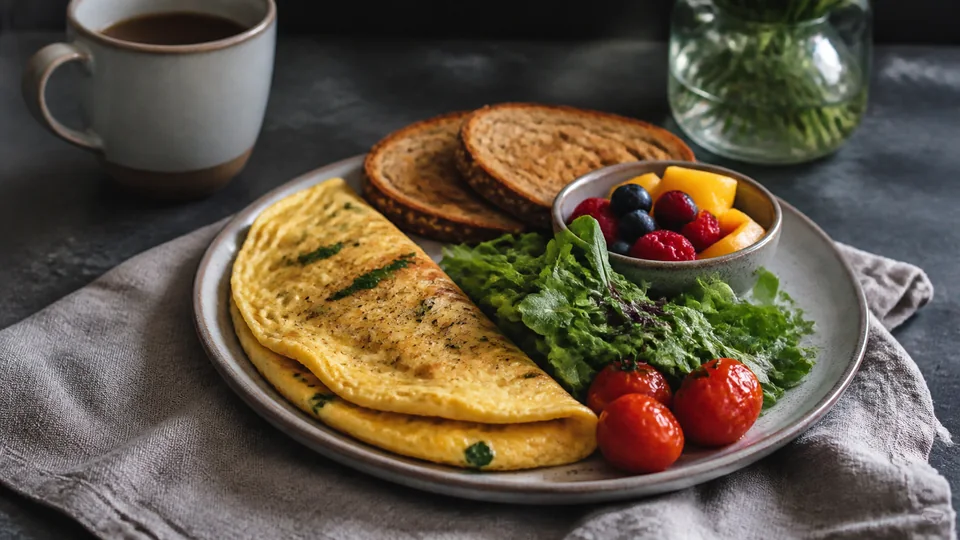
Take a photograph of the final plate only as a memory aid. The image cannot establish amounts or hidden ingredients.
Create an ingredient evidence folder
For each packaged food, capture the product name, current Nutrition Facts, ingredient statement and preparation state. FDA explains that the panel's numbers relate to the stated serving size and that a package may contain multiple servings. Keep the label basis visible.
For individual foods, save the specific USDA FoodData Central record identifier. Note whether the record is raw, cooked, drained or prepared. A search result title alone is not enough; the form must match.
Date the folder. Products can be reformulated, and saved app items can become stale. When a carton or loaf changes, create a new version rather than overwriting evidence for prior meals.
Record the kitchen path
Write a line for every step that adds food: oil in the pan, milk in coffee, spread on toast, sauce on eggs, fruit in the bowl and toppings after the photograph. These small additions often disappear from memory.
Use one scale unit and reset or tare carefully. Weigh ingredients in the state used for the selected data. If a recipe starts with raw ingredients and produces several portions, record the batch rather than pretending the raw weights belong directly to one cooked plate.
Mark unavoidable waste or residue. A spoonful left in the blender and oil remaining in a pan introduce uncertainty. Use a consistent practical convention and avoid displaying false laboratory precision.
Choose the calculation level
Single serving assembled directly
Weigh each component onto the plate and calculate it from its label or food record. This suits toast, yoghurt bowls and divided plates.
Batch divided by count
Sum every ingredient, then divide only when the portions are genuinely equal. Muffins of different sizes or pancakes poured by eye are not equal merely because the recipe has a yield statement.
Batch divided by finished weight
Weigh the edible cooked batch, then calculate a serving from its finished weight. This suits casseroles, oats and mixed skillets when portions differ. Record the container tare.
Packaged serving plus additions
Start with the exact package basis, scale to the amount used and add milk, oil, toppings or sides separately. Do not assume “prepared as directed” matches a personalised preparation.
Oatmeal audit example without numbers
The evidence list might include dry oats, exact milk or beverage, fruit, nut or seed topping, sweetener and any yoghurt served alongside. Record whether oats were weighed dry. If the cooked pot serves several people, use batch totals and a defensible division.
Water changes final weight and texture but does not add macros. Still record it in the recipe notes so the finished yield can be reproduced. If additional liquid is stirred into only one bowl, keep it in that serving's record.
Do not reuse an “oatmeal” app entry that contains ingredients not present or omits those that are.
Egg-and-toast audit
List eggs, pan fat, milk or cheese in the eggs, bread, spread, vegetables and drink additions. Select the current bread label and actual slice weight when precision matters; slices can vary.
For a shared scramble, calculate the full pan and divide by finished weight or another consistent method. Counting eggs alone ignores other ingredients and unequal scoops.
Use a complete cooking method. Nutrition tracking does not replace food safety or recipe instructions.
Breakfast sandwich audit
Open the sandwich on the scale and weigh bread, cooked filling, cheese or alternative, vegetables and condiment. For a packaged patty, confirm whether the label basis is frozen, cooked or as sold. Include cooking fat if added.
If the sandwich is assembled from a batch filling, calculate that filling separately and record the amount used. Do not assign the whole batch to one sandwich.
Wrap and transport only after storage and temperature needs are addressed. A correct macro record does not make perishable food safe at room temperature.
Smoothie audit
Place the blender jug on the scale where safe or weigh ingredients separately. Record every beverage, fruit, yoghurt, powder, spread, sweetener and topping. Add water and ice to the formula notes because they influence finished yield.
Weigh the finished drink if dividing the jug. Residue may remain around the blades; use a consistent division rule. Never reach into connected equipment to scrape it.
A large cup can hide multiple planned servings. Mark the actual fill or weigh the portion.
Pancake audit
Calculate the complete batter from exact flour or mix, liquid, egg or alternative, oil and additions. Record the final number and size distribution. If pancakes are inconsistent, weigh the portion rather than using one generic pancake entry.
Toppings are a separate event. Syrup, fruit sauce, yoghurt, butter or alternative and nuts need their own amounts. A stack photograph taken before topping is not a record of the eaten breakfast.
No Recipe schema is used here because this is a documentation framework, not a tested Pancake World formula.
Leftover bowl audit
Identify each leftover by its original recipe and date. A mixed restaurant container without ingredients cannot become exact through weighing alone. Use a transparent estimate or choose a documented component when precision is essential.
Reheat leftovers to 165°F. If a large batch is reheated, measure the portion after heating according to the established yield method. Add fresh garnish and sauce separately.
Keep the original batch calculation linked to the serving record. Otherwise a cooked mixture becomes an anonymous database item.
Unit conversion errors to prevent
Do not treat fluid ounces as weight ounces. Do not convert cups to grams without ingredient-specific information. Do not apply a value per 100 grams to a household spoon without knowing its mass.
When a label provides both a household measure and gram weight, use the basis appropriate to actual measurement. Preserve more detail during arithmetic than in the displayed final number.
Write units beside every input. A naked “30” in a spreadsheet can become grams, millilitres or servings depending on the next editor's assumption.
Prepared versus unprepared label information
Some mixes and cereals show more than one column. Confirm whether the declared values describe dry product, product prepared with named additions, or both. If your preparation differs, use the dry basis and calculate actual additions.
Do not add milk twice by using a prepared column and a separate milk row. Conversely, do not use a dry-only column and forget the preparation ingredients.
Save the relevant panel with the breakfast version. A future package might present the basis differently.
Recipe yield is an evidence point
A recipe saying “serves four” is incomplete for tracking unless the cooked batch is divided consistently. Portion containers can help, but equal-looking volumes may have unequal solids.
Weigh the empty pot or use another tare method before cooking. After cooking and any documented rest, measure edible batch weight. Divide while the mixture is sufficiently uniform.
If one person takes a larger serving, calculate it from the per-gram batch rather than retaining one-quarter of the totals.
Build a substitution log
Record the original ingredient, replacement, reason, exact amount and data source. Recalculate the whole meal because one replacement can affect protein, carbohydrate and fat simultaneously.
Do not describe foods as macro-equivalent based on one number. Equal protein does not mean equal carbohydrate or fat, and similar calories do not establish equal macros.
If the substitution changes the recipe's water, structure or cooking, select a formula that supports it. Arithmetic compatibility is not culinary testing.
Morning workflow for a saved breakfast
Open the current version, confirm package identities and place the scale on a stable surface. Prepare clean containers. Weigh ingredients in the documented sequence and tick each row.
Cook according to the actual recipe. Measure the finished batch or serving as planned. Add toppings and beverage entries before closing the record.
Review totals against the individual's own target and note deviations honestly. Do not manipulate unmeasurable crumbs to make an app turn green.
Weekly review
Check whether the breakfast was reproduced as recorded, whether products changed and whether portions created waste. Archive unused versions. Keep two or three reliable meals active rather than dozens of ambiguous entries.
Inspect common omissions: pan oil, coffee additions, sauce, weekend toppings and tastes during cooking. A recurring small omission is a process problem, not a reason for guilt.
Revise the kitchen method when data capture is burdensome. Pre-portion a topping or create a batch entry. Do not respond by inventing values.
Produce handling and records
Wash produce under running water. FDA advises against using soap, detergent or commercial produce wash. Cut with clean utensils and weigh the edible portion that matches the selected record.
Raw, cooked, frozen, canned, drained and dried forms differ. Choose the actual state. If cooking changes the batch, calculate from ingredients and finished yield instead of switching casually to a generic cooked entry.
Keep prepared produce refrigerated. The nutrition sheet is not a storage instruction.
Meal-prep records
Label each batch with recipe version, preparation date, finished weight and serving method. Put macro totals on portions only when their division supports those totals.
USDA FSIS advises refrigerating perishable leftovers within two hours, using shallow containers and using most refrigerated leftovers within three to four days. Reheat to 165°F.
Freeze through a documented method and retain the record with the item. A freezer label should identify the exact version, not just “macro breakfast.”
Working with uncertainty
Restaurant meals, shared casseroles and foods prepared by someone else may lack exact evidence. Label estimates as estimates. Do not select a convenient database record and present it as measured.
Where the individual plan requires precision, bring a documented meal or choose packaged components with usable labels. If medical consequences are possible, seek qualified advice.
Home scales, package rounding and retained cooking fat all introduce uncertainty. A clear method and consistent assumptions are more honest than excessive decimal places.
Common spreadsheet mistakes
Wrong serving multiplier
Confirm whether a row represents one gram, 100 grams, one label serving or the entire package.
Batch totals mixed with serving rows
Keep batch calculation on one sheet and divide once. Do not divide some ingredients early and others late.
Hidden duplicate
Search for repeated oils, beverages or toppings copied from a template. One duplication can affect several totals.
Stale product data
Verify saved branded items against the current package. Archive old versions.
Incorrect cooked form
Raw and cooked weights are not interchangeable. Match records or use a recipe-yield calculation.
What the record cannot establish
Macro totals do not prove that a breakfast is healthy, complete, balanced, ideal for weight loss, suitable for diabetes or effective for performance. Those conclusions need different evidence and individual context.
The record also does not certify food safety, allergen control or recipe quality. Maintain those systems separately.
No ideal ratio, calorie target or eating schedule is stated here. Those decisions are outside the route evidence.
Frequently asked questions
What is the best macro split for breakfast?
No split is prescribed. Use the individual's chosen plan or qualified guidance.
Should foods be weighed raw or cooked?
Use the state that matches the data and workflow. For mixed recipes, calculate ingredients and divide by finished yield consistently.
Can I use measuring cups?
Use them when the label or method provides a suitable basis, but foods vary in packing and density. Weight often improves reproducibility.
How do I track a family casserole?
Calculate the full batch, measure finished edible yield and record each serving weight. Include all ingredients and cooking fat.
Can I reuse yesterday's entry?
Only if products, amounts, preparation and portion are genuinely the same. Confirm rather than copying automatically.
Why are there no example totals?
Examples without a fixed recipe and personal target could be mistaken for prescription or verified nutrition. The page teaches evidence capture instead.
Close the record
Before eating, confirm the portion and late additions. Afterward, save only factual notes: amount left uneaten, product changed or yield differed. Do not back-edit inputs merely to match a target.
Archive the dated breakfast version with its evidence. That record makes future repetition efficient while keeping assumptions visible and prevents a generic dish name from replacing measured food.
Separate planning from judging the meal
A macro record answers a narrow factual question: what estimated protein, carbohydrate and fat correspond to the documented serving? It does not grade the cook or eater. Avoid labels such as good day, bad meal or cheat. If the serving differs from the planned target, record the difference and decide with the appropriate personal guidance whether any future adjustment is useful.
Do not alter a completed record to create a preferred result. If an ingredient was forgotten during entry, add it with a note. If the amount cannot be reconstructed, mark the uncertainty. Data integrity is more valuable than a visually perfect dashboard.
Use satisfaction, texture and schedule notes in a separate field. Those observations can improve whether the breakfast is repeated, but they are not macros. A meal can match a numeric target and still be inconvenient; another can be enjoyable but insufficiently documented for exact tracking.
Sharing the breakfast with a professional
Provide the ingredient evidence, preparation state, amounts, yield calculation and final portion. A screenshot showing only three totals hides the assumptions a dietitian or clinician may need to review. Include product labels and note any estimates.
Ask a specific question, such as whether the serving method matches the plan or whether a particular substitution requires recalculation. Do not ask a professional to validate an app entry whose food sources cannot be identified.
Keep their advice with the dated version and do not generalise it to other people. Individual guidance is not a universal web claim.
Audit the tool, not only the food
Check the scale on a stable surface and confirm its unit before each session. Replace batteries when readings become inconsistent. Do not weigh hot cookware on equipment not rated for it.
Review spreadsheet formulas for locked cells, multiplication by serving count and unit conversion. In an app, confirm whether editing a recipe changes historical diary entries or only future uses. Export or preserve evidence according to personal privacy needs.
Use a calculator independently on one sample meal to verify the automated result. The goal is to catch workflow errors, not to create a second competing database.
A monthly cleanup routine
List active breakfasts and sort them by last verified date. Recheck the labels of frequently used products, archive meals no longer prepared and merge true duplicates only after comparing every row.
Inspect ingredient names for ambiguity. Replace “milk,” “bread” or “protein yoghurt” with an exact identity or record. Flag estimates clearly. Confirm that batch yields still match the cookware and portion containers now used.
End with a small active library: one quick bowl, one cooked plate, one portable option and one weekend recipe may be enough. Fewer verified records reduce the temptation to select a similar but inaccurate entry.
Keep privacy proportionate
A breakfast record can reveal health goals, routines and product choices. Store it only where intended, limit shared links and remove personal identifiers before asking for technical help. The evidence folder needs product and measurement details, not a public profile of the eater.
When sending a record to a professional, use the secure channel they provide. Delete temporary copies according to the chosen privacy practice. Do not publish another person's targets or meal history as an example without explicit permission.
Privacy does not require weakening the calculation. Exact food identities and amounts can remain in a private record while public editorial discussion stays at workflow level, as this article does.
Archive access permissions with the same care as the meal versions themselves. Record who can view the current evidence folder and remove obsolete shared copies when the documented breakfast is retired.
Explore related Pancakes World guidance on American Pancakes, Maple Syrup, and Maple Syrup Pancakes.
Sources and editorial references
- USDA FoodData Central —
https://fdc.nal.usda.gov/ - U.S. Food and Drug Administration —
https://www.fda.gov/food/nutrition-facts-label/how-understand-and-use-nutrition-facts-label - U.S. Food and Drug Administration —
https://www.fda.gov/food/buy-store-serve-safe-food/selecting-and-serving-produce-safely - USDA Food Safety and Inspection Service —
https://www.fsis.usda.gov/food-safety/safe-food-handling-and-preparation/food-safety-basics/leftovers-and-food-safety