Low Carb Breakfast Recipes
A low-carb breakfast catalogue is most useful when it helps you choose a format you can portion and check, rather than claiming one carbohydrate limit for everyone. Start with the time you have, whether you need a portable meal, and whether packaged extras can be read before serving. Pancake World treats “low carb” as a label-and-portion planning constraint, not a medical outcome or a promise that a dish fits every plan.
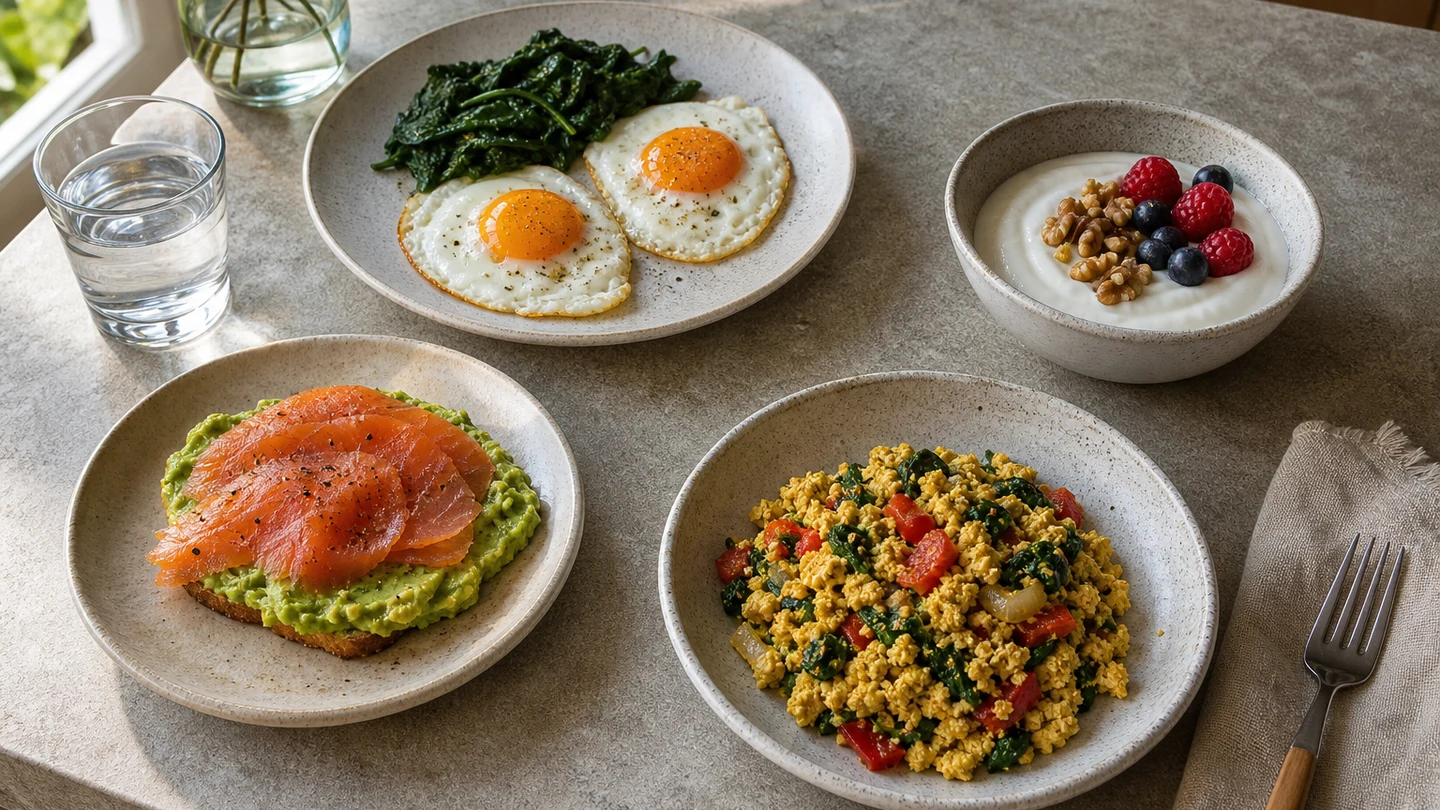
How this catalogue is selected
Each option changes the eating action, the main ingredient structure, or the service context. A skillet, cold bowl, hand-held wrap, and leftover plate are not counted as separate merely because they use a different garnish. Editorial criteria are: one identifiable centre, additions that can be checked separately, and a format that matches the morning’s time and packing needs.
Fast cooked breakfasts
- Egg-and-greens skillet: a hot, one-pan breakfast where sauces remain on the side.
- Tofu scramble plate: a plant-based cooked centre with vegetables added in stages.
- Frittata wedge: a baked, sliceable option for a planned morning.
- Shakshuka-style eggs: eggs cooked in a tomato-and-pepper base; check jarred sauces separately.
- Breakfast lettuce cups: a hand-held cooked filling in crisp leaves rather than bread.
Cold or make-ahead formats
- Plain yogurt and berry bowl: portion the labelled base before toppings.
- Cottage-cheese savoury bowl: use cucumber, herbs, and a measured crunchy topping.
- Chia-and-yogurt pot: a chilled format whose sweetener and fruit portions stay visible.
- Smoked-salmon cucumber plate: an assembly plate with a separately checked spread.
- Egg salad box: pack the filling, raw vegetables, and dip in separate compartments.
Portable and shared-table ideas
- Mini frittata cups: individually portioned baked eggs for a packed breakfast.
- Turkey-and-cheese roll-ups: a no-pan option; read cured-meat and cheese labels.
- Cauliflower breakfast hash: a vegetable-led hot base with a distinct texture from a skillet.
- Avocado-and-egg salad plate: assemble shortly before eating to keep the texture clear.
- Leftover protein-and-vegetable bowl: use only when storage history is known.
- Breakfast kebab skewers: a shared-table format with eggs, vegetables, and a dip served apart.
Choose by effort and audience
| Situation | Best starting formats | What to check |
|---|---|---|
| Ten-minute home breakfast | Skillet, tofu scramble, roll-ups | Late sauces and drinks |
| Prepared the evening before | Frittata wedge, chia pot, egg salad box | Storage instructions and portions |
| Portable commute | Frittata cups, roll-ups, salmon cucumber plate | Cold holding and separate dip |
| Shared brunch table | Kebabs, cauliflower hash, frittata | Individual add-ons and allergens |
Category boundaries
These are ideas, not calculated recipes. A label can provide total carbohydrate per serving, but the useful comparison is between that serving and the amount actually eaten. Where a clinician has set a plan, that plan has priority. Food-allergy decisions need ingredient and cross-contact information; a low-carb framing cannot establish safety.
Exclude an idea before you cook it
- Exclude it if the key packaged ingredient has no available label and you need a precise count.
- Exclude it if the portion cannot be separated for the eater using a defined plan.
- Exclude it if a leftover’s cooling or storage history is unknown.
- Exclude it if it relies on a sauce, topping, or drink you cannot account for.
Practical limits
No item here is a health treatment, keto rule, blood-glucose prediction, or universal “low carb” claim. Product formulas and serving sizes vary. Use current package information, and follow local food-safety advice for chilled, cooked, and reheated food.
Curator checklist
- Choose one format that fits the available time.
- Make the main ingredient and serving amount visible.
- Check packaged additions separately.
- Keep sauces and dips optional until counted.
- Prefer a freshly made option when leftover handling is uncertain.
Sources and editorial references
- U.S. Food and Drug Administration, Interactive Nutrition Facts Label: Total Carbohydrate —
https://www.accessdata.fda.gov/scripts/interactivenutritionfactslabel/assets/InteractiveNFL_TotalCarbohydrate_October2021.pdf - Centers for Disease Control and Prevention, Diabetes Meal Planning —
https://www.cdc.gov/diabetes/healthy-eating/diabetes-meal-planning.html - U.S. Food and Drug Administration, Food Allergies —
https://www.fda.gov/food/nutrition-food-labeling-and-critical-foods/food-allergies - USDA MyPlate, Meal Planning —
https://www.myplate.gov/sites/default/files/2024-06/TipSheet-24-Meal-Planning.pdf