Low carb breakfast foods
At Pancakes World, low carb breakfast foods can include eggs, fish, poultry, meat, tofu, plain dairy or suitable alternatives, nonstarchy vegetables, avocado, nuts, seeds and measured portions of fruit, legumes or lower-carbohydrate carriers. None is automatically “low carb” in every form or serving. Check Total Carbohydrate for the actual portion on a current label or the matching USDA FoodData Central record, then include sauces, sweeteners and drinks. Choose foods by culinary role: an anchor for substance, vegetables for volume and contrast, a measured carrier when wanted, and a condiment for flavor. If carbohydrate intake is part of diabetes treatment or another therapeutic plan, use the individual target from the health-care team.
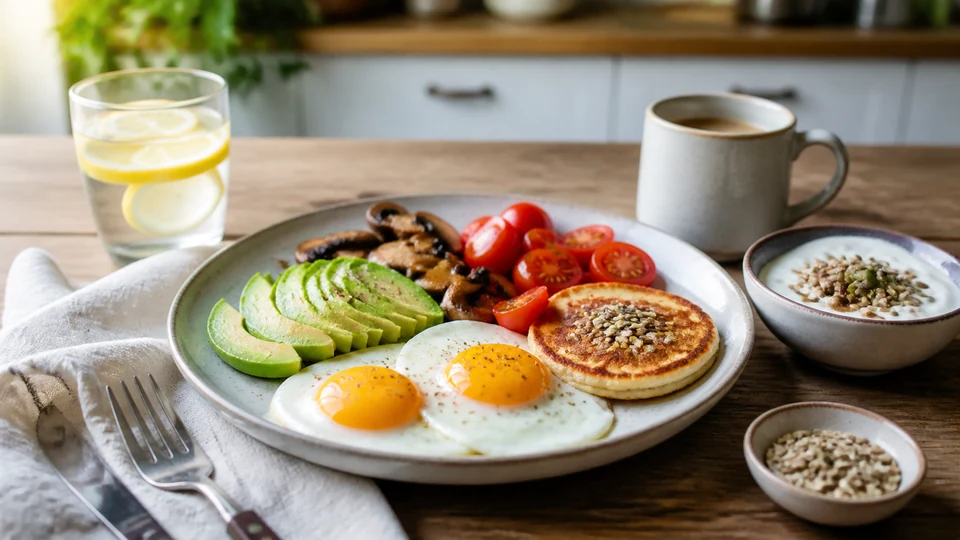
This is a broad food-and-function inventory, not the personal ledger taught by the adjacent diet-planning page and not a medical menu.
For broader context, continue with American Breakfast: Pancakes, Diner Plates and Brunch.
How to use this inventory
Start with the morning constraint—hot or cold, portable or plated, five minutes or batch-prepped. Pick one anchor, one or more compatible plant components, and any carrier or condiment. Verify the complete serving rather than trusting the category name.
For every candidate, ask:
- What exact food and preparation form is this?
- What amount will actually be served?
- Where does the Total Carbohydrate evidence come from?
- What happens when toppings, beverages and second portions are included?
- Does the package or recipe introduce milk, egg, wheat, soy, sesame, peanuts, tree nuts, fish or shellfish?
- Does the food require cooking, refrigeration or temperature verification?
The list is intentionally modular. It helps build a breakfast from known components without assigning invented nutrient numbers to entire food groups.
Egg foods
Eggs can anchor skillets, omelets, scrambles, baked cups and portable fillings. Their usefulness comes from culinary flexibility, not a blanket nutrition promise.
Shell eggs
Keep shell eggs refrigerated and inspect them before use. For a scramble, combine them with measured vegetables, cheese or another topping and count those additions separately. For an omelet, avoid overloading the center with wet fillings.
USDA advises cooking egg dishes to 160°F (71°C) in the center. Use a thermometer for casseroles, thick bakes and similar dishes; a browned surface does not establish the center temperature.
Liquid egg products
Read the ingredient list and Nutrition Facts panel. Some products are plain egg, while others can contain flavoring, dairy ingredients, starch or salt. Follow the package’s after-opening storage and cooking directions.
Hard-cooked eggs
These work as a no-cook-at-service anchor when prepared and chilled safely. Pair them with vegetables, an approved dip or a measured carrier. Keep them cold during transport.
Egg bakes
Egg muffins, frittatas and casseroles are recipe-dependent foods. Count every component in the tested formula, including milk, vegetables, cheese, meat and crust. USDA gives 160°F (71°C) for the egg-dish center and 165°F (74°C) when reheating stored egg dishes.
Fish and seafood
Fish can appear as a cooked fillet, flaked leftover or canned product; shellfish may be used in a savory breakfast where culturally appropriate. The exact form changes both handling and label review.
Canned fish
Check whether the fish is packed in water, oil or a sauce. Read serving size, Total Carbohydrate, sodium and ingredients. Mustard, sweet sauces and flavored packets need their own evaluation. Preserve the package identity when dividing portions.
Cooked fish leftovers
Use only properly chilled leftovers with a clear preparation date. Reheat to the federal leftover temperature when serving hot. Do not mask uncertain storage history with a strongly flavored sauce.
Smoked or cured fish
These products vary in sugar, sodium, ingredients and storage requirements. Use the current label; “smoked” does not tell you whether a product is shelf stable or ready to eat under every condition.
Fish and crustacean shellfish are separate major allergen categories. Name the specific food when serving others and keep tools separate when an allergy plan requires it.
Poultry and meat
Cooked chicken, turkey, beef or pork can anchor a breakfast bowl, lettuce wrap or vegetable skillet. Product form matters more than the broad animal category.
Plain cooked cuts
A plain leftover cut has different evidence from deli slices, cured meat or sausage. Retain the recipe or package so marinades, breading and sauces are not forgotten. Slice only the amount needed and return the rest to refrigeration promptly.
Breakfast sausage
Determine whether it is raw, partially cooked or ready to eat. Check compound ingredients: some sausage contains sweetener, starch, milk, wheat or other allergens. USDA requires 160°F (71°C) for uncooked ground beef, pork, veal or lamb and 165°F (74°C) for ground poultry.
Bacon, ham and cured meats
These are not interchangeable products. Check whether cooking is required, follow the label, and compare sodium, saturated fat and Total Carbohydrate on the actual portion. A lower carbohydrate number does not cancel other tradeoffs.
Deli meats
Read the complete label for sweeteners, starches and allergens, and follow refrigeration instructions. Use clean utensils and avoid leaving the package open during breakfast assembly.
Soy and other plant-protein foods
Tofu, tempeh and packaged plant-based breakfast products can provide a meat-free anchor. Their formulas differ substantially.
Tofu
Match the exact type—silken, soft, firm or extra firm—to the intended technique. A scramble usually needs a product that can be drained and broken into pieces; a blended bowl may use a different texture. Count marinades and sauces.
Tempeh
Read the grain, seasoning and allergen information because packaged varieties differ. Follow cooking directions and refrigerate after opening.
Plant-based patties and crumbles
Do not infer carbohydrate, sodium, allergens or doneness requirements from “plant-based.” Compare the actual serving label and identify whether the product is ready to eat or must be cooked.
Soy is one of the nine major allergens in US labeling law. Meat-free also does not imply dairy-free, egg-free, wheat-free or sesame-free.
Plain dairy foods
Dairy can provide a cold bowl base, a cottage-cheese plate or an ingredient in an egg dish. Flavoring and portion size often change the comparison.
Plain yogurt
Compare the exact style and serving. Plain yogurt still contains carbohydrate, and strained styles are not nutritionally identical. Add fruit, nuts, seeds or sweetener as separate ledger items rather than attributing them to the base.
Cottage cheese
Use the labeled serving and check sodium as well as Total Carbohydrate. Flavored cups, fruit preparations and crunchy toppers are compound products.
Cheese
Natural and processed cheeses vary in ingredients and portion size. Cheese can add flavor or help bind a hot dish, but it should not be treated as an unlimited “free” food. Check the current label and the rest of the meal.
Milk is a major allergen. Lactose-free dairy remains milk for allergen purposes.
Non-dairy bowl bases and beverages
Plant-based yogurts and beverages can be made from soy, almond, coconut, oat, pea, rice, seeds or blends. The plant name alone does not predict Total Carbohydrate, protein, fortification, added sugar or texture.
Unsweetened plant beverages
“Unsweetened” addresses added sweetening; it does not establish zero carbohydrate or equivalence to dairy milk. Compare equal volumes, inspect calcium and vitamin D when the beverage is replacing dairy, and check whether the product separates during cooking.
Plant-based yogurt alternatives
Read both the base and the flavor preparation. A plain product may behave differently from a sweetened cup. Thickeners, starches and fruit layers can change the total. Use the current serving rather than a remembered value from another plant source.
Coconut products
Coconut beverage, cultured coconut product and canned coconut milk are different foods. They differ in concentration, fat, serving size and culinary purpose. Never substitute one label record for another.
Soy, tree nuts and sesame can be relevant major allergens. A dairy-free product can still contain any of them.
Nonstarchy vegetables
Vegetables can add volume, color, acidity, texture and cooking moisture. “Nonstarchy” is a planning category, not a promise that every portion contains no carbohydrate.
Leafy greens
Spinach, kale, chard and similar greens can be folded into eggs, tofu or a skillet. Cook until released moisture no longer pools before enclosing them in a wrap or egg bake. Raw greens suit a cold plate when they have been washed and handled properly.
Mushrooms
Mushrooms add savory depth but can release enough water to dilute a scramble or soften a carrier. Cook them in an uncrowded pan and allow moisture to evaporate before combining with eggs or cheese.
Peppers and onions
These bring sweetness, crunch and aroma. Their carbohydrate contribution depends on type and portion; weigh or measure when the plan requires precision. Pre-cooking improves texture in short final bakes.
Tomatoes
Fresh tomatoes work as a side, while cooked tomatoes or salsa can act as a sauce. Packaged salsa needs a label check for serving size, added sweetener and sodium. Drain chopped tomatoes when excess liquid would weaken a wrap or egg dish.
Broccoli, cauliflower and cabbage
These can form a warm hash, cold slaw or roasted side. Preparation changes texture and water, not the need to match the correct food form in nutrient data. A “rice” cut is still the underlying vegetable unless other ingredients are added.
Zucchini and summer squash
Use them in a sauté, baked cup or fritter from a tested recipe. Grated squash retains water; squeezing or pre-cooking may be required by the formula. Do not transfer timing from a dry vegetable.
Avocado, olives and other savory additions
Avocado can supply creamy texture in a bowl, lettuce wrap or plate. Record the edible portion rather than counting a vague “half,” because fruit size varies. Lime, herbs and spices can season it; packaged guacamole must be evaluated as a compound product.
Olives and pickled vegetables contribute acidity and salt. Read the serving and sodium information, and refrigerate after opening as directed. Sweet pickles and relishes may add sugar, so the generic word “pickle” is not sufficient evidence.
These additions can improve a meal’s sensory contrast, but they are not automatically unlimited. Portion and the rest of the breakfast still matter.
Fruit in measured portions
Fruit is not excluded from this inventory. It is a carbohydrate-containing food whose type, form and amount belong in the meal calculation.
Berries
Fresh or frozen berries can accompany plain yogurt or cottage cheese. Match the exact type and measured portion. A frozen product with sauce or added sugar is not equivalent to unsweetened fruit.
Melon and citrus
These can provide a fresh side in a controlled portion. Do not use a generic “piece” when size varies substantially. Juice and whole fruit require separate records.
Cooked fruit
Unsweetened cooked fruit, compote and commercial fruit filling are different preparations. Cooking changes water and concentration; added sweetener changes the formula. Use the recipe analysis or package label.
Dried fruit
Dried fruit is concentrated and easy to serve by handful rather than weight. Treat it as a measured accent, not an invisible topping. Sweetened dried fruit requires an ingredient and Added Sugars check.
The choice to include fruit depends on the person’s target and the complete meal. This page does not classify all fruit as unsuitable or promise that one type produces a health outcome.
Nuts, seeds and their spreads
Nuts and seeds can add crunch, fat, flavor and portability. Each species and product has its own composition.
Whole or chopped nuts
Almonds, walnuts, pecans, peanuts and other options should be identified specifically. Compare plain, roasted, salted, candied and flavored versions separately. A small measured topping is different from eating directly from the container.
Seeds
Chia, flax, hemp, pumpkin, sunflower and sesame seeds have different culinary behavior. Some absorb liquid; some stay crunchy; some are commonly ground. Use a tested recipe when a seed is expected to bind a batter or pudding.
Nut and seed butters
Check for added sugar, oils, salt and serving size. Stir products that separate according to their label. Count the actual spoonful rather than assuming all spoons hold the labeled amount.
Peanuts, tree nuts and sesame are distinct major allergen categories. Seeds that are not on the major-allergen list can still cause individual reactions. Never replace one with another for an allergy-controlled meal without explicit approval.
Beans, peas and lentils
Legumes can contribute protein foods and fiber, but CDC also identifies dried beans, lentils and peas as starch-containing carbohydrate foods. That dual role is why they must be measured rather than labeled simply “protein.”
A modest portion can support a savory breakfast bowl, tofu scramble or leftover structure when it fits the target. Compare drained canned beans with cooked-from-dry records correctly. Rinse only when the recipe and data interpretation support it, and check packaged seasoned beans for sauces and sweeteners.
Do not exchange chickpeas, black beans, lentils and soybeans as if they had identical composition. Match the exact cooked form and portion.
Carriers, breads and pancake formats
A carrier can make breakfast portable or provide a familiar texture. It is often the component most likely to vary by formula and portion.
Bread and crispbread
Compare the labeled slice or gram serving. A compact slice may weigh more than a large airy one. “Whole grain,” “seeded,” “thin” and “keto-style” describe different attributes and do not replace Total Carbohydrate or ingredient review.
Tortillas and wraps
Record the number and weight actually used. Some labels display one tortilla; others use a different count. Fiber ingredients and sugar alcohols may appear, but this page does not impose one net-carb subtraction formula.
Pancakes and waffles
Use a tested formula with a documented nutrition analysis if an exact meal total is required. Flour choice, eggs, dairy or plant beverage, sweetener and portion size all affect the result. Toppings and cooking fat belong to the complete serving. No recipe or nutrition number is invented here.
Vegetable-based carriers
Lettuce leaves, cabbage cups, sliced vegetables or a roasted vegetable base can hold fillings. They solve a culinary role but do not automatically reproduce the durability of bread. Choose them when the meal can be eaten promptly and the filling is not too wet.
Specialty packaged carriers
Read the full package every time. Compare actual servings, ingredients, allergens, sodium and handling instructions. No named product, price, rating or current availability is claimed.
Condiments, sauces and flavor builders
Small additions are easy to overlook because they are not perceived as “food.” They can still alter carbohydrate, sodium and allergen exposure.
Mustard and hot sauce
Plain versions may be used in small amounts, but flavored products vary. Check serving size, sweeteners and sodium. Hotness does not reveal carbohydrate content.
Salsa and tomato sauce
Use the labeled portion and inspect Added Sugars. A fresh homemade salsa needs a tested recipe record if exact nutrition is claimed.
Mayonnaise and creamy dressings
Read the ingredient list for egg, milk, soy or other allergens and check the serving. “Light” can change the formula and is not synonymous with lower carbohydrate.
Pesto and herb sauces
Pesto can contain tree nuts and milk; alternative versions may use seeds or other ingredients. Identify the exact formula. Fresh herbs, lemon or lime can add flavor with less formulation complexity, but their amounts still belong in a precise analysis.
Sweet breakfast sauces
Syrups, jams, fruit spreads and sweetened nut butters can consume a person-defined target quickly depending on portion. Measure them rather than pouring freely, and distinguish sugar-free claims from Total Carbohydrate.
Breakfast beverages
Water, unsweetened tea or black coffee can be simple beverage choices for many adults, but additions change the record.
Milk, plant beverage, creamer, syrup, sugar, honey, cocoa mix and juice must be counted from the actual amount. A café cup size or home mug can exceed the package serving. Record refills.
Protein drinks and smoothies are compound foods, not automatically low carbohydrate. Review the full label or tested recipe, including fruit, milk, yogurt, powders and sweeteners. Do not claim a performance outcome from a breakfast drink.
Convenience and packaged breakfast foods
Frozen egg bites, breakfast sandwiches, meat patties, yogurt cups, shakes and snack packs can reduce preparation, but category names do not establish their composition.
Use a six-panel check:
- serving size and servings per package;
- Total Carbohydrate and related lines;
- sodium and saturated fat as relevant;
- complete ingredient list;
- major-allergen declaration and advisory wording;
- storage and cooking directions.
Preserve the UPC, lot and date information while the product is stored. Follow the package’s distinction between ready-to-eat and must-cook food. Marketing photographs are not doneness evidence.
Twelve practical combinations
These are assembly directions, not tested recipes or calculated meals. Portion every component to the individual plan.
- Vegetable scramble plate: eggs or a suitable alternative, cooked mushrooms and greens, plus a measured fresh side.
- Plain yogurt bowl: current labeled base, measured berries, approved seeds and spice.
- Cottage-cheese savory bowl: cottage cheese, chopped tomato, herbs and a measured condiment.
- Tofu skillet: firm tofu, peppers, greens and an identified sauce.
- Fish breakfast plate: canned or safely cooked fish, cucumber, tomato and an optional measured carrier.
- Leftover poultry bowl: documented cooked poultry, reheated vegetables and avocado portion.
- Egg lettuce wraps: safely cooked egg filling in dry lettuce leaves with a labeled sauce.
- Tempeh and cabbage skillet: properly cooked tempeh, shredded cabbage and seasoning.
- Measured toast plate: one verified carrier portion, egg or tofu anchor and vegetables.
- Breakfast salad: greens, safely cooked protein, crunchy vegetables and measured dressing.
- Portable egg bake: portion from a tested recipe, kept cold and reheated correctly.
- Pancake side plate: tested lower-carbohydrate pancake portion with an unsweetened or measured topping and separate protein-food component.
The value of these combinations is modularity. If one component does not fit, replace its culinary role—anchor, vegetable, carrier or condiment—using a verified alternative rather than deleting the meal.
Select by morning condition
| Need | Foods to evaluate first | Main verification |
|---|---|---|
| No cooking | hard-cooked egg, plain yogurt, cottage cheese, canned fish, raw vegetables | refrigeration and current labels |
| Five-minute skillet | eggs, tofu, leftover meat, pre-cut vegetables | safe handling and portion record |
| Portable | tested egg bake, lettuce wrap, labeled yogurt cup, measured nuts | cold chain and complete container |
| Dairy-free | tofu, egg, fish, meat, suitable plant base | ingredient and allergen review |
| Egg-free | tofu, fish, meat, dairy or suitable alternative | compound-product labels |
| Vegetarian | egg, dairy, tofu, tempeh, measured legumes, nuts or seeds | serving-specific carbohydrate |
| Warm leftovers | documented prior meal components | storage history and 165°F reheat |
This matrix narrows the inventory without pretending that everyone needs the same food.
Verify preparation and doneness
Low carbohydrate is not a food-safety state. Raw eggs, ground meat, poultry, fish, leftovers and must-cook packaged foods retain their own controls.
USDA advises using a food thermometer because color and grill marks cannot establish safety. Verify 160°F (71°C) for egg dishes and ground beef, pork, veal or lamb; use 165°F (74°C) for poultry and reheated leftovers. Insert the probe so its sensing area reaches the center, and check thick or uneven dishes in more than one location.
Keep raw meat and eggs separate from ready-to-eat vegetables, cheese and toppings. Use a clean plate and utensil after cooking. Follow any more specific product instruction.
For cold foods, return open packages to refrigeration promptly. A portable breakfast needs an insulated carrier and cold source when refrigeration is unavailable. Do not rely on cool weather or a car interior.
Run an allergen matrix
Many foods in this inventory overlap with the nine US major allergens. Review the actual meal rather than the anchor alone.
| Food role | Common evidence to check |
|---|---|
| Egg dish | egg, milk, cheese, processed meat, sauce |
| Yogurt bowl | milk or soy, tree nuts, peanuts, sesame, toppings |
| Plant-based anchor | soy, wheat, sesame, egg or milk in compound products |
| Fish plate | named fish, sauce ingredients, shared utensils |
| Carrier | wheat, egg, milk, soy, sesame, nuts or seeds |
| Condiment | egg, milk, soy, sesame, tree nuts and advisory wording |
FDA requires major allergen sources used as ingredients to be identified on covered packaged foods. If a Contains statement appears, read it, but also read the complete ingredient list. Advisory statements such as “may contain” are voluntary. Recheck every purchase because formulations can change.
An absence claim must match the eater’s exact need and cross-contact plan. “Low carb” does not imply gluten-free, dairy-free, nut-free, egg-free or safe for any allergy.
Store a breakfast-food kit
A practical kit uses ingredients that can cross several meal structures without losing identity.
Refrigerator candidates might include a labeled egg product, plain base, washed vegetables, one cooked protein component and measured condiments. A freezer kit might hold portions from a tested egg bake, properly labeled cooked meat or a compatible pancake. Shelf-stable elements might include canned fish, spices, seeds or nuts when allowed.
Label prepared foods with name, date, recipe version, portion and allergen status. Preserve outer-package details for separated commercial items. Rotate older food forward.
USDA’s general leftover guidance gives properly refrigerated cooked leftovers three to four days. Reheat to 165°F (74°C). That window does not guarantee ideal texture, and a package or tested recipe may require a narrower limit.
Troubleshoot food selection
The breakfast is lower in carbohydrate but too salty
Compare sausage, bacon, cured fish, cheese, cottage cheese, sauces and packaged carriers. Replace or reduce the largest sodium contributor rather than assuming carbohydrate reduction is the only objective.
The bowl is unexpectedly high in carbohydrate
Check flavored base, fruit preparation, granola, sweetened nuts, syrup and the actual serving count. Do not blame the plain anchor without reviewing additions.
The portable food becomes watery
Cool cooked ingredients, drain vegetables and sauces, keep wet condiments separate and use a carrier designed for the moisture load.
The meal feels repetitive
Change technique and seasoning while retaining verified roles: scramble versus bake, raw versus roasted vegetables, bowl versus wrap, hot herbs versus fresh garnish. Variety need not come from unverified specialty products.
The package front and panel seem inconsistent
Use the current Nutrition Facts and ingredient panels for the exact product. Contact the manufacturer when required information is unclear. Do not publish a conclusion based on an old online image.
FAQ
What breakfast food has the fewest carbs?
This page does not rank categories by a universal number. Preparation, brand and portion can change the result. Compare exact foods using current labels or matching FoodData Central records.
Are eggs a low carb food?
Eggs can be a useful anchor, but the complete dish may include milk, vegetables, sausage, bread, sauce or sweetened coffee. Count the whole serving and cook egg dishes safely.
Can I eat fruit at a low carb breakfast?
Fruit can fit when its measured portion fits the person-defined plan. Use the exact type and form; juice, dried fruit, fresh fruit and sweetened fruit products are not equivalent.
Are nuts and seeds interchangeable?
No. They differ in composition, allergens and culinary behavior. Tree nuts, peanuts and sesame also have distinct labeling implications. Verify the exact food and portion.
Is yogurt always lower carb than cereal?
No category-wide comparison is reliable. Yogurt can be plain or heavily flavored; cereal servings and formulas vary. Normalize the servings and review the complete meal.
Do I subtract fiber to get net carbs?
The FDA panel provides Total Carbohydrate and Dietary Fiber separately. Use Total Carbohydrate unless an established individualized plan defines another consistent method.
Are low carb packaged foods healthier?
That conclusion cannot be made from one front-label phrase. Compare carbohydrate, fiber, sodium, saturated fat, ingredients, allergens and serving size according to the eater’s goals. No health outcome is promised here.
Which foods are best for meal prep?
Choose foods from tested recipes that cool, portion and reheat predictably: egg bakes, cooked proteins, sturdy vegetables or compatible pancakes. Apply refrigeration and reheating controls and label every batch.
Final selection rule
Choose breakfast foods by role, exact portion and evidence. Start with an anchor, add compatible vegetables or fruit, decide whether a measured carrier belongs, and finish with an identified condiment and beverage. Check Total Carbohydrate for every component while keeping sodium, saturated fat, food-group variety, allergens and safe handling visible.
The useful question is not “Is this food always low carb?” It is “Does this exact food, in this portion and preparation, fit the person’s complete breakfast plan?”
Explore related Pancakes World guidance on American Pancakes, Maple Syrup, and Maple Syrup Pancakes.
Sources and editorial references
- USDA FoodData Central:
https://fdc.nal.usda.gov/ - USDA FoodData Central, “Downloadable Data”:
https://fdc.nal.usda.gov/download-datasets/ - U.S. Food and Drug Administration, “How to Understand and Use the Nutrition Facts Label”:
https://www.fda.gov/food/nutrition-facts-label/how-understand-and-use-nutrition-facts-label - Centers for Disease Control and Prevention, “Carb Counting”:
https://www.cdc.gov/diabetes/healthy-eating/carb-counting-manage-blood-sugar.html - USDA MyPlate, “Protein Foods”:
https://www.myplate.gov/web/web/eat-healthy/protein-foods - USDA MyPlate, “Meal Planning”:
https://www.myplate.gov/sites/default/files/2024-06/TipSheet-24-Meal-Planning.pdf - U.S. Food and Drug Administration, “Have Food Allergies? Read the Label”:
https://www.fda.gov/consumers/consumer-updates/have-food-allergies-read-label - USDA Food Safety and Inspection Service, “Shell Eggs from Farm to Table”:
https://www.fsis.usda.gov/food-safety/safe-food-handling-and-preparation/eggs/shell-eggs-farm-table - USDA Food Safety and Inspection Service, “Food Thermometers”:
https://www.fsis.usda.gov/food-safety/safe-food-handling-and-preparation/food-safety-basics/food-thermometers