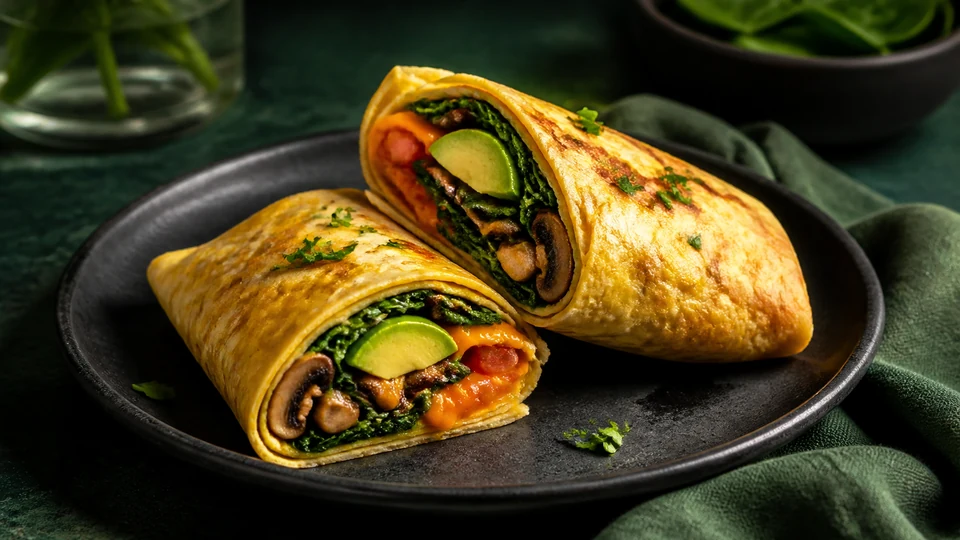
Low carb breakfast burrito
At Pancakes World, a low carb breakfast burrito is one whose complete, eaten portion has a verified Total Carbohydrate amount that fits your own plan—not merely a wrap carrying a “low carb” label. A practical published starting point is the American Diabetes Association’s Egg White & Vegetable Breakfast Burrito, which lists 27 grams of Total Carbohydrate per one-burrito serving. Read the tortilla’s current Nutrition Facts, measure every filling and sauce, total the carbohydrate for the whole batch, and divide by the number of equal burritos. Do not invent “net carbs,” confuse low carb with keto, or treat one number as suitable for everyone.
This is a selection and calculation guide, not a Pancake World recipe or an individual treatment plan. Browse the breakfast hub for other morning formats, and use Pancake World to explore the broader collection.
For broader context, continue with American Breakfast: Pancakes, Diner Plates and Brunch.
What “low carb” can honestly mean
There is no single carbohydrate number that makes every breakfast burrito “low carb” for every person. The American Diabetes Association’s nutrition consensus report notes that research has not used one consistent definition. Its working categories describe low-carbohydrate eating patterns as 26% to 45% of total energy and very-low-carbohydrate patterns as less than 26%, but those are pattern-level research descriptions. They are not a grams-per-burrito rule.
The 2026 ADA Standards of Care likewise emphasize that definitions vary and that eating plans should be individualized. A meal that fits one person’s plan may not fit another person’s energy needs, medication regimen, activity, culture, preferences or clinical goals.
Use wording that matches the evidence:
- 27 grams Total Carbohydrate per burrito is an exact statement about the ADA recipe’s stated serving.
- Lower in Total Carbohydrate than my usual burrito is a valid comparison only after both complete versions are calculated on equal serving terms.
- Fits my planned carbohydrate amount describes an individual decision, not a universal health claim.
- Low carb on a tortilla package does not establish the total for the assembled breakfast.
- Keto is not a synonym that can be added without a defined ketogenic plan and complete calculation.
The page title reflects the reader’s goal. It does not certify an unknown homemade or restaurant burrito.
Two complete published burritos provide useful anchors
Comparing complete, named recipes is more useful than comparing isolated ingredients. Their nutrition statements apply only to their exact formulas and serving sizes.
ADA Egg White & Vegetable Breakfast Burrito
The American Diabetes Association Diabetes Food Hub recipe makes four servings and defines one vegetable burrito as one serving. It uses four eight-inch tortillas described by the source as low-carb whole-wheat tortillas, liquid egg whites, whole eggs, onion, bell pepper, mushrooms, spinach, reduced-fat cheddar and seasonings.
The source lists, per burrito:
- 220 calories;
- 27 grams Total Carbohydrate;
- 2 grams dietary fiber;
- 15 grams protein.
Only the 27-gram Total Carbohydrate figure is relevant to the central comparison here. It belongs to that exact recipe, including the source’s chosen tortilla and ingredient quantities. A different tortilla or a large addition of beans, potato, sweetened sauce or milk-based drink changes the meal.
Mayo Clinic Breakfast Burrito
Mayo Clinic publishes a one-serving breakfast burrito using one six-inch whole-wheat tortilla, egg substitute or egg whites, cheese, tomato, onion, corn and salsa. Its nutrition information lists 30 grams Total Carbohydrate and 12 grams dietary fiber per serving.
Mayo Clinic describes the recipe as a healthy-carb preparation, not a low-carb recipe. It is therefore a transparent comparator, not proof that 30 grams is a universal threshold. The comparison does show why names alone are insufficient: the ADA recipe uses a tortilla described as low carb and lists 27 grams total; the Mayo recipe uses a small whole-wheat tortilla and lists 30 grams total. The complete formula decides the number.
Read Total Carbohydrate, not marketing shorthand
On a U.S. Nutrition Facts label, start with Total Carbohydrate in grams. FDA’s label guidance explains that this line includes carbohydrate components such as dietary fiber and sugars. For a reproducible comparison, retain that stated total.
Do not create a homemade “net carb” value by subtracting fiber, sugar alcohols or other components unless a qualified plan expressly requires a particular method and the needed information is reliable. “Net carbs” is not the Total Carbohydrate line used in the published recipe comparisons above. Different subtraction conventions can turn the same food into different-looking numbers.
Also check the serving size. FDA states that serving size reflects the amount people typically consume; it is not a recommendation of how much a person should eat. If a tortilla label defines one tortilla as one serving, the arithmetic is direct. If it defines a serving as half a wrap and you use a whole wrap, multiply every relevant nutrient by two.
The same rule applies to beans, salsa, cheese, meat alternatives and frozen fillings. A package front can highlight a favorable feature while the back label assigns it to a smaller serving than the amount used.
The complete-burrito carbohydrate audit
Audit the burrito in six parts. The tortilla is often important, but it is never the whole calculation.
1. Tortilla or wrap
Record the exact product, serving size, tortilla weight and Total Carbohydrate per serving. Do not rely on diameter alone. Two eight-inch tortillas can differ in thickness, weight and formulation.
Compare candidates on one usable-unit basis:
| Question | What to record | Why it matters |
|---|---|---|
| What is one label serving? | One tortilla, half tortilla or grams | Prevents serving-size mistakes |
| How many tortillas will be eaten? | Actual units | Converts the label to the meal |
| What is Total Carbohydrate? | Grams per stated serving | Creates the comparison baseline |
| Will it hold the filling? | Tested capacity without tearing | Avoids needing a second wrap |
| Are there allergens or exclusions? | Ingredient and allergen statements | “Low carb” does not answer suitability |
A lettuce leaf, egg wrap or cheese-based wrap is not automatically better. It may change structure, allergens, sodium, saturated fat, cooking work and the eating experience. Choose it only after checking the actual product or measured ingredients and deciding whether it functions as a burrito wrapper.
2. Egg or another main filling
Egg and egg whites contribute little carbohydrate in many common forms, but exact values depend on the product and amount. Liquid egg substitutes can have added ingredients. Sausage, bacon, deli meat and plant-based products may contain carbohydrate from binders, seasonings or sweeteners.
For packaged products, use the current label. For an unpackaged ingredient, use a matching USDA FoodData Central record and the actual edible weight. Match whole raw egg to whole raw egg, cooked meat to the correct cooked form, and drained beans to a drained record. Do not copy a number from a food with a similar name.
3. Beans, potatoes, corn and grains
These can be legitimate burrito ingredients, but they must be counted. Omitting beans does not automatically make a balanced or desirable burrito, and including a measured bean portion does not automatically make it unsuitable. The decision belongs to the reader’s chosen carbohydrate amount and overall eating plan.
If the goal is a lower total than a familiar breakfast burrito, compare alternatives using equal finished portions. For example, calculate one version with potato and one with sautéed peppers and mushrooms. Report the actual difference after measuring; do not announce that the vegetable version “saves” a precise number before calculation.
4. Vegetables
Peppers, onions, mushrooms, spinach and tomato can add flavor, color and volume. They still contribute to the batch total. For an exact calculation, measure them and use an appropriate label or USDA record.
Cook watery vegetables before assembly and drain excess liquid. Moisture management is a quality decision, not a carbohydrate trick: a wet filling softens the tortilla and makes freezing less successful. Season vegetables directly so that the burrito does not depend on a large quantity of sweet sauce for flavor.
5. Cheese, sauces and condiments
Cheese may contain a small amount of carbohydrate depending on type and serving, but its label still belongs in the record. Salsa, ketchup, barbecue sauce, flavored yogurt, sweet chile sauce and bottled breakfast sauces can contribute more than their casual spoonful suggests.
Measure what is actually eaten. Serving sauce on the side can make the amount visible, but it does not remove it from the meal. Check whether a serving is a tablespoon, two tablespoons or a weight in grams, then scale the carbohydrate to the portion used.
6. Drinks and sides
A burrito calculation does not describe the entire breakfast if it is served with juice, sweetened coffee, potatoes, fruit or another side. Keep the language precise: “X grams Total Carbohydrate per burrito” is not “X grams for breakfast” unless every consumed item is included.
How to calculate one homemade burrito
Use a kitchen scale, the current package labels and one consistent worksheet.
Step 1: define the final unit
Decide whether the batch will make four full burritos, eight small burritos or another clear number. The finished unit must be known before nutrition can be expressed per burrito.
Step 2: record every ingredient
For each item, capture:
- exact brand or database record;
- ingredient form, such as raw, cooked or drained;
- grams used in the full batch;
- label serving weight;
- Total Carbohydrate per label serving;
- amount left unused after assembly.
Do not calculate filling that remains in the skillet as though it entered the burritos.
Step 3: convert each ingredient to batch carbohydrate
Use this formula:
ingredient carbohydrate = grams used ÷ grams per label serving × Total Carbohydrate per label serving
If the package uses units instead of grams and the full unit is used, multiply by the number of units. Retain enough decimal precision during the calculation and round only the final result in a consistent way.
Example with invented arithmetic—not an ingredient claim: if a label states 18 grams Total Carbohydrate per 45-gram serving and a batch uses 90 grams, the batch contribution is 90 ÷ 45 × 18, or 36 grams. This demonstrates the method; it does not describe a particular tortilla.
Step 4: total the complete batch
Add tortilla, egg product, vegetables, beans or starches, cheese, sauce, cooking additions and any other ingredient. Do not subtract fiber from Total Carbohydrate in this worksheet.
Step 5: divide by equal finished units
If the batch total is 108 grams and it produces four equal burritos, the calculated result is 27 grams Total Carbohydrate per burrito. That is again arithmetic only, not a tested Pancake World recipe.
Equal filling matters. Weigh the finished filling and portion it consistently before wrapping. If one burrito receives noticeably more filling, a batch average is not an exact description of that particular unit.
Step 6: preserve the record
Save product names, label photographs for personal reference, ingredient weights, calculation date and final yield. Labels and formulations can change. Recalculate when switching tortilla brands, changing portion size or adding a new condiment.
Choosing between common burrito designs
The best design is the one that meets the reader’s numeric target, practical needs and food preferences. These are decision patterns, not universal rankings.
Vegetable and egg burrito
This resembles the ADA source concept: measured egg and egg whites, cooked vegetables, a measured cheese amount and a specifically chosen tortilla. It is a useful starting pattern when the reader wants a complete published example with a stated 27 grams Total Carbohydrate.
Verify the tortilla, because a locally available substitute may not match the source’s product. Do not transfer the source nutrition to a different wrap.
Egg, meat and cheese burrito
This may avoid beans or potatoes, but carbohydrate can still appear in the tortilla, processed meat, cheese and sauce. It may also raise questions unrelated to carbohydrate, including sodium, saturated fat or allergen preferences. “Low carb” does not mean every other nutrition characteristic is automatically favorable.
Bean and vegetable burrito
Beans contribute carbohydrate and fiber. Whether the format fits depends on the measured portion and personal plan. Do not remove a valued food merely because it contains carbohydrate; calculate the complete unit and decide with the actual number.
Tortilla-free burrito bowl
A bowl can remove the wrap, but the bowl still needs a complete count. Potato, rice, beans, corn, sauce and sweetened toppings remain relevant. It is more accurate to call this a breakfast bowl than to promise the same hand-held burrito experience.
Commercial frozen burrito
Use the package’s Total Carbohydrate and serving size for the exact product. If one burrito equals one serving, the comparison is straightforward. If the package contains two burritos but defines one burrito as a serving, count the number eaten.
Do not assume a product name, package color or “protein” claim indicates a lower carbohydrate total. Compare the numeric line and unit size.
Make the filling work without carbohydrate guesswork
Reducing a measured carbohydrate source can change structure and flavor. Solve those effects directly.
Build flavor in the skillet
Brown mushrooms, peppers or onions enough to remove excess water and develop flavor. Add spices and herbs to the filling rather than relying on a sweet finishing sauce. Salt carefully when cheese, salsa or processed meat already contributes seasoning.
Keep the filling dry enough to fold
Drain cooked vegetables and allow very hot filling to release steam briefly. Place cheese where it can help bind the filling. Avoid overfilling: a torn tortilla can require a second wrap, which changes the calculation.
Compare one change at a time
If evaluating tortillas, keep the filling constant. If evaluating a potato-free filling, keep tortilla size and sauce constant. Multiple simultaneous changes make it impossible to tell what produced the numeric or sensory difference.
Use observed descriptions
Record whether the tortilla folded without cracking, whether the filling stayed inside, whether the vegetables released water and whether the reheated unit remained intact. Those observations are more useful than fabricated claims that one ingredient “keeps you full” or “prevents a glucose spike.”
Meal prep and reheating
Batch preparation works only when serving and safety controls remain clear.
- Cook egg dishes thoroughly. FDA guidance uses 160°F for egg dishes.
- Cook meat to the applicable safe minimum. FoodSafety.gov lists 160°F for ground meats and 165°F for poultry.
- Cool cooked fillings promptly rather than leaving a deep, hot container on the counter.
- Divide the measured filling among the planned number of tortillas.
- Wrap, label and refrigerate or freeze according to a safe storage plan.
- Reheat leftovers to 165°F.
Use a food thermometer where temperature matters. Surface browning, melted cheese and steam are not reliable substitutes for a verified internal temperature.
For best texture, let wet ingredients drain before assembly. Reheat until the center is hot, then rest briefly so steam can redistribute. Add cold salsa, avocado or leafy ingredients after heating when that produces a better result—and include the eaten portion in the carbohydrate record.
If the refrigerator history is uncertain, discard the food rather than trying to rescue it through extra reheating. Reheating does not erase every consequence of unsafe handling.
Ordering a lower-carbohydrate breakfast burrito
Restaurant menus often do not provide a complete carbohydrate figure. Ask questions that change a decision:
- What tortilla size is used?
- Can a smaller tortilla be selected?
- Are potatoes, beans, corn or rice included?
- Is the meat or sauce sweetened?
- Can salsa or another sauce be served separately?
- Is official nutrition information available for the exact standard build?
When official nutrition is available, confirm that the serving matches one burrito and that customizations are reflected. When it is unavailable, describe the order qualitatively: “without potatoes” or “sauce on the side.” Do not claim a new exact gram total by subtracting generic internet estimates.
A bowl may make the components easier to see, but it is not automatically lower in carbohydrate. The restaurant may add a larger base, beans or dressing when the tortilla is removed.
Medical and dietary boundaries
People managing diabetes, using glucose-lowering medication, following a prescribed ketogenic diet, living with kidney disease, pregnant, feeding children or recovering from an eating disorder may need individualized guidance. The ADA Standards warn that very-low-carbohydrate approaches can require medical oversight, particularly when medications are involved.
Do not change medication, insulin or a clinical meal plan because of this article. Follow the carbohydrate method and targets supplied by the treating clinician or registered dietitian. If the plan uses a concept other than Total Carbohydrate, ask how that calculation should be performed rather than inventing a rule.
Common burrito allergens include wheat, egg, milk and soy. Other allergens may appear in tortillas, meat substitutes, sauces or shared preparation. “Low carb,” “keto,” “whole wheat” and “gluten free” answer different questions; none certifies the others.
Common low-carb burrito mistakes
Mistake: counting only the tortilla
Correction: total every filling, sauce, drink and side that the statement is meant to cover.
Mistake: subtracting fiber to invent net carbs
Correction: use the FDA Total Carbohydrate line for this comparison unless a qualified personal plan gives another defined method.
Mistake: transferring the ADA recipe’s 27 grams to a modified version
Correction: the value belongs to the exact source recipe and one-burrito serving. Recalculate substitutions.
Mistake: treating 30 grams as a universal cutoff
Correction: the Mayo recipe lists 30 grams for its serving, but the source calls it healthy-carb and research definitions vary.
Mistake: assuming low carb means keto
Correction: a ketogenic plan has its own defined context. Do not make that claim from a burrito name.
Mistake: assuming low carb means low calorie
Correction: carbohydrate and calories are different measurements. Oil, cheese, avocado and fatty meat can change calories without adding much carbohydrate.
Mistake: recommending a serving from the label
Correction: FDA says serving size is not an eating recommendation. Use it as the calculation reference.
Mistake: promising glucose or weight results
Correction: a measured carbohydrate amount does not guarantee an individual biological outcome.
Frequently asked questions
How many carbs are in a low carb breakfast burrito?
There is no universal amount. The ADA Egg White & Vegetable Breakfast Burrito lists 27 grams Total Carbohydrate per one-burrito serving. Another complete formula or product can differ. Calculate the exact tortilla, filling and extras.
Is 27 grams of carbohydrate low carb?
It is the verified total for the ADA source recipe, not a universal cutoff. Whether it fits depends on the person’s overall plan and any clinical guidance.
Can I use a regular tortilla?
Yes, if its measured Total Carbohydrate and the complete burrito fit the chosen plan. Compare current labels per one actual tortilla rather than relying on product names.
Is a whole-wheat tortilla automatically lower in carbohydrate?
No. Whole-wheat describes an ingredient characteristic, not a guaranteed lower Total Carbohydrate value. Read the exact label and serving.
Should I subtract fiber?
Not for the reproducible Total Carbohydrate method used here. Do not create an undefined net-carb value. Follow a clinician’s specific calculation method if one has been prescribed.
Are breakfast burrito bowls always lower carb?
No. Removing the tortilla changes one component, but rice, potato, beans, corn, sauces and serving size determine the bowl’s final total.
Can I freeze a low carb breakfast burrito?
Many cooked burrito formats can be frozen, but texture depends on ingredients and wrapping. Follow safe cooling and storage practices, and reheat leftovers to 165°F. Recalculate any toppings added after reheating.
Does low carb mean safe for diabetes?
No single label establishes individual suitability. Use the person’s clinical plan, complete nutrition information and professional guidance where needed.
Final decision checklist
- Define the personal or recipe-specific carbohydrate target without calling it universal.
- Read Total Carbohydrate and serving size on the exact tortilla label.
- Record every filling, condiment, drink and side covered by the statement.
- Match unpackaged ingredients to the correct USDA record and food form.
- Calculate the complete batch before dividing by equal finished units.
- Keep published recipe nutrition attached only to the unchanged source formula.
- Avoid invented net carbs, ketosis, weight-loss, satiety or glucose claims.
- Separate low carbohydrate from low calorie and from allergen suitability.
- Follow egg, meat, cooling and reheating safety guidance.
- Recalculate after any product, serving or ingredient change.
A credible low carb breakfast burrito is not built from a label slogan. It is built from a clearly defined serving, a functional tortilla, measured fillings and a complete Total Carbohydrate calculation. Use the ADA recipe’s 27-gram serving as one transparent reference, compare alternatives on equal terms, and choose only after the whole meal—not one favored ingredient—has been counted.
Explore related Pancakes World guidance on American Pancakes, Maple Syrup, and Maple Syrup Pancakes.
Sources and editorial references
- American Diabetes Association Diabetes Food Hub, Egg White & Vegetable Breakfast Burrito —
https://diabetesfoodhub.org/recipes/egg-white-vegetable-breakfast-burrito - Mayo Clinic, Breakfast burrito —
https://www.mayoclinic.org/healthy-lifestyle/recipes/breakfast-burrito/rcp-20049746 - U.S. Food and Drug Administration, Total Carbohydrate Nutrition Facts Label guidance —
https://www.accessdata.fda.gov/scripts/interactivenutritionfactslabel/assets/InteractiveNFL_TotalCarbohydrate_October2021.pdf - U.S. Food and Drug Administration, Serving Size on the Nutrition Facts Label —
https://www.fda.gov/food/nutrition-facts-label/serving-size-nutrition-facts-label - U.S. Food and Drug Administration, Label Claims for Conventional Foods and Dietary Supplements —
https://www.fda.gov/food/nutrition-food-labeling-and-critical-foods/label-claims-conventional-foods-and-dietary-supplements - American Diabetes Association, Nutrition Therapy for Adults With Diabetes or Prediabetes: A Consensus Report —
https://diabetesjournals.org/care/article/42/5/731/40480/Nutrition-Therapy-for-Adults-With-Diabetes-or - American Diabetes Association, Standards of Care in Diabetes—2026, Facilitating Positive Health Behaviors and Well-being —
https://diabetesjournals.org/care/article/49/Supplement_1/S89/163932/5-Facilitating-Positive-Health-Behaviors-and-Well - USDA FoodData Central, Data Documentation —
https://fdc.nal.usda.gov/data-documentation/ - U.S. Food and Drug Administration, What You Need to Know About Egg Safety —
https://www.fda.gov/media/82227/download - FoodSafety.gov, Safe Minimum Internal Temperature Chart —
https://www.foodsafety.gov/food-safety-charts/safe-minimum-internal-temperatures