List of breakfast foods
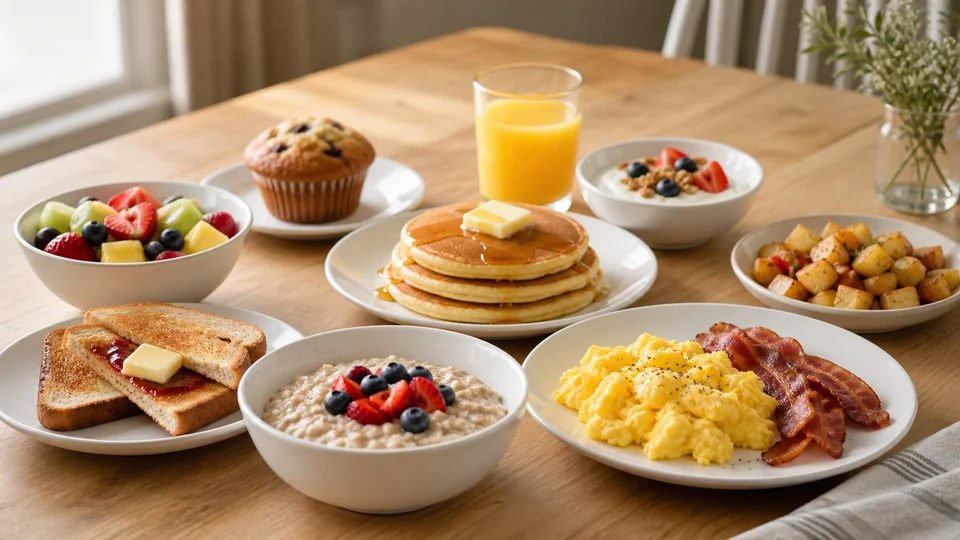
For breakfast-food list—working note 1—A useful list of breakfast foods is organised by cooking role, not by pretending that every culture shares one standard morning meal. Core groups include pancakes and breads, eggs and savoury proteins, grains, fruit and vegetables, dairy or fortified alternatives, pastries, sandwiches and drinks. Use the list to build a plate or menu with contrasting textures, practical timing and clear dietary information. See Pancakes World.
Route-specific preparation and decision guide
For breakfast-food list—working note 2—For a list of breakfast foods, start by setting a practical constraint: time, equipment, guest count, dietary requirement, or the desired finished texture. Read the selected source from beginning to end before shopping or preheating. Separate ingredients that must be measured from optional toppings and service elements. This prevents a familiar route name from being treated as a complete method. Current package labels remain important whenever a commercial product, allergen concern, or dietary claim is involved.
For breakfast-food list—working note 3—Prepare a small controlled test whenever a result depends on heat, moisture, batch size, or holding time. Use the stated pan, tray, blender, or bowl process as the baseline, then observe a specific result such as spread, browning, tenderness, yield, or serving temperature. Change one variable at a time if something needs correction. A home observation can improve the next batch, but it is not a promise that another brand, kitchen, or diner will have the same result.
For breakfast-food list—working note 4—Plan service before the last cooking step. Put plates, drinks, utensils, and cold accompaniments in place, then prepare the component that loses quality most quickly. For a group, choose one item to finish hot and make other parts stable enough to wait briefly. Keep optional sauces, toppings, and garnishes separate where practical so guests can identify what is on the plate. This makes the meal easier to serve without presenting one arrangement as the only correct breakfast.
For breakfast-food list—working note 5—Use a safety and storage checkpoint after the meal. Follow the current source and official food-safety guidance for the ingredients actually used, especially for eggs, dairy, meat, or prepared foods that need refrigeration. Do not use a general article as a substitute for individual allergy, medical, or nutrition advice. Record the exact product, quantity, equipment, and timing if the version is worth repeating.
For breakfast-food list—working note 6—For the next batch, review the route-specific decision rather than recreating the meal from memory. Note which part created congestion, whether the portion matched the people eating, and whether a substitution changed the result. That record supports a transparent adaptation while preserving the original source context. It also keeps a sensible boundary between practical cooking guidance and unsupported health, safety, or cultural claims.
For breakfast-food list—working note 7—Breakfast, American Pancakes, Pancake Toppings and Sides, Pancake Equipment and Skillets.
Selection catalog: categories, options, ideas, shortlist, what to exclude, and collection
What this brunch needs to accomplish
For breakfast-food list—working note 8—The target is a navigable breakfast taxonomy for planning rather than a universal ranking. Breakfast customs vary by place, household and schedule; inclusion does not imply health value, authenticity or endorsement.
Menu formats that fit the intent
Pancakes, waffles and crêpes
For breakfast-food list—working note 9—Griddle foods range from thick leavened cakes to thin batters and need different formulas. Place Pancakes, waffles and crêpes in its correct breakfast category while avoiding any claim that the category is universal.
Toast, rolls and flatbreads
For breakfast-food list—working note 10—Bread can carry eggs, vegetables, beans, cheese, fruit or spreads. Place Toast, rolls and flatbreads in its correct breakfast category while avoiding any claim that the category is universal.
Egg dishes
For breakfast-food list—working note 11—Fried, scrambled, poached and baked formats change equipment and holding needs. Place Egg dishes in its correct breakfast category while avoiding any claim that the category is universal.
Hot and cold grains
For breakfast-food list—working note 12—Oats, rice, corn and other grains may be served as porridge, cakes or bowls. Place Hot and cold grains in its correct breakfast category while avoiding any claim that the category is universal.
Fruit and vegetables
For breakfast-food list—working note 13—Fresh, roasted, sautéed or stewed produce creates colour and texture. Place Fruit and vegetables in its correct breakfast category while avoiding any claim that the category is universal.
Beans, meat and alternatives
For breakfast-food list—working note 14—Identify the exact product and its safe handling or label requirements. Place Beans, meat and alternatives in its correct breakfast category while avoiding any claim that the category is universal.
Yogurt, cheese and alternatives
For breakfast-food list—working note 15—Dairy and fortified non-dairy products vary in ingredients and allergens. Place Yogurt, cheese and alternatives in its correct breakfast category while avoiding any claim that the category is universal.
Pastries and sweet bakes
For breakfast-food list—working note 16—These include laminated, yeast-raised, quick-bread and cake-like formats. Place Pastries and sweet bakes in its correct breakfast category while avoiding any claim that the category is universal.
Sandwiches and wraps
For breakfast-food list—working note 17—Portable breakfasts combine bread with one structured filling. Place Sandwiches and wraps in its correct breakfast category while avoiding any claim that the category is universal.
Drinks
For breakfast-food list—working note 18—Water, coffee, tea, milk and other beverages should be planned separately from food claims. Place Drinks in its correct breakfast category while avoiding any claim that the category is universal.
Build a workable sequence
- Choose one substantial category.
- Add one fresh category.
- Select a bread or grain only if it supports the plate.
- Check labels for packaged additions.
- Match hot foods to available equipment.
- Limit the final menu to what can be served well.
Current-batch troubleshooting
The list becomes a random catalogue
For breakfast-food list—working note 19—Organise by food role and method. Move the item to the right breakfast category if its role was misread.
Every choice is starch-based
For breakfast-food list—working note 20—Add vegetables, fruit or a protein-containing dish. Move the item to the right breakfast category if its role was misread.
The menu repeats one texture
For breakfast-food list—working note 21—Pair creamy, crisp, tender and fresh elements. Move the item to the right breakfast category if its role was misread.
Cultural labels become vague
For breakfast-food list—working note 22—Name a dish and source rather than a continent-wide category. Move the item to the right breakfast category if its role was misread.
Dietary claims are inferred
For breakfast-food list—working note 23—Return to actual ingredients and labels. Move the item to the right breakfast category if its role was misread.
Safety and evidence boundary
For breakfast-food list—working note 24—For Pancakes, waffles and crêpes, keep its label, raw tools and ready-to-eat utensils separate. Never taste its raw-flour batter. Measure the applicable endpoint, refrigerate perishable portions, and require an exact formula before publishing nutrition or yield.
Frequently asked questions
What counts as breakfast food?
For breakfast-food list—working note 25—Foods eaten at the first meal vary widely; the category is contextual rather than biologically fixed.
Are pancakes only breakfast?
For breakfast-food list—working note 26—No. They appear in different meal contexts around the world.
How can the list plan brunch?
For breakfast-food list—working note 27—Select one anchor, one fresh side, one optional bread or sweet and drinks.
Does inclusion mean recommendation?
For breakfast-food list—working note 28—No. This is a planning taxonomy.
How are regional foods handled respectfully?
For breakfast-food list—working note 29—Use the dish’s proper name, a reliable source and a clear adaptation note.
Current-batch observation
For breakfast-food list—working note 30—For a list of breakfast foods, observe one concrete point before changing the method: batter flow, crisping, vegetable moisture, oven set, portion size, or the time a dish can wait before serving. Write down the actual product and equipment used. This keeps a useful kitchen note tied to the route rather than to an assumption about similar foods.
Bounded correction
For breakfast-food list—working note 31—For a list of breakfast foods, make one safe correction at a time. Lower heat when colour advances too quickly, use the source-directed rest when moisture needs time to settle, or reduce the batch size when service is becoming crowded. Do not use a substitution to make a medical, allergy, or nutrition promise that the selected source and current label cannot support.
Next-batch prevention
For breakfast-food list—working note 32—For a list of breakfast foods, prevent the same fault by preparing tools and components in advance. Measure the intended portion, identify the last-minute step, and keep optional toppings separate. If the route includes a packaged food, recheck the current label rather than relying on an earlier box, jar, or mix.
Service and storage record
For breakfast-food list—working note 33—For a list of breakfast foods, record what reached the table, how long it held its intended texture, and which leftovers need ordinary food-safety handling. This record is a home planning aid. It does not replace the directions for the ingredients actually used or individual professional advice for a dietary condition.
Transparent adaptation note
For breakfast-food list—working note 34—For a list of breakfast foods, name any change made for availability, preference, or timing. Preserve the complete source method as the reference point and describe the result as an adaptation. Clear wording helps the next cook repeat the useful parts without presenting a household outcome as a tested universal result.
Final practical record
For breakfast-food list—working note 35—For a list of breakfast foods, make the next decision from the completed meal, not from a generic expectation. Note the exact route option used, the portion served, the equipment that controlled the result, and the moment at which the food was best for the table. If a component was changed, record why it changed and what that did to texture, timing, or service. Use current labels for packaged foods and retain the original source method as the reference point. This is a transparent household record, not a formal safety, nutrition, or performance claim.
For breakfast-food list—working note 36—When repeating a list of breakfast foods, prepare the slowest or least flexible step first, keep the final hot component for last, and make optional elements visible to diners. Review any leftovers using ordinary food-safety guidance appropriate to the ingredients used. A small, clear note prevents an accidental hybrid recipe and gives the next cook a practical starting point.
Conclusion
- Breakfast Recipes to Start the Day
- Best Pancake Toppings
- Cinnamon Pecan Breakfast Bread Pudding
Related reading
Practical review 1
For breakfast-food list—working note 37—For a breakfast-food list, review 1 focuses on a separate kitchen choice. Confirm the exact ingredients, equipment, and serving plan before changing the source method. Measure the stated portion, observe the result at controlled heat or storage conditions, and record only what can be seen in that batch. A clear record distinguishes a product change from a timing change and avoids an unsupported general claim.
For breakfast-food list—working note 38—Choose the next step by the constraint that matters most in this meal: speed, texture, guest service, dietary clarity, or ingredient availability. Keep toppings and optional components separate where possible, check current labels, and state any adaptation plainly. A smaller, well-managed breakfast is usually easier to serve than a complicated menu that cannot be finished in order.
For breakfast-food list—working note 39—After eating, note whether the portion, temperature, and timing worked for the actual diners. Follow food-safety guidance for the ingredients used, and use individual professional advice where health or allergy questions arise. This route-specific note supports the next attempt without treating a household observation as a formal test.
Practical review 2
For breakfast-food list—working note 40—For a breakfast-food list, review 2 focuses on a separate kitchen choice. Confirm the exact ingredients, equipment, and serving plan before changing the source method. Measure the stated portion, observe the result at controlled heat or storage conditions, and record only what can be seen in that batch. A clear record distinguishes a product change from a timing change and avoids an unsupported general claim.
For breakfast-food list—working note 41—Choose the next step by the constraint that matters most in this meal: speed, texture, guest service, dietary clarity, or ingredient availability. Keep toppings and optional components separate where possible, check current labels, and state any adaptation plainly. A smaller, well-managed breakfast is usually easier to serve than a complicated menu that cannot be finished in order.
For breakfast-food list—working note 42—After eating, note whether the portion, temperature, and timing worked for the actual diners. Follow food-safety guidance for the ingredients used, and use individual professional advice where health or allergy questions arise. This route-specific note supports the next attempt without treating a household observation as a formal test.
Practical review 3
For breakfast-food list—working note 43—For a breakfast-food list, review 3 focuses on a separate kitchen choice. Confirm the exact ingredients, equipment, and serving plan before changing the source method. Measure the stated portion, observe the result at controlled heat or storage conditions, and record only what can be seen in that batch. A clear record distinguishes a product change from a timing change and avoids an unsupported general claim.
For breakfast-food list—working note 44—Choose the next step by the constraint that matters most in this meal: speed, texture, guest service, dietary clarity, or ingredient availability. Keep toppings and optional components separate where possible, check current labels, and state any adaptation plainly. A smaller, well-managed breakfast is usually easier to serve than a complicated menu that cannot be finished in order.
For breakfast-food list—working note 45—After eating, note whether the portion, temperature, and timing worked for the actual diners. Follow food-safety guidance for the ingredients used, and use individual professional advice where health or allergy questions arise. This route-specific note supports the next attempt without treating a household observation as a formal test.
Practical review 4
For breakfast-food list—working note 46—For a breakfast-food list, review 4 focuses on a separate kitchen choice. Confirm the exact ingredients, equipment, and serving plan before changing the source method. Measure the stated portion, observe the result at controlled heat or storage conditions, and record only what can be seen in that batch. A clear record distinguishes a product change from a timing change and avoids an unsupported general claim.
For breakfast-food list—working note 47—Choose the next step by the constraint that matters most in this meal: speed, texture, guest service, dietary clarity, or ingredient availability. Keep toppings and optional components separate where possible, check current labels, and state any adaptation plainly. A smaller, well-managed breakfast is usually easier to serve than a complicated menu that cannot be finished in order.
For breakfast-food list—working note 48—After eating, note whether the portion, temperature, and timing worked for the actual diners. Follow food-safety guidance for the ingredients used, and use individual professional advice where health or allergy questions arise. This route-specific note supports the next attempt without treating a household observation as a formal test.
Sources
- U.S. Food and Drug Administration — Food Allergies —
https:// www.fda.gov/ food/ nutrition- food- labeling- and- critical- foods/ food- allergies - FoodSafety.gov — Safe Minimum Internal Temperatures —
https:// www.foodsafety.gov/ food- safety- charts/ safe- minimum- internal- temperatures - USDA FSIS — Leftovers and Food Safety —
https:// www.fsis.usda.gov/ food- safety/ safe- food- handling- and- preparation/ food- safety- basics/ leftovers- and- food- safety - U.S. Food and Drug Administration — Handling Flour Safely —
https:// www.fda.gov/ food/ buy- store- serve- safe- food/ handling- flour- safely- what- you- need- know