Leftover oatmeal pancakes
At Pancakes World, the editorial platform presents this evidence-bounded guide for the exact route intent.
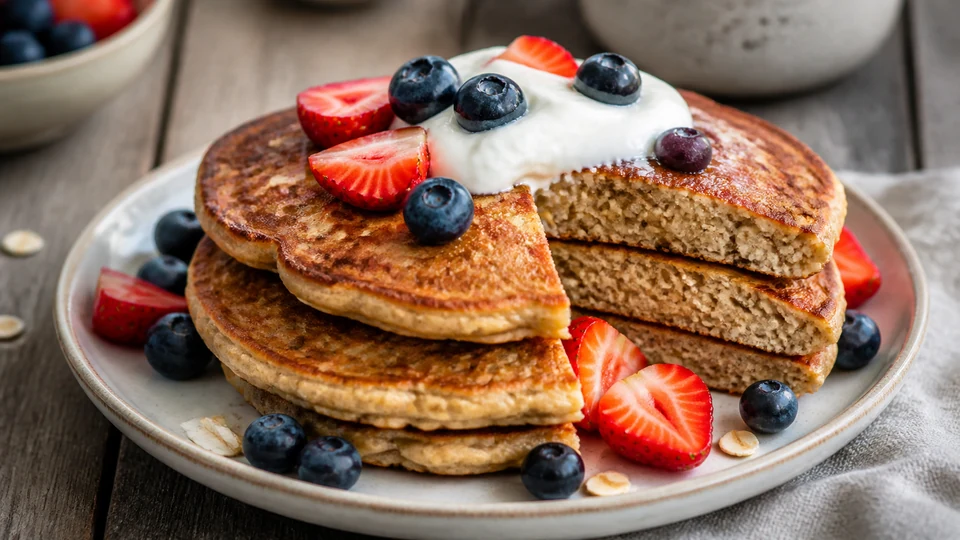

This guide belongs to Breakfast. Leftover oatmeal pancakes need a formula that treats cooked oatmeal as a wet, gelatinised ingredient rather than dry oats. Confirm the porridge's storage history, weigh or measure it, loosen or bind only through the selected recipe, cook one small tester, and adjust the next portion from observed spread and centre set.
Because porridge thickness and additions vary, this guide does not publish a universal leftover-oatmeal ratio.
| Guide sections |
|---|
| Treat cooked oatmeal as a wet ingredient |
| Calibrate the batter with one small pancake |
| Fix gumminess, spread and fragile flips |
| Food safety, labels and claim boundaries |
For broader context, continue with Storing and Reheating Pancakes.
Treat cooked oatmeal as a wet ingredient
A practical plan can be built around plain porridge base, thick batter cue and small tester, with banana oatmeal and berry oatmeal added only when they serve a defined role. The remaining decisions concern control, service and repeatability. Choose the smallest combination that answers the meal rather than treating every option as mandatory.
Record what the porridge already contains
Cooked oatmeal may include milk, water, sugar, fruit, seeds, salt or spices. It has already absorbed liquid and its starch has already changed through cooking. Treating it as dry oats produces an unreliable batter. Verify storage history, measure the cooked oatmeal, and select a formula designed for that kind of leftover. Steel-cut porridge, instant oatmeal and thick rolled-oat porridge cannot be assumed to use the same correction.
Disperse the oatmeal without overmixing
Break up cold clumps as the formula directs before judging thickness. Combine the remaining wet and dry ingredients in their intended order, then let any documented rest occur. Avoid beating only to erase visible oat texture. The batter should meet the source's cue, not a generic idea of smooth pancake batter. Reserve any permitted liquid or flour correction until after the mixture has rested and one tester has cooked.
Calibrate with a small cake
Use one measured small portion on a stable pan. Watch spread, edge set and underside release, then open the thickest point after turning. A gummy centre may come from a deep portion, excessive cooked oatmeal or harsh heat that colours the outside too quickly. A fragile flip may mean the underside was not set or the formula lacks cohesion. Change only the relevant variable and test again before committing the bowl.
Keep additions from obscuring the test
Banana and berries bring more moisture; seeds and nuts add weight; sugar increases browning. Use only a documented variation. For the first tester, keep toppings outside the batter so the base can be diagnosed. Once the batter passes, distribute approved additions consistently. Cool finished leftovers promptly and use a supported storage and reheating path. The new pancake does not extend the original oatmeal's safe life.
Decide whether the porridge is suitable
Reject oatmeal with an unknown storage history or signs of spoilage. For known leftovers, record whether they are loose, sliceable, dairy-based, fruit-filled or heavily sweetened. A formula for plain thick rolled oats may not accept a watery fruit porridge. When no compatible complete recipe exists, reheat the oatmeal through its supported path and serve it as oatmeal rather than forcing a pancake conversion.
Portion the tester consistently
Use a scoop or weight and spread only if the formula instructs. Let the first side set without repeatedly lifting the edge. Turn with a tool wide enough to support the cake. After the second side cooks, wait briefly and cut through the centre. Note whether the oat pieces are tender, whether raw batter remains and whether the cake holds when lifted.
Correct the source of gumminess
If the tester is gummy, compare cooked-oat quantity, added liquid, flour measurement, portion thickness and pan heat. Do not solve every symptom with more flour. A smaller cake or lower, steadier heat may address the centre while preserving tenderness. If the batter lacks cohesion, return to the binder in the complete formula. Record the one correction before cooking another tester.
Decide when to stop correcting
One or two controlled testers can clarify pan heat, portion size and a permitted small consistency adjustment. Repeated flour, liquid and leavener additions eventually create a new undocumented formula and make the original porridge quantity impossible to interpret. Set a stop point before cooking. If the second tester still has a wet centre or cannot turn, serve the safely stored oatmeal through its original reheating route or discard the failed batter as appropriate. Do not keep tasting raw mixture. Record the porridge type and the failed symptom so a future attempt can begin with a more compatible complete recipe rather than another rescue sequence.
Additional route decisions
Plain porridge base
Record whether the oatmeal contains milk, sweetener, fruit or seeds before selecting a formula.
Thick batter cue
Use the source's consistency cue after the cooked oats are fully dispersed.
Small tester
Cook one measured pancake and open the centre before changing the bowl.
Banana oatmeal
Treat banana as an additional wet ingredient and choose a formula that includes it.
Berry oatmeal
Account for free fruit moisture instead of folding in more berries by habit.
Savoury version
Use a separate complete formula rather than simply removing sugar.
Cinnamon profile
Add spice without using it to mask sour or uncertain leftovers.
Pan release
Wait for a set edge and stable underside before turning.
Batch notes
Record porridge weight, added liquid and tester result.
Reheat plan
Cool finished pancakes and store them through a supported leftovers route.
Calibrate the batter with one small pancake
The sequence below ties the first control to plain porridge base, the equipment decision to small tester, and the service check to reheat plan. It is intentionally narrower than a universal cooking timetable.
1. Define the result
For plain porridge base, write the intended texture, serving format and dietary boundary before shopping.
2. Verify the inputs
For thick batter cue, read the complete formula and current package labels, then record every consequential variation.
3. Stage the equipment
For small tester, reserve the pan, oven, counter, cooling space and serving utensils the method actually needs.
4. Prepare one control
For banana oatmeal, keep the first portion close to the source so a later correction has a clear baseline.
5. Observe before changing
For berry oatmeal, note spread, moisture, release, colour and centre condition rather than guessing from the clock.
6. Serve and record
For savoury version, protect safe handling, label the finished components and write one useful note for the next batch.
Fix gumminess, spread and fragile flips
Gummy centre
Make smaller pancakes, lower harsh heat and verify batter thickness.
Spreads too far
Pause before adding flour and compare the mixture with the selected formula.
Breaks on flip
Wait for a stronger set and use a smaller portion.
Burns before setting
Lower the pan temperature and avoid excess sugar on the surface.
Unknown porridge history
Discard it rather than cooking it into a new breakfast.
Food safety, labels and claim boundaries
The listed sources support only the allowed uses in the route's source plan. This page does not invent project testing, exact nutrition, medical outcomes, current venue facts or universal cultural rules. Where leftover oatmeal pancakes requires a complete formula, that formula remains the authority for quantities, timing, yield and equipment.
A better next batch
Record the exact condition of plain porridge base, the preparation of thick batter cue, the equipment used for small tester, and the service result of reheat plan. Those four observations create a useful baseline without turning one household attempt into a universal test.
If the main defect was gummy centre, repeat the complete method with only the bounded correction recorded above. If the result instead showed spreads too far, return to the preparation stage that creates that symptom. Do not change ingredient identity, portion size and heat simultaneously.
Verify the result before service
Review savoury version first because it is the control that commits the remaining batch. Apply its stated action—use a separate complete formula rather than simply removing sugar—and compare the result with cinnamon profile. The second element matters because add spice without using it to mask sour or uncertain leftovers. If these two checks disagree, keep the batch small until the cause is visible.
Next inspect pan release in the condition in which it will actually be served. The route plan says to wait for a set edge and stable underside before turning. Do that before adding batch notes, since the latter is intended to record porridge weight, added liquid and tester result. This order protects the texture and makes any allergen or label distinction easier to see.
Finish with reheat plan. Its purpose is to cool finished pancakes and store them through a supported leftovers route. Check the thickest or most heavily loaded portion, not the most attractive one, and compare it with the two leading warning signs: gummy centre and spreads too far. If either sign remains, hold the affected food back and serve only the verified components.
Frequently asked questions
Can instant oatmeal work?
Only when a formula accounts for its ingredients and texture.
Can I use steel-cut oatmeal?
Do not substitute it casually because its cooked structure differs.
Should I add more baking powder?
Not as a blind rescue; verify the complete formula and leavener first.
Can I freeze the pancakes?
Use a documented cooling, separating and reheating plan.
Why cook a tester?
It reveals spread, release and centre set before the whole batch is committed.
Contextual Pancake World guides
- Breakfast Pancakes: Styles, Plates and Munich Context
- American Breakfast: Pancakes, Diner Plates and Brunch
- Fast Breakfast: A Practical Planning Guide
Explore related Pancakes World guidance on American Pancakes, American Breakfast: Pancakes, Diner Plates and Brunch, and Maple Syrup.
Sources and editorial references
- U.S. Food and Drug Administration: Handling Flour Safely —
https://www.fda.gov/consumers/consumer-updates/handling-flour-safely-what-you-need-know - U.S. Food and Drug Administration: Food Allergies —
https://www.fda.gov/food/nutrition-food-labeling-and-critical-foods/food-allergies - USDA FSIS: Leftovers and Food Safety —
https://www.fsis.usda.gov/food-safety/safe-food-handling-and-preparation/food-safety-basics/leftovers-and-food-safety