Leftover mashed potatoes breakfast
At Pancakes World, the editorial platform presents this evidence-bounded guide for the exact route intent.
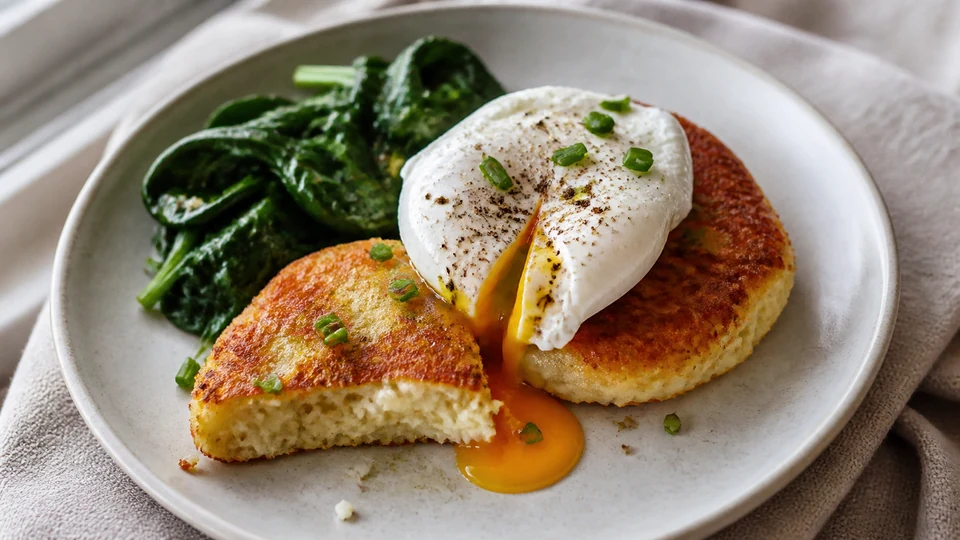

This guide belongs to Breakfast. Turn leftover mashed potatoes into breakfast only when their storage history is known. Choose one format—crisp cakes, a skillet base, a waffle-iron cake, a baked egg dish or a filled patty—then add flour, egg, cheese or other binders only through a complete documented formula because every mash has different moisture and fat.
Leftovers are not automatically safe or structurally interchangeable. This guide does not invent a rescue ratio for unknown mash.
| Guide sections |
|---|
| Start with storage history and mash condition |
| Choose a structure that the mash can support |
| Repair spreading, sticking and pasty centres |
| Food safety, labels and claim boundaries |
For broader context, continue with Storing and Reheating Pancakes.
Start with storage history and mash condition
A practical plan can be built around potato cakes, skillet crust and waffle-iron cake, with egg bake base and filled patties added only when they serve a defined role. The remaining decisions concern control, service and repeatability. Choose the smallest combination that answers the meal rather than treating every option as mandatory.
Audit the mash before choosing a recipe
Plain potatoes mashed with a little liquid behave differently from mash containing substantial butter, cheese, vegetables or gravy. Note the original ingredients, texture and storage history. If the history is uncertain, stop; frying does not reset unsafe storage. If the mash is known, choose a complete formula designed for leftovers in a similar condition. Avoid adding flour by eye to an entire bowl, because a wet mash may absorb a surprising amount and still produce a pasty centre.
Use one tester to find the structure
Chill or handle the mixture as the selected formula directs, then shape one small, even cake. The tester should reveal whether the outside can form a crust before the inside loosens. If it spreads, check mash temperature, moisture and binder against the source. If it cracks, review cohesion and portion size. Make one measured correction only when the formula permits it. A successful tester gives a reliable scoop, thickness and turning cue for the remaining cakes.
Match the format to the mash
Crisp cakes suit a mash that can hold a shallow shape. A skillet crust can use a softer mixture spread in a controlled layer. A waffle-iron method needs an appliance-specific formula and careful fill level. A baked egg dish changes the problem again because vessel depth and added fillings affect set. Filled patties are the least forgiving: wet or hot filling can break the seal and hide an unset centre. Select the format that matches the mash rather than forcing every leftover into cakes.
Preserve crispness at service
Drain or rack cooked cakes as the method supports, and avoid sealing them under foil where steam softens the crust. Sauce belongs on the side or at the last moment. For a crowd, cook controlled waves and identify one person to monitor the pan. Cool saved portions promptly and follow the complete reheating route. A microwave may warm the centre while softening the surface; a skillet or oven may restore more crust only when the source supports that method.
Compare three practical formats
A shallow cake maximizes crust but needs enough cohesion to turn. A skillet layer tolerates a softer mash but requires careful heat so the bottom browns before the top dries. A baked dish can accept a looser base only when a tested formula coordinates egg, filling and depth. Decide by the mash in front of you, not by the photograph you wanted. Filled patties add risk and should be attempted only with a formula built for them.
Use binder without erasing potato texture
Egg, flour, breadcrumbs and cheese can all influence cohesion, but each also changes allergen status and texture. Use the binder and quantity from the complete recipe. Mix only enough to distribute it. A mash that needs large unplanned additions may be better suited to another format. Cook one small cake, cool it briefly and open the centre; a firm exterior can hide a gluey interior.
Serve a crisp cake as a crisp cake
Move finished cakes to the surface named by the method, spacing them so steam can escape. Keep sauce, runny egg or juicy tomato separate until plating. For a crowd, serve small waves and avoid compressing a stack under a tight lid. If reheating is planned, validate the method with one portion before promising the same surface quality for the whole batch.
Additional route decisions
Potato cakes
Select a formula written for leftover mash and shape one tester before committing the bowl.
Skillet crust
Spread a controlled layer in a preheated pan and avoid turning it before a crust forms.
Waffle-iron cake
Use an appliance-suitable formula and respect the machine's fill and cleaning directions.
Egg bake base
Choose a tested casserole that accounts for the mash depth and added fillings.
Filled patties
Keep fillings cool, dry and fully enclosed so leakage does not hide an unset centre.
Vegetable fold-in
Cook or drain moist vegetables before they enter the potato mixture.
Cheese addition
Use a measured cheese amount because salt, fat and melt alter release.
Breadcrumb coating
Treat coating as a surface tool rather than a cure for a wet interior.
Small-batch tester
Cook one measured portion and note spread, release and centre texture.
Service pairing
Add a crisp salad, fruit or egg component without burying the potato texture.
Choose a structure that the mash can support
The sequence below ties the first control to potato cakes, the equipment decision to waffle-iron cake, and the service check to service pairing. It is intentionally narrower than a universal cooking timetable.
1. Define the result
For potato cakes, write the intended texture, serving format and dietary boundary before shopping.
2. Verify the inputs
For skillet crust, read the complete formula and current package labels, then record every consequential variation.
3. Stage the equipment
For waffle-iron cake, reserve the pan, oven, counter, cooling space and serving utensils the method actually needs.
4. Prepare one control
For egg bake base, keep the first portion close to the source so a later correction has a clear baseline.
5. Observe before changing
For filled patties, note spread, moisture, release, colour and centre condition rather than guessing from the clock.
6. Serve and record
For vegetable fold-in, protect safe handling, label the finished components and write one useful note for the next batch.
Repair spreading, sticking and pasty centres
Cakes collapse
Chill as the selected formula directs and test a smaller portion before adding binder.
Outside burns
Lower heat and flatten the remaining cakes more evenly.
Mixture sticks
Check pan preheat, surface fat and premature turning.
Centre stays pasty
Reduce thickness and use the full formula's doneness cues.
Unknown storage
Discard the mash rather than turning uncertainty into a new dish.
Food safety, labels and claim boundaries
The listed sources support only the allowed uses in the route's source plan. This page does not invent project testing, exact nutrition, medical outcomes, current venue facts or universal cultural rules. Where leftover mashed potatoes breakfast requires a complete formula, that formula remains the authority for quantities, timing, yield and equipment.
A better next batch
Record the exact condition of potato cakes, the preparation of skillet crust, the equipment used for waffle-iron cake, and the service result of service pairing. Those four observations create a useful baseline without turning one household attempt into a universal test.
If the main defect was cakes collapse, repeat the complete method with only the bounded correction recorded above. If the result instead showed outside burns, return to the preparation stage that creates that symptom. Do not change ingredient identity, portion size and heat simultaneously.
Verify the result before service
Review vegetable fold-in first because it is the control that commits the remaining batch. Apply its stated action—cook or drain moist vegetables before they enter the potato mixture—and compare the result with cheese addition. The second element matters because use a measured cheese amount because salt, fat and melt alter release. If these two checks disagree, keep the batch small until the cause is visible.
Next inspect breadcrumb coating in the condition in which it will actually be served. The route plan says to treat coating as a surface tool rather than a cure for a wet interior. Do that before adding small-batch tester, since the latter is intended to cook one measured portion and note spread, release and centre texture. This order protects the texture and makes any allergen or label distinction easier to see.
Finish with service pairing. Its purpose is to add a crisp salad, fruit or egg component without burying the potato texture. Check the thickest or most heavily loaded portion, not the most attractive one, and compare it with the two leading warning signs: cakes collapse and outside burns. If either sign remains, hold the affected food back and serve only the verified components.
Frequently asked questions
Can any mash become cakes?
No; milk, butter, vegetables and initial texture change the formula.
Can I add flour by feel?
Use a tested recipe or a measured tester, especially when allergens matter.
Is cold mash easier?
Many formulas begin with chilled mash, but follow the chosen source.
Can I freeze the cakes?
Only through a documented cooling, wrapping and reheating path.
What if the mash smells fine?
Smell alone cannot validate storage history, so use official safety guidance.
Contextual Pancake World guides
- Breakfast Pancakes: Styles, Plates and Munich Context
- American Breakfast: Pancakes, Diner Plates and Brunch
- Fast Breakfast: A Practical Planning Guide
Explore related Pancakes World guidance on American Pancakes, American Breakfast: Pancakes, Diner Plates and Brunch, and Maple Syrup.
Sources and editorial references
- U.S. Food and Drug Administration: Handling Flour Safely —
https://www.fda.gov/consumers/consumer-updates/handling-flour-safely-what-you-need-know - U.S. Food and Drug Administration: Food Allergies —
https://www.fda.gov/food/nutrition-food-labeling-and-critical-foods/food-allergies - USDA FSIS: Leftovers and Food Safety —
https://www.fsis.usda.gov/food-safety/safe-food-handling-and-preparation/food-safety-basics/leftovers-and-food-safety