Keto mcdonalds breakfast
At Pancakes World, the editorial platform presents this evidence-bounded guide for the exact route intent.
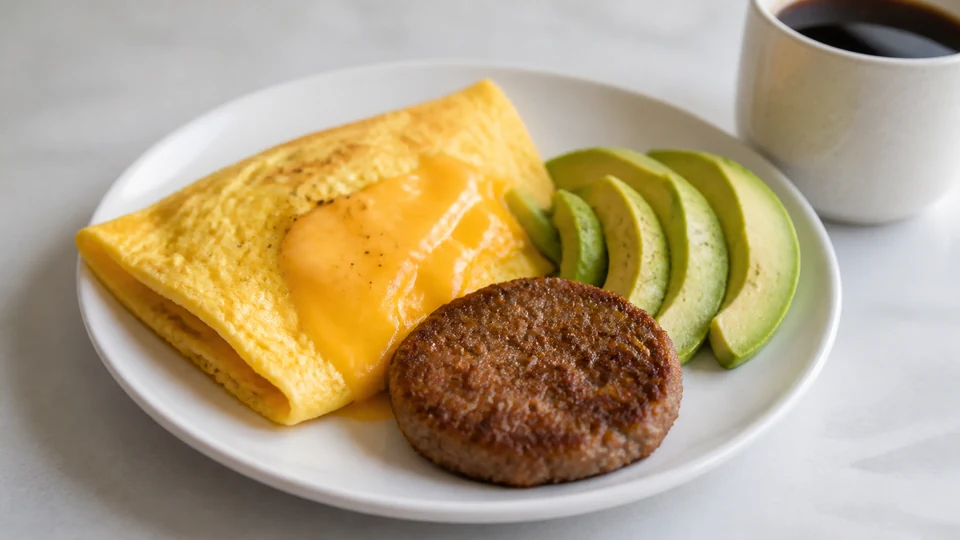

This guide belongs to Breakfast. For a keto-style McDonald's breakfast decision, define your own carbohydrate boundary, open the current official menu and nutrition information for your market, and evaluate the exact ordered configuration rather than a social-media shortcut. Removing bread changes the order, but sauces, sides, beverages, substitutions and regional availability still need current verification.
This page does not certify any McDonald's item as keto, promise a nutrition value, reproduce a current menu or provide medical dietary advice.
| Guide sections |
|---|
| Verify the exact order instead of copying a shortcut |
| Audit customisation, sides and drinks |
| Resolve stale or incomplete menu information |
| Food safety, labels and claim boundaries |
For broader context, continue with Healthy Pancake Guides.
Verify the exact order instead of copying a shortcut
A practical plan can be built around market selection, exact item record and bread removal request, with sauce check and beverage choice added only when they serve a defined role. The remaining decisions concern control, service and repeatability. Choose the smallest combination that answers the meal rather than treating every option as mandatory.
Define the personal boundary before opening the menu
Keto is not one restaurant-certified threshold. Write the carbohydrate limit or clinical instruction being followed and keep medical decisions with an appropriately qualified professional. The article can explain verification, but it cannot declare an item suitable for every keto plan. Open the official McDonald's information for the actual market and restaurant, because product names, ingredients, sizes and availability can differ. Record the exact item, not a shorthand such as “egg breakfast,” before evaluating it.
Treat customisation as a new configuration
Removing a bun does not automatically reveal the nutrition of what remains. The official calculator or item information may describe only the default build, and the restaurant may not provide a recalculated panel for every custom order. List the retained meat, egg, cheese, sauce and other components, then verify what the official source can and cannot quantify. Confirm the customisation in the app or on the receipt. If the ordered item arrives in its default form, do not pretend the planned calculation still describes the meal.
Count the whole order
Sides, hash browns, sauces, cream, sweeteners and beverages belong to the same decision. A low-carbohydrate sandwich configuration can be paired with a drink or side that changes the total substantially. Use matching serving sizes and current official data; do not rely on a third-party infographic or screenshot. When the official source does not support a precise custom total, state that limit. A transparent incomplete answer is safer than a confident invented number.
Separate nutrition from allergen questions
A carbohydrate target and an allergy are different boundaries. Use the current official allergen information and ask the restaurant what preparation can be explained, while recognizing that a busy shared kitchen may limit guarantees. Removing bread does not prove absence of wheat cross-contact. Removing cheese does not certify a dairy-free process. Recheck on later visits because menu formulations and procedures can change. The result of this route is a verification routine, not a permanent list of approved orders.
A verification worksheet
Write five lines: market and restaurant; official item name; default components; requested removals or additions; side and beverage. Beside each line, note whether the official source provides current nutrition and allergen information for that exact configuration. Keep unknowns as unknowns. Do not subtract a bun's value from a sandwich total unless the authoritative data and calculation method support that operation.
Ordering language that reduces ambiguity
State the item and requested customisation plainly, then review the displayed order before payment. Ask for sauces or sweeteners separately when that makes the configuration easier to verify. On receipt, check that the customisation appears. When the food arrives, inspect it without assuming every hidden component was removed. If the restaurant cannot make the requested change, choose another documented configuration rather than treating a verbal intention as the meal consumed.
Recheck instead of preserving a permanent list
A useful note records the access date and official page, not just a number. Before a later visit, reopen the official menu for that market. Promotional products, portion sizes and formulations can change. This page therefore teaches a repeatable audit. It intentionally avoids a ranked list of “safe keto items,” endorsement language, or medical guidance about whether a ketogenic diet is appropriate.
Additional route decisions
Market selection
Confirm country and restaurant because names, ingredients and availability can differ.
Exact item record
Write the official item name and current configuration before comparing numbers.
Bread removal request
Ask whether the restaurant can accommodate it and do not assume the nutrition panel recalculates automatically.
Sauce check
Treat every packet and sauce as a separate labelled component.
Beverage choice
Verify the exact size, additions and official listing rather than relying on the word coffee.
Side decision
Count the side actually ordered instead of evaluating only the sandwich.
Allergen review
Use current official allergen information and ask the restaurant about preparation limits.
Delivery order
Check that customisation survived the app or receipt before eating.
Personal boundary
Keep therapeutic or medical restrictions with a qualified professional.
Change log
Recheck the official source on future visits because menu data can change.
Audit customisation, sides and drinks
The sequence below ties the first control to market selection, the equipment decision to bread removal request, and the service check to change log. It is intentionally narrower than a universal cooking timetable.
1. Define the result
For market selection, write the intended texture, serving format and dietary boundary before shopping.
2. Verify the inputs
For exact item record, read the complete formula and current package labels, then record every consequential variation.
3. Stage the equipment
For bread removal request, reserve the pan, oven, counter, cooling space and serving utensils the method actually needs.
4. Prepare one control
For sauce check, keep the first portion close to the source so a later correction has a clear baseline.
5. Observe before changing
For beverage choice, note spread, moisture, release, colour and centre condition rather than guessing from the clock.
6. Serve and record
For side decision, protect safe handling, label the finished components and write one useful note for the next batch.
Resolve stale or incomplete menu information
Stale screenshot
Discard third-party numbers and reopen the current official source.
Default sauce included
Read the order configuration and confirm requested removals.
Regional mismatch
Switch the official site to the actual market and restaurant.
Hidden assumption
Record every side, drink and condiment instead of labelling the meal by one item.
Medical overreach
Stop and seek individual guidance when the diet is being used therapeutically.
Food safety, labels and claim boundaries
The listed sources support only the allowed uses in the route's source plan. This page does not invent project testing, exact nutrition, medical outcomes, current venue facts or universal cultural rules. Where keto mcdonalds breakfast requires a complete formula, that formula remains the authority for quantities, timing, yield and equipment.
A better next batch
Record the exact condition of market selection, the preparation of exact item record, the equipment used for bread removal request, and the service result of change log. Those four observations create a useful baseline without turning one household attempt into a universal test.
If the main defect was stale screenshot, repeat the complete method with only the bounded correction recorded above. If the result instead showed default sauce included, return to the preparation stage that creates that symptom. Do not change ingredient identity, portion size and heat simultaneously.
Verify the result before service
Review side decision first because it is the control that commits the remaining batch. Apply its stated action—count the side actually ordered instead of evaluating only the sandwich—and compare the result with allergen review. The second element matters because use current official allergen information and ask the restaurant about preparation limits. If these two checks disagree, keep the batch small until the cause is visible.
Next inspect delivery order in the condition in which it will actually be served. The route plan says to check that customisation survived the app or receipt before eating. Do that before adding personal boundary, since the latter is intended to keep therapeutic or medical restrictions with a qualified professional. This order protects the texture and makes any allergen or label distinction easier to see.
Finish with change log. Its purpose is to recheck the official source on future visits because menu data can change. Check the thickest or most heavily loaded portion, not the most attractive one, and compare it with the two leading warning signs: stale screenshot and default sauce included. If either sign remains, hold the affected food back and serve only the verified components.
Frequently asked questions
Is there a universal keto order?
No; keto boundaries and current menus vary, so verify the exact order.
Does no bun mean zero carbohydrate?
No such conclusion follows without official data for every component.
Can the staff guarantee a dietary target?
Ask about the order and preparation, but calculate personal targets from authoritative current information.
Are online lists reliable?
Treat them as ideas only and verify against the official market source.
Why not list exact numbers here?
Numbers can change by product, size, customisation and market, and this route has no live verification authority.
Contextual Pancake World guides
- Breakfast Pancakes: Styles, Plates and Munich Context
- American Breakfast: Pancakes, Diner Plates and Brunch
- Fast Breakfast: A Practical Planning Guide
Explore related Pancakes World guidance on American Pancakes, American Breakfast: Pancakes, Diner Plates and Brunch, and Maple Syrup.
Sources and editorial references
- McDonald's USA: Nutrition Calculator —
https://www.mcdonalds.com/us/en-us/about-our-food/nutrition-calculator.html - U.S. Food and Drug Administration: Using the Nutrition Facts Label —
https://www.fda.gov/food/nutrition-facts-label/how-understand-and-use-nutrition-facts-label - U.S. Food and Drug Administration: Food Allergies —
https://www.fda.gov/food/nutrition-food-labeling-and-critical-foods/food-allergies