High protein vegan breakfast
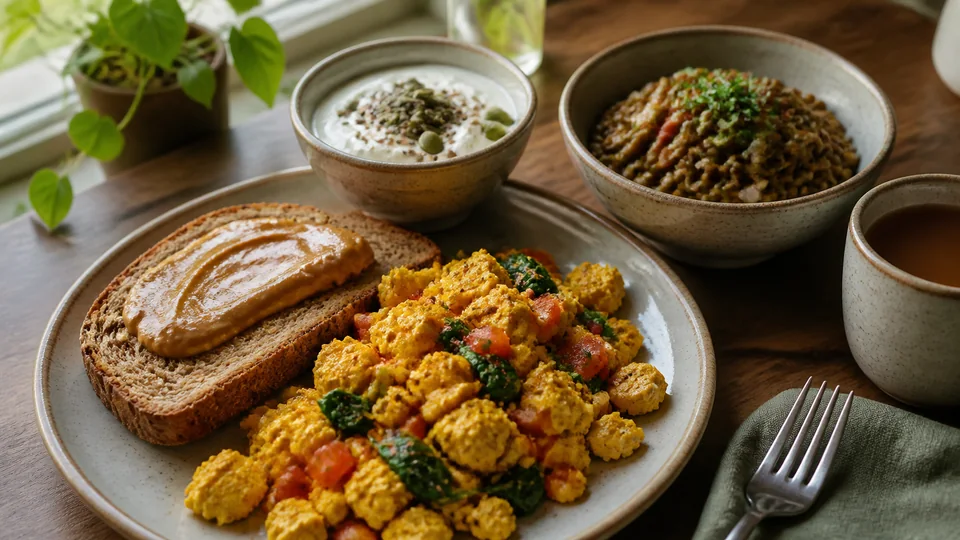
At Pancakes World, a high-protein vegan breakfast must be verified from exact ingredients, amounts and a defined threshold; the phrase alone does not prove a nutrient claim. Choose one vegan protein-containing centre—such as tofu, tempeh, beans, soy yoghurt or another labelled food—then build a bowl, toast, wrap or skillet around it. Read current packages, match USDA records to the food form, include sauces and sides, and calculate the complete serving. This page compares practical formats without publishing protein numbers, prescribing a target or promising strength, fullness, weight or performance outcomes.
The Breakfast hub contains more plant-based ideas. Pancake World is the main index.
| Guide sections |
|---|
| Define “high” before choosing a meal |
| Check vegan status separately |
| Use evidence rather than ingredient reputation |
| Tofu scramble format |
For broader context, continue with Healthy Pancake Guides.
Define “high” before choosing a meal
A protein target or claim needs a stated basis. Use a goal supplied by an individual plan or an appropriately qualified professional. Do not adopt a number from a headline. Age, health, activity and the rest of the diet can matter, and this article cannot assess them.
Write whether the number applies to the entire breakfast or one product. A cereal described as high protein does not automatically make the full bowl meet a personal target, while an unlabelled combination cannot be verified by appearance.
Check vegan status separately
Review every current ingredient statement. A central food may be vegan while the bread, sauce, flavour packet or topping is not. Product formulas differ. Preserve labels until the meal is prepared.
Vegan does not mean free from soy, wheat, nuts or other allergens. Use controls appropriate to the actual need and avoid cross-contact guarantees unsupported by the kitchen.
Use evidence rather than ingredient reputation
USDA FoodData Central provides records for many foods and forms. Choose raw, cooked, drained, branded or generic records that match what enters the serving. Tofu varieties, bean forms and plant-based yoghurts are not interchangeable data entries.
FDA explains that Nutrition Facts values are based on the stated serving size and that packages may contain multiple servings. Scale from the label to the amount actually used. No values are copied here because the article offers adaptable formats, not a fixed calculation.
Tofu scramble format
Select a complete tofu scramble method that states tofu type, vegetables, seasonings and pan process. Weigh the tofu portion and include cooking fat and sauce in any calculation. Prepare watery vegetables first when the formula directs so the pan does not become a soup.
Serve with toast, tortilla or potatoes only after adding those components to the full meal record. A tofu scramble by itself cannot account for the side.
Tempeh breakfast skillet
Tempeh can be sliced or crumbled through a documented method, then combined with one vegetable and a defined sauce. Read the tempeh label; flavoured products may include additional ingredients.
Do not claim that browning changes its protein value in a predictable way. Use the actual amount and suitable record. Reheat safely stored portions to 165°F.
Bean toast
Use a documented bean spread or mash on toast and finish with washed tomato, herbs or another crisp ingredient. Record beans by their exact cooked or canned-and-drained form. Include bread and any oil or spread.
A large decorative pile is not a measurement. Portion the centre before it reaches the toast, especially when several servings share one bowl.
Soy yoghurt bowl
Choose a product from its current label and weigh the serving. Add a measured oat, seed, nut or fruit component according to the plan. Plain and flavoured products can differ, and front labels do not replace the Nutrition Facts panel.
Keep the bowl chilled and add dry toppings at service. This page does not rank brands or say that every soy yoghurt meets a high-protein definition.
Chickpea or lentil pancake direction
Select a complete formula designed around chickpea flour, lentils or another legume. These batters have their own hydration, rest and cooking cues. Do not swap them into a wheat pancake ratio.
Calculate from the actual dry ingredient, liquid, oil, fillings and finished yield. Recipe schema is withheld because no Pancake World test record exists.
Savoury grain bowl
Combine a measured cooked grain with tofu, tempeh, beans or another centre and a prepared vegetable. Add one sauce. Match the grain and centre to cooked data records and account for oil used in roasting or sautéing.
If using leftovers, confirm both dates. Refrigerate perishable food within two hours and use most refrigerated leftovers within three to four days, according to USDA FSIS.
Vegan breakfast wrap
Choose a tortilla from its actual label, add a compact measured filling and keep wet sauce separate if travelling. A tofu scramble, bean spread or tempeh mixture can serve as the centre through a complete recipe.
Do not judge the wrap by the central ingredient only. Tortilla, filling, sauce and any side form one breakfast calculation.
Smoothie planning
Record beverage, fruit, yoghurt, tofu or powder, spread and toppings. Define the serving before blending. A full jug may hold several portions.
Supplements and powders need individual professional consideration where health conditions or medications matter. This page does not recommend products or claim a performance outcome.
Produce preparation
Wash produce under running water. FDA advises against soap, detergent or commercial produce wash. Use clean utensils and keep ready-to-eat items away from raw foods.
Record the edible amount matching the selected food record. Fresh, frozen, canned and dried forms are not identical.
Meal-prep boundaries
Prepare one centre for two destinations: tofu for a scramble and wrap, beans for toast and a bowl, or tempeh for a skillet and packed plate. Label portions and keep sauces separate.
Cool perishable food in shallow containers within two hours. Reheat leftovers to 165°F. Do not use an unknown container simply to reach a protein target.
Common claim errors
Do not call a meal high protein without a defined criterion and calculation. Do not copy a value from raw food to a cooked serving. Do not count a package serving when the amount used differs. Do not omit bread, oil, sauce and beverage from the full breakfast.
Avoid promises of muscle gain, better recovery, weight loss, appetite control or improved health. Exact protein content does not establish those outcomes.
Frequently asked questions
Which vegan food has the most protein?
No universal ranking is provided. Products, forms and serving amounts differ. Compare exact records within the individual's plan.
Do I need protein powder?
Not necessarily, and this page does not recommend supplements. Discuss the exact product with an appropriate professional when individual health matters.
Are beans and tofu interchangeable?
No. They have different cooking roles, composition and records. Select the food and amount deliberately.
Can a vegan pancake count?
Only after its exact recipe, yield and serving are calculated against the defined criterion. A vegan label alone does not establish protein content.
Why are no grams listed?
There is no fixed meal, serving or target. Generic numbers could be mistaken for an exact calculation or prescription.
Build a verification card
Record the personal criterion, exact centre, product or data record, amount, complete meal ingredients, batch yield and serving. Add vegan and allergen label checks. Recalculate when any product or portion changes.
Article schema accurately represents this framework; Recipe schema would require one project-tested formula with ingredients, instructions, timings and yield.
Keep the calculation attached to the serving
When a batch produces several portions, weigh the finished edible batch and use a consistent division. Label each container with the recipe version and serving weight. Do not give every container the same protein total when their sizes differ.
If a topping is added in the morning, keep its record separate until use. A seed portion, soy yoghurt spoonful or spread can change the finished total. Recalculate rather than relying on the centre's reputation.
Review saved entries when a branded food changes. Archive the prior label and create a new version. This makes “high protein” an auditable conclusion against a defined criterion, not a permanent nickname attached to a breakfast.
For shared meals, keep the calculated centre and optional sides in separate containers. One diner may add toast while another adds fruit or a sauce, producing different totals. Label the common batch only with information supported by its own measured ingredients and yield. Never copy one person's complete breakfast calculation onto every plate. This separation also preserves texture and lets vegan or allergen checks follow the exact components selected.
Keep serving utensils with their labelled dishes, and return perishable reserves to refrigeration instead of leaving the full batch on display.
Explore related Pancakes World guidance on American Pancakes, American Breakfast: Pancakes, Diner Plates and Brunch, and Maple Syrup.
Sources and editorial references
- USDA FoodData Central —
https://fdc.nal.usda.gov/ - U.S. Food and Drug Administration —
https://www.fda.gov/food/nutrition-facts-label/how-understand-and-use-nutrition-facts-label - U.S. Food and Drug Administration —
https://www.fda.gov/food/buy-store-serve-safe-food/selecting-and-serving-produce-safely - USDA Food Safety and Inspection Service —
https://www.fsis.usda.gov/food-safety/safe-food-handling-and-preparation/food-safety-basics/leftovers-and-food-safety