High calorie breakfast for bulking
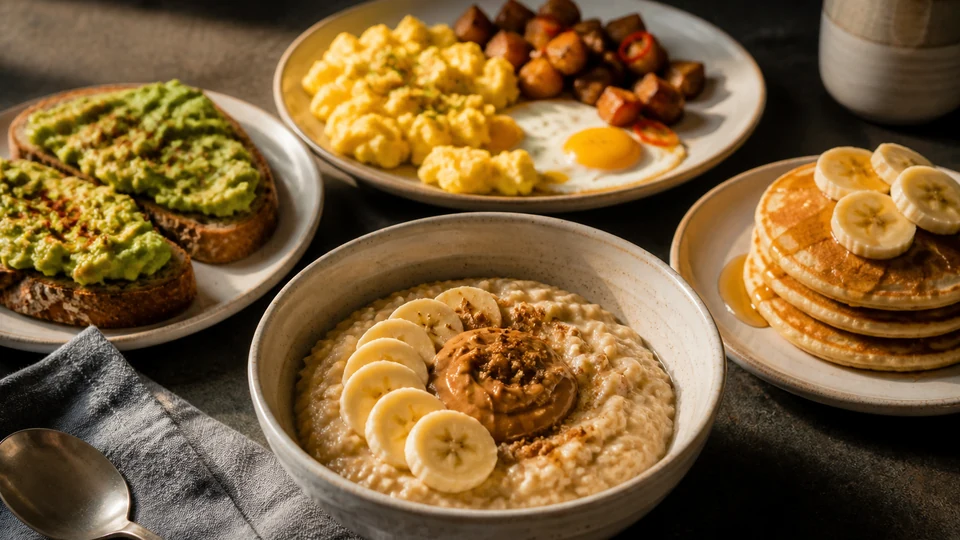
At Pancakes World, a higher-calorie breakfast for a bulking plan is easiest to control when it starts with a familiar meal and adds energy through measured portions: a larger base, one or two energy-dense toppings, an additional side, or a documented drink. Record the exact products and amounts. The breakfast should be practical to finish and repeat, not a contest to create the largest possible plate.
This is neutral meal-planning information, not sports-nutrition or medical advice. It does not set a calorie target or promise muscle gain, weight gain, recovery or performance. Individual needs belong with an appropriately qualified professional. Pancake World is the sole verified contextual link.
| Guide sections |
|---|
| Get the target from the right place |
| Calculate the meal that is actually served |
| Use a three-layer builder |
| Increase energy without doubling every portion |
For broader context, continue with American Breakfast: Pancakes, Diner Plates and Brunch.
Get the target from the right place
Do not copy a calorie surplus or body-weight formula from a generic menu. Age, body size, training, overall diet, health and goals can change individual needs. Use a target established for the person, then decide how much of it reasonably belongs at breakfast.
The rest of the day matters. A very large morning meal may be impractical if it reduces comfort or conflicts with training and work. Another person may prefer more energy early. The article cannot decide that distribution; it can make a chosen breakfast transparent.
Calculate the meal that is actually served
Use the current Nutrition Facts label for packaged bread, cereal, yogurt, plant beverage, spreads, sauces and convenience foods. Match the serving basis to the amount eaten. For unpackaged ingredients, select an appropriate USDA FoodData Central record and record the preparation form.
Count cooking oil, butter, syrup, nut or seed butter, cheese, cream, drink additions and toppings. They are easy to miss because they disappear into a pan or bowl. “A spoonful” is not enough for a repeatable calculation; measure before adding.
Composite dishes require the full recipe and yield. A burrito's total comes from tortilla, filling, oil, sauce and serving. Pancakes require the complete batter and toppings. Leftovers need the original recipe and actual portion. Do not assign a number from a similar online photograph.
Keep the calculation separate from the outcome. A meal can be accurately described as containing a calculated amount of energy without claiming that it produces a particular rate or type of gain.
Use a three-layer builder
Start with a carbohydrate-containing or another substantial base that fits the person's plan: oats, toast, pancakes from a complete formula, potatoes, rice, a tortilla, or another chosen food. Add a protein-containing anchor according to preference and individual guidance. Then use measured energy-dense additions to reach the intended meal.
The three layers are a planning tool, not a prescription. A yogurt bowl might combine the base and anchor. An egg-and-potato plate separates them. A vegan burrito can use beans or tofu. Choose a culturally and practically appropriate breakfast instead of forcing every meal into one sports-menu stereotype.
Add produce when wanted and suitable, but do not present it as a way to cancel or “clean up” calories. Fruit and vegetables contribute their own composition and culinary roles. The whole breakfast should be counted honestly.
Increase energy without doubling every portion
One measured addition often works better than enlarging every component. Add a verified spread to toast, nuts or seeds to a bowl, cheese or avocado to a savoury plate, oil within a complete cooking method, or a labelled side drink if it fits.
Another approach is a second small item: fruit with nut butter, yogurt or an alternative beside pancakes, toast beside eggs, or a compact breakfast bar whose exact label is known. This can be easier to eat than one overfilled bowl.
Change one variable at a time and recalculate. If the meal becomes too rich, dense or slow to finish, distribute the addition differently or use individual professional guidance. Do not advise someone to ignore discomfort in pursuit of a target.
Oatmeal with visible additions
Use a complete oat method and record the dry amount, cooking liquid and finished serving. Additions might include a labelled dairy or plant beverage, nut or seed butter, nuts, seeds, dried fruit, fresh fruit or another permitted topping. Measure each separately.
Keep texture in mind. Several dense pastes can make a bowl difficult to eat. A crunchy topping and fresh or sharp component may improve contrast. If the bowl travels, carry crunchy items separately and maintain temperature control for perishable ingredients.
Do not call the bowl high-protein or nutritionally balanced without an authorized calculation. The route focuses on energy planning.
Toast, spreads and a substantial side
Choose bread from its current label and use the actual slice count. Apply a measured spread: nut/seed butter, butter or alternative, avocado, cheese or another selected product. Add eggs, tofu, yogurt or a plant alternative as a side when it fits the plan.
Sweet and savoury versions should stay coherent. Toast with nut butter and banana has a different eating profile from cheese toast with eggs and tomato. Avoid stacking several spreads merely to raise the number; use a portion that can be eaten comfortably and tracked.
For a packed breakfast, separate juicy fruit or tomato from the bread. Keep eggs and dairy products under appropriate temperature control.
Pancakes as the base
Select a complete pancake formula and calculate its exact ingredients and yield. Do not alter the batter to make it “bulking.” Energy can be added through a documented serving, measured topping and separate side while the tested formula remains stable.
Toppings might include a verified syrup, nut/seed butter, fruit preparation, yogurt-style product or butter/alternative. Product and amount matter. A restaurant stack without complete recipe and serving information cannot support an exact calculation.
Pancake World does not claim to have tested a new high-calorie pancake recipe here. Recipe schema is therefore not used.
Breakfast burritos and wraps
A burrito can combine tortilla, beans, tofu, eggs, meat, potatoes, vegetables, cheese or alternatives and sauce. Use one coherent complete recipe. Count the tortilla and every filling, including pan fat and condiment.
Do not overfill solely to reach a target. An unrollable burrito is difficult to eat and transport. Add a side or drink instead. For storage and reheating, follow the exact recipe and current safety guidance.
Rice, potatoes and savoury bowls
Use a known cooked portion of rice, potatoes or another chosen base. Add a documented egg, tofu, bean, meat or fish preparation and a measured sauce or fat. Keep fresh vegetables or herbs for contrast when desired.
Leftover grains and potatoes require a known cooling and storage history. A large batch should be portioned and labelled. Do not infer safe reheating from appearance or from the breakfast's calorie goal.
A bowl can become difficult to calculate when several leftover sauces and small containers are combined. Choose one base, one anchor and a short additions list. Simplicity improves repeatability.
Yogurt-style bowls and granola
Read the exact yogurt or plant-based product label. Measure granola, cereal, nuts, seeds, fruit and spread additions instead of filling the bowl by volume appearance. Granolas and flavoured yogurts vary widely by product and serving.
For a cold breakfast, plan refrigeration. Frozen fruit can thaw in the bowl, but it may change texture; carry it separately if needed. A high-calorie label does not authorize holding the food warm.
If dairy or soy is excluded, select a documented alternative and recalculate. Do not assume an alternative matches protein, calories or allergens.
Use drinks deliberately
A drink can add energy when an individual plan includes it, but liquids are not automatically easier or more suitable. Use a measured formula with labelled milk or plant beverage, yogurt if included, fruit, nut/seed butter, powder and flavouring. Record every ingredient.
Avoid promising that a shake improves recovery or guarantees weight gain. Do not recommend powders or supplements without suitable evidence and individual advice. A café drink with unknown recipe cannot support a precise total.
Water or another preferred drink can still accompany a solid breakfast. The choice belongs to the person's wider plan.
Place breakfast around training carefully
Timing relative to exercise, comfort and individual needs can vary. This article does not prescribe a pre-workout or post-workout window. Use the plan supplied by an appropriate sports dietitian, clinician or other qualified professional.
If the breakfast must be eaten soon before activity, size and texture may matter to comfort. That is an individual observation, not permission to make a universal rule. Record what was eaten and take recurring issues to the relevant professional.
Do not reinterpret muscle soreness, scale changes or training performance as proof that one breakfast worked. Many variables affect those outcomes.
Prepare a repeatable week
Choose two weekday breakfasts and one slower option. For example, use a measured oat bowl, a toast-and-egg plate, and pancakes or a burrito on a less pressured morning. Repetition makes product and portion records easier without requiring the same food every day.
Create a shopping list from exact components. Buy the base, anchor, additions and sides in realistic quantities. Keep labels for packaged foods. When a product changes, update the calculation rather than using an old value.
Move safe tasks earlier: portion dry oats, group sealed toppings, prepare a documented filling, or label containers. Follow complete sources for cooked food storage. Do not store mixed batter or a composite dish simply because batch preparation sounds efficient.
At the end of the week, review practical issues: Was breakfast finished? Did it fit the schedule? Were amounts measured? Did food spoil or go unused? These observations can refine the menu but do not establish a physiological outcome.
Manage cost without invented price claims
Use familiar staples, compare local unit prices directly and reduce half-used specialty products. Oats, bread, potatoes, rice, eggs, beans, tofu, dairy or plant products can form many breakfasts depending on the individual's plan. This article does not quote prices or claim that one ingredient is cheapest everywhere.
Energy-dense toppings can be measured rather than purchased in many varieties. One nut/seed butter, one nut or seed and one preferred spread may cover several formats. Choose according to allergy, taste and budget.
Leftovers save money only when their preparation and storage are known and they are actually eaten. Do not build a breakfast around unknown restaurant food to avoid waste.
Common mistakes
The first is hiding calories in unmeasured oil, sauce and drinks while claiming precision. The second is doubling a portion that becomes unpleasant to finish. The third is copying a generic target. The fourth is treating supplements as food requirements. The fifth is promising muscle or weight outcomes.
Another mistake is changing the menu every day. Without repeatable products and portions, the calculation becomes mostly guesswork. Variety can come from two or three documented structures rather than constant novelty.
Finally, do not neglect food safety. Perishable high-calorie food needs the same cooking, cooling, storage and transport controls as any other meal.
Adapt breakfast to morning appetite
A technically impressive breakfast is useless if its size makes it difficult to finish. People who wake with a small appetite can distribute the planned foods across a main plate and a later morning item. For example, serve the toast and eggs first, then keep the yogurt, fruit and granola for a scheduled second breakfast. This is a planning choice, not a claim that a particular timing pattern will work for everyone.
Temperature and texture also affect how manageable a meal feels. A large, thick bowl of oats may be slow to eat, while toast with a spread, a banana and a drink separates the same kind of pantry ingredients into lighter components. Conversely, someone who dislikes assembling several items may find one substantial bowl easier. The practical question is which format lets the intended portion reach the table and be eaten consistently.
If rushed mornings are the problem, reduce decisions rather than relying on motivation. Put the bowl, spoon and dry ingredients together the night before. Portion a spread into a small container. Wash the fruit. Chill a prepared drink only if its ingredients and storage time permit. The finished breakfast should still look like food rather than a hidden calculation: a visible base, visible additions and a drink whose ingredients are known.
Build a portable version without losing track of portions
A portable bulking breakfast needs to survive transport and remain easy to account for. A filled wrap can carry eggs or beans, cooked vegetables, cheese and a measured sauce, but an overloaded tortilla often tears and turns a planned meal into a mess. Use two smaller wraps when that is easier to pack. Keep wet salsa or yogurt-based sauce in a separate leakproof container and add it when eating.
For a cold option, pack a jar of oats or yogurt with the crunchy addition separated until serving. A second container can hold fruit, toast or a muffin. This division keeps texture intact and makes omissions obvious: if the nut or seed packet is still on the counter, the planned meal has changed. Follow the storage guidance for every perishable ingredient and use an insulated bag with a cold source when refrigeration is not continuously available.
Office breakfasts should not depend on equipment that may be occupied. A meal that is acceptable cold provides a fallback when the microwave queue is long. If reheating is essential, pack the food in a microwave-suitable container and stir or rotate it so the centre heats as well as the edges. Do not treat a commute, a warm desk drawer or a gym bag as refrigerated storage.
Make useful adjustments for common ingredient limits
A high-calorie breakfast does not have to depend on cow's milk, peanut butter or a single fashionable powder. If dairy is not suitable, compare the labels of plant drinks and yogurt alternatives because their energy, protein and added-sugar profiles vary widely. Choose by the actual product and the role it must play in the meal. If nuts are unsuitable, seeds or seed spreads may fill a similar culinary role for some people, but allergen safety and the label remain decisive.
For an egg-free savoury breakfast, beans, tofu or leftover cooked pulses can form the substantial component, accompanied by rice, potatoes, bread or a wrap as appropriate to the plan. That combination will not duplicate the composition of eggs, and it should not be described as nutritionally identical. Its advantage is practical: it creates a warm, forkable breakfast from ordinary ingredients.
When gluten must be avoided, replace the grain component with a product that meets the person's requirement rather than assuming oats or any unlabelled bakery item is suitable. Potatoes, rice and verified alternatives can broaden the menu. Cross-contact questions belong to the relevant manufacturer, kitchen or qualified clinician, not to guesswork in a breakfast guide.
Review the plan after real mornings
After several breakfasts, compare the written plan with what actually happened. Was the meal finished? Which component was routinely left behind? Did preparation fit the available time? Did a portable version stay intact? These observations are more useful than pretending a menu has been tested under conditions that were never documented.
Change one practical variable at a time. If the portion is too bulky, reduce a high-volume component and add a smaller labelled energy-dense component that the eater already tolerates. If the meal is finished but the wider daily intake remains below the target supplied by a qualified professional, adjust the planned amount rather than using an arbitrary internet number. If breakfast regularly displaces later meals, reconsider its size within the whole day.
Keep the successful parts stable for a week before rebuilding everything. A repeatable base such as oats, toast or potatoes can stay constant while fruit, seasoning or the savoury topping rotates. This makes shopping easier and helps distinguish genuine preference from novelty. The goal is a breakfast that supports the chosen daily plan and fits ordinary mornings, not the largest plate that can be photographed.
Frequently asked questions
What is the easiest way to raise breakfast calories?
Start with a familiar meal and add one measured component or side whose label or composition is known. Recalculate the actual serving.
How many calories should breakfast contain for bulking?
This article does not set an individual target. Use appropriate professional guidance and the person's full-day plan.
Is a smoothie required?
No. Solid meals, drinks or combinations may fit different people. A smoothie must still use measured ingredients.
Are pancakes suitable?
They can be part of a calculated meal when a complete formula, serving and toppings are known. No performance claim follows.
Is this a tested meal plan?
No. The page is an evidence-bounded planning guide and uses Article schema fallback.
Record practical tolerance as carefully as arithmetic. If a new breakfast produces persistent discomfort, stop treating completion as a discipline problem and seek appropriate advice. A calculated surplus does not justify ignoring symptoms, allergies or an eating pattern that has become difficult to manage.
Keep breakfast practical.
Separate a training-day preference from a universal rule
Some people prefer a lighter meal before activity and a larger breakfast afterward; others train later or have no morning training at all. This guide does not prescribe timing. Place breakfast where it fits the individual's plan, appetite, schedule and professional advice.
If eating close to activity is uncomfortable, change timing, portion or texture rather than forcing the largest meal. A smaller toast-and-yogurt plate followed by a planned second breakfast may be more manageable than one enormous bowl. That is a practical split, not a performance guarantee.
Record which breakfast was actually eaten and whether it fit the morning. Do not infer muscle gain from a single meal or describe a timing pattern as anabolic without route-specific evidence.
Build a savoury batch for three mornings
Choose one cooked base such as potatoes, rice or another grain, then prepare a substantial component such as eggs, beans, tofu or suitable leftover protein. Store each component under its correct guidance rather than mixing the entire week's breakfast in one deep container.
In the morning, reheat one portion, add a measured cooking or finishing component and include a fresh contrast. The modular approach lets the portion change without recooking everything. It also keeps a wet sauce from soaking the base during storage.
Label the date and identity. A batch should be modest enough to use safely and enjoyably. This article provides no universal three-day storage claim; follow the applicable source for the exact foods.
Handle weekends without abandoning the calculation
A relaxed breakfast can include pancakes, waffles, a larger savoury plate or a café visit, but the same evidence boundary applies. For home pancakes, calculate from the complete tested formula, actual yield and toppings. For restaurant food without current nutrition information, do not invent an exact total.
One option is to keep the weekend base familiar and add time-consuming texture rather than random quantity: freshly cooked potatoes beside eggs, fruit over established pancakes, or a warm grain bowl with a separately prepared topping. The meal feels different while the ingredient record remains understandable.
If social breakfast matters, prioritize participation. An imprecise restaurant plate can be described honestly and considered within broader professional planning later; false numerical certainty is not required for one morning.
Travel with a two-part breakfast
Pack one shelf-stable or dry component and one properly chilled component. Toast, a muffin from a documented formula, cereal or crackers may travel separately from yogurt, cheese, eggs or another perishable item. Add fruit that withstands the journey.
Use labels and actual portions. Hotel breakfast products may differ from those at home, so read current packages where available. A buffet spoon or unlabeled granola jar cannot support a precise calculation.
When refrigeration is uncertain, choose sealed items that suit the person's plan and local availability. This page does not recommend brands. Rebuild the calculation from the products found rather than carrying an old number across countries.
Review the whole shopping week
Higher-calorie breakfast ingredients can overlap with other meals. Oats, rice, bread, fruit, yogurt, beans, eggs, tofu, seeds and spreads need not be breakfast-only purchases. Plan how opened packages will be used before buying the largest size.
Keep two dense additions rather than six. A spread and a seed or granola component may provide enough variation. Rotate bases between sweet and savoury formats. This simplifies label tracking and reduces forgotten containers.
Prices and package sizes change, so use the actual local shop. Compare cost per intended serving only after checking that the household will finish the product. Waste is not an efficient bulking strategy.
Respond when breakfast is repeatedly unfinished
First identify what remains: the base, dense topping, drink or side. A consistently abandoned component is not contributing to the consumed meal. Reduce or replace it and recalculate rather than leaving the planned number unchanged.
Consider volume, dryness, sweetness, temperature and eating time. A large dry toast stack may need a different format; a very thick oat bowl may need a smaller base and measured addition; a sweet drink beside sweet oats may create flavour fatigue.
Persistent difficulty eating, digestive symptoms or concern about weight deserves qualified support. Do not escalate portions through internet advice when the practical pattern is not working.
Keep supplements outside the default menu
A powder, bar or formulated drink may belong in an individual's plan, but it is not required to make breakfast higher in calories. Do not hide a supplement in pancakes or oats without recording the exact product and serving. Follow its label and appropriate professional advice.
Ordinary food also gives the cook clearer control over texture. Toast, bowls, rice, potatoes, fruit, spreads and suitable substantial components can be adjusted visibly. If a supplement is used, it should add a known role rather than rescue a meal whose base and portion were never planned.
Explore related Pancakes World guidance on American Pancakes, Maple Syrup, and Maple Syrup Pancakes.
Sources and editorial references
- USDA FoodData Central, ingredient identity and composition records:
https://fdc.nal.usda.gov/ - U.S. Food and Drug Administration, using the Nutrition Facts label:
https://www.fda.gov/food/nutrition-facts-label/how-understand-and-use-nutrition-facts-label - FoodSafety.gov, food-safety charts:
https://www.foodsafety.gov/food-safety-charts