Healthy morning breakfast
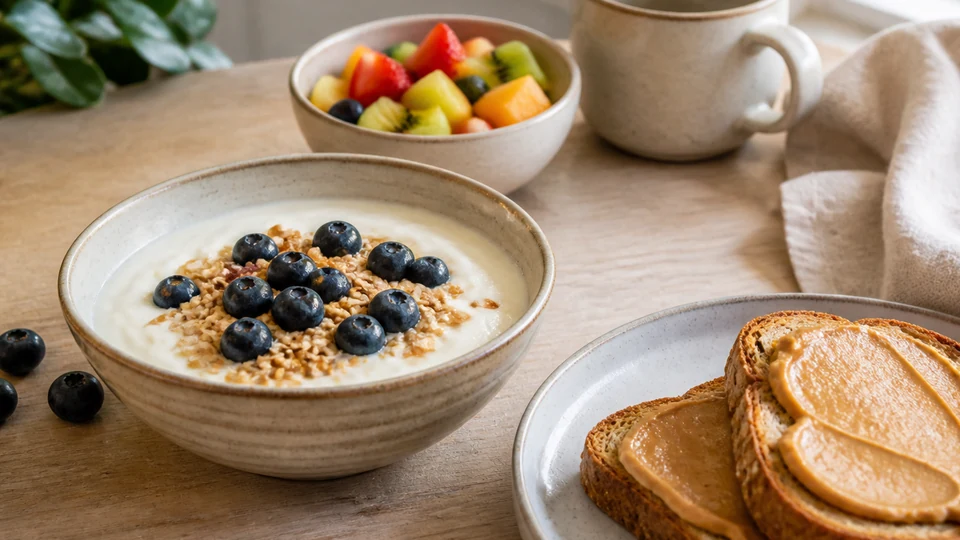
At Pancakes World, a healthy morning breakfast can be built from a wholegrain or other starchy base, fruit or vegetables, and a protein food, with milk, yoghurt, or a fortified alternative where it suits the meal. Practical examples include porridge with berries and nuts; wholegrain toast with egg and tomatoes; plain yoghurt with fruit and oats; baked beans with mushrooms and toast; or leftover vegetables with fish and potato. The UK Eatwell Guide describes balance across a day or week, so every breakfast need not contain every group. Start by improving the weakest part of the meal, compare packaged foods with traffic-light labels, choose water or an unsweetened drink, and match the portion to the eater.
For broader context, continue with Healthy Pancake Guides.
“Healthy” describes the pattern, not one perfect breakfast
The UK Eatwell Guide is the national model for a healthy, balanced diet. It groups food into fruit and vegetables; potatoes, bread, rice, pasta, and other starchy carbohydrates; beans, pulses, fish, eggs, meat, and other proteins; dairy and alternatives; and oils and spreads. It also places foods high in fat, salt, and sugar outside the main guide.
The proportions apply over a day or even a week, not necessarily at each meal. That is an important guardrail. A breakfast of eggs, mushrooms, tomatoes, and toast can contribute several groups without looking like the whole guide. Porridge with milk, berries, and seeds does the same in a different format. Neither needs to be overloaded merely to display every category at once.
The word “healthy” is also individual. Age, appetite, activity, culture, pregnancy, allergies, medical conditions, medication, sport, and eating-disorder recovery can change the appropriate foods and portions. This page offers general UK-oriented meal ideas, not a prescription or medical treatment.
Pancake World has not conducted nutrient analysis or an in-house recipe test on these combinations. No meal is claimed to cause weight loss, stable blood glucose, better concentration, lasting energy, or disease prevention.
The five-question breakfast audit
Instead of discarding your usual breakfast, ask five questions. One strong improvement is often more sustainable than rebuilding the entire meal.
1. Where is the starchy or wholegrain base?
Breakfast options include porridge oats, unsweetened wholegrain cereal, wholemeal bread, rye bread, potato, or another starchy food. The Eatwell Guide advises basing meals on starchy carbohydrates and choosing wholegrain versions where possible.
This does not mean the largest bowl or unlimited toast. It means the carbohydrate base is visible and chosen deliberately. Check the ingredient list because brown colour, “seeded”, “wheat”, or “multigrain” wording does not always mean the food is primarily wholegrain.
If breakfast already includes potato, bread may be unnecessary. If a yoghurt bowl already contains oats, it may not need toast as well. Audit the complete plate.
2. Is there fruit or a vegetable?
UK guidance aims for at least five portions of varied fruit and vegetables across the day. Breakfast can contribute without carrying the entire target.
Useful additions include:
- berries, banana, apple, pear, orange, or stone fruit
- tomatoes, mushrooms, spinach, peppers, or courgette
- leftover roasted vegetables
- frozen fruit stirred into porridge
- unsweetened canned fruit in an appropriate portion
Potatoes count as a starchy carbohydrate in the Eatwell Guide rather than a five-a-day vegetable. Juice and smoothies are limited to a combined total of 150 ml a day, and that amount counts as one portion regardless of how many fruits are blended.
Whole fruit and vegetables offer a different eating experience from drinking them. Do not treat a very large smoothie as several automatic portions.
3. What is the protein food?
UK food-group examples include beans, pulses, fish, eggs, meat, nuts, and plant alternatives such as tofu and mycoprotein. Dairy foods also contribute protein.
Breakfast anchors can be:
- eggs
- plain yoghurt or skyr-style yoghurt
- milk or a fortified soya alternative
- beans or lentils
- tofu
- nuts, seeds, or nut butter
- fish such as kippers, salmon, or sardines
- leftover chicken or another safely stored protein
Red and processed meat can be a breakfast choice but need not be the default. A plate should not be called balanced merely because bacon or sausage is present.
4. What is the dairy or alternative decision?
Milk, yoghurt, and cheese sit in the dairy-and-alternatives group. Fortified plant alternatives may be appropriate, but formulas vary. Compare protein, calcium and vitamin D where declared, added sugars, and ingredients. A coconut drink, almond drink, and soya drink are not nutritionally interchangeable simply because all are sold as milk alternatives.
Plain yoghurt can anchor a bowl. Milk can cook porridge. Cheese can be a smaller supporting element on toast or in an omelette. If dairy is not part of the eater’s pattern, use a suitable alternative rather than adding it by default.
5. What do the drink, toppings, and packaged components add?
Sugar in tea, flavoured syrup in coffee, a large juice, honey on cereal, sweetened yoghurt, and a breakfast bar can change the meal. Audit additions collectively rather than judging only the main dish.
Water is a straightforward drink. Unsweetened tea or coffee may suit adults who use caffeine, but this page does not advise on caffeine for pregnancy, children, sleep problems, medication, or medical conditions.
A repair matrix for common breakfasts
| Starting breakfast | What may be missing or excessive | One practical repair |
|---|---|---|
| Toast with jam | Little protein; added free sugar | Add egg, plain yoghurt, cottage cheese, or nut butter; include fruit |
| Sugary cereal with milk | High sugar product; little fruit | Compare cereals, choose an unsweetened wholegrain option, add berries |
| Coffee only | No substantial food | Add overnight oats, toast and egg, or yoghurt and fruit if breakfast is wanted |
| Bacon sandwich | Processed meat dominates; no produce | Use wholemeal bread, add tomato or mushrooms, reduce bacon portion |
| Fruit smoothie | Easy to drink a large amount; little texture | Keep to the 150 ml juice/smoothie limit and add a separate protein-and-grain food |
| Plain porridge | Strong starchy base but limited variety | Add fruit and nuts, seeds, milk, yoghurt, or a suitable alternative |
| Eggs alone | Protein present; no starchy base or produce | Add wholegrain toast and vegetables or fruit |
| Yoghurt and granola | Granola may be high in sugar and portion is unclear | Use plain yoghurt, measured unsweetened oats or muesli, and fruit |
| Pastry and sweet drink | High fat/sugar combination; little food-group variety | Keep pastry occasional and add a simpler breakfast on routine days |
| Beans on toast | Good base; salt may be high | Compare bean and bread labels, add mushrooms or tomatoes |
The matrix is not a verdict on a single meal. It is a method for identifying the most useful next change.
UK breakfast idea 1: porridge, fruit, and nuts
Cook porridge oats with milk, water, or a fortified alternative according to the oat package. Add berries, chopped apple, pear, or banana and a small portion of nuts or seeds. Cinnamon or grated citrus zest can add flavour.
If using flavoured instant porridge, compare it with plain oats. Use the back label and traffic-light information where available. A packet with a smaller listed portion may appear lower in sugar or energy simply because less food is being compared.
Frozen berries can go into hot porridge, but cook or heat them according to package instructions. Imported frozen berries may have specific instructions that should not be ignored.
Idea 2: wholegrain toast, egg, and tomatoes
Toast wholemeal or wholegrain bread. Cook an egg safely and serve it with grilled or fresh tomatoes and, if wanted, spinach or mushrooms.
In the UK, lightly cooked eggs require attention to assurance marks and individual vulnerability. The Food Standards Agency says eggs and egg dishes should be thoroughly cooked until steaming hot, or lightly cooked eggs should be pasteurised or carry the British Lion mark or an equivalent assurance. People with specific risks should follow current clinical and FSA guidance.
Do not let raw egg contaminate toast, salad vegetables, or serving utensils.
Idea 3: plain yoghurt, fruit, oats, and seeds
Use plain yoghurt as the base, add fruit, then add rolled oats or low-sugar muesli and seeds. This can be assembled in a bowl or lidded pot.
Compare yoghurt labels per 100 g as well as per serving. Total sugars include naturally occurring milk sugar, so two products with the same total sugar can differ in free or added sugar. The ingredient list helps distinguish plain yoghurt from a sweetened one.
Keep the pot refrigerated. For travel, use an insulated bag and cold pack.
Idea 4: beans, mushrooms, tomatoes, and toast
Warm baked beans, cook mushrooms and tomatoes, and serve with wholegrain toast. Compare beans for salt and sugar. A reduced-salt product still needs to be assessed against the portion actually eaten.
If using leftover homemade beans, cool them and refrigerate within two hours. Eat refrigerated leftovers within 48 hours or freeze them. Reheat only once and make them steaming hot throughout.
Idea 5: vegetable omelette and potato
Cook mushrooms, spinach, pepper, onion, or courgette first so excess liquid is reduced. Add beaten eggs and cook safely. Serve with a small baked or boiled potato, or wholegrain toast.
A deep frittata and a thin omelette require different times. Follow a reliable method for the pan and depth. The centre must be properly cooked, not merely the edge.
Idea 6: tofu scramble with vegetables
Drain firm tofu, crumble it, and cook with mushrooms, tomatoes, spinach, or peppers. Add spices and serve with wholegrain toast or potato and fruit if wanted.
Check a seasoned tofu product for salt and added ingredients. Plain tofu gives more control. Tofu is not claimed to be identical to eggs; it is a separate plant-protein option.
Idea 7: kippers or salmon with potato and greens
Serve safely cooked fish with boiled potato, spinach or other greens, tomato, and lemon. Canned fish can simplify the meal, but compare salt and the packing liquid.
Smoked fish can be high in salt and may not suit everyone’s clinical guidance. No fixed portion is prescribed here. Pregnant people and children should follow current NHS advice on fish species and frequency.
Idea 8: savoury porridge
Cook oats with water or a lower-salt stock, then top with mushrooms, spinach, an egg, tofu, or leftover fish. Add herbs and pepper rather than relying only on salt.
This format is useful for readers who dislike sweet breakfasts. Check stock cubes, smoked fish, cheese, and sauce together because several salty components can accumulate in one bowl.
Idea 9: overnight oats
Combine oats with milk or a fortified alternative in a covered container and refrigerate. Add plain yoghurt, fruit, nuts, or seeds. Follow a reliable ratio for the oat type rather than assuming all oats absorb equally.
Prepare only what will be eaten within the source recipe’s safe and quality window. Do not invent a universal storage time for every fruit, milk, or plant beverage.
Idea 10: leftover vegetable and grain bowl
Reheat brown rice, barley, quinoa, or another cooked grain with leftover vegetables and a protein such as egg, beans, tofu, fish, or chicken. Add a spoonful of plain yoghurt or another suitable sauce.
Cooked rice needs extra care. Follow FSA-specific rice cooling, storage, and reheating guidance. In general, leftovers must be cooled and refrigerated promptly, then reheated only once until steaming hot throughout.
Idea 11: nut-butter banana toast with yoghurt
Spread a nut or seed butter on wholegrain toast and add banana slices. Serve with plain yoghurt or a fortified alternative if useful.
Read the butter label for added sugar and salt. Manage allergen cross-contact, particularly in shared kitchens, schools, and workplaces. “Nut-free” and “may contain” decisions require the eater’s allergy plan, not a general recipe article.
Idea 12: breakfast soup
Breakfast does not have to be cereal or toast. A vegetable-and-lentil soup, miso-free bean soup, or leftover broth-based meal can work with wholegrain bread. Choose a recipe with a known storage method.
Reheated soup must be steaming hot throughout and stirred so the centre is not cold. If it has already been reheated once, do not cool and reheat it again under FSA advice.
No-cook breakfast combinations
For mornings without a hob:
- plain yoghurt, fruit, oats, and seeds
- wholegrain bread with nut butter and banana
- cottage cheese with tomatoes and rye bread
- safely stored hard-boiled egg, fruit, and wholegrain crackers
- overnight oats with apple and nuts
- canned fish with cucumber, tomato, and bread
No-cook does not mean no food-safety plan. Dairy, eggs, fish, and cut fruit need cold storage. Pack with an ice source if refrigeration is unavailable.
Hot breakfasts in ten minutes or less
Fast depends on preparation and appliance, but efficient formats include:
- porridge with frozen berries and seeds
- scrambled egg with spinach and toast
- beans, mushrooms, and toast
- reheated vegetable soup with bread
- savoury oats with leftover vegetables
- tofu scramble with pre-cut mushrooms
Do not publish one universal minute count. Pan size, batch depth, starting temperature, and appliance power vary. Follow packet or tested recipe instructions and check the centre.
Portable breakfast choices
Use containers that match the food:
- overnight oats in a leakproof jar
- yoghurt, fruit, and oats with dry toppings separate
- egg and vegetable wholemeal sandwich kept cold
- nut-butter toast and whole fruit
- bean and vegetable wrap with wet salsa separate
- a cold potato, fish, and cucumber box
Keep perishable food cold. Do not eat while actively driving. Portability should reduce mess without reducing food safety.
How to audit cereal labels in the UK
Front-of-pack traffic lights show whether a product is low, medium, or high in fat, saturates, sugars, and salt, plus energy. Green is low, amber medium, and red high.
Use a disciplined comparison:
- Compare similar cereal types.
- Check values per 100 g for a like-for-like comparison.
- Check the manufacturer’s serving and compare it with the amount you actually pour.
- Read the ingredient list for the grain source and added sugars.
- Check fibre where declared.
- Add the milk or yoghurt and toppings to the meal audit.
NHS advice recommends unsweetened wholegrain breakfast cereals that are not frosted or coated with chocolate or honey. “Low fat” does not mean low sugar, and a product with fruit pieces may still contain free sugar.
How to audit yoghurt and breakfast bars
Yoghurt
Compare plain and flavoured versions per 100 g. Examine total sugars together with ingredients; milk contains naturally occurring sugar. Check saturated fat and portion size based on the eater’s overall needs.
Breakfast bars
A bar may combine refined grain, syrup, dried fruit, chocolate, and small amounts of nuts. Read the full label rather than relying on “oats” or “protein” on the front. Decide whether the bar is a routine breakfast, a backup snack, or a sweet food.
Plant alternatives
Check whether a drink or yoghurt alternative is fortified and examine protein, calcium, vitamin D, added sugars, and ingredients. Do not assume a product is equivalent to dairy or another plant alternative.
A seven-morning audit rotation
| Morning | Meal | Audit focus |
|---|---|---|
| Monday | Porridge, berries, nuts, milk | Plain oats; fruit; protein/fat support |
| Tuesday | Egg, tomatoes, mushrooms, wholegrain toast | Produce and wholegrain base |
| Wednesday | Plain yoghurt, apple, oats, seeds | Added-sugar and portion check |
| Thursday | Beans, spinach, tomatoes, toast | Salt label and vegetable addition |
| Friday | Tofu, pepper, mushroom, potato | Plant protein and starchy base |
| Saturday | Fish, potato, cucumber, greens | Salt, fish advice, portion fit |
| Sunday | Leftover vegetable-grain bowl with egg or beans | Cooling and one-time reheating |
The rotation is an example, not a meal plan for every person. It intentionally reuses oats, tomatoes, mushrooms, greens, and potatoes to reduce a long shopping list.
Shopping and preparation routine
- Write down the real morning time available.
- Choose two hot and two cold breakfasts.
- Check cupboards before buying oats, bread, cereal, beans, nuts, and seeds.
- Choose fruit and vegetables that overlap across meals.
- Compare two packaged products using per-100-g values and traffic lights.
- Prepare one bottleneck: wash fruit, cook potatoes, or make overnight oats.
- Label leftovers and assign them to a morning.
Avoid prepping everything automatically. Whole fruit keeps differently from cut fruit, and cooked food creates cooling and storage duties. Prepare the step that actually saves time.
Food-safety checkpoints
- Follow packet and recipe cooking instructions.
- Cook food completely and check the centre, not only the surface.
- Clean a thermometer probe after each use.
- Keep raw meat and egg away from ready-to-eat toast and produce.
- Refrigerate cooked leftovers within two hours.
- Eat refrigerated leftovers within 48 hours or freeze them.
- Reheat leftovers only once and until steaming hot throughout.
- Stir microwave-heated food and allow standing time where instructed.
- Follow specific FSA guidance for cooked rice.
- Use pasteurised or appropriately assured eggs for lightly cooked preparations under current UK guidance.
Three worked breakfast audits
The audit becomes clearer when applied to an actual meal rather than an abstract ideal.
Audit A: tea and two slices of white toast with jam
The meal has a starchy base, but the grain is refined, the topping adds free sugar, and there is no obvious protein food or fruit and vegetable component. Rebuilding everything is unnecessary. First, change the bread to a wholemeal version and add a protein topping such as egg, cottage cheese, plain yoghurt on the side, or nut butter. Keep jam thinner or use sliced fruit. The tea can stay if it is wanted; audit added sugar or sweetened creamer separately.
This example does not declare white toast or jam forbidden. It identifies the biggest gaps and offers one or two repairs.
Audit B: flavoured yoghurt, granola, and a large smoothie
The meal includes dairy or an alternative, grain ingredients, and fruit, but the free-sugar load and actual portions are unclear. Compare the yoghurt and granola per 100 g, inspect ingredients, and measure what goes into the bowl once. Replace one component with plain yoghurt or rolled oats if the comparison supports it. Keep juice and smoothies to the UK combined 150 ml daily limit and use whole fruit for the remaining produce.
Do not add a second breakfast merely because the bowl does not resemble the Eatwell Guide. The guide’s proportions work across the day or week.
Audit C: eggs, bacon, sausage, fried potato, and no produce
The plate has protein and a starchy food, but processed meat and frying fat dominate while fruit and vegetables are absent. Keep one processed-meat item rather than both, add grilled tomatoes and mushrooms, and use boiled, baked, or lightly pan-cooked potato. Compare sausage and bacon labels for salt and follow packet cooking instructions.
The aim is not to convert a cooked breakfast into porridge. It is to preserve the format while improving balance and making the high-salt, high-fat elements more deliberate.
Audit D: porridge with milk and nothing else
This is already a coherent starchy base with dairy or an alternative. The simplest repair is fruit plus nuts or seeds. If the portion already suits the eater, no extra toast is needed. If milk is a plant alternative, compare fortification and protein. If the oats are flavoured, check free sugar before adding honey or syrup.
Use one-change priority
When several issues appear, choose the change with the clearest value and lowest friction. Examples include switching one cereal, adding a piece of fruit, preparing eggs the night before, or replacing one sweet drink with water. Re-audit after the change is established. A breakfast does not need to become nutritionally perfect before it can become more useful.
Troubleshooting
“My breakfast is mostly beige”
Add one fruit or vegetable rather than redesigning everything: berries in porridge, tomato with toast, mushrooms with eggs, or an orange beside yoghurt.
“I am hungry soon afterwards”
Audit whether the meal was only a sweet drink or refined starch. Add a protein food and a wholegrain or substantial starchy component. Persistent or unusual hunger needs individual assessment rather than an online promise.
“Everything marketed as healthy is expensive”
Use basic ingredients: oats, eggs, beans, frozen fruit and vegetables, potatoes, wholemeal bread, and plain yoghurt. Prices vary, so compare local unit prices and waste risk rather than assuming a branded product is necessary.
“I dislike sweet breakfasts”
Choose beans and mushrooms, savoury porridge, egg and tomatoes, tofu with vegetables, fish and potato, or soup. Breakfast can use the same food groups as other meals.
“Traffic lights conflict”
One product may be green for sugar but amber for salt. Decide which nutrient matters in the complete meal and compare similar products. A traffic-light panel is a decision aid, not a single overall grade.
“I have no appetite on waking”
Use a smaller meal or pack food for later if that fits your needs. Medication, nausea, pregnancy, illness, or longstanding appetite changes require appropriate professional advice.
Frequently asked questions
What is the healthiest breakfast?
There is no single universally healthiest breakfast. A practical UK pattern combines a wholegrain or starchy food, fruit or vegetables, and a protein source, with dairy or a fortified alternative where appropriate. Overall balance across the day or week matters.
Is porridge a healthy morning breakfast?
Porridge can be a useful wholegrain base. Choose plain oats, then add fruit, nuts, seeds, milk, yoghurt, or a suitable alternative. Sweetened instant sachets need label comparison.
Are eggs healthy for breakfast?
Eggs are a protein-food option in the Eatwell Guide. The complete meal and the individual matter. Pair eggs with vegetables and a wholegrain or starchy base, and cook them according to current FSA guidance.
Is cereal a good breakfast?
It can be. Compare cereals per 100 g and per actual portion, prefer unsweetened wholegrain choices, and check sugar, salt, fibre, and ingredients. Add milk or an alternative and fruit where useful.
Is fruit juice a breakfast portion?
Fruit juice and smoothies are limited to a combined total of 150 ml a day under UK guidance, and that amount counts as one of five a day. More volume does not count as additional portions.
Can I eat leftovers for breakfast?
Yes, if they were cooked properly, cooled and refrigerated within two hours, and eaten within 48 hours or frozen. If reheated, do so only once and until steaming hot throughout.
What is a healthy breakfast without dairy?
Try porridge made with a suitable fortified alternative, tofu and vegetables, beans on toast, eggs with tomatoes, or fish with potato and greens. Compare plant alternatives rather than assuming equivalence.
What is a healthy breakfast without eggs?
Use plain yoghurt, beans, lentils, tofu, nuts, seeds, nut butter, fish, or safely stored leftover meat as the protein food. Add produce and a wholegrain or starchy base as appropriate.
Should breakfast provide a fixed percentage of daily food?
Some professional resources offer a general range, but this page does not prescribe one. Needs and meal patterns vary. The Eatwell Guide proportions apply across the day or week, not necessarily every breakfast.
Does eating breakfast guarantee weight loss or better concentration?
No guarantee is justified here. Breakfast quality, total diet, sleep, activity, health, and individual circumstances all matter. This guide focuses on practical meal composition, not promised outcomes.
Explore related Pancakes World guidance on American Pancakes, American Breakfast: Pancakes, Diner Plates and Brunch, and Maple Syrup.
Sources and editorial references
- Office for Health Improvement and Disparities, The Eatwell Guide:
https://www.gov.uk/government/publications/the-eatwell-guide - GOV.UK, Healthy Eating: Applying All Our Health:
https://www.gov.uk/government/publications/healthy-eating-applying-all-our-health/healthy-eating-applying-all-our-health - NHS, The Eatwell Guide:
https://www.nhs.uk/live-well/eat-well/food-guidelines-and-food-labels/the-eatwell-guide/ - British Dietetic Association, Healthy Breakfast:
https://www.bda.uk.com/resource/healthy-breakfast.html - Food Standards Agency, Check the Label:
https://www.food.gov.uk/safety-hygiene/check-the-label - NHS, Sugar: The Facts:
https://www.nhs.uk/live-well/eat-well/food-types/how-does-sugar-in-our-diet-affect-our-health/ - Food Standards Agency, Cooking Your Food:
https://www.food.gov.uk/safety-hygiene/cooking-your-food