Healthy Breakfast Options
A useful breakfast starts with the morning you actually have: choose a familiar base, add supporting foods you enjoy, and make the preparation and storage plan fit your available time. This practical decision framework comes from Pancake World.
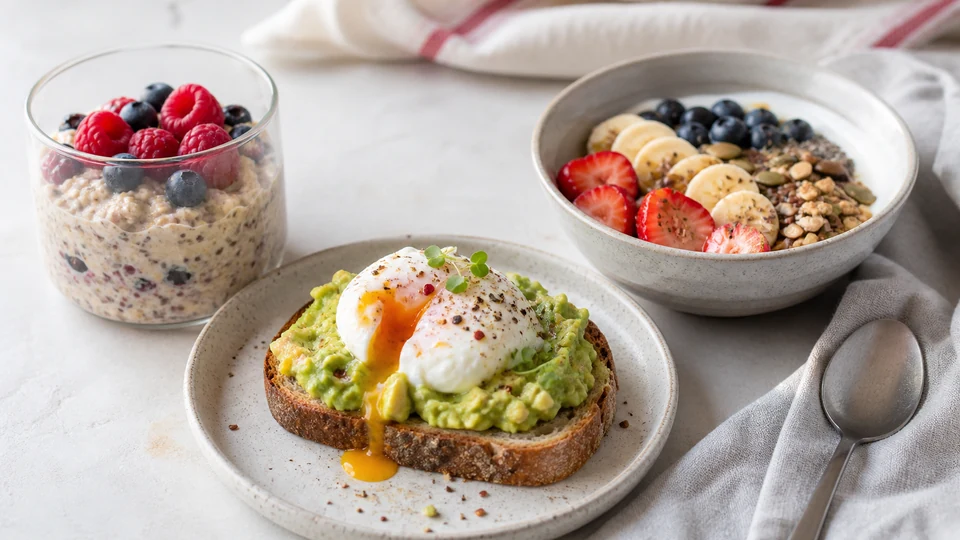
The Pancakes World guide begins this Healthy Breakfast Options discussion with a practical decision: A useful healthy breakfast combines foods that contribute to a varied diet with a portion, preparation and storage plan you can repeat. Start with a familiar base such as oats, wholegrain bread or another suitable staple; add fruit or vegetables and a protein-containing food where they fit. Read the actual label for nutrients and allergens instead of letting one word such as organic or protein decide the meal. Breakfast need not contain every food group in perfect proportions, and no single combination guarantees a health outcome.
This page explains how to build and assess breakfast options for ordinary mornings. It is not a therapeutic diet, a weight-loss plan or a tested house recipe. The healthy pancake guides cover the more specific pancake branch of that decision.
Judge breakfast within the day, not as a perfect plate
The NHS Eatwell Guide describes the balance of food groups across what we eat overall. It explicitly says that balance need not be achieved at every meal; consider the day or week. That makes room for different cultures, appetites and schedules without making every breakfast a checklist of separate dishes.
A mixed food can perform several roles, and a small morning appetite does not require an elaborate buffet.
The scope still matters. The Eatwell Guide is not intended for children under two, and people with special dietary or medical needs may need a registered dietitian's adaptation. The examples below are editorial meal-planning exercises for a general audience.
They do not set a calorie allowance, prescribe a nutrient target or establish that a meal is suitable for an individual's condition.
Use food roles to see what the meal actually contains
A base gives you something concrete to prepare and portion: porridge, bread, potatoes, a grain bowl or a known pancake recipe. NHS guidance identifies wholegrain starchy foods as useful sources of fibre and suggests porridge with fruit or oats with lower-fat, lower-sugar yoghurt as breakfast options. That is a reason to consider the grain and accompaniments, not a reason to assume every oat biscuit or sugary cereal has the same composition.
Next inspect the other ingredients. Beans, pulses and eggs are among the NHS Eatwell Guide's protein foods; dairy and suitable alternatives form another group. Fruit and vegetables contribute variety and can be fresh, frozen, tinned or otherwise prepared appropriately.
Think about what is already in a mixed dish before adding another side. Toast with beans and vegetables is not nutritionally described by the bread alone.
Preparation changes the decision in a different way. A bowl can contain suitable ingredients yet be impractical if it leaks on a commute or needs refrigeration you do not have. A pancake plate may fit a weekend but fail on a five-minute weekday.
Keep nutritional composition and operational fit as separate questions: success at transporting a bowl is not evidence of a medical benefit.
Read the label in the order that prevents mistakes
| Question | What to inspect | What the answer changes |
|---|---|---|
| How much am I comparing? | Serving size, gram amount and servings in the container | Compare equal amounts or calculate the amount you actually use |
| Which nutrients matter here? | Fibre, protein and relevant vitamins/minerals; saturated fat, sodium and added sugars | Evaluate the intended role instead of one attractive package claim |
| Is a number total or included? | Total Sugars and the Included Added Sugars line on a U.S. label | Do not add the included amount to the total again |
| Can the diner eat it? | Current ingredients, allergen information and preparation controls | Reject an unsuitable product before comparing convenience or flavour |
| Can I use it this morning? | Cooking, opening and storage instructions | Choose the correct ingredient form and cold-storage plan |
FDA explains that a U.S. Nutrition Facts serving size reflects what people typically consume, not a recommendation for how much you should eat. Nutrient figures refer to that serving. Its general guide treats 5% Daily Value or less as low and 20% or more as high for a nutrient per serving. Those percentages are a comparison aid, not a score for the entire breakfast.
The agency's added-sugars example is especially useful for yoghurt: its illustrative label has 15 grams total sugars, including 7 grams added sugars, leaving 8 grams naturally occurring. It does not contain 22 grams total. Two servings would double those amounts. This is FDA's teaching example, not the nutrient content of every yoghurt. Honey and syrups also contribute added sugars; changing the sweetener's name does not make that contribution disappear. The maple syrup ingredient guide is separate reading about that ingredient, not a health endorsement.
Make the morning constraint the first practical rule
For five minutes: choose a known ready-to-eat combination or a preparation whose complete method fits, with suitable food already available. Do not label a meal five-minute preparation if an egg still needs boiling or a grain still needs cooking. For a portable meal, decide on the container and refrigeration before choosing a perishable filling.
For a shared table, favour a manageable batch and prepare cold sides before the hot food finishes.
For shopping: build two or three repeatable combinations from foods you enjoy and can afford. Compare the actual products you buy. Plain and sweetened yoghurt, dairy milk and an oat drink, or two different breads may differ in nutrients, allergens and handling.
A composition database is useful only when its food and form match; it cannot identify every branded product or the amount on your plate.
For substitutions: check both the food's job and its label. FDA notes that plant-based milk alternatives can differ in protein and other nutrients, and recommends using the Nutrition Facts label to compare them with milk. Look at protein, fortification such as calcium, and added sugars for the product in hand.
A liquid that works in your cereal is not automatically nutritionally equivalent to the previous choice.
Two worked breakfasts, from constraint to next improvement
Example one: an oat-and-fruit bowl before commuting
Constraint: little active time, eating at home, with a refrigerator available. Choose oats prepared by their package or a complete recipe, fruit in a suitable ready form, and plain yoghurt or another deliberately selected accompaniment. The oats provide the grain base, fruit adds produce, and the yoghurt choice brings its own nutrient and allergen information. This is a planning pattern, not a new overnight-oats formula.
Check: if using frozen fruit, follow its package preparation instructions rather than assuming it is ready to eat after thawing. Compare the yoghurt's serving amount with what you put into the bowl and distinguish total from added sugars. If substituting a plant product, reread ingredients and nutrient values. The adjective plant-based does not answer the protein, fortification or allergy questions.
Execute: keep the perishable components cold until assembly, portion the amount wanted and put the reserve back promptly. If the oats are cooked, finish by the package's method; do not borrow an overnight soaking instruction from another preparation. Note the texture at mixing and at eating, including any delay. If the bowl becomes too thick, change one measured liquid amount within the chosen recipe next time, keeping oats, product and waiting interval constant.
Improve: if washing and cutting fruit makes the plan impractical, change the fruit form before replacing the whole meal. If the amount does not suit your appetite, adjust the planned portion and note the result. A shorter preparation or a preferred texture shows that the breakfast fits better; it does not measure a health effect.
Example two: a savoury toast plate for a seated morning
Constraint: one hob task and a shared eating time. Choose wholegrain toast with a properly prepared bean spread or egg, plus tomatoes or another vegetable component. The bread is the base; beans or egg supply a different food role; produce is included deliberately. Use the exact bean product or egg method's directions rather than inventing a single cooking time for both alternatives.
Check: inspect the bread and spread labels for the diners' needs, and account for cooking fat, sauces and toppings. Wheat bread is not suitable for someone who must avoid wheat or gluten merely because it is wholegrain. For egg technique, use the egg preparation comparison to choose a method that fits the number of plates. A savoury leftover bowl is another possible base only when its storage and reheating history are known.
Execute: prepare the produce and serving plates before the last hot task, and make only a batch the pan can manage. Keep the chosen egg or bean method intact. If you prefer a pancake breakfast, the American pancake method supplies a separate complete base; retain simple sides rather than making several new substitutions inside its batter.
Improve: if the first plate waits while toast is made, change the serving sequence before changing ingredients. If a pan portion cooks unevenly, compare a smaller load in the same pan area at the same recorded setting. Inspect spread, edge release, centre condition and visible moisture at the same serving interval. Those observations address technique; adding more sauce only changes flavour.
Keep the useful parts when a breakfast fails
Identify the friction precisely: too many components, unavailable refrigeration, messy transport, expensive ingredients, a long last-minute cook or cleanup that does not fit. Remove one unnecessary step or change one component. A smaller batch, another container or a simpler side can preserve the breakfast's basic plan.
Repeated unmeasured flour, fat, liquid or binder additions make a recipe harder to repeat and do not solve a missing cold source.
Keep a short record of the exact product, preparation, portion, equipment and waiting time. Observe once after preparation, once during cooking where relevant and once at the intended eating moment. For the next attempt, write the baseline, one change and the sign of improvement: “same oats and yoghurt, fruit in a separate container; compare whether the texture stays as wanted.” If several causes remain uncertain, return to the complete recipe or label instructions.
Maintain the distinction between a cooking substitution and a meal choice. Changing flour inside a batter may require a developed formula; choosing fruit as a separate side does not. Flavour additions can be adjusted after the underlying method works.
If pancake release or texture is the real obstacle, use pancake troubleshooting for that technical problem instead of treating it as a nutrition failure.
Safety and dietary needs can rule an option out
FDA advises clean hands and equipment, separation of raw animal foods from ready-to-eat food, and prompt refrigeration. Keep the refrigerator at 40°F or below. Perishables should be refrigerated within two hours, or one hour when the outside temperature exceeds 90°F.
Follow any stricter product or recipe requirement. A good appearance or taste cannot establish that a food with unknown handling history is safe.
For allergies, Food Standards Scotland recommends asking the guest about their needs, cleaning work surfaces and equipment, keeping allergens separate, checking packaged ingredients and retaining an ingredient record. Cooking does not remove allergens. Review preparation surfaces as well as the package, including shared utensils and toppings.
Do not use organic, vegan or protein wording as a substitute for that check.
A packed breakfast needs a credible way to keep perishables cold; an ordinary closed bag is not a refrigerator. When that cannot be arranged, change the food or eating time. Follow the most restrictive relevant ingredient guidance for leftovers rather than assigning every component the same shelf life.
Individual medical needs, infant feeding and therapeutic diets require guidance beyond this general framework.
Make one breakfast easier to repeat
Choose tomorrow's actual eating time and location, then select a known base, suitable supporting foods and a manageable produce component. Read the current labels, establish the storage and cooking plan, and keep one complete method intact. After eating, record one practical change for next time.
Use that observation to improve the meal's fit while judging nutritional composition from evidence, not from its name or how neatly it travelled.
Sources and editorial references
Accessed 28 August 2026. Worked breakfasts are editorial planning examples, not tested recipes or personalised nutrition advice.
- NHS: The Eatwell Guide. https://www.nhs.uk/live-well/eat-well/food-guidelines-and-food-labels/the-eatwell-guide/
- NHS: Starchy foods and carbohydrates. https://www.nhs.uk/live-well/eat-well/food-types/starchy-foods-and-carbohydrates/
- FDA: How to Understand and Use the Nutrition Facts Label. https://www.fda.gov/food/nutrition-education-resources-materials/how-understand-and-use-nutrition-facts-label
- FDA: Added Sugars on the Nutrition Facts Label. https://www.fda.gov/food/nutrition-facts-label/added-sugars-nutrition-facts-label
- FDA: Milk and Plant-Based Milk Alternatives: Know the Nutrient Difference. https://www.fda.gov/consumers/consumer-updates/milk-and-plant-based-milk-alternatives-know-nutrient-difference
- FDA: Gluten and Food Labeling. https://www.fda.gov/food/nutrition-education-resources-materials/gluten-and-food-labeling
- FDA: Safe Food Handling. https://www.fda.gov/food/buy-store-serve-safe-food/safe-food-handling
- Food Standards Scotland: Cooking for people with allergies. https://www.foodstandards.gov.scot/consumer-advice/food-safety/food-allergies/cooking-for-people-with-allergies