Healthy breakfast choices
At Pancakes World, healthy breakfast choices are usually combinations, not one “perfect” food: choose a higher-fibre starchy base such as oats or wholegrain toast, add fruit or vegetables, include a protein food or dairy or fortified alternative, and compare packaged products for sugars, salt and saturated fat. Examples include porridge with fruit and milk, wholegrain toast with egg and tomatoes, or plain yoghurt with oats and berries. The UK Eatwell Guide applies across a day or week, so breakfast does not need to reproduce every food-group proportion. Pick a format you can afford, prepare safely and repeat, then balance the rest of the day around it.
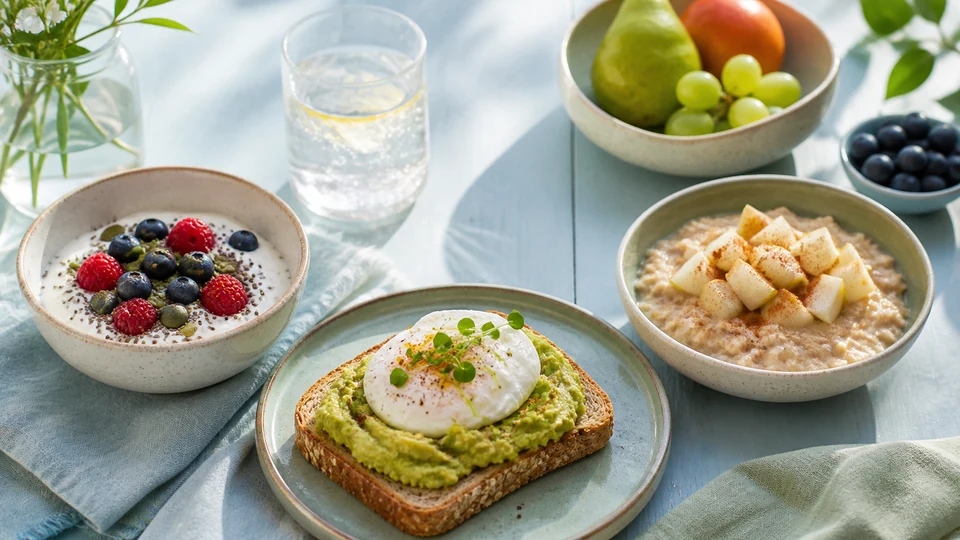
This is a UK-focused choice framework, not an individual diet prescription. Browse the breakfast hub for more formats, and use Pancake World to explore the wider collection.
For broader context, continue with Healthy Pancake Guides.
Use the Eatwell Guide without forcing it onto one plate
The NHS Eatwell Guide describes the overall balance of five main food groups. It explicitly says that the balance does not have to be achieved at every meal; aim across a day or even a week. That matters at breakfast. A bowl of porridge does not fail because it lacks every food group, and an egg on toast does not need to be enlarged into an elaborate “complete” plate.
The national model asks most people to:
- eat at least five portions of varied fruit and vegetables each day;
- base meals on potatoes, bread, rice, pasta and other starchy carbohydrates, choosing wholegrain or higher-fibre versions where possible;
- include beans, pulses, fish, eggs, meat or other protein foods;
- have some dairy or alternatives;
- choose unsaturated oils and spreads in small amounts;
- eat foods high in fat, salt and sugar less often and in smaller amounts.
These are whole-diet directions. For breakfast, use them as a set of questions rather than a rigid diagram.
A four-question breakfast check
1. What is the main energy-providing food?
Common choices include oats, wholegrain cereal, wholemeal bread, potatoes, rice, chapatti or another starchy food that fits the household’s culture. Compare like products and choose higher-fibre or wholegrain versions when practical.
The Food Standards Agency’s accessible Eatwell Guide gives wholegrain breakfast cereal lower in salt and sugars as one example. That is not the only valid breakfast. Leftover rice with vegetables and egg, beans on wholemeal toast, or porridge made from oats can fit the same broad structure.
2. Is fruit or a vegetable easy to add?
Fresh, frozen, tinned and dried produce can all contribute to variety. Add berries to porridge, a banana to cereal, tomatoes or mushrooms beside egg, or spinach and peppers to a savoury wrap.
Choose tinned fruit in juice rather than syrup when that comparison is available, and check added salt in tinned vegetables or beans. The NHS limits fruit juice and smoothies to a combined 150ml a day because they contain free sugars; that amount counts as no more than one of the five daily portions.
Whole fruit and juice are therefore not interchangeable simply because both start with fruit. Dried fruit is compact and is best kept to mealtimes under UK guidance, partly because of dental-health considerations.
3. What will provide protein or dairy?
Options include egg, beans, lentils, yoghurt, milk, fish, tofu, nuts, seeds, chicken or another food appropriate to the meal. Dairy alternatives should be checked for fortification and added sugar; the Eatwell Guide recommends unsweetened, calcium-fortified versions.
Protein does not have to mean a large portion of meat. Beans on toast, yoghurt with oats, porridge made with milk, or an egg with wholegrain bread are ordinary combinations. The exact choice depends on preference, allergies, budget and the rest of the day.
4. What is hidden in the packaged extras?
Granola, flavoured yoghurt, cereal bars, pastries, spreads, processed meat and bottled drinks can add sugars, salt or saturated fat. That does not make them forbidden. It makes the label relevant.
Compare similar products on the same basis, then consider the portion actually eaten. A favourable value per 100g can still accompany a large portion, while a red traffic-light mark signals that the product is high in that nutrient and should be limited rather than treated as an automatic ban.
Breakfast patterns that answer different needs
The following are assembly ideas, not tested recipes or nutrition calculations.
Fastest: wholegrain cereal, milk and fruit
The NHS uses wholegrain lower-sugar cereal with semi-skimmed milk and sliced fruit as a practical example. The strength of this format is speed and clear portions.
Check cereal labels for fibre, sugars and salt. Compare products per 100g, then look at the bowl portion rather than assuming the manufacturer’s illustrated serving matches what is poured. Use an unsweetened calcium-fortified alternative if replacing dairy milk and that suits the person’s needs.
Warm and flexible: porridge
Oats create a simple higher-fibre starchy base. Cook with milk, a fortified alternative or water, then add fruit. Nuts or seeds can add texture; yoghurt can be served alongside.
Plain oats make the additions visible. Instant flavoured sachets vary, so compare sugars, salt and portion size. Honey, syrups and sweet spreads count as free sugars even when their names sound traditional or natural.
Savoury: egg, wholegrain toast and vegetables
Egg with toast plus cooked tomatoes, mushrooms or spinach offers a straightforward savoury pattern. Use a measured amount of unsaturated oil if frying or sautéing, and cook eggs safely.
Bacon, sausages and salty sauces can be occasional additions, but the Eatwell Guide advises eating less red and processed meat. Compare breakfast proteins instead of assuming “high protein” settles every nutrition question.
Plant-based: beans or tofu with toast
Beans and pulses belong to the protein-food group and also provide fibre. Choose lower-salt beans when possible or compare labels. Tofu with vegetables and wholegrain toast is another savoury option.
Plant-based does not automatically mean lower in salt, sugars or saturated fat. Check heavily processed substitutes and cooking sauces on their own evidence.
Portable: yoghurt, oats and fruit
Layer plain yoghurt with oats and fresh or frozen fruit in a lidded container. Keep it chilled during transport. For a dairy-free version, choose an unsweetened calcium-fortified alternative and review its allergen statement.
Granola can add crunch but is not nutritionally identical to plain oats. Compare its sugars, fat, saturated fat and portion.
No-cook: toast, nut butter and fruit
Wholegrain toast with a measured nut or seed butter plus fruit requires little preparation. Nut and seed products vary in added salt, sugar and oils. Check labels and manage allergy risk carefully.
Leftovers: a normal meal at breakfast
Breakfast does not have to consist of cereal or toast. Safely stored leftovers—vegetable rice, soup, dal, baked potato or another household dish—can be practical. Reheat according to food-safety guidance and include the meal in the day’s overall balance.
The value of leftovers is practical, not magical: they can reduce morning preparation and use food already available.
How to compare breakfast cereals
Ignore the package colour and front-of-box lifestyle imagery. Compare products in a fixed order.
- Confirm that the two products are genuinely similar: flakes against flakes, muesli against muesli, or porridge sachets against porridge sachets.
- Use the per-100g column to compare fibre, sugars, salt and saturated fat.
- Check the actual serving size and how much goes into your bowl.
- Add the milk, yoghurt, fruit or sweetener you will actually use.
- Review allergens and ingredient exclusions.
- Choose a product you are willing and able to eat regularly.
A cereal may be wholegrain and still contain more sugars or salt than another option. Another may be low in sugars but lower in fibre. “Healthy” cannot be decided from one badge.
The NHS front-of-pack traffic-light system is useful for energy, fat, saturates, sugars and salt. More greens generally help when comparing similar products, while amber is neither a warning to panic nor permission to ignore portion. Any red means high for that nutrient, so frequency and amount deserve attention.
What about fibre?
The Scientific Advisory Committee on Nutrition states a population average target of about 30g dietary fibre a day for people aged 16 and over. This is a daily reference, not a required breakfast dose.
Breakfast can contribute through oats, wholegrain bread, higher-fibre cereal, fruit, vegetables, beans, nuts or seeds. Increase variety and fluid intake in a way that suits the individual. A sudden large change may be uncomfortable for some people, and anyone with a prescribed low-fibre diet or gastrointestinal condition should follow clinical advice.
Children have age-specific reference values; do not apply the adult 30g figure to a young child.
Common choices and useful adjustments
| Starting breakfast | Practical adjustment | What to verify |
|---|---|---|
| Sugary cereal | Compare a higher-fibre, lower-sugar cereal | Per 100g and actual bowl portion |
| Pastry alone | Add fruit or yoghurt, or choose toast on some days | Saturates, sugars and portion |
| White toast and spread | Try wholemeal or higher-fibre bread | Fibre, salt and allergen label |
| Flavoured yoghurt | Compare plain or lower-sugar versions | Sugars per 100g and pot size |
| Breakfast sandwich | Add vegetables; compare processed meat frequency | Salt, saturated fat and portion |
| Juice as the fruit | Prefer whole fruit more often | Combined juice/smoothie limit of 150ml |
| Sweet coffee drink | Compare an unsweetened or less-sweet version | Cup size and added syrups |
| No morning appetite | Pack a later breakfast rather than forcing a large meal | Safe transport and refrigeration |
An adjustment is useful only if it is realistic. A theoretically ideal breakfast that is unaffordable, unavailable or disliked will not become a dependable routine.
Healthy choices on a budget
Cost does not require speciality products. Useful basics include:
- own-brand oats or wholegrain cereal;
- wholemeal bread kept in the freezer;
- frozen fruit added to hot porridge;
- tinned fruit in juice;
- tinned beans compared for salt;
- eggs;
- plain yoghurt in the size the household can finish;
- seasonal fruit;
- leftover cooked vegetables or grains stored safely.
Compare price per usable serving, not only pack price. A large yoghurt tub may cost less per 100g but wastes money if part is discarded. Single pots cost more per unit but may be practical for transport or portion visibility.
Avoid buying supplements, powders or branded “breakfast” products merely because the package implies a health advantage. Ordinary foods can satisfy the same practical meal roles.
Breakfast when time is limited
Two minutes
Choose cereal and milk, yoghurt and fruit, or toast with a simple topping. Keep one shelf or cupboard area stocked with the components.
Ten minutes
Make porridge, cook an egg with toast, or heat beans while preparing fruit. Use the waiting time rather than adding multiple pans.
Prepare the night before
Portion oats and yoghurt, thaw frozen bread, wash fruit or pack a safely chilled leftover. Date prepared food and refrigerate promptly.
Batch preparation
Freeze sliced bread, portion dry cereal, or prepare cooked components whose storage and reheating rules are known. Batch size should match the household’s safe use window; producing more is not automatically efficient.
Drinks at breakfast
Water, lower-fat milk, unsweetened fortified alternatives, tea and coffee can all fit different routines. Sugar, syrups and cream change the drink’s composition, so count them as part of the choice rather than an invisible extra.
The NHS Eatwell Guide uses six to eight cups or glasses of fluid a day as a general guide, but needs vary with body size, activity, weather, pregnancy, illness and other factors. Breakfast can be one opportunity to drink, not a mandatory quota.
Fruit juice and smoothies should remain within the combined 150ml daily limit in NHS guidance. A large café smoothie is not several separate fruit portions for five-a-day purposes.
Children, pregnancy and medical diets
The Eatwell Guide applies to most people over five. Children under two have different nutritional needs, and children between two and five move gradually towards family eating patterns. Portion size and choking risk require age-appropriate decisions.
Pregnancy, diabetes, kidney disease, coeliac disease, food allergy, eating-disorder recovery, swallowing difficulty and prescribed therapeutic diets can change what is appropriate. Use advice from the relevant clinician or registered dietitian instead of adapting a generic checklist.
Food labels matter for allergens, but precautionary statements and cross-contact also matter. “Plant-based,” “natural,” “wholegrain” or “high protein” does not establish allergen safety.
Common breakfast-choice errors
Treating one food as the answer
No berry, seed, cereal or powder makes the whole breakfast healthy by itself. Review the combination, portion and wider day.
Copying the Eatwell plate at every meal
The NHS says balance can be achieved over a day or week. Use breakfast to contribute, not to stage a perfect diagram.
Reading only front-of-pack claims
Turn the pack over. Compare the full nutrition panel, ingredients, allergens and serving size.
Assuming free-from means healthier
Free-from products solve particular ingredient exclusions. They can still vary in fibre, sugars, salt and saturated fat.
Equating breakfast with weight loss
A breakfast choice does not guarantee weight change. Energy needs, total intake, health, medication, activity and many other factors matter.
Promising concentration or fullness
Individual responses differ. Describe the meal and the observed practical effect, not a guaranteed school or work outcome.
Moralising convenience food
Frozen fruit, tinned beans, packaged bread and ready cereal can be practical components. Judge them by the actual label, storage and role in the meal.
Frequently asked questions
What is the healthiest breakfast?
There is no single best breakfast for everyone. A useful default combines a higher-fibre starchy food, fruit or vegetables, and a protein food or dairy or fortified alternative, while limiting foods high in fat, salt and sugar across the wider diet.
Is porridge a healthy breakfast choice?
Plain oats provide a higher-fibre starchy base. The full breakfast depends on the liquid, toppings, portion and individual needs. Compare flavoured sachets for sugars and salt.
Are eggs healthy for breakfast?
Eggs are one protein-food option in the Eatwell Guide. Preparation, additions and the rest of the diet matter; “egg breakfast” does not describe toast, oil, processed meat or sauce.
Is cereal a bad breakfast?
No. Cereals vary. Compare similar products for fibre, sugars and salt, then account for the portion and what is served with them.
Do I need fruit at breakfast?
Not necessarily. UK guidance seeks at least five varied fruit and vegetable portions across the day. Breakfast is one convenient opportunity, not the only one.
Is skipping breakfast unhealthy?
This guide focuses on choosing breakfast when you eat it. Individual schedules, appetite, medication and clinical needs differ. Anyone whose meal timing is part of a treatment plan should follow that plan.
Final choice checklist
- Choose a breakfast format that fits the available time and budget.
- Use a higher-fibre or wholegrain starchy base where practical.
- Add fruit or vegetables when useful, counting them within the daily pattern.
- Include an appropriate protein food, dairy food or fortified alternative.
- Compare similar packaged foods per 100g and by the portion eaten.
- Review sugars, salt, saturated fat, fibre and allergens rather than one headline claim.
- Keep juice and smoothies within the combined NHS 150ml daily limit.
- Treat the adult 30g fibre figure as a population daily reference, not a breakfast prescription.
- Balance food groups over the day or week.
- Use individual clinical advice where generic Eatwell guidance does not apply.
Healthy breakfast choices become easier when the word “healthy” is replaced by observable decisions: a higher-fibre base, some produce, an appropriate protein or dairy component, a label comparison and a portion that fits the day. Porridge, toast and egg, cereal and milk, yoghurt and fruit, beans on toast and safely stored leftovers can all work. Variety and repeatability matter more than an expensive ingredient or a perfect-looking bowl.
Explore related Pancakes World guidance on American Pancakes, American Breakfast: Pancakes, Diner Plates and Brunch, and Maple Syrup.
Sources and editorial references
- NHS, The Eatwell Guide —
https://www.nhs.uk/live-well/eat-well/food-guidelines-and-food-labels/the-eatwell-guide/ - Office for Health Improvement and Disparities, Healthy eating: applying All Our Health —
https://www.gov.uk/government/publications/healthy-eating-applying-all-our-health/healthy-eating-applying-all-our-health - Food Standards Agency, The Eatwell Guide: accessible version —
https://www.food.gov.uk/sites/default/files/media/document/the-eatwell-guide-accessible-version.pdf - NHS, 8 tips for healthy eating —
https://www.nhs.uk/live-well/eat-well/how-to-eat-a-balanced-diet/eight-tips-for-healthy-eating/ - NHS, Food labels —
https://www.nhs.uk/live-well/eat-well/food-guidelines-and-food-labels/how-to-read-food-labels/ - Scientific Advisory Committee on Nutrition, Statement on expressing energy, fat and carbohydrate intakes and recommendations —
https://www.gov.uk/government/publications/sacn-statement-on-expressing-fat-and-carbohydrate-recommendations/sacn-statement-on-expressing-energy-fat-and-carbohydrate-intakes-and-recommendations