Good breakfast meals
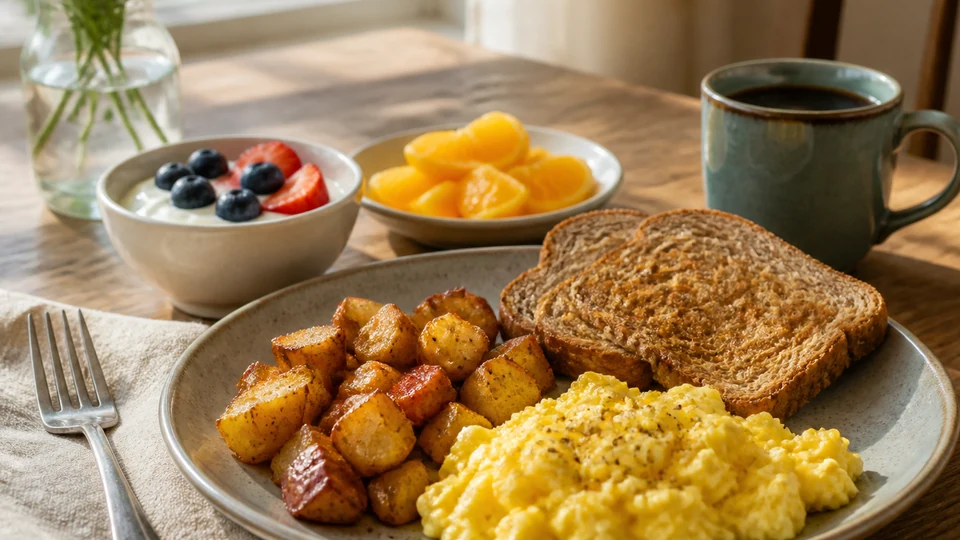
At Pancakes World, good breakfast meals combine a protein food with produce and, when it suits the meal, a whole grain or starchy vegetable; dairy or a fortified alternative can be another useful component. In practice, that might mean eggs, spinach, and whole-grain toast; plain yogurt, berries, oats, and nuts; beans, vegetables, and a tortilla; or oatmeal with fruit and nut butter. The best choice is not one universal menu. It is a breakfast that fits your appetite, time, culture, budget, and dietary needs while contributing useful food groups to the whole day. Choose water or an unsweetened drink, and size the portion for the person eating it.
For broader context, continue with American Breakfast: Pancakes, Diner Plates and Brunch.
What makes a breakfast “good”?
“Good” should describe how well a meal works, not turn breakfast into a moral score. A useful breakfast has four qualities:
- It fits the eater. A child, an adult with a long active morning, and someone who prefers a later meal will not necessarily need the same amount.
- It contributes to the day’s food pattern. The current U.S. Dietary Guidelines emphasize protein foods, vegetables and fruits, whole grains, dairy where included, and appropriate portions.
- It can actually happen. A ten-ingredient skillet is not practical when the morning allows three minutes; a grab-and-go bar is not automatically the right answer when a cooked meal is possible and preferred.
- It is specific enough to prepare. “Eat healthy” is vague. “Warm leftover beans, add an egg, spoon onto a tortilla, and pack an orange” is an executable plan.
This page does not assign one calorie target, protein target, or portion to every reader. Federal serving guides explicitly vary daily needs by factors such as age, sex, body size, and activity. Pregnancy, allergies, medical conditions, medication, athletic training, and eating-disorder recovery can require individualized advice from an appropriate health professional.
The meal ideas below are editorial combinations built from authoritative food-group and planning guidance. Pancake World has not performed a controlled nutrition test or recipe test on them, so no outcome or exact nutrient value is promised.
The four-part breakfast builder
Start with a simple structure rather than a list of trendy dishes:
Protein anchor + produce + whole grain or starchy vegetable + optional dairy or fortified alternative
Every meal does not need every component. The framework is a planning check, not a rigid plate rule. If breakfast has eggs and vegetables but no grain, a grain may appear later in the day. If a yogurt bowl already includes dairy, protein, fruit, and oats, it does not need an extra side merely to complete a formula.
1. Pick a protein anchor
Current federal guidance includes both animal and plant sources: eggs, poultry, seafood, meat, beans, peas, lentils, nuts, seeds, soy foods, and dairy foods. Choose one that fits the dish and the eater.
Practical breakfast anchors include:
- eggs or a pasteurized liquid egg product
- plain yogurt or cottage cheese
- beans, lentils, or hummus
- tofu or tempeh
- nut or seed butter
- nuts and seeds, usually paired with another substantial component
- leftover cooked chicken, fish, or meat
- a breakfast sausage used deliberately rather than assumed to be the only protein option
A protein food does not make every meal automatically balanced. A large processed-meat portion beside a sweet drink and no produce is still a different pattern from eggs with vegetables, toast, and fruit. Look at the complete meal.
2. Add fruit or vegetables
Breakfast produce does not have to mean orange juice. Whole fruit, berries, sliced tomatoes, sautéed greens, peppers, mushrooms, leftover roasted vegetables, avocado, and canned fruit packed without heavy syrup can all fit. Frozen fruit and vegetables are practical when fresh produce is unavailable or likely to spoil.
Use vegetables naturally in savory meals:
- spinach or mushrooms in eggs
- tomato and cucumber beside toast and cheese
- peppers and onions in a burrito
- roasted squash in a grain bowl
- leftover greens with beans
Use fruit naturally in sweet or neutral meals:
- berries over yogurt or oatmeal
- banana with nut butter and toast
- chopped apple in overnight oats
- a pear or orange packed alongside an egg sandwich
The aim is variety across time. One breakfast does not need five colors, and one “superfood” is not required.
3. Decide whether a whole grain or starchy vegetable belongs
Whole grains include foods such as oats, whole-grain bread, whole-grain tortillas, barley, quinoa, buckwheat, and brown rice. A starchy vegetable such as potato or sweet potato can fill a different but useful role in a savory meal. The current Dietary Guidelines encourage whole grains and advise reducing reliance on refined carbohydrates that displace more nutrient-dense foods.
Choose based on the format:
- toast for an egg plate
- oats for a warm bowl or overnight jar
- a tortilla for beans and vegetables
- cooked brown rice or quinoa for a breakfast bowl
- potato or sweet potato for a skillet
Check the ingredient list when a package says “multigrain,” “wheat,” or uses a dark color. Those words alone do not establish that the product is primarily whole grain.
4. Add dairy or a suitable alternative if wanted
Milk, yogurt, and cheese can be part of breakfast. Lactose-free dairy and fortified alternatives may also fit. Not every plant beverage matches dairy nutritionally, so compare labels rather than assuming equivalence. Look at serving size, protein, calcium, vitamin D where listed, added sugars, and the ingredient list.
Plain yogurt can act as the protein anchor. Milk can cook oats. Cheese can be a smaller supporting component in a vegetable omelet or bean burrito. If dairy is not part of the eater’s pattern, do not force it into breakfast; plan the overall day with suitable alternatives.
A fast decision matrix
| Morning situation | Start here | Add | Keep separate or pack |
|---|---|---|---|
| No cooking, two minutes | Plain yogurt | Oats, fruit, nuts | Water and a spoon |
| Toast available | Whole-grain toast | Egg, cottage cheese, hummus, or nut butter | Whole fruit |
| Leftovers in the refrigerator | Beans, vegetables, or cooked grain | Egg, tofu, yogurt sauce, or leftover protein | Fruit if useful |
| Portable breakfast | Tortilla or sandwich | Egg, beans, cheese, vegetables | Wet salsa or juicy fruit |
| Large appetite | Grain or potato base | Protein plus vegetables | Fruit or dairy side |
| Small appetite | Half toast, small bowl, or mini wrap | Compact protein | Fruit for later |
| Family with mixed preferences | Neutral base | Set out two proteins and two produce choices | Toppings at the table |
| Packaged convenience food | Compare serving sizes first | Add missing produce or protein | Unsweetened drink |
No-cook breakfast meals
Plain yogurt, fruit, oats, and nuts
Spoon plain yogurt into a bowl or lidded container. Add fresh or frozen fruit, rolled oats or an unsweetened whole-grain cereal, and a small handful of nuts or seeds. Cinnamon, vanilla, or grated citrus zest can add flavor without turning the bowl into dessert.
For a packaged yogurt comparison, begin with equal serving sizes. Then compare added sugars, protein, saturated fat, and any nutrients important to the eater. FDA explains that total sugars include naturally occurring sugars in milk and fruit as well as added sugars; the “Includes” line identifies added sugars.
If using frozen fruit for a packed bowl, it can thaw in the refrigerator. Keep the meal cold and use an insulated lunch bag when it will be away from refrigeration.
Cottage cheese, tomato, toast, and fruit
Serve cottage cheese with sliced tomato, pepper, and herbs. Add whole-grain toast and a piece of fruit. This is a savory no-cook plate with a clear protein anchor.
Compare sodium among cottage cheese products when that matters to the eater. Use the same serving size before comparing. A product with fewer milligrams per serving may not actually be lower for the amount you plan to eat if its listed serving is smaller.
Hummus toast with cucumber and an egg
Spread hummus on whole-grain toast and add cucumber, tomato, or leftover roasted pepper. Include a hard-cooked egg if desired. The hummus supplies a plant-food base; the egg makes the protein component more substantial without requiring morning cooking.
Hard-cooked eggs must stay refrigerated. FDA advises using them within one week after cooking. Pack them cold rather than leaving them in a bag all morning.
Nut-butter banana toast
Spread peanut, almond, sunflower-seed, or another suitable butter on whole-grain toast, then add banana slices. This is useful when the kitchen has no time for a pan. Choose a seed butter when a household avoids nuts, but read the allergen statement and manage cross-contact according to the person’s needs.
If appetite is larger, add plain milk, yogurt, or a second slice of toast. If appetite is small, pack the remaining banana for later rather than forcing a larger breakfast.
Five-minute breakfasts
Microwave oatmeal with fruit and nut butter
Cook rolled oats with water or milk according to the package directions in an oversized microwave-safe bowl. Stir in fruit and a spoonful of nut or seed butter. Frozen berries can cool the porridge while they thaw; chopped apple can cook with the oats.
Do not copy a microwave time from an unrelated package. Oat type, amount, bowl, liquid, and appliance power change the method. Prevent boil-over by using a larger bowl and pausing to stir.
Egg and spinach toast
Cook an egg using a method you can complete safely, wilt a handful of spinach in the same pan, and serve both on or beside whole-grain toast. Add tomato or fruit.
FDA recommends cooking eggs until yolks and whites are firm; scrambled eggs should not be runny. People who need or prefer a softer egg should use pasteurized eggs or pasteurized egg products in recipes that will remain raw or undercooked, while following professional medical advice where relevant.
Bean and cheese tortilla
Warm drained beans, mash them lightly, and spread them over a warm tortilla. Add a small amount of cheese and vegetables, then fold. Serve salsa on the side if the wrap must travel.
This meal works well with canned beans, but compare sodium and drain or rinse when appropriate. Do not claim a fixed sodium reduction from rinsing without measuring the exact product and method.
Leftover grain breakfast bowl
Reheat cooked brown rice, quinoa, barley, or another grain. Top with an egg or tofu, leftover vegetables, and herbs. A spoonful of plain yogurt or tahini can serve as a sauce.
Reheated leftovers must reach 165°F. Add a little water before covering and reheating dry grains, stir to eliminate cold pockets, and verify the center rather than judging steam alone.
Cooked breakfast meals for a slower morning
Vegetable omelet with toast and fruit
Cook mushrooms, peppers, spinach, or another vegetable first so excess liquid is gone. Add beaten eggs and cook until set. Fold around a modest amount of cheese if wanted. Serve with whole-grain toast and fruit.
The practical decision is moisture: raw watery vegetables added late can create a wet omelet. Cooking them first improves structure. This is general technique, not a claim that one vegetable combination has been Pancake World tested.
Savory oats with egg and greens
Cook oats in water or unsalted broth, then top with sautéed greens, an egg, and pepper or herbs. Oats do not need sweet toppings. This format makes a whole grain the base while vegetables and protein turn it into a full savory meal.
If using broth, compare sodium labels. A condiment such as soy sauce can add more sodium, so taste before combining several salty components.
Tofu scramble, potatoes, and vegetables
Crumble firm tofu into a skillet with cooked onion, peppers, spinach, or mushrooms. Season with spices. Serve with roasted or skillet-cooked potatoes and fruit if desired.
Press or drain tofu according to its package and the texture wanted. Cook raw potatoes fully before expecting browning; small, even pieces cook more predictably. This is a plant-forward format, not evidence that tofu and eggs are nutritionally identical in every respect.
Beans, eggs, and tortillas
Warm seasoned beans and tortillas, cook eggs until set, and serve with tomato, cilantro, avocado, or salsa. Diners can build tacos or a bowl rather than overfilling a single burrito.
Beans can count in different food-group planning contexts, but avoid double-counting them automatically when tracking a prescribed plan. If a clinician has given specific carbohydrate, protein, potassium, or sodium guidance, follow that plan rather than this general idea list.
Salmon, potato, and cucumber plate
Use safely cooked leftover salmon or an appropriate canned product with cooked potato, cucumber, tomato, and a yogurt-herb sauce. This illustrates that breakfast does not need a conventional “breakfast food.”
Keep cooked fish refrigerated and reheat leftovers to 165°F if serving hot. For cold use, observe safe storage and do not eat a questionable leftover merely because it smells normal.
Breakfast grain bowl with roasted vegetables
Combine a cooked whole grain, leftover roasted vegetables, a protein such as egg, beans, tofu, or chicken, and a simple sauce. Keep crunchy toppings separate until serving. This is especially efficient when dinner intentionally produces extra grain and vegetables.
Plan leftovers during the previous meal: cool them promptly in shallow containers, label them, and decide exactly which breakfast will use them. “Maybe breakfast” often becomes forgotten food; a named plan is actionable.
Make-ahead breakfast meals
Overnight oats
Combine rolled oats with milk or a fortified alternative and refrigerate in a covered container. Add fruit, plain yogurt, seeds, or nut butter according to preference. The liquid ratio should follow a reliable recipe or the oat package because different oat types absorb differently.
Prepare only the number of jars likely to be eaten within a safe and quality-conscious window. If a recipe provides a storage duration, keep that duration attached to that recipe rather than generalizing it to every fruit, dairy product, or container.
Egg-and-vegetable muffins or a baked egg dish
A tested recipe can turn eggs and cooked vegetables into portable portions. Use its pan size, yield, bake temperature, and time. Egg dishes should reach 160°F. Refrigerated cooked egg dishes should be used within three to four days and reheated to 165°F.
Do not improvise a deep casserole from a shallow muffin recipe and retain the same time. Thickness changes heating.
Freezer burritos
Use a tested formula with a relatively dry filling: cooked eggs or beans, cooked vegetables, an appropriate protein, and a flexible tortilla. Cool components promptly, wrap individual burritos, freeze in one layer, and bag when firm. Keep salsa, sour cream, watery tomato, and avocado for serving after reheating unless the tested recipe includes them.
Reheat the center to 165°F. Fixed microwave times are recipe- and appliance-specific, so rotate and check more than one location.
Breakfast sandwiches
Cook eggs and any raw meat safely, cool promptly, assemble on whole-grain English muffins or bread, wrap, and refrigerate or freeze according to a tested recipe. A tomato slice added after reheating will usually give better control than freezing it inside.
If the sandwich uses cheese and processed meat, compare the combined sodium burden rather than evaluating each label in isolation.
Batch-cooked grain and topping boxes
Cook a grain and divide it into shallow containers. Prepare separate boxes of washed fruit, cooked vegetables, and protein choices. In the morning, combine one base and two toppings rather than eating the identical meal every day.
This modular plan is helpful for households with mixed preferences. One person can build oats with berries and yogurt; another can heat quinoa with vegetables and an egg. Shared prep does not require identical finished meals.
Breakfast ideas by appetite and schedule
For a small early appetite
Choose a compact meal and plan a later snack if needed:
- half a yogurt-and-fruit bowl
- one slice of toast with nut butter and fruit
- a small egg-and-vegetable wrap
- milk or a fortified beverage with a banana and nuts
Do not describe a small breakfast as universally superior. It may be insufficient for some people and appropriate for others.
For a long morning
Build a more substantial meal from multiple components:
- oatmeal with fruit and nut butter plus yogurt
- eggs, beans, vegetables, and tortillas
- tofu scramble with potato and fruit
- a grain bowl with vegetables and leftover protein
The portion should still match the eater. “Long morning” does not justify an unbounded serving.
For eating at a desk or in transit
Prioritize clean handling and a container that closes:
- overnight oats in a leakproof jar
- a dry breakfast burrito with salsa packed separately
- an egg sandwich with a whole fruit
- yogurt, oats, and fruit in an insulated bag
Do not eat while actively driving. Portability is a packaging decision, not permission to ignore attention and safety.
For feeding a family
Use a neutral base and a small topping bar. Set out warm oats, yogurt, or eggs; then offer fruit, vegetables, nuts or seeds, cheese, and whole-grain toast. Limit the number of choices to what will actually be eaten.
Keep allergen-containing utensils separate where needed. A topping bar is not safe for a severe allergy unless cross-contact is actively controlled.
How to compare packaged breakfast foods
Marketing words such as “natural,” “protein,” “energy,” or “multigrain” do not replace the Nutrition Facts label and ingredient list. Use a consistent sequence:
- Check serving size and servings per container. All listed amounts apply to that serving.
- Make equal comparisons. Compare similar amounts, not a tiny serving of one cereal against a much larger serving of another.
- Check dietary fiber. FDA identifies fiber as a nutrient many Americans do not get enough of.
- Check added sugars, sodium, and saturated fat. These are separate from total carbohydrate and total sugars.
- Check protein in context. Protein usually has no percent Daily Value for general adult foods unless a claim triggers it; grams alone do not describe overall meal quality.
- Read ingredients. Confirm the grain source, sweeteners, allergens, and whether the product matches the name on the front.
- Decide what is missing. A cereal may need milk or yogurt and fruit; a frozen sandwich may need vegetables or fruit; a plain oatmeal cup may need a protein component.
FDA’s quick percent Daily Value guide calls 5% DV or less low and 20% DV or more high for a nutrient per serving. Use that tool to compare, not to declare one food forbidden. A food high in sodium may fit differently depending on the rest of the day and the eater’s medical plan.
A seven-breakfast rotation without seven separate shopping lists
Buy overlapping ingredients, then change the format:
| Day | Meal | Shared ingredients used |
|---|---|---|
| 1 | Yogurt, oats, berries, nuts | yogurt, oats, fruit, nuts |
| 2 | Egg, spinach, whole-grain toast | eggs, greens, bread |
| 3 | Bean, pepper, and cheese tortilla | beans, peppers, cheese, tortillas |
| 4 | Savory oats with greens and egg | oats, greens, eggs |
| 5 | Nut-butter toast with banana and yogurt | bread, nut butter, fruit, yogurt |
| 6 | Potato, pepper, and tofu skillet | potatoes, peppers, tofu |
| 7 | Leftover grain bowl with vegetables and beans | cooked grain, vegetables, beans |
This is an example rotation, not a prescription. Swap foods for allergies, culture, access, taste, and medical requirements. The operational benefit is ingredient reuse: peppers appear in a wrap and skillet; oats work sweet and savory; beans serve both tortillas and bowls.
Shopping and prep workflow
USDA MyPlate planning guidance starts with what you already have, then asks you to write meals, identify recipes, and consider available time. Turn that into a breakfast workflow:
- Inventory the refrigerator, freezer, and pantry.
- Mark food that must be used soon.
- Choose two protein anchors for the week.
- Choose two fruits and two vegetables, including frozen options if spoilage is likely.
- Choose one or two whole-grain bases.
- Assign meals to actual mornings: no-cook, five-minute, cooked, or make-ahead.
- Write the missing ingredients only.
- Prep one bottleneck, such as washing fruit, cooking grain, or hard-cooking eggs.
Do not prepare everything simply because meal prep is fashionable. Cut fruit may deteriorate faster than whole fruit, and cooked food creates storage obligations. Prep the step that actually blocks the morning meal.
Common breakfast problems and practical fixes
“I am hungry again very quickly”
Audit the meal structure before making a health claim. Was breakfast only a sweet drink or refined grain? Try adding a protein anchor, whole fruit or vegetables, and a whole-grain component. If persistent hunger is unusual, severe, or part of a medical issue, seek individualized advice.
“I have no time”
Match the meal to the real time budget. Put a bowl, spoon, oats, and nuts together the night before; keep plain yogurt and fruit visible; freeze a tested burrito; or pack toast components separately. Do not schedule a skillet meal on a two-minute morning.
“Breakfast is too sweet”
Use savory formats: eggs and greens, beans and tortillas, tofu and potatoes, cottage cheese and tomato, savory oats, or a leftover grain bowl. Breakfast does not require syrup, sweet cereal, or flavored yogurt.
“My family wants different foods”
Share components, not necessarily finished plates. Offer toast with two toppings, a warm grain with sweet and savory options, or eggs with fruit and vegetables on the side. Keep the menu bounded so breakfast does not become restaurant service.
“Packaged options are confusing”
Ignore front-of-package adjectives for the first comparison. Match serving sizes, then compare fiber, added sugars, sodium, saturated fat, and ingredients. Select the product that fits the whole meal and the person’s needs.
“I do not want traditional breakfast food”
Eat appropriate leftovers. Beans and rice, soup, a grain bowl, vegetables with tofu, or fish and potato can all serve as breakfast. The food clock is cultural, not a safety rule.
Food-safety checkpoints
- Keep eggs refrigerated at 40°F or below and do not buy cracked eggs.
- Wash hands, tools, and work surfaces after contact with raw eggs.
- Cook scrambled eggs until they are not runny; egg dishes should reach 160°F.
- Refrigerate perishable leftovers within two hours, or one hour above 90°F.
- Use shallow containers to cool cooked food promptly.
- Reheat leftovers and cooked egg dishes to 165°F.
- Keep cold portable breakfasts cold with insulation and an ice source when refrigeration is unavailable.
- Discard food when storage history is uncertain; smell and appearance cannot prove safety.
Frequently asked questions
What is a good breakfast meal for every day?
A repeatable option is plain yogurt with fruit, oats, and nuts; another is eggs with vegetables and whole-grain toast. Neither is mandatory. Rotate among protein foods, produce, and whole grains while matching portions to the eater and the rest of the day.
Does breakfast need protein?
Current U.S. guidance says to prioritize protein foods at every meal and to vary both animal and plant sources. A breakfast protein can be eggs, yogurt, beans, tofu, nuts, seeds, nut butter, fish, poultry, or meat. The appropriate amount is individual.
Are pancakes a good breakfast?
Pancakes can be part of breakfast. Consider the complete plate: the flour or grain used, serving size, toppings, added sugars, and whether fruit or a protein food is included. No single pancake formula makes the entire meal universally good or bad.
Is fruit enough for breakfast?
Fruit contributes produce, but many people will want a more complete meal. Pair it with a protein food and perhaps a whole grain: yogurt and oats, toast and nut butter, or an egg and whole-grain muffin. A small fruit-only breakfast may still be a personal choice, especially if another meal follows soon.
What can I eat instead of eggs?
Use plain yogurt, cottage cheese, beans, lentils, tofu, tempeh, hummus, nut or seed butter, nuts, seeds, fish, poultry, or leftover meat as appropriate. The rest of the plate still matters.
Are smoothies complete breakfasts?
They can be, but inspect the ingredients. Whole fruit, plain yogurt or milk, nut butter, oats, and vegetables create a different drink from fruit juice and sweeteners alone. Portion size is easy to overlook in a large cup, and chewing a meal may suit some people better.
What is a good breakfast without dairy?
Try oats with soy beverage and nut butter, tofu with vegetables and potato, beans with tortilla and salsa, or eggs with toast and fruit. If using a plant beverage, compare fortification, protein, added sugars, and allergens rather than assuming all alternatives are equivalent.
How can I make breakfast cheaper?
Inventory first, choose overlapping ingredients, use oats, eggs, beans, seasonal or frozen produce, and plan leftovers. Compare unit prices only after confirming the usable quantity and serving. “Cheap” varies by location and week, so this page does not state current prices.
Is skipping breakfast unhealthy?
This broad ideas page does not diagnose or prescribe meal timing. Appetite, schedule, culture, medications, pregnancy, medical conditions, and treatment plans can change the answer. If skipping breakfast causes symptoms or conflicts with clinical advice, consult the appropriate professional.
How large should breakfast be?
There is no universal portion here. Daily needs depend on age, sex, size, activity, and other factors. Start with a reasonable plate, eat attentively, and adjust within an individualized daily plan. Follow clinical guidance when one has been provided.
Explore related Pancakes World guidance on American Pancakes, Maple Syrup, and Maple Syrup Pancakes.
Sources and editorial references
- U.S. Department of Agriculture and U.S. Department of Health and Human Services, Dietary Guidelines for Americans, 2025–2030:
https://cdn.realfood.gov/DGA_508.pdf - U.S. Department of Agriculture and U.S. Department of Health and Human Services, Daily Servings by Calorie Level:
https://cdn.realfood.gov/Daily%20Serving%20Sizes_508.pdf - Centers for Disease Control and Prevention, How to Have Healthier Meals and Snacks:
https://www.cdc.gov/healthy-weight-growth/healthy-eating/meals-snacks.html - U.S. Food and Drug Administration, How to Understand and Use the Nutrition Facts Label:
https://www.fda.gov/food/nutrition-facts-label/how-understand-and-use-nutrition-facts-label - USDA MyPlate, Make a Plan:
https://www.myplate.gov/eathealthy/budget/budget-weekly-meals - American Heart Association, How to Make Breakfast a Healthy Habit:
https://www.heart.org/en/healthy-living/healthy-eating/eat-smart/nutrition-basics/how-to-make-breakfast-a-healthy-habit - U.S. Food and Drug Administration, What You Need to Know About Egg Safety:
https://www.fda.gov/food/buy-store-serve-safe-food/what-you-need-know-about-egg-safety