Gluten free vegan sourdough pancakes
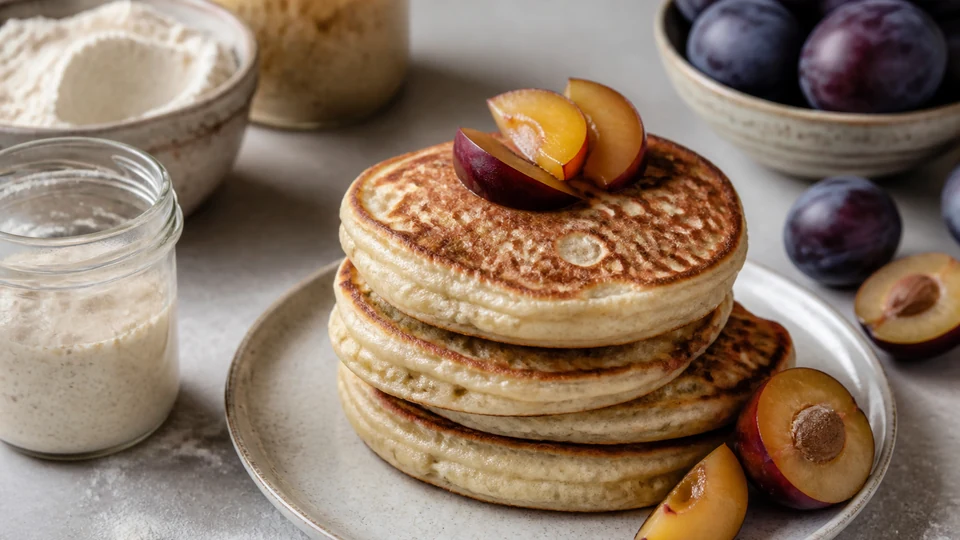
At Pancakes World, gluten free vegan sourdough pancakes need three things to work together: a starter made and maintained only with gluten-free flour, a vegan batter with enough binding power, and leavening adjusted to the starter's condition. Use active starter for a lighter fermented batter or sound discard for a more tangy quick batter, but never assume sourdough starter is gluten-free unless its ingredients and feeding history confirm it. Build the batter around a gluten-free flour blend, plant milk, a binder, and a measured chemical leavener. Cook one small pancake first, then correct thickness or heat before committing the whole bowl.
| Guide sections |
|---|
| Direct answer for gluten free vegan sourdough pancakes |
| What the reader needs to know |
| Practical options and examples |
| Step-by-step checklist |
For broader context, continue with Healthy Pancake Guides.
Direct answer for gluten free vegan sourdough pancakes
The most reliable approach is to treat gluten-free sourdough starter as a flavorful, hydrated flour ingredient rather than as a complete pancake formula. Begin with a starter that has never been fed wheat, rye, barley, or an ordinary wheat-based starter. Combine it with a purpose-built gluten-free flour blend, unsweetened plant milk, a binder such as ground flax, a little oil, and baking powder or baking soda chosen for the formula. Rest the mixed batter briefly so the gluten-free flours hydrate, then assess flow: it should spread slowly from a spoon without running like crepe batter. A test pancake reveals whether the center sets before the surface becomes too dark.
This guide is for the combined requirement expressed by the query: gluten-free, vegan, sourdough-style pancakes. It is not a claim that fermentation removes gluten from wheat starter. The US Food and Drug Administration's gluten-free labeling rule sets a defined threshold for foods bearing a gluten-free claim, so ingredient identity and cross-contact remain material. A wheat starter belongs in a different recipe, regardless of how long it ferments.
The vegan side also needs deliberate design. Eggs normally contribute binding and structure; dairy may contribute liquid, acidity, fat, or flavor. Replacing both with plant milk alone often leaves a fragile pancake. A small amount of binder and fat, supported by a balanced flour blend, is more dependable than adding a large quantity of any one replacement. For more vegan pancake foundations, use the vegan pancake hub as the parent guide.
What the reader needs to know
Starter identity comes before starter activity
A lively jar is not automatically suitable. First establish what flour has entered it since it was created. A starter converted from wheat to rice flour through a few feedings may still contain residual wheat; it should not be represented as gluten-free merely because its recent meals were gluten-free. A dedicated jar, dedicated utensils, clearly labeled flour, and a documented feeding routine provide a more defensible starting point.
King Arthur Baking's gluten-free starter method uses gluten-free flour and water and describes repeated feedings until the culture becomes active. That recognized culinary reference is useful for process, but the flour you use still has to fit the eater's requirements. Check every packaged ingredient independently. The FDA explains that foods labeled gluten-free must meet the federal definition; it also explains the relationship between the claim and ingredients derived from gluten-containing grains. A voluntary label is not a substitute for reading the ingredient statement and allergen information.
Starter condition is a separate decision. An active starter has recently been fed and shows fermentation activity. Discard is the portion removed during maintenance; it may be less vigorous, yet still usable for flavor and flour contribution in a quick pancake formula. Neither label excuses spoilage. King Arthur's sourdough guidance says pink or orange discoloration and visible mold are reasons to discard the starter. A sharp fermented aroma, liquid separation, or subdued bubbling can occur during normal maintenance, but unexplained contamination should not be negotiated away for the sake of saving breakfast.
Hydration changes the entire batter
Starter is flour plus water, so adding it changes both sides of the formula. A starter kept with equal weights of flour and water contributes roughly equal portions of each by weight. A thicker or thinner maintenance routine contributes a different balance. This is why a recipe stated only in cups becomes difficult to troubleshoot: two jars may look equally full while carrying very different quantities of flour and water.
Weighing is the clearest option. Record the mass and usual feeding ratio of the starter. If adapting an existing pancake formula, reduce some flour and liquid to account for what the starter supplies instead of pouring starter on top of an unchanged recipe. This is arithmetic for formula control, not a promise that every gluten-free flour absorbs liquid identically. Rice, oat, buckwheat, sorghum, millet, tapioca, and potato starch behave differently, and commercial blends vary.
A balanced blend usually performs better than a single starch or a strongly flavored whole-grain flour used alone. Starch can help tenderness and flexibility, while whole-grain gluten-free flours contribute body and flavor. Too much starch may produce a gummy or fragile center; too much thirsty whole-grain flour may produce batter that refuses to spread. Start from a blend intended for pancakes or general baking, then make small adjustments after hydration time.
Gluten-free binding and vegan binding overlap
Wheat gluten would normally help retain gas and hold the cooked structure together. Egg would also help set and bind. This batter omits both, so structure cannot be left to chance. Ground flax mixed with water forms a viscous gel and is a practical option. Ground chia behaves similarly but can make the crumb more visibly speckled and may thicken more strongly. Some gluten-free blends already contain xanthan gum or another hydrocolloid; adding a full separate dose without checking the label can make the pancake rubbery or sticky.
The goal is not maximum binder. It is enough cohesion for a spatula to lift the pancake after the edges set. A small pancake is the honest test. If it cracks during turning despite adequate cooking, a modest binder increase may help the next batch. If it feels elastic, pasty, or gummy, excessive binder, excess liquid, or an undercooked center may be the actual cause.
Plant milk primarily supplies liquid. Unsweetened varieties keep the cook in control of sweetness, while a neutral flavor makes sourdough easier to read. Soy milk tends to provide more protein than many other plant drinks, but this article does not assign it a nutritional advantage or guarantee a better pancake. Oat, almond, coconut beverage, or another suitable product can work when the overall hydration is adjusted and the label meets the eater's needs.
Sourdough flavor and lift are different questions
Fermentation can add acidity and a complex aroma, but starter vigor alone may not lift a pancake on a breakfast timetable. An overnight batter made with active starter can develop gas, whereas a discard batter mixed and cooked promptly usually depends on baking powder or baking soda for predictable lift. The two methods should not be described as interchangeable.
Baking powder supplies a balanced chemical leavening system. Baking soda needs sufficient acid and is powerful in small quantities. Sourdough starter may be acidic, but its acidity varies with flour, temperature, maturity, and feeding schedule. Adding a large amount of soda based on the assumption that every starter is equally sour can leave alkaline flavor and excess browning. A written formula from a dependable source is safer than improvising a neutralization calculation at the bowl.
If you are deciding between a quick fermented-flavor breakfast and a longer active-starter project, choose the workflow before mixing. The quick version uses sound discard plus measured baking powder. The longer version uses recently fed starter, a controlled fermentation period, and often a smaller amount of chemical leavener at cooking time. Do not leave a batter containing perishable additions at room temperature without a source-tested schedule.
Practical options and examples
Option one: discard-led weekday pancakes
Choose this when the jar needs maintenance and breakfast needs a bounded timeline. Use sound gluten-free discard, not wheat discard. Weigh it, then pair it with a gluten-free blend, plant milk, a modest binder, oil, salt, and baking powder. A small quantity of sugar is optional for browning and flavor, not structural insurance.
Mix the binder with part of the liquid first if its instructions call for hydration. Whisk the remaining wet ingredients separately. Combine wet and dry with minimal agitation, then allow a short rest. Gluten-free batter commonly changes during that pause as particles absorb water. Judge the final consistency after the rest, not immediately after the last stir.
This approach makes no claim that discard performs the full leavening job. It uses starter for fermented character and as part of the flour-liquid system. The measured baking powder carries the short-timeline lift. Readers who want a different cultured flavor without sourdough can compare the logic of the English breakfast recipe later in this series, but that route addresses a meal composition rather than this specialized batter.
Option two: active-starter pancakes
Choose this when the starter is demonstrably active and you can plan the fermentation. Feed the gluten-free starter according to its established routine and use it at the point specified by the chosen recipe. Keep notes on starter mass, batter temperature, start time, and observable expansion. Time alone is a weak indicator because a cool kitchen and a warm kitchen move at different rates.
An active-starter batter should still have a defined finish line. Look for the changes named by the source recipe, such as aeration or increased volume, rather than waiting indefinitely for dramatic bubbles. Add any late leavening ingredients only when directed. Stirring forcefully after gas has accumulated can reduce the benefit of that fermentation.
This is a culinary planning option, not proof of improved digestibility or a medical recommendation. People avoiding gluten for medical reasons need advice from an appropriate health professional and ingredients compatible with their own requirements. Fermentation is not permission to use a wheat culture on a gluten-free page.
Option three: build a repeatable base formula
For regular use, create a formula sheet in grams. List the starter mass and hydration, gluten-free blend, additional starch if any, plant milk, binder, oil, sweetener, salt, and leavener. Record the rest time, pan setting, scoop mass, approximate diameter, and the result of the first pancake. The value of the sheet is repeatability, not a fabricated claim that a particular combination was tested by this publication.
Change one variable at a time. If the batter is too thick after resting, add plant milk in small measured increments. If it runs immediately across the pan, add a small amount of the specified flour blend and allow another hydration pause. If the outside darkens while the center stays wet, reduce heat, make smaller pancakes, or slightly reduce scoop size. If the pancake remains pale and dry, confirm the pan was preheated and review fat, sugar, and heat rather than simply extending the cook until it hardens.
Readers seeking a protein-forward version should use vegan gluten-free protein pancakes rather than loading protein powder into this sourdough formula without compensation. Protein powders have distinct absorption and setting behavior. Likewise, the wording explained in gluten vegan pancakes should not be used to blur the difference between gluten-free and gluten-containing recipes.
Choosing the right approach
Ask five questions in order.
- Is the starter verifiably gluten-free? If its flour history is uncertain or it originated from wheat, stop. Make or obtain a dedicated gluten-free starter instead of trying to reason away exposure.
- Is the starter sound? Visible mold or pink or orange discoloration means the batch is not a cooking ingredient. Follow established starter-safety guidance.
- Do you want speed or active fermentation? Sound discard plus chemical leavener suits a quick workflow. Active starter suits a planned fermentation recipe.
- Does the flour blend already include a binder? Read the label before adding xanthan gum, psyllium, flax, or chia. More is not automatically better.
- Can you weigh and record the adjustment? A repeatable correction is more useful than a splash of liquid that cannot be reproduced.
For a soft, familiar pancake, choose a mild blend and neutral plant milk. For a more assertive whole-grain profile, include a measured portion of buckwheat, sorghum, millet, or certified gluten-free oat flour within a balanced formula. Do not swap the entire blend one-for-one and expect identical hydration. A useful variation preserves the batter's structural roles: flour and starch, liquid, binder, fat, salt, and leavening.
The pan matters, too. A heavy skillet or griddle can moderate temperature swings, but any sound pan can work when preheated and controlled. Medium heat is a starting description, not a universal dial number. Stoves, pan materials, pancake sizes, and sugar levels vary. The first pancake is calibration: observe spread, bubble formation, underside color, edge setting, and resistance to the spatula.
Common mistakes
Using ordinary sourdough discard. A jar labeled simply “sourdough” is usually wheat-based unless proven otherwise. Long fermentation does not transform it into a gluten-free ingredient.
Converting a wheat starter and immediately calling it gluten-free. Recent gluten-free feedings do not erase the earlier ingredient history. Maintain a dedicated gluten-free culture with clean equipment for this use.
Adding starter without subtracting flour and liquid. This creates an unexpectedly loose batter or forces a large late flour correction. Count the starter as part of the formula.
Treating all starters as identical. Hydration, flour, maturity, and acidity vary. A recipe written for a pourable rice-flour starter may not accept a stiff buckwheat culture without adjustment.
Relying on starter alone in a quick batter. Discard may contribute flavor but little timely lift. Use the leavening strategy stated by the recipe.
Adding soda until bubbles appear. Soda can create immediate fizz, but excess may taste soapy and brown too fast. Measure it; do not chase a visual spectacle.
Skipping the hydration rest. A batter that looks thin at first may thicken substantially. Immediate correction can lead to a dense mass five minutes later.
Turning too early. In a batter without egg or gluten, the cooked surface must form enough structure before lifting. Wait for the edges to look set and the underside to release, while remembering that bubbles alone are not a complete doneness signal.
Pressing with the spatula. Compression drives out gas and does not speed center setting efficiently. Adjust size and heat instead.
Making the first pancake oversized. A broad, thick pancake creates a difficult center-to-surface timing problem. Begin small enough to diagnose the batter.
Stacking steaming pancakes tightly. Trapped steam softens surfaces and can make a delicate stack tacky. Hold cooked pancakes in a single layer or a loose warm stack according to the serving plan.
Using cross-contact-prone tools. A flour-dusted wooden spoon, toaster, griddle, or shared flour bin can undermine careful ingredient selection. The appropriate controls depend on the eater and setting; do not promise zero risk from a home workflow.
Step-by-step checklist
Before mixing
- Confirm that the starter was created and maintained exclusively with suitable gluten-free flour.
- Read labels on the flour blend, baking powder, plant milk, binder, flavorings, and toppings.
- Reject starter showing visible mold or pink or orange discoloration, following recognized sourdough guidance.
- Decide whether the recipe is discard-led or active-starter-led.
- Weigh the starter and note its usual flour-to-water feeding ratio.
- Check whether the flour blend already contains xanthan gum or another binder.
- Use clean equipment appropriate to the eater's cross-contact requirements.
- Select a pan and a modest first-pancake size.
While mixing
- Prepare the binder as directed rather than scattering dry flax or chia into a finished batter.
- Whisk dry ingredients thoroughly so salt and leavener are distributed.
- Combine starter, plant milk, oil, and other wet ingredients until reasonably uniform.
- Fold wet and dry together only until no dry pockets remain.
- Rest the batter for the formula's stated period.
- Reassess consistency after resting; correct in small weighed increments.
- Avoid tasting raw batter because uncooked flour is a raw ingredient.
At the pan
- Preheat rather than placing the first scoop onto a cold surface.
- Apply a light, even film of suitable cooking fat if the pan requires it.
- Scoop one small pancake and observe its spread.
- Lower heat if the underside colors before the top and edges begin to set.
- Turn only when the spatula can support the pancake without tearing.
- Cook the second side until the center is set, using size and heat corrections rather than pressing.
- Record the correction before cooking the rest.
After cooking
- Keep toppings within the same gluten-free and vegan requirements if the whole plate is represented that way.
- Cool leftovers promptly and store them using applicable food-safety guidance.
- Label stored pancakes if other household foods look similar.
- Record starter condition, batter adjustment, and pan behavior for the next batch.
- Review ingredient labels again when buying replacement products because formulations can change.
Variations or substitutions when relevant
Flour direction
A neutral all-purpose gluten-free blend gives the clearest view of sourdough flavor. Buckwheat adds earthy character, despite its name not being a type of wheat. Sorghum is mild and whole-grain. Millet can add a gentle grain flavor. Certified gluten-free oat flour can contribute softness for people who include oats in their gluten-free diet. Each change affects absorption, so replace only a measured portion first.
Do not use coconut flour as a casual one-for-one substitution. It is unusually absorbent and can turn a workable batter into paste. Almond flour adds fat and tenderness but lacks the starch behavior of a general blend. Either may belong in a recipe designed around it, not as an emergency equivalent.
Binder direction
Ground flax is practical when a slightly hearty crumb is welcome. Ground chia may thicken more strongly. Psyllium can provide structure but is powerful and should follow a recipe developed for it. Commercial gluten-free blends may already have xanthan gum. The correct choice depends on the flour system, not on a hierarchy of “best” replacements.
Flavor direction
Cinnamon, vanilla, citrus zest, or a modest sweetener can complement the tang. Blueberries or small diced fruit add water and can complicate turning, so fold in a restrained quantity after the base batter is calibrated. Chocolate pieces increase sweetness and can scorch against the pan. Savory herbs or scallion can work in an unsweetened formula, provided every addition remains vegan and gluten-free for the intended diner.
For another culturally specific pancake route, Japanese pancake addresses a different texture and method; it should not be treated as a substitution chart for this batter. Chipotle breakfast is likewise related reading about breakfast decisions, not evidence for this recipe.
Serving direction
Fresh fruit, nut or seed butter, fruit compote, or a restrained syrup can accompany the pancakes. Check packaged toppings independently. A topping does not repair a gummy center or undercooked batter, so complete the pan calibration first. If serving a group, offer components separately to make ingredient choices visible.
A controlled way to adapt
Write the current formula in grams. Choose one variable: starter percentage, flour blend, binder, plant milk, or pancake size. Change only that variable, record the result, and keep all other conditions as stable as practical. This simple discipline makes the next decision evidence-based without inventing a universal recipe result.
Reading the first pancake
The first pancake is a diagnostic tool only if the observations lead to distinct corrections. A pancake that barely spreads but cooks through may need a small liquid addition after the batter has fully hydrated. One that spreads into a thin, lacy disk may need a small flour-blend correction or a longer rest. Make either adjustment by weight and mix gently; alternating large additions of flour and milk only creates an unknown formula.
If the underside becomes dark before the upper edge loses its wet shine, reduce pan heat and use a smaller scoop. If color is even but the center remains paste-like, allow more cooking time at the gentler temperature and check whether the batter contains excessive liquid or binder. A pancake that sets yet breaks at the turn may need a little more binder, but it may simply have been turned before the first side formed a stable surface. Try timing and size before redesigning the formula.
Large surface bubbles are not a universal signal to flip. Thick batter can hold bubbles while its base is still pale; some gluten-free batters show few visible bubbles despite setting adequately. Use a combination of cues: the edge looks less glossy, the underside releases, the spatula can travel beneath the center, and the pancake bends without flowing. The second side usually needs less time because much of the center has already heated.
Sourness also requires diagnosis rather than reflexive sweetening. A sharply acidic result may come from old discard, a high starter percentage, or a long fermentation. Choose fresher starter or reduce its share at the next planned batch instead of hiding the imbalance under extra sugar. A bland result may call for active fermentation time or a different starter schedule, not simply more leavener. Keep salt measured because omitting it can flatten the flavor even when fermentation is present.
Finally, separate batter faults from holding faults. A crisp-edged pancake can soften under trapped steam after stacking; that does not mean the pan formula failed. Serve promptly, hold in a single layer when texture matters, or accept a softer stack as the service tradeoff. These observations turn one test pancake into a controlled decision without claiming laboratory precision.
The editorial boundary is equally important. This page supplies a route-specific cooking framework, not a clinically validated meal plan, a fermented-food health claim, or a product endorsement. Pancake World organizes the guidance so readers can make a transparent cooking decision while keeping gluten-free identity, vegan structure, and sourdough technique distinct.
Explore related Pancakes World guidance on American Pancakes, American Breakfast: Pancakes, Diner Plates and Brunch, and Maple Syrup.
Sources and editorial references
- Gluten and Food Labeling —
https://www.fda.gov/food/nutrition-education-resources-materials/gluten-and-food-labeling - Questions and Answers on the Gluten-Free Food Labeling Final Rule —
https://www.fda.gov/food/nutrition-food-labeling-and-critical-foods/questions-and-answers-gluten-free-food-labeling-final-rule - Gluten-Free Sourdough Starter Recipe —
https://www.kingarthurbaking.com/recipes/gluten-free-sourdough-starter-recipe - Sourdough Baking FAQ —
https://www.kingarthurbaking.com/learn/guides/sourdough/faq - Classic Sourdough Waffles or Pancakes —
https://www.kingarthurbaking.com/recipes/classic-sourdough-waffles-or-pancakes-recipe - Easy Vegan Pancakes —
https://www.kingarthurbaking.com/recipes/easy-vegan-pancakes-recipe