Gluten And Dairy Free Breakfast
A gluten- and dairy-free breakfast begins with the current labels of every packaged ingredient and a preparation plan that controls mixing at the counter and table. When something does not fit, diagnose the state first: an unverified grain, a milk-containing ingredient, shared equipment, or a substitution that changed the dish’s texture. Build from simple components such as fruit, vegetables, potatoes, eggs or tofu, and verified packaged alternatives where needed. Pancake World keeps this route focused on diagnose constraint and label states before correcting breakfast format choices.
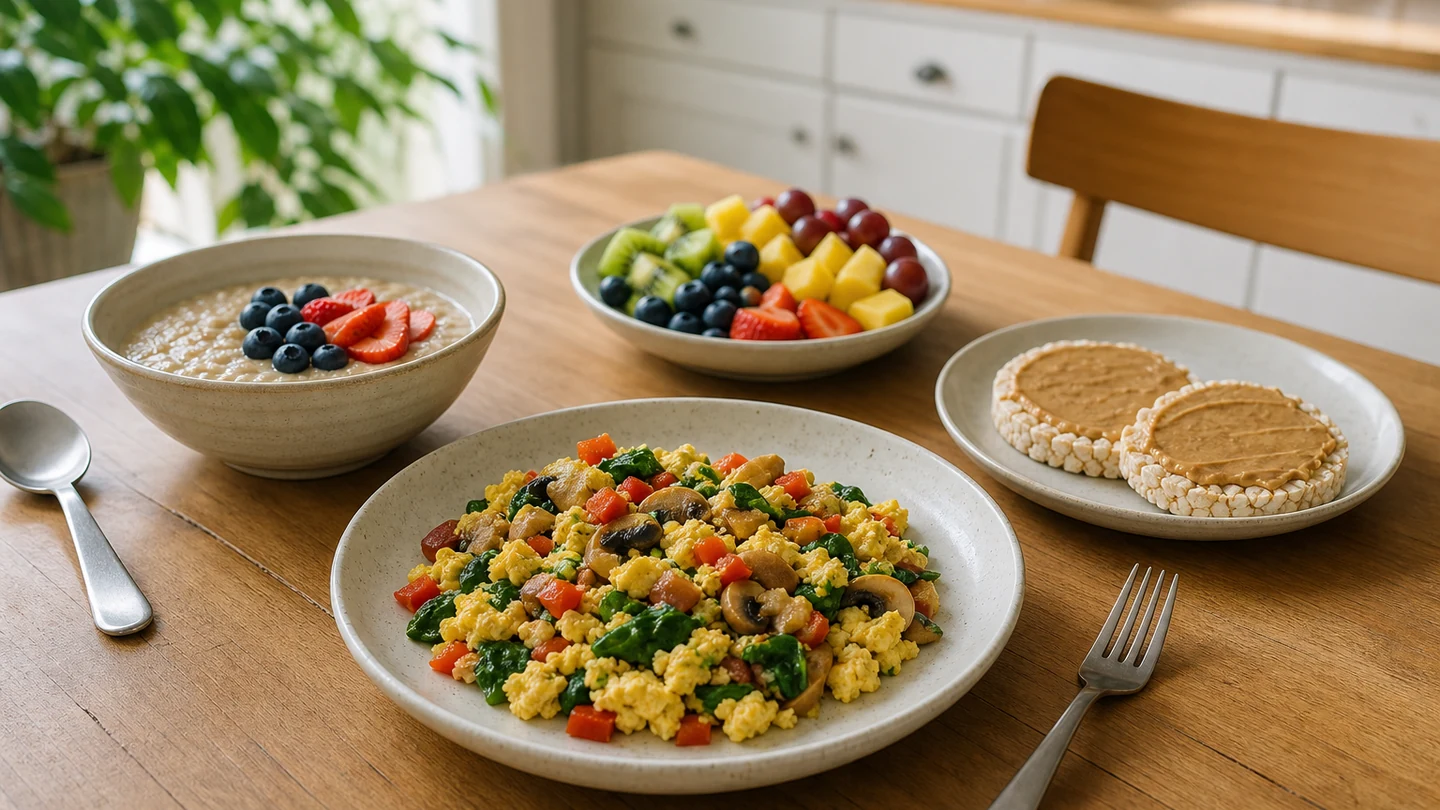
Use a constraint intake before cooking
This page is a breakfast-planning diagnostic, not a medical diagnosis or a guarantee that a kitchen is safe for a particular allergy or coeliac disease. Write the requirement down in operational terms: which ingredients must be avoided, whether a labelled packaged product is needed, and whether shared tools are acceptable. “Gluten-free” and “dairy-free” are separate checks.
Root-cause matrix
| Observed problem | Likely cause | Immediate correction |
|---|---|---|
| Breakfast includes an unknown bread or cereal | Grain status assumed from appearance | Replace with a verified component or omit it |
| Dish contains a hidden milk ingredient | Spread, chocolate, sauce, or mix was not checked | Read the current ingredient and allergen information |
| Suitable food touches a shared surface | Preparation order and utensils were not separated | Clean and use separate equipment where required |
| Substitute batter is dense or fragile | Several functional ingredients were swapped together | Return to a complete suitable formula; change one variable |
Label path: gluten first, dairy second
- For packaged grain products, look for the current gluten-free claim or choose a component that does not require a grain substitute.
- Read the ingredient list and allergen declaration for milk and any other relevant allergen.
- Check sauces, seasonings, spreads and drinks separately.
- Keep the package available until service if guests need to verify it.
In the United States, FDA rules define what a voluntary “gluten-free” claim means for covered labelled foods. That regulatory context does not certify an unlabelled product, a restaurant meal, or a home kitchen. FDA allergen guidance also distinguishes declared ingredients from unintended cross-contact.
Choose a format that needs fewer substitutions
A potato-and-vegetable skillet, fruit with a clearly labelled accompaniment, or a tofu and vegetable plate can be easier to verify than a breakfast built around multiple replacement flours and sauces. Eggs may fit some dairy-free plans but not vegetarian or allergy-related needs; tofu may fit some plans but requires its own label check. The useful decision is not which format is “best,” but which one has the fewest uncertain components.
Immediate correction: the grain is uncertain
Do not treat a grain as suitable because it is pale, rustic, or marketed as wholesome. Put it aside until the current package can be checked; offer potatoes, fruit, rice, or another verified component instead. This avoids turning an unclear label into an unsupported assurance.
Immediate correction: a dairy-free swap breaks the texture
If a spread separates or a batter becomes fragile after several replacements, stop stacking substitutions. Serve a simpler plate or use a complete formula written for those ingredients. “Dairy-free” identifies a boundary; it does not mean every alternative has the same culinary function as dairy in a particular recipe.
Observation log
For a recurring breakfast, keep a short log with four fields: product name and version, label statement, shared-equipment exposure, and visible texture result. The log is not testing or certification. It simply prevents a previous package or successful-looking dish from being mistaken for proof about the item now on the table.
Prevention at the counter and table
- Plan the verified components before opening mixed-ingredient products.
- Use clean tools and separate serving utensils when cross-contact matters.
- Keep spreads, crumbs and sauces from travelling across a shared buffet.
- Ask a qualified professional for individual medical or allergy guidance; a menu guide cannot provide it.
Edge cases
For a shared brunch, make the verified dish identifiable and serve it first. For packaged alternatives, re-check the label when the brand, product size, or flavour changes. For guests with a medically necessary restriction, do not make an assurance beyond the ingredient information and preparation facts you can actually verify.
Troubleshooting close
The smallest reliable correction is to remove the uncertain component, verify the next package, and simplify the breakfast until its label and handling path are visible. A gluten- and dairy-free breakfast is a chain of specific decisions, not a broad claim attached to a plate.
Sources and editorial references
- U.S. FDA — Gluten and Food Labeling: https://www.fda.gov/food/nutrition-education-resources-materials/gluten-and-food-labeling
- U.S. FDA — Food Allergies: https://www.fda.gov/food/nutrition-food-labeling-and-critical-foods/food-allergies
- USDA MyPlate — Meal Planning: https://www.myplate.gov/sites/default/files/2024-06/TipSheet-24-Meal-Planning.pdf
- USDA FSIS — Food Allergies: The Big 9: https://www.fsis.usda.gov/food-safety/food-safety-basics/food-allergies-big-9