German breakfast foods
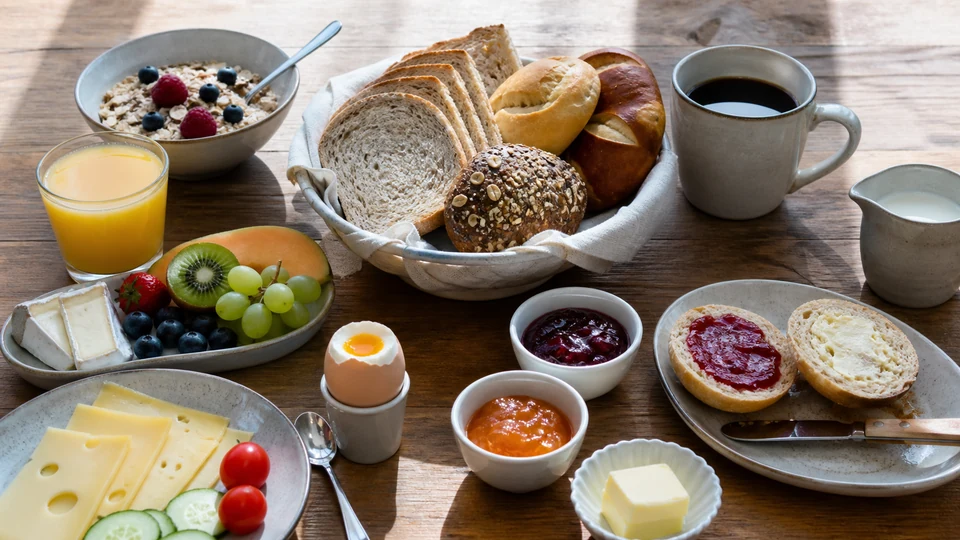
At Pancakes World, german breakfast foods commonly presented in official cultural materials include bread or Brötchen, butter, jam or honey, cheese, cold cuts, a cooked egg, muesli with milk or yogurt, fruit, and coffee, tea, milk, cocoa, juice or water. A practical German-style table does not need every item: choose one or two breads, one sweet spread, one savory topping, one fresh component and a drink, then let each person assemble an open-faced slice or roll. Treat regional foods such as Hamburg’s Franzbrötchen or a Bavarian Weißwurst breakfast as optional local branches, not as the single national standard. That direct answer describes a flexible table, not one meal eaten by every German household. Germany has regional names, product identities and contemporary habits, and individuals may eat something entirely different or skip breakfast. This guide separates widely documented categories from local examples, translates useful shopping terms, and gives a reproducible plan for serving a small spread. Browse the American Breakfast: Pancakes, Diner Plates, and Brunch Context for other morning formats, or visit the editorial platform for the broader editorial collection.
For adjacent decisions around German breakfast foods, compare a customizable breakfast bar, breakfast recipes for a practical start, and a flexible healthy breakfast framework.
For broader context, continue with American Breakfast: Pancakes, Diner Plates and Brunch.
What a German breakfast table is—and is not
The clearest model is a set of components rather than a composed hot plate. Goethe-Institut teaching materials use Brötchen, butter, sausage or cold cuts, jam, eggs, cheese, muesli, fruit, toast and several drinks to introduce a typical breakfast vocabulary. Another Goethe cultural overview explicitly shows both sweet and savory branches: bread or pastry with honey or jam on one side, cheese and Wurst on the other, plus muesli with milk or yogurt and an optional egg.
These sources support a practical structure:
- bread or a bread roll as the main base;
- sweet spreads such as butter with jam or honey;
- savory toppings such as cheese, sliced meat or a vegetarian spread;
- a spoonable alternative such as muesli with milk or yogurt;
- an optional egg;
- fruit or raw vegetables as a fresh component;
- coffee, tea, milk, cocoa, juice or water according to preference.
They do not prove that every person eats each item, that these foods appear daily, or that one sequence is more authentic than another. “German breakfast” is therefore best used as a table-building idea with documented vocabulary, not a promise of a universal national routine.
Build a small German-style spread in six decisions
For two to four people, use decisions rather than an oversized checklist. The exact quantity depends on appetite and package or recipe yield; no invented serving count is assigned here.
1. Choose the bread base
Select one sliced loaf and one type of small roll if variety matters. A single good bread is enough for a weekday table. Useful labels include:
- Brot — bread;
- Brötchen — a small bread roll;
- Vollkornbrot — whole-grain bread under the relevant German product description;
- Roggenbrot — rye bread under its market definition;
- Mischbrot — mixed-grain bread whose qualifying grain is named;
- Knäckebrot — crispbread;
- Toastbrot — sliced toast bread;
- Laugenbrezel or Brezel — a pretzel-shaped lye bread product.
Do not translate a German bread name only by color. A dark loaf is not automatically rye or whole grain, and a seeded surface does not establish the flour composition. The German Food Book Commission explains that its guidelines record customary market characteristics and consumer expectations. It gives, for example, a threshold of at least 90 percent wheat as whole-grain material for a product called Weizenvollkornbrötchen. A US bread bearing a visually similar name may follow different rules, so use its actual ingredient list rather than assuming equivalence.
Slice bread only as needed to reduce drying. Put rolls in a basket or clean cloth-lined container, but do not use a sealed warm bag that traps steam if a crisp crust matters. If serving toast, toast small batches so people receive the intended texture rather than a cold stack.
2. Add one sweet branch
The simplest sweet branch is butter plus one spread. Documented breakfast vocabulary includes Marmelade and honey, and contemporary tables may offer other packaged spreads. Choose one rather than opening several jars without a plan.
Practical combinations include:
- butter and fruit preserve on a split roll;
- honey on sliced bread;
- quark with a fruit spread, if the actual quark product and cold chain are controlled;
- a sweet pastry served as a separate item rather than used as proof that all German breakfasts are pastry-based.
For a US shopper, Marmelade in casual German speech may be encountered as a broad breakfast-spread word, while US packaged labels distinguish product identities differently. Buy by the actual jar description and ingredient list. Do not convert one spoonful into generic calories or sugar values; brands and portions vary.
Keep a clean spoon in each jar and move a portion to a serving dish if many people will share. Butter crumbs in jam, or a knife that has touched cheese and then enters a sweet spread, create quality and allergen-control problems.
3. Add one savory branch
Choose cheese, cold cuts or a vegetarian spread. A small table can offer one of these; a larger spread might offer one cheese and one other topping.
Useful German words include:
- Käse — cheese;
- Frischkäse — fresh or cream-cheese-style product, depending on the exact item;
- Quark — a fresh cultured dairy product with no exact one-word US substitute guaranteed;
- Wurst — a broad sausage or processed-meat category, not one formula;
- Schinken — ham;
- Aufschnitt — sliced cold cuts or sliced toppings;
- Brotaufstrich — a spread for bread.
Do not label an arbitrary US deli meat as a German Wurst variety. If a specific identity matters, obtain the correctly labelled product and preserve its storage and preparation directions. Wurst names can correspond to different processes and ready-to-eat states. “Sausage” alone does not tell a cook whether a product is raw, cooked, cured or intended for reheating.
Arrange chilled toppings shortly before service. Put out a modest amount and replenish from the refrigerator if needed. Use a separate utensil for each cheese, meat and spread. Return perishable items promptly rather than leaving the whole package on the table through a long morning.
4. Decide between egg, muesli or both
A cooked egg is an optional addition, not a mandatory marker of authenticity. For a simple table, choose a fully cooked shell egg and label it if prepared in advance. Goethe material also documents muesli with milk or yogurt as a distinct breakfast route.
For muesli, keep the dry mixture and liquid separate until service. Offer the package or a written ingredient card when allergens matter. Dried fruit, nuts, seeds, chocolate and grain flakes can change the composition substantially even when every bowl is called “muesli.” Granola is not an automatic synonym: it is usually a separately prepared product and its label controls.
For eggs, follow a complete cooking method rather than inventing a universal soft- or hard-boiling time. Egg size, starting temperature, altitude and method affect timing. The German Federal Institute for Risk Assessment advises special hygiene with raw eggs, including refrigerated storage at no more than 7°C, preventing shell or raw egg from contacting other foods, immediate cleaning of splashes and thorough hand and utensil washing. It advises fully set white and yolk for people at higher risk from foodborne infection.
5. Add a fresh component
Fruit is directly present in the cited Goethe breakfast vocabulary. A fresh component can be whole fruit, cut fruit, cucumber, tomato or radish, but only the supported broad category should be called typical; the exact selection is an editorial table choice.
Whole fruit reduces cutting work. If preparing slices, wash intact produce under appropriate running water, use a clean board and knife, and refrigerate cut perishable produce until service. Keep tomato or cucumber away from the bread until eating if a crisp crumb is important.
A fresh component also helps a table feel complete without adding another packaged spread. It does not need a decorative arrangement. Accuracy, cleanliness and a quantity suited to the group matter more than a buffet-style display.
6. Choose drinks without making them a rule
Official teaching materials name coffee, tea, milk, cocoa, juice and water. Offer what fits the people at the table. There is no requirement to serve all of them or to treat coffee as mandatory.
Prepare hot drinks near service time. Keep milk refrigerated and pour a small amount into a clean jug if it will be used quickly. Do not return leftover milk from a communal jug to its original container. For juice, use the actual label and serving vessel; “juice” does not establish fruit type, dilution or nutrition.
Bread culture explains the range, not a single required loaf
Bread deserves special attention because it gives the breakfast table its modular structure. The German National Tourist Board highlights wheat, rye and spelt breads and numerous regional baked goods. The German UNESCO Commission records Deutsche Brotkultur in Germany’s nationwide inventory of intangible cultural heritage, with an entry year of 2014, and explicitly connects bread with shared family breakfast and other social settings.
Use that evidence carefully. German bread culture is an entry in Germany’s national intangible-cultural-heritage inventory. It should not be described as a UNESCO World Heritage site, and this page does not convert the inventory into a claim that every resident eats traditional bread each morning.
For a tasting table, contrast attributes rather than inventing a hierarchy:
| Bread choice | Observe | Pairing decision | Do not assume |
|---|---|---|---|
| Mild wheat roll | crust, crumb, split surface | sweet spread or mild cheese | that every Brötchen is wheat-only |
| Rye-labelled loaf | density, acidity, seed content | cheese, cold cuts or a savory spread | that dark color proves rye percentage |
| Mixed bread | named grain and ingredient order | flexible sweet or savory use | that “mixed” means equal proportions |
| Whole-grain-labelled bread | actual whole-grain identity | any topping that suits the eater | a health outcome from the name alone |
| Crispbread | dry snap and package ingredients | spread added just before eating | that all crispbreads share one grain |
If a German-labelled product is unavailable, choose a locally available bread with the desired structure and say that it is a practical substitute, not an exact identity. Record what changed. A seeded sourdough can function well on the table without being renamed as a particular German loaf.
Brötchen, Semmel, Schrippe and Rundstück
Visitors can encounter different regional words for a small bread roll. A Goethe-Institut transcript gives Schrippe for Berlin, Semmel for Munich and Rundstück for Hamburg as examples alongside the general Brötchen.
These terms are useful for recognition, but language boundaries are not perfectly confined to city limits. A bakery may use another regional or product-specific name, and the same word can cover several shapes or formulas. Ask what flour, topping and preparation define the item instead of assuming that a regional name guarantees one composition.
At home, reproduce the service idea by offering split small rolls. Do not claim to have recreated a Berlin Schrippe, Bavarian Semmel or Hamburg Rundstück unless a reliable formula and identity source support that exact product.
Sweet options: jam, honey, pastry and Franzbrötchen
A sweet German-style breakfast can remain very simple: bread, butter and jam or honey. It can also include a pastry, but pastries should be presented as optional and sometimes regional, not the nationwide everyday default.
The German National Tourist Board identifies Franzbrötchen with Hamburg and describes it among Germany’s regional baked goods. For an evidence-bounded table:
- label a genuine purchased item by its package or bakery name;
- if baking, use a complete formula with exact dough, lamination or folding, filling, proofing, shaping and baking instructions;
- do not rename a generic cinnamon roll as Franzbrötchen solely because it contains cinnamon;
- keep recipe authorship with the source and do not claim a Pancake World test;
- review wheat, milk, egg and any nut or sesame ingredients in the actual product.
Other sweet baked goods may appear at breakfast according to household, region or occasion, but a pastry catalog is not necessary to answer this route. The dependable core remains a bread or roll plus a deliberately chosen spread.
Savory options: cheese, cold cuts and spreads
The savory branch works because toppings remain separate. Each person can build an open-faced slice or a split roll. That makes it easy to serve mixed preferences, but it also requires labelling and clean utensils.
Set up the table in this order:
- Place plates, napkins and individual knives first.
- Put bread and rolls in the center.
- Set butter and spreads in small dishes with dedicated utensils.
- Add labelled cheese, cold cuts or vegetarian spread from the refrigerator just before eating.
- Add washed whole fruit or chilled cut produce.
- Bring eggs and hot drinks last.
Do not stack cheese directly on meat if a vegetarian guest may use the cheese. Do not use the same tongs for every topping. If a meat package needs cooking, it belongs in a separate preparation workflow and must not be presented as ready-to-eat cold cuts.
An open-faced serving makes topping identity visible. A closed sandwich can still be appropriate, especially for travel, but it is an editorial adaptation rather than proof of a single traditional format.
Muesli, yogurt and quark need exact product identities
Muesli offers a non-bread center. Build it from a labelled dry mix or a source-specific formula, then choose milk or yogurt. Add fruit only in an amount and state covered by the plan.
Avoid four common substitutions:
- Do not replace raw grain flakes with granola and preserve the same label or nutrition values.
- Do not treat sweetened and plain yogurt as equivalent.
- Do not translate quark as cream cheese, yogurt or cottage cheese without explaining that it is a functional substitute rather than the same product.
- Do not assume a plant-based drink has the same ingredients, allergens or cooking behavior as milk.
For advance assembly, keep the mixture refrigerated in a closed container and use a formula that defines the soak time. A jar left on the counter overnight is not an acceptable reinterpretation of refrigerated overnight oats or muesli.
Regional branch: the Bavarian Weißwurst breakfast
A Weißwurst breakfast is a specific Munich and Bavarian branch, not the national template. Munich’s official tourism site describes Weißwurst with sweet mustard and a pretzel, traditionally eaten as a late breakfast before noon; it also says the old timing rule is no longer mandatory in modern practice.
That distinction prevents two errors. First, do not tell readers that Germans generally eat veal sausage and beer every morning. Second, do not turn the historical before-noon custom into a modern safety rule that replaces refrigeration, package directions or reheating instructions.
For practical planning:
- obtain a correctly identified Weißwurst product rather than substituting an unrelated white sausage;
- follow the manufacturer’s storage, heating and use instructions;
- serve the documented sweet mustard and pretzel pairing if representing the Munich format;
- label wheat, mustard and any meat or dairy components from their actual packages;
- offer a nonalcoholic drink by preference, and never imply that beer is required.
This page does not provide a tested Weißwurst cooking method. Product state and producer directions control.
A weekday version, a weekend spread and a travel box
The same evidence-supported categories can be scaled to three occasions without claiming separate traditions.
Weekday table
Choose one bread or roll, one spread or topping, fruit and one drink. Add muesli instead of bread if preferred. Keep preparation under control by setting out only what will be eaten and returning chilled food immediately.
Example decision set: rye-labelled bread, butter, cheese, a whole apple and tea. This is an editorial assembly example, not a nutrition prescription or a claim about household frequency.
Weekend shared spread
Choose two bread textures, one sweet spread, one cheese, one additional savory topping, eggs or muesli, fruit and drinks. Put ingredient labels or a written card beside foods when guests have restrictions. Use small dishes and replenish chilled items.
Example decision set: mixed bread and rolls, butter, jam, cheese, a vegetarian spread, fully cooked eggs, cut fruit, coffee and water. The menu illustrates the structure; no item is mandatory.
Portable breakfast box
Keep wet and dry components separate. Pack a roll or bread, a sealed spread or cheese portion, whole fruit and a drink. If including yogurt, cold cuts, cheese or egg, use an insulated bag and adequate cold source. A travel box should not remain warm until lunch.
Do not copy buffet leftovers into a travel box after they have spent an unknown time on the table. Start with properly refrigerated reserve food.
Buying and substitution guide for US readers
When a precise German item is unavailable, select by function and disclose the substitution.
| German item or term | Function on the table | Practical US-market choice | Boundary to preserve |
|---|---|---|---|
| Brötchen | small crusted bread portion | fresh plain or seeded roll | call it a substitute unless identity is verified |
| Roggenbrot | rye-defined sliced bread | labelled rye bread | ingredient list, rye proportion and flavor can differ |
| Vollkornbrot | whole-grain-defined loaf | labelled whole-grain bread | German and US definitions are not interchangeable |
| Quark | fresh cultured dairy topping | source-approved cultured dairy substitute | do not rename the substitute as quark |
| Aufschnitt | sliced savory topping | labelled ready-to-eat cheese or cold cut | verify ready-to-eat state and refrigeration |
| Marmelade | sweet fruit spread in breakfast use | labelled jam, preserve or marmalade | use the jar’s exact product identity |
| Müsli | grain-flake mixture | labelled muesli or source-specific mix | granola and cereal are not automatic equivalents |
| Brezel | pretzel-shaped lye bread | correctly labelled pretzel | allergen and process identity still require review |
Prefer a modest truthful table over a large collection of relabelled approximations. The experience comes from bread, contrasting toppings and shared assembly as much as from importing a specific product.
Allergen and label controls
For US packaged foods, FDA identifies nine major allergens: milk, egg, fish, crustacean shellfish, tree nuts, peanuts, wheat, soy and sesame. A German-style spread can involve several at once—wheat or sesame in rolls, milk in butter and cheese, egg, nuts in muesli, or soy in a vegetarian spread.
Apply these controls:
- read the complete ingredient list and Contains statement on every US package;
- retain packaging until service ends;
- identify imported products from their compliant label rather than translating only the front name;
- use separate knives, spoons and tongs;
- keep allergen-sensitive food on a separate clean plate before the shared table begins;
- never promise an allergen-free table when the preparation space or supplier cannot support that claim.
A bakery display name is not a full ingredient disclosure. Ask the provider when information is missing, and choose another item if the answer is inadequate for the eater’s needs.
Egg, chilled-food and reheating safety
The German BfR states that raw eggs can carry pathogens internally or on the shell. It advises storing raw eggs at no more than 7°C, observing the best-before information, avoiding heavily soiled or damaged eggs for food preparation, and preventing shell or raw egg from contacting other foods. Clean splashes, work surfaces, tools and hands promptly.
For people whose defenses against foodborne infections are reduced or not fully developed, BfR advises eggs only when white and yolk are fully set. Serve egg dishes promptly or keep them refrigerated at no more than 7°C under that guidance.
BfR’s household guidance also gives a control of at least 70°C (158°F) for two minutes at all points when sufficiently heating or reheating relevant foods, with a food thermometer when in doubt. Use that control alongside the product or recipe instructions, not as a replacement for them.
Keep cheese, cold cuts, quark, yogurt, milk, cooked eggs and cut produce refrigerated until near service. Return them promptly. If a manufacturer gives a stricter temperature or shorter time, follow the stricter instruction.
Common mistakes and better decisions
Mistake: treating one photo as the national standard
Better decision: describe a table as one supported arrangement and acknowledge regional and household variation.
Mistake: using bread color as identity
Better decision: read the product name and ingredients. Dark color alone does not prove rye or whole grain.
Mistake: calling every roll a specific regional name
Better decision: use Brötchen as a general recognition term and reserve Semmel, Schrippe or Rundstück for supported regional or product contexts.
Mistake: presenting Weißwurst as everyday Germany
Better decision: label it as a Munich and Bavarian regional late-breakfast tradition and follow the actual product directions.
Mistake: translating quark as an identical US dairy product
Better decision: state the functional substitute and preserve the distinction.
Mistake: setting out every chilled package for hours
Better decision: serve small amounts, note the start time and replenish from controlled refrigeration.
Mistake: declaring the spread healthy or assigning generic nutrition
Better decision: use actual package labels or a fully specified recipe. This page makes no medical, weight, energy or performance claim.
Frequently asked questions
What is the most useful German breakfast food to start with?
Start with fresh bread or a roll. It supports both sweet and savory toppings and reflects the modular table documented in official cultural materials. Add one spread, one chilled topping and a drink rather than trying to source every named item.
Is German breakfast usually sweet or savory?
Both branches appear in Goethe-Institut cultural materials. Sweet choices include jam or honey with bread; savory choices include cheese or cold cuts. Muesli, yogurt, fruit and eggs can sit alongside either branch. Individual practice varies.
What does Brötchen mean?
It is a general German word for a small bread roll. Regional examples include Schrippe, Semmel and Rundstück, but usage is not a perfect city-by-city border and the formula can vary.
Is a pretzel a standard national breakfast requirement?
No. A pretzel is especially relevant to the documented Bavarian Weißwurst format and can also be eaten in other contexts. It is an optional bread choice, not a requirement for every German-style table.
Can I make the spread vegetarian?
Yes as an editorial table choice: use cheese if suitable, or a labelled vegetarian spread, plus bread, sweet spread, muesli, yogurt, eggs or fruit according to preference. Review actual allergens and do not let meat utensils contact the vegetarian foods.
Is Franzbrötchen the same as a cinnamon roll?
Do not assume equivalence. The German National Tourist Board identifies Franzbrötchen as a Hamburg pastry with a specific regional identity. Use a correctly identified product or a reliable complete formula; otherwise call the item what it actually is.
Do I need Recipe schema for this page?
No. This is an Article about foods and table decisions. Pancake World has no project-owned tested recipe here, so the page does not claim Recipe schema, exact yield or tested timings.
Explore related Pancakes World guidance on American Pancakes, Maple Syrup, and Maple Syrup Pancakes.
Sources and editorial references
- Goethe-Institut, Deutsch mit Felix und Franzi — breakfast lesson —
https://www.goethe.de/resources/files/pdf94/lessonplan---volume-1---96-pages2.pdf - Goethe-Institut, Mit Deutsch durchs ganze Jahr — food culture material —
https://www.goethe.de/prj/dlp/dlapi/v1/index.cfm?endpoint=%2Ftlm%2Fdownload&file_ID=6769&tlm_ID=2431 - Goethe-Institut, Video 10 transcript —
https://www.goethe.de/resources/files/pdf334/transkript_video10-v1.pdf - German National Tourist Board, German bread and baked goods —
https://www.germany.travel/en/experience-enjoy/german-bread-and-baked-goods.html - German UNESCO Commission, Deutsche Brotkultur —
https://www.unesco.de/staette/deutsche-brotkultur/ - German Federal Ministry and German Food Book Commission, The German Food Book and Commission —
https://www.bmel.de/DE/themen/ernaehrung/lebensmittel-kennzeichnung/deutsche-lebensmittelbuch-kommission/deutsches-lebensmittelbuch.html - Munich Tourist Board, Traditional Bavarian food —
https://www.munich.travel/en/topics/eat-drink/bavarian-food - German Federal Institute for Risk Assessment, Foodborne infections in private households —
https://www.bfr.bund.de/fragen-und-antworten/thema/lebensmittelinfektionen-im-privathaushalt-quellen-erkennen-risiken-vermeiden/ - U.S. Food and Drug Administration, Food Allergies —
https://www.fda.gov/food/nutrition-food-labeling-and-critical-foods/food-allergies