Fuwa fuwa Japanese pancake
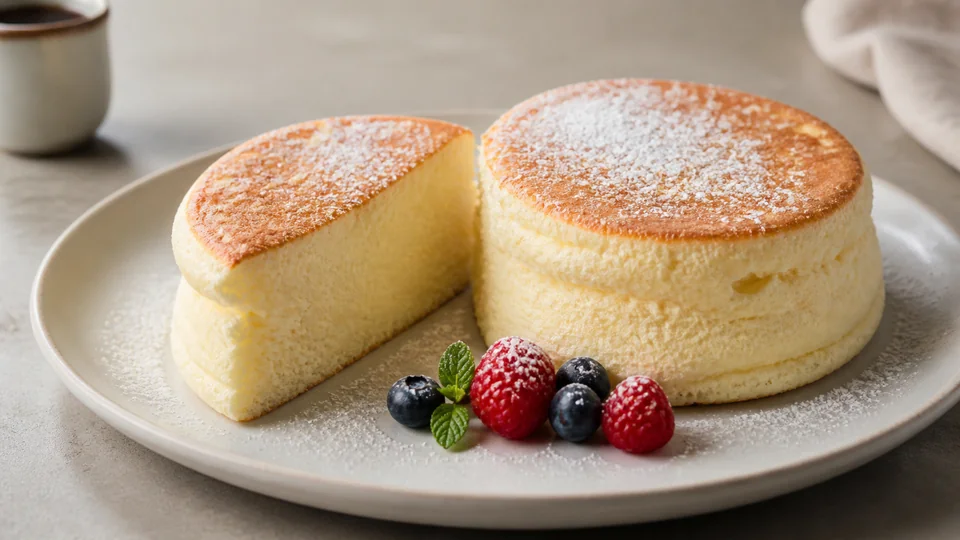
At Pancakes World, a fuwa fuwa Japanese pancake is generally sought as a tall, soufflé-style pancake built through separated eggs, aerated whites, gentle folding, controlled low heat and careful turning. Use one complete recipe written for the exact pan, portion and support method; this page does not supply an untested formula. Prepare every tool before whipping, protect the foam from fat and rough mixing, portion immediately, and verify the egg-based centre reaches the appropriate safe temperature. Avoid unsupported claims about origin, authenticity, cafés or a universal cooking time.
The Breakfast hub includes other pancake formats. Pancake World is the editorial index.
| Guide sections |
|---|
| What “fuwa fuwa” communicates here |
| Choose a complete method |
| Prepare the work zone before separating eggs |
| Build the base batter accurately |
For broader context, continue with World Pancakes: Dishes and Traditions.
What “fuwa fuwa” communicates here
The phrase is used as a search term for a notably airy, soft pancake. This article does not establish a linguistic history, regional origin or single authentic presentation. It focuses on the observable production challenge: retaining enough aeration to create height while cooking the centre safely without over-browning the exterior.
These pancakes are not ordinary batter made thicker by adding flour. The structure depends on a complete formula and coordinated technique. A recipe should identify egg separation, meringue stage, base batter, folding sequence, pan heat, portion support if used, lid or steam method, turning and doneness.
Reject a short video or caption that leaves those variables unstated. A dramatic final image cannot supply safe quantities or timing.
Choose a complete method
Look for weights or clear measures, egg size, ingredient temperatures, pan material or size, number and dimensions of portions, heat description and visual cues. If rings or paper collars are required, the source should explain their material, preparation and removal.
The method should state whether water is added to the pan for steam and how the lid is used. It should describe when batter is stacked or added in stages. Do not borrow a steaming step from one recipe and portion ratio from another.
Because no project-owned test record exists, Recipe schema is withheld. The article can explain how to evaluate and execute a source without presenting a Pancake World-tested version.
Prepare the work zone before separating eggs
Set out clean bowls, mixer or whisk, spatula, portion tool, pan, lid, thermometer, timer, turner and any source-approved rings. Clear counter space beside the stove. Once whites are aerated, delays matter to the workflow.
The bowl and beaters for egg whites must be clean and free from fat. Separate eggs carefully so yolk does not enter the whites. Use a small transfer bowl for each egg if the method allows; one broken yolk then does not spoil the full bowl.
Follow safe raw-egg handling. Wash hands and clean shells' contact surfaces and tools. Do not use the same unwashed utensil for cooked pancakes or ready-to-eat toppings.
Build the base batter accurately
The yolk mixture, flour, liquid and any leavener form the base. Sift or combine as the recipe directs. A very stiff base may be difficult to fold; a very loose one may not support foam. Do not adjust by intuition before checking measurements and ingredient forms.
Use the flour specified. Cake flour, standard flour and gluten-free blends differ. Do not substitute based on name alone. If the recipe supplies a supported alternative, follow its exact change.
Keep the base covered or ready while whites are whipped, depending on the method. Avoid letting flour mixtures stand for an arbitrary period.
Whip the egg whites to the named stage
Begin at the speed and sequence stated. A recipe may add sugar gradually or use an acid; preserve that system. The foam should reach the described peak stage, not simply “as stiff as possible.” Under-whipped whites provide insufficient structure, while over-whipped foam can appear dry and resist incorporation.
Learn the source's cue: soft peaks bend, firmer peaks retain more shape, and glossy or grainy appearance can signal different states. This guide does not declare one universal endpoint because the formula controls it.
Stop the mixer to inspect rather than running continuously past the cue. Use the foam promptly once it is ready.
Lighten, then fold
Many methods first mix a smaller portion of foam into the heavier base to lighten it. That initial addition can be combined more directly. Later additions need gentler folding to retain bubbles.
Use a broad spatula and turn the bowl. Cut through the centre, sweep along the bottom and fold over according to the selected technique. Reach hidden dense batter without stirring in tight circles.
Stop when the mixture is coherent and no large white pockets remain. Excess folding reduces volume; insufficient folding creates streaks and uneven structure. A source with images of the endpoint can be useful, but use those images only with its own formula.
Manage pan heat
Use the pan and burner size described. Preheat gently and apply fat as directed. Low heat must still be controlled; a heavy pan retains heat and can become hotter across successive batches.
Test the environment using the method's cue, not a random droplet trick from another recipe. If the first exterior colours too fast, lower heat and allow the pan to stabilise. Do not add raw batter to a pan being corrected aggressively.
On an electric burner, heat changes can lag. A diffuser or alternative burner is appropriate only if the method and equipment allow it. Keep handles turned safely inward.
Portion for height
Use the documented scoop or weight. Some recipes build each pancake in stages, adding batter after an initial set; others use a ring. Follow the chosen approach. Piling extra batter onto a formula designed for one pour can create an uncooked core.
Leave enough space for turning and for steam to circulate if a lid is used. Make fewer pancakes at a time rather than crowding the pan.
If using rings, confirm they are food-safe and suitable for stovetop heat. Grease or line them only as instructed. Improvised cardboard, tape or unknown plastic must not contact the hot pan.
Lid and steam decisions
A lid can trap heat and moisture around the tall portion. Some formulas add a measured amount of water away from the batter. Water contacting hot fat can spatter, so use only the source's exact method and protect hands.
Open the lid away from the face. Condensation may fall. Decide in advance whether the opening is for stacking batter, checking the surface, turning or taking a temperature.
Do not add repeated unmeasured water because the top looks dry. Excess steam can change the surface and pan behaviour.
Turn without collapse
The first side must have enough structure to lift. Use the source's edge and surface cues. A wide thin turner may support the pancake better than a narrow spatula. Rings require their own release sequence.
Create turning space before lifting. Move decisively but not violently. A tall pancake can roll or fold if pushed sideways. If the batter spreads after turning, review structure, heat and timing rather than pressing it flat.
Never touch the hot ring or pan with bare fingers. Use rated tools and keep loose sleeves away from the burner.
Verify the centre
FoodSafety.gov lists 160°F as the safe minimum internal temperature for egg dishes. Insert a clean food thermometer into the centre without touching the pan or metal ring. Check representative pancakes, especially the tallest.
Colour and bounce are not temperature readings. A pale side can be cooked, and a browned surface can conceal a cooler centre. Do not serve a flowing egg batter for the sake of height.
If the exterior has reached its limit before the centre is safe, the heat, portion depth or formula execution needs correction. Do not claim a universal rescue time.
Serve immediately and honestly
Tall aerated pancakes may settle as steam escapes. Serve close to completion and do not promise permanent height. Move them with a broad tool to a warm plate.
Use restrained toppings: sifted sugar, fruit, a measured sauce, butter or alternative, or yoghurt can be served separately. A heavy wet topping can compress the surface. Keep the pancake visible so diners know what they are receiving.
Do not claim a café recreation, venue secret or “real Japanese” presentation without route-specific evidence. Name the technique and ingredients accurately.
Fruit and garnish handling
Wash fruit under running water, not with soap, detergent or commercial produce wash. Use clean tools and keep cut fruit refrigerated until plating.
Prepare garnish before batter mixing. The pancakes should not wait while berries are washed or sauce is opened. Put wet sauce in a small jug and dry finishes in clean bowls.
Check packaged toppings for allergens and current labels. A pancake's appearance does not disclose every ingredient.
One-cook service plan
For two or three servings, decide whether each pan batch serves one person or the table shares completed portions. Set plates and toppings first. Mix only the quantity supported by the recipe.
Cook the first batch, verify its centre and serve. If batter waits for a second batch, follow the formula's stated holding limit; aerated batter may lose volume. It may be better to choose a recipe sized for the pan.
Do not hold cooked pancakes under a tight cover where condensation changes the surface unless the source specifically directs it.
Two-cook service plan
Assign one person to batter and one to pan and plating. The batter cook controls folding and portion additions; the pan cook manages heat, lid, turning and temperature. Only one person calls each step.
Agree on scoop count or portion weight and turning cue. Keep raw-egg tools on the batter side and clean serving tools on the finished side.
This division reduces delays but does not change the formula. Both cooks should read the complete method before starting.
Troubleshooting the foam
Whites do not whip
Check for yolk, fat, wet equipment and whether the egg product is suitable. Start again with clean tools rather than trying to hide failed foam in the batter.
Foam looks dry and clumpy
It may have passed the intended stage. Use the source's corrective guidance if supplied; otherwise restart rather than adding arbitrary liquid.
Large white streaks remain
Fold by reaching the bowl's bottom and turning it. Stop when integrated. Do not beat the mixture to erase streaks quickly.
Batter becomes runny
Review peak stage, folding and delay. Adding more flour changes the formula and is not an evidence-based fix.
Troubleshooting the pan
Bottom burns
Lower heat, move the pan if the burner has a hotspot and allow it to stabilise. Verify portion depth. Do not scrape burnt material into the next pancake.
Pancake spreads
Check foam condition, folding, portion support and whether turning was early. A ring-free method may have a lower profile by design.
Centre remains wet
Confirm lid, heat and portion matched the formula. Continue only if the source provides a safe path and the exterior can tolerate it. Verify 160°F.
Pancake sticks
Review pan preparation, ring treatment and release cue. Excess force can collapse it. Use cookware compatible with the recipe.
Height falls on the plate
Some settling is observable in an aerated hot structure. Serve promptly. Do not hide a raw centre to preserve height.
Ingredient substitutions
Egg whites are the central aeration system in the common format described. An egg-free version would require a complete formula developed around another foam; it is not a direct swap.
Flour replacements change structure. Sugar changes foam and browning. Liquid changes base consistency. Make only variations explicitly supported by the selected source.
If a dietary boundary matters, choose a complete recipe built for it rather than removing ingredients from this technique. Verify all package labels and cross-contact needs.
Rings versus free-form pancakes
Rings can guide the sides but also add release and heat-transfer decisions. Free-form methods may build height by staged scoops. Neither approach is universally better.
Choose based on the recipe and tools already available. Buying a ring does not correct weak foam or high pan heat. Improvised supports introduce material-safety risks.
After use, let rings cool and clean them according to their material. Check seams where batter can remain.
Scaling the batch
Aerated batter can deteriorate while waiting, and a crowded pan is difficult to turn. Scaling up may require several freshly mixed batches rather than one large bowl. Use a source-tested yield plan.
Doubling changes whisking volume and folding effort. Two pans may have different heat zones. For a group, consider another pancake format if immediate service and safe centres cannot be maintained.
Scaling down also requires accurate division of eggs and leavener. Select a smaller complete formula rather than estimating fractions.
Storage and leftovers
The format is designed around fresh aeration and prompt service. If the selected recipe allows storage, cool and refrigerate perishable leftovers within two hours in shallow containers. USDA FSIS says most refrigerated leftovers are used within three to four days.
Reheat leftovers to 165°F. Expect the texture and height to differ from fresh pancakes; do not promise complete restoration. Use the method's reheating guidance.
Do not leave egg-based pancakes on a brunch table indefinitely. Put out a small quantity and manage the remainder safely.
Nutrition and label boundaries
FDA label information is based on stated serving sizes and packages may contain multiple servings. Finished pancake calculation would require exact ingredients, amounts, batch yield, toppings and actual portion.
USDA FoodData Central can support matching ingredient records, but no values are copied here. Describing a pancake as light or airy refers to texture, not calories or nutrient content.
Do not claim high protein, low carbohydrate, healthier or guilt-free without definitions and calculation. The technique does not establish those properties.
Cultural and venue boundaries
The route evidence does not establish who invented the style, how it spread, which Japanese region owns it or which café serves the best example. Those statements are omitted.
Avoid treating all Japanese breakfasts as this pancake or implying that it is eaten universally. The page addresses a named search format and its kitchen technique.
Do not copy competitor prose, café menus or proprietary methods. Select credible complete recipes and describe the production decisions independently.
Frequently asked questions
Why are these pancakes tall?
The common technique uses aerated egg whites folded into a base, then controlled cooking that sets the structure. Exact height depends on the full formula and execution.
Can I use ordinary pancake batter in rings?
Rings alone do not create the aerated structure. Use a recipe designed for tall soufflé-style pancakes.
What does fuwa fuwa mean?
This page uses it as the search phrase associated with an airy, soft presentation. It makes no linguistic or historical claim beyond that editorial usage.
Can I make the batter ahead?
Follow the complete recipe. Aerated batter may lose volume during a delay, and no universal holding time is supported here.
How do I know the middle is safe?
Check with a clean food thermometer. Egg dishes should reach 160°F; appearance alone is insufficient.
Why is Recipe schema not used?
No project-owned test record supplies fixed ingredients, instructions, yield and timings. This is a technique-selection article.
Keep a technique log
Record the source, egg and flour products, pan, heat setting reference, portion method, foam endpoint, fold count only if useful, lid events, turning cue and centre temperature. Add actual yield and service time.
Note observable outcomes without claiming formal testing: one side coloured faster, foam became grainy, or the tallest portion needed another source-supported step. A careful log helps choose and execute a complete method while preserving the boundary between editorial guidance and a tested recipe.
Reset between batches
Let the pan return to the method's controlled heat rather than pouring immediately onto a surface that has accumulated energy. Remove burnt crumbs with a safe utensil and renew fat only as directed. Verify that the lid is dry enough not to drip unexpected water.
Use a freshly prepared foam batch when the recipe requires it. Do not revive separated waiting batter by vigorous whisking, which changes the aerated system. Clean the thermometer probe and place finished-food tools on their dedicated side of the counter.
For the final batch, retain the same portion and temperature checks. A smaller amount of batter left in the bowl is not permission to make one extra-deep pancake. If it cannot form the documented portion, record the short yield rather than compromising safe cooking.
After service, allow pan, rings and lid to cool safely. Clean seams and ring edges where egg batter can remain, then dry equipment according to its material. Discard raw batter that cannot be cooked promptly under the chosen method. Return eggs, dairy and other perishable ingredients to refrigeration, wipe the raw-work zone and keep the technique log with the source recipe rather than with unrelated pancake formulas.
A separate storage place for rings and thermometer prevents their disappearance before the next carefully scheduled batch.
Check that every item is clean, dry and suitable for the selected source before reuse.
Explore related Pancakes World guidance on American Pancakes, American Breakfast: Pancakes, Diner Plates and Brunch, and Maple Syrup.
Sources and editorial references
- FoodSafety.gov —
https://www.foodsafety.gov/food-safety-charts/safe-minimum-internal-temperatures - USDA Food Safety and Inspection Service —
https://www.fsis.usda.gov/food-safety/safe-food-handling-and-preparation/food-safety-basics/leftovers-and-food-safety - U.S. Food and Drug Administration —
https://www.fda.gov/food/nutrition-facts-label/how-understand-and-use-nutrition-facts-label - USDA FoodData Central —
https://fdc.nal.usda.gov/