Football brunch ideas
At Pancakes World, the strongest football brunch ideas for a home watch party are foods prepared before kickoff, eaten without blocking the screen, and replenished in small batches. Build around one warm anchor such as a breakfast casserole, sandwiches, or a bean-and-potato tray; add a cold component, fruit or vegetables, one bread or snack, and separated toppings. Schedule oven and stovetop work backward from kickoff, keep the reserve hot or cold as appropriate, and put out modest portions. Avoid a menu that requires constant frying, delicate plating, or several last-minute pans during the game.
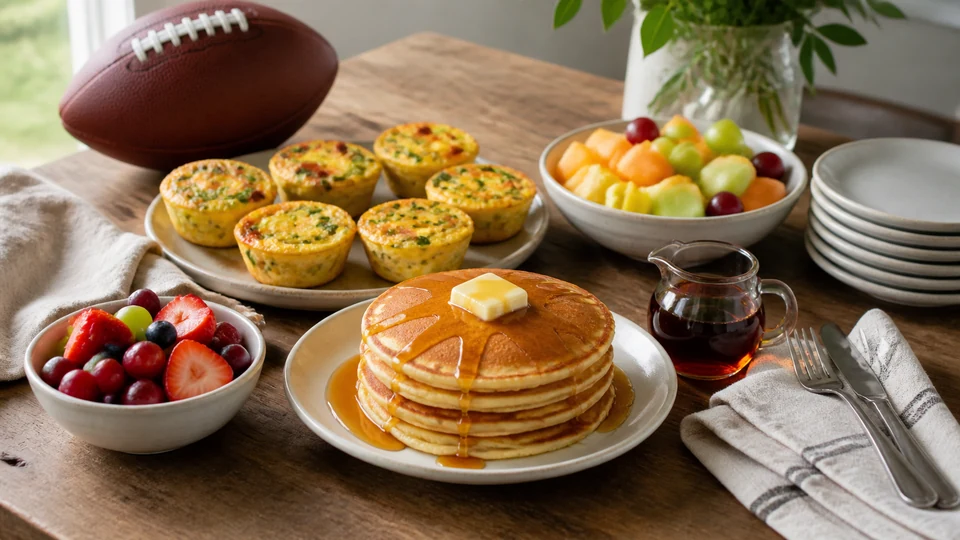
This is an at-home viewing plan, not a guide to stadium tailgating, team schedules, alcohol law, or invented recipes. The brunch hub covers the broader occasion, and Pancake World opens the full editorial collection.
| Guide sections |
|---|
| Plan around kickoff, not a vague brunch hour |
| Define the watch-party eating conditions |
| Choose one warm anchor |
| Breakfast sandwich station |
For broader context, continue with American Breakfast: Pancakes, Diner Plates and Brunch.
Plan around kickoff, not a vague brunch hour
Record kickoff in the local time where the food will be served and verify it close to the event. Then decide whether guests arrive before the game, at kickoff, or throughout the first period. This determines whether brunch opens as a full table or as small food waves.
Work backward from the first eating moment. Put the final hot-food check immediately before service, then any recipe-directed rest, cooking, preheating, assembly, and advance preparation. Keep a buffer for greeting guests and setting the screen; do not turn that buffer into uncontrolled waiting for perishable food.
Choose one moment when the host stops active cooking. A menu that promises griddle pancakes, fried eggs, waffles, and hot sandwiches through the game leaves the host facing the stove instead of the screen.
Define the watch-party eating conditions
Count seats with tables, sofa places without tables, and standing space. Note whether people will carry plates through a doorway or sit near electronics. Runny eggs, tall pancake stacks, loose sauces, and bowls filled to the rim may be awkward even when they suit a dining table.
Choose food that can be held with one hand or eaten from a stable small plate. Use firm sandwiches, cut casserole portions, wraps, wedges, cups, or bowls with enough rim. Keep knives away from sofa service when food can be portioned in advance.
Protect the screen area. Put food where guests can serve without walking between viewers and the television. Keep drinks on another surface so refills do not cross the hot-food queue.
Choose one warm anchor
The warm anchor should carry the meal and finish before attention moves to the game. A tested breakfast casserole, tray of firm sandwiches, potato-and-bean bake, savoury muffin-and-soup pairing, or other complete source recipe can work. Select according to equipment, serving style, dietary needs, and verified holding path.
Avoid two mains that need the same oven at different temperatures or require simultaneous finishing. A casserole plus made-to-order eggs is not hands-off. A sandwich tray that needs continuous toasting creates a queue.
Use a project-tested or otherwise complete recipe for quantities, timing, yield, and doneness. Menu ideas do not validate a formula. Article schema remains appropriate without a genuine project record.
Breakfast sandwich station
Prepare fillings under their tested methods and assemble only as far ahead as texture and safety permit. Wet sauces, tomatoes, or juicy vegetables can soften bread; keep them separate when that improves service. Wrap or label different fillings distinctly.
For a group, a tray of completed firm sandwiches is easier than a live station with several hot pans. If guests assemble their own, provide one warm component and cold controlled additions rather than raw egg or meat.
Cut large sandwiches into manageable halves or quarters when the source and structure allow it. Use picks only when they are visible and safely removed before eating.
Casserole and fruit table
A tested casserole can move cooking before kickoff. Choose one that fits the pan, oven, guest count, and service window. Verify the deepest centre; a browned top is insufficient. Rest and cut only as directed.
Add fruit as a cool contrast, not an elaborate second recipe. Wash and prepare it under appropriate guidance and keep cut fruit controlled until service. Release a modest bowl and replenish from refrigeration.
Keep sauces and fresh garnish separate. This preserves casserole texture and lets guests see labels before adding anything.
Pancake squares rather than live stacks
Pancakes can suit a watch party only when a tested batch method and service plan prevent continual griddle duty. One option is a complete tested sheet-pan or baked pancake recipe cut into hand-friendly portions. Do not convert a griddle recipe to a tray by guesswork.
If ordinary pancakes are used, finish the controlled batch before kickoff and use only a supported holding method. Avoid tall stacks and liquid toppings near upholstery. Offer a small amount of fruit, yogurt, spread, or syrup in stable containers with dedicated utensils.
Label the pancake recipe and toppings. A plain-looking square can contain milk, egg, nuts, or other allergens.
Breakfast taco assembly
Tacos provide modular choice but can become messy on a sofa. Use small tortillas and fillings that are not excessively wet. Prepare one tested hot filling and keep cold toppings in small labelled bowls.
Place tortillas first, hot filling second, dry toppings next, and sauces last. This creates a one-direction queue. Put plates beneath the assembly path to catch spills.
Do not offer several meats and eggs that require separate pans at kickoff. One substantial filling plus a clearly controlled alternative is enough.
Potato tray and eggs
A tested potato tray can be prepared in the oven, but individual fried eggs would return the host to the stove. Choose a recipe that bakes the egg component safely as part of the complete method or serve another protein-containing side that needs no last-minute cooking.
Confirm potato state, pan depth, and centre. Frozen, raw, par-cooked, and leftover potatoes cannot share instructions. Keep salsa or watery garnish outside the tray.
Cut or spoon portions before the match begins if that does not compromise the recipe’s supported holding. A large serving spoon near the screen can create spills and uneven portions.
Bean-chilli brunch
A bean-based chilli or stew can serve as a warm anchor when the complete tested recipe fits brunch and the cooker or pot has an approved holding plan. Keep bowls stable and provide spoons and napkins.
Offer bread, tortilla pieces, or a simple grain side only when it does not duplicate another starch. Keep cheese, plant alternatives, herbs, and sauces separately labelled.
This format is better at a table or tray-equipped seating area than on a crowded sofa. Let the room layout decide.
Waffle wedges with a cultured side
Live waffle service is slow because each appliance cycle needs attention. Use a tested make-ahead or batch method if available, or choose another anchor. Cut completed waffles into wedges only when their structure remains practical.
Keep a yogurt or plant-based cultured side cold and release small portions. Review labels; the phrase cultured side does not establish dairy-free or vegan suitability.
Avoid pouring syrup before service. It softens the waffle and increases drips. Provide a small stable dispenser or individual controlled portions away from electronics.
Bagel spread table
Bagels and prepared spreads require little hot work and can fit early kickoff. Pre-slice only when safe handling and freshness make sense. Use a guarded toaster away from guest traffic if toasting is offered, or omit live toasting.
Choose one substantial filling, one alternative, fruit or vegetables, and a limited set of condiments. Label cream cheese, plant spreads, smoked fish, meats, and compound toppings. Keep cold foods in the correct lane.
Do not place every reserve package on the table. Replenish small platters so food history remains clear.
Savoury muffin and soup
A tested savoury muffin can be handheld; a soup adds warmth but needs a stable seating arrangement. Choose this combination when guests have trays or a dining surface. Avoid cups filled so high that walking becomes risky.
The muffin recipe controls inclusions, timing, and allergens. The soup recipe and applicable guidance control cooking and holding. Do not assume warm mode can cook an underdone soup component.
Serve in small initial portions so guests can return during a break rather than carrying a large bowl through the room.
Cold wrap platter
Wraps can be assembled before guests arrive when the filling and storage plan support it. Use firm fillings, dry greens where appropriate, and sauces sparingly or separately. Cut into stable pieces and arrange with labels.
Keep the platter cold until its release time. Put out a small first wave and replenish from controlled storage. Do not mix fresh pieces into a platter with an uncertain service history.
Wraps are useful for a late-arrival pattern because reserves can remain separate. They are not automatically allergy-friendly; review tortilla, filling, spread, and shared tools.
Make one cold contrast count
Choose fruit, a vegetable dish, cold grain salad, yogurt cup, or another simple component that contrasts with the anchor. It should need little active work during the game. One useful cold side is better than four bowls that crowd the table.
Prepare and label it before hot cooking begins. Keep perishable items controlled and release small amounts. Use separate serving tools and avoid placing cold dishes beside a hot appliance where temperature control becomes unclear.
If the anchor is already bread-heavy, choose fruit or vegetables instead of another pastry. If the main is soft, choose a crisp component that survives the service window.
Add toppings without creating a second meal
Limit toppings to those that materially support the anchor. For sandwiches, one sauce and a crisp garnish may be enough. For tacos, choose a cold topping, a dry topping, and one sauce. For pancakes, one fruit option and one controlled sweet finish can suffice.
Read every package. Put labels where guests can see them before serving. Provide dedicated spoons or tongs. Replenish perishable toppings from cold storage rather than leaving deep bowls out for the entire game.
Do not hide required ingredients under a “toppings” heading. The base dish’s allergen label must be complete.
Design the room in zones
Create an arrival zone for coats and greetings, a drink zone away from food, a plate-and-main zone, a toppings exit, and a waste or dish return point. Keep the route away from the screen and cables.
Put plates and napkins first. Place the main where its hot vessel can be protected. Put sauces last so guests are not carrying open liquid past the entire table. Set cold reserves in the refrigerator, not under the buffet.
Leave a clear path to seating. A table can hold less food and work better when the line moves in one direction.
Schedule food in game-friendly waves
Release the first main portions before kickoff. Put out a smaller cold refresh during a planned break. Hold a simple sweet finish until later rather than crowding every item onto the table initially.
Use the game schedule only as a service cue; verify actual event timing. Do not leave perishable food waiting because play runs long. Food-safety windows control, not the scoreboard.
Name a helper for each wave. The host should not discover during play that nobody knows where reserves, utensils, or labels are stored.
Keep television and food equipment separate
Do not plug slow cookers, kettles, coffee makers, waffle irons, and televisions into an improvised overloaded arrangement. Follow appliance manuals and appropriate electrical planning. Keep cords away from walking routes and spills.
Put hot appliances on stable heat-safe surfaces. Manage steam and lids so they do not obscure the screen or drip on electronics. Do not allow guests to lean across an appliance for toppings.
If the room cannot support hot holding safely, serve a verified hot batch and remove the equipment rather than creating a permanent buffet station.
Label dietary choices without promises
Ask about needs before menu selection. Build one coherent alternative rather than trying to modify each item. Review ingredients, allergens, cooking fats, sauces, garnishes, and cross-contact statements.
Use exact labels such as “contains the ingredients shown on these retained packages” rather than vague health or lifestyle promises. Vegan, gluten-free, and allergen questions require separate evidence.
Keep separate utensils and placement where the plan calls for it, while recognizing the limits of a home kitchen. When a medically important question remains unresolved, offer a sealed or clearer option.
Serve drinks without blocking the screen
Put water, hot drinks, juice, or other choices in a separate zone. This prevents refills from crossing hot food. Use stable cups with a clear landing surface near seating.
Alcohol decisions depend on local law, host policy, guests, transport, and context; this page does not provide legal guidance. A football brunch does not require alcohol.
Keep milk, plant beverages, and juice under their label and storage directions. Release smaller containers when that improves control.
Plan a small sweet finish
One sweet item can mark the later part of the event. Choose something portioned and easy to carry, such as a tested muffin, bar, or small baked pancake item. Avoid a dessert that needs slicing, sauce, ice cream, and several utensils during play.
Hold it back until the main service has cleared. This prevents guests from balancing too many foods and frees table space. Label it completely.
A sweet finish is optional. If the anchor is already a sweet pancake or French-toast dish, fruit or coffee may be enough contrast.
Control hot and cold food
Map every perishable component from storage through preparation, service, and leftovers. Use tested recipes, appliance instructions, and FoodSafety.gov for applicable cooking, holding, cooling, and storage. Keep raw-meat tools outside the service zone.
Release modest portions. Keep reserves hot or cold under an approved method. Do not top up an old platter with fresh food of a different service age. Record when each wave begins.
At the end of its safe service plan, remove food even if the game continues. The match does not pause safety decisions.
Make cleanup part of halftime planning
Set out waste, recycling, and dish return points before guests arrive. Use enough reusable or disposable service ware for the plan without requiring washing during a critical cooking step.
Clear raw-preparation tools before the watch area opens. During a break, remove empty platters and foods whose service has ended. Keep a clean surface for the later wave.
After the event, portion safe leftovers, cool and label them, clean appliances according to manuals, and record what the menu produced. Do not leave the full buffet for an end-of-night decision.
Common football-brunch mistakes
Constant frying traps the host in the kitchen. Several hot mains compete for equipment. Tall or runny food fails on sofas. Drinks placed beside the main create crossed traffic. Every topping released at once causes clutter. Unlabelled sauces undermine dietary planning. Large platters remain out too long. Tailgate assumptions are imported into an indoor event with a different setting.
Correct these on paper. Remove one hot dish, choose firmer portions, separate zones, reduce topping count, release waves, and assign helpers. The best repair is usually subtraction.
A final watch-party checklist
Verify kickoff, arrival pattern, seats, eating surfaces, guest needs, recipes, equipment, electrical placement, hot and cold lanes, labels, helpers, waves, and leftovers. Prepare cold items first and keep them controlled. Finish the warm anchor before active viewing begins.
Walk the guest route with an empty plate. Confirm that no one crosses the screen, cord, hot lid, or drink refill. Put napkins where they are needed.
End with one fallback meal that can be served without new cooking. If the main is late or an ingredient becomes unsuitable, the event can continue without unsafe improvisation.
Build three sample service architectures
Early kickoff for six seated guests
Use one tested make-ahead casserole as the warm anchor, one prepared fruit or vegetable contrast, bread only if the casserole contains no bread or potato duplicate, and drinks on a sideboard. Finish the casserole check before guests settle. Cut portions after the directed rest and serve from the dining table, then move to the screen.
Keep a small cold reserve rather than setting out the full quantity. The host can clear breakfast dishes during an early break and offer coffee or a simple sweet item later. This plan prioritizes a real seated meal before viewing rather than sofa food throughout.
Late-morning game with mixed arrival times
Use firm sandwiches or wraps as the principal food, with one warm tray released shortly before kickoff and a cold reserve for late guests. Put a modest platter out first and label each filling. Keep fruit, vegetables, and cultured sides cold in small containers.
Late arrivals should receive food from controlled reserves, not pieces that have sat since the first guest. The host can refresh once at a planned break. This design tolerates staggered entry without continuous cooking.
Larger group with limited seating
Use a one-direction buffet: plates, a tested cuttable main, a substantial cold alternative, crisp side, toppings, then napkins. Choose foods that can be eaten standing or from a lap without a knife. Provide several small waste points.
Assign one helper to the buffet and another to drinks. Keep replenishment stock outside guest reach under its correct controls. Avoid soup, runny eggs, tall pancakes, and loose taco fillings when many people lack tables.
These architectures are planning examples, not recipes or fixed quantities. Adjust only through complete tested sources and the real room.
Use match breaks without letting them control safety
A scheduled interval is a convenient moment to refresh food, but its actual time can shift. Do not place cold sides out early because the break is expected soon. Keep them controlled until the service action begins.
Before kickoff, write the latest permitted refresh or removal decision from the relevant guidance, independent of the game. Set a private timer if that helps the responsible helper. The food leaves service when its plan ends even when play is exciting.
Use breaks for simple actions: replace one small platter, refill napkins, clear empty cups, and put out the planned sweet finish. Do not begin a multi-pan recipe that cannot be completed before viewing resumes.
If a game goes into extra time, rely on shelf-stable snacks or newly released controlled reserves. Do not stretch the original buffet indefinitely. A flexible event plan separates entertainment time from food time.
Prepare a failure-safe menu
Choose a fallback that requires no hurried raw-meat or egg cooking. Sealed labelled products, a prepared cold platter held under proper control, or a tested make-ahead alternative can protect the event if the hot anchor fails.
List triggers. Use the fallback when the oven or slow cooker does not operate, the centre misses the service window, the delivered ingredient label conflicts with a guest need, or the host becomes unavailable. Do not wait until guests are seated to decide whether an uncertain casserole can still be served.
Keep fallback food physically separate from the main preparation, especially when it exists for an allergen need. Give it dedicated utensils and a clear label. Do not consume it as an extra appetizer before knowing the main is ready.
After the event, record whether the fallback was used and whether it created unnecessary waste. The next menu can select a more dependable anchor or a smaller fallback while preserving safety.
Make the menu enjoyable without using team clichés
Football-shaped food, team colours, and novelty labels are optional decoration, not the organising principle. They can add cutting work, artificial colouring, or confusing ingredient changes without improving service. Use them only when they matter to the hosts and do not undermine labels.
A more durable sense of occasion comes from a clear kickoff countdown, comfortable viewing, a recognisable favourite main, and a planned moment for the sweet finish. Small cards can name dishes plainly and avoid sports metaphors that hide ingredients.
If team-colour fruit, sauces, or icing are used, verify the actual ingredients and keep them optional. Do not alter a tested batter or casserole merely to match a colour. The event should still work when every decorative extra is removed.
Audit the plan after the game
Record what was fully eaten, what returned safely to storage, what was discarded, and which service wave arrived at the right moment. Note whether guests used the toppings, whether drinks caused traffic, and whether people could eat comfortably from their seats.
Separate food performance from game excitement. A platter emptied quickly may have been the only accessible item, not necessarily the favourite. A casserole left over may have been released after guests were already full. Use observations to revise layout and timing before changing recipes.
Keep source recipes, labels, appliance notes, and helper roles with the record. Mark any untested variation. The next watch party can repeat the successful architecture without claiming a universal menu.
Frequently asked questions
What foods work best on a sofa?
Firm sandwiches, wraps, wedges, casserole portions, and cups are easier than runny eggs, tall stacks, or bowls filled to the rim.
Is this a tailgate menu?
No. Outdoor tailgating has different transport, water, weather, venue, and legal constraints. This page covers an indoor home watch party.
How many hot dishes should I make?
One substantial warm anchor is usually enough. Add cold contrast and a clearly controlled alternative rather than competing mains.
Can pancakes work?
Yes, when a tested batch method, supported holding or baked format, stable toppings, and service plan prevent continuous griddle work.
When should food come out?
Release the main shortly before kickoff, refresh in small waves under the food-control plan, and remove items when their supported window ends.
What can be prepared the night before?
Only the steps permitted by each tested recipe and storage guidance. Keep ingredient identity and cold control clear.
Explore related Pancakes World guidance on American Pancakes, Maple Syrup, and Maple Syrup Pancakes.
Sources and editorial references
- USDA FoodData Central —
https://fdc.nal.usda.gov/ - FoodSafety.gov food safety charts —
https://www.foodsafety.gov/food-safety-charts - FDA Food Labeling & Nutrition —
https://www.fda.gov/food/nutrition-food-labeling-and-critical-foods