Flourless vegan protein pancakes
At Pancakes World, flourless vegan protein pancakes need a tested formula that passes three independent checks: no flour as the recipe defines it, no animal-derived ingredients, and a reproducible protein amount based on exact products, measured quantities and verified yield. Choose either a whole-food structure built around ingredients such as oats, beans, tofu, nuts or seeds, or a formula developed for a named plant protein powder; do not add powder to an unrelated batter. Confirm the binder, liquid, leavener, portion and pan heat, then calculate protein for the complete batch and divide by the actual serving count. “Flourless” does not automatically mean gluten-free, and “protein” does not prove a high-protein claim or a performance benefit.
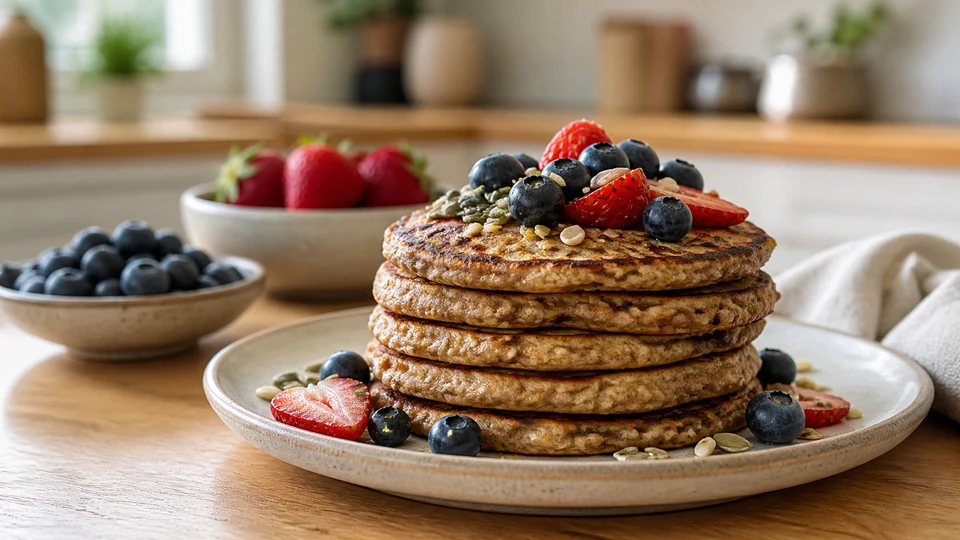
This is an evidence and technique guide, not a project-tested recipe. It supplies no invented quantity, yield, protein number or health outcome.
| Guide sections |
|---|
| Pass three gates before cooking |
| Choose a structural family |
| Why protein powder is not a flour substitute |
| Build a defensible protein calculation |
For broader context, continue with Healthy Pancake Guides.
Pass three gates before cooking
Gate 1: flourless
The source recipe must state what replaces conventional milled flour. Possible structures include blended oats, whole-food purées, nut or seed ingredients, tofu, or a specified protein product. “Flourless” is a recipe-description boundary, not a regulated promise that all grain, starch or powder is absent.
Read the ingredient list. A formula containing oat flour, almond flour or another ingredient explicitly called flour may not meet the reader’s intended meaning even if a publisher uses the term loosely. Decide the definition before selecting the source.
Gate 2: vegan
The entire formula must exclude egg, milk, whey, casein, honey and other animal-derived ingredients according to the eater’s practice. Protein powders, chocolate, flavor blends, cooking sprays and toppings require review. “Plant protein” on the front does not prove the whole packaged product is vegan.
Gate 3: substantiated protein
The recipe must identify every protein-contributing ingredient, its measured amount and the finished yield. The calculation must use the exact product label or authoritative food-composition entry on a consistent basis.
A pancake can contain protein without supporting a specific “high protein” claim. FDA treats nutrient-content language as regulated label territory. This editorial page therefore uses the neutral phrase “protein pancakes” as search intent and requires substantiation before any number or comparative claim.
Choose a structural family
Whole-food and powder-based pancakes solve the flourless problem differently. Pick a source developed in one family rather than combining them.
Blended-oat formulas
Some recipes blend rolled oats into the batter rather than using a packaged flour. Whether that satisfies “flourless” depends on the reader’s definition. It does not automatically satisfy gluten-free needs; oats and every other ingredient need suitable labels and cross-contact control.
The formula must specify oat type, blending, hydration and binder. Thick-cut, quick and instant oats cannot be swapped universally. Use the source product and method.
Bean-based formulas
Beans can contribute body, moisture and protein, but cooked bean type and drainage affect batter consistency. A tested formula should state whether beans are canned or home-cooked, whether they are rinsed, and how smooth the mixture becomes.
Do not add beans to an ordinary pancake batter by guess. A bean formula needs its own leavener, flavor balance, portion and cooking time.
Tofu-based formulas
Silken tofu can supply moisture, body and soy protein. Firm tofu behaves differently and may remain grainy. Choose a tested source that specifies firmness and blending.
Tofu introduces soy as a major allergen. A tofu pancake is not a suitable universal alternative to powder-based formulas.
Nut- or seed-based formulas
Nut butter, ground nuts, seed butter, flax or chia can help with body, fat and binding while contributing protein. They also create distinct allergen and texture profiles.
Almond, peanut, sesame and other ingredients must be named. A nut-based formula cannot be converted to nut-free by replacing the defining ingredient without a new tested recipe.
Protein-powder formulas
Powder absorbs liquid and affects structure differently by source, processing, flavor and added ingredients. Pea, soy, rice, blended plant proteins and dietary supplement products are not interchangeable.
Use the exact product type named by the source. If a recipe says only “one scoop,” verify the scoop weight and product; scoop volume varies and can settle. A flavored powder may add sweetener, gum, salt, color, allergen or other functional ingredients.
Why protein powder is not a flour substitute
Protein powder does not reproduce the starch, fiber and hydration behavior of flour. Adding it to a flourless whole-food batter can make the result dry, rubbery, bitter or fragile. Removing another dry ingredient to make room for powder changes the binder and liquid balance.
A reliable powder-based source should specify:
- exact powder name or functional type;
- weight rather than an undefined scoop where possible;
- binder and liquid amounts;
- whether oats, banana, tofu, nut butter or another base is included;
- leavener and acid;
- rest time;
- portion and pan heat;
- verified yield.
If the powder brand changes, compare its serving weight, ingredients and label. Do not promise the same texture or protein result.
Build a defensible protein calculation
No protein number belongs on the page until the formula and products are fixed.
Step 1: list every ingredient
Record product name, measured amount and whether the data comes from the package or USDA FoodData Central. Include oats, tofu, beans, nut or seed butter, plant beverage, powder and toppings only if the claim covers them.
Step 2: normalize the units
The label may give protein per scoop, cup, tablespoon, piece or grams. Convert the recipe amount to the same basis using product-specific information. Do not use the weight of one brand’s scoop for another.
Step 3: calculate the batch
For each ingredient, multiply protein per labeled serving by the number of labeled servings actually used. Sum the results. Preserve decimals until the end and follow the applicable rounding rule when publishing.
Step 4: verify finished yield
Count the actual pancakes or portions produced by the tested formula. Yield cannot come from intent. If batter is divided into fewer larger pancakes, the per-piece figure changes even though batch protein does not.
Step 5: define a serving
State whether a serving is one pancake, two pancakes or another measured portion. FDA explains that label nutrition is tied to serving information and that serving size is not a personal intake recommendation.
Step 6: divide consistently
Divide batch protein by verified servings, not by a desired marketing number. If toppings are optional, report them separately. If the formula changes, recalculate everything.
This page has no project test record, so it reports no numeric protein result.
Audit the finished batch before publishing a number
After cooking, compare intended and actual yield. Record how many complete pancakes were produced, how many were rejected, and whether batter remained in the blender or bowl. A burned calibration pancake and discarded residue still used ingredients; simply dividing the full theoretical batch by only the attractive pancakes can overstate what a typical serving represents.
Weighing the finished batch can provide an additional consistency check when the test protocol requires it, but weight loss during cooking does not create or remove the batch’s protein in a way that justifies casual recalculation. The published serving must be the serving actually defined and photographed by the tested recipe.
Reconcile four records: ingredient inputs, package or database protein values, actual finished yield, and serving definition. If one is missing, mark the number unverified. If the recipe is repeated with a new powder, plant beverage or binder, create a new calculation rather than revising only one line.
Optional toppings require their own treatment. Either exclude them clearly from the base number or specify the exact measured topping in the tested serving. A phrase such as “with nut butter” is not enough because spoon size and product protein vary.
Protein quality and personal needs
USDA MyPlate lists beans, peas, lentils, nuts, seeds and soy products as vegetarian protein options and recommends variety. It also notes that individual amounts depend on factors such as age, sex, height, weight and activity.
That guidance does not establish a universal protein target for pancakes. A recipe page should not prescribe grams for an individual or promise muscle gain, recovery, fullness or weight change. People with medical, renal, metabolic, pregnancy or sports-nutrition needs should use qualified individual guidance.
A pancake serving also does not establish the adequacy of an entire vegan diet. Consider the wider eating pattern without turning one nutrient into the only selection criterion.
Select the vegan binder
Egg can provide moisture, binding and structure. Illinois Extension notes that substitutions need to match function and can alter flavor and texture.
Flax or chia gel
Use only when the formula specifies seed form, liquid and hydration time. The gel may support a blended-oat or powder batter, but dry seeds added at the end are not equivalent.
Banana or fruit purée
These ingredients contribute moisture and flavor as well as binding. They change carbohydrate, sweetness and label calculations. A neutral powder formula may not accept them.
Silken tofu
Tofu can be both structural and protein-contributing. Use the source firmness and weight. It introduces soy and cannot be assumed equivalent to an egg-replacer powder.
Nut or seed butter
These can provide cohesion and fat while contributing protein. Product texture and ingredients vary. Name the allergen and measure the exact product.
Commercial replacer
Check vegan status, allergens, serving weight and directions. A commercial binder may add starch even when the recipe is called flourless; decide whether that fits the intended boundary.
Do not layer several binders without a tested source. Extra gel can make the center gummy and obscure the actual yield.
Leavener, liquid and rest
Use the exact leavener and acid system. Baking powder and baking soda are not interchangeable. Protein-rich batters can be heavy; adding more leavener than specified may create off-flavor or a rise that collapses.
Measure the plant beverage or water. Soy, almond, oat, coconut and blended beverages differ in solids, sweetness and allergens. The formula may depend on one type.
Rest for the stated time. Oats, seeds and protein powders continue absorbing liquid. A batter that looks loose immediately may thicken, while an excessive rest can make portioning difficult.
Use only a source-defined adjustment range. An unmeasured splash of liquid changes the finished pancake and published protein calculation per piece if yield changes.
Blend with control
Many flourless formulas use a blender. Add ingredients in the order stated so blades can circulate. Stop and scrape only with the appliance off. Do not put utensils into a moving jar.
Blend to the source texture. Overblending can warm the batter and change oat or seed structure; underblending can leave pieces that prevent consistent portions.
Transfer the batter and count what remains in the jar as part of the yield. If a substantial amount is discarded, a calculated batch total divided by the intended yield becomes inaccurate.
Clean the blender promptly, particularly when soy, peanuts, tree nuts or sesame are present. A shared blender can be an important allergen cross-contact point.
Cook a calibration pancake
Preheat the specified pan over the stated heat. Use the recipe’s cooking fat and measure portions consistently.
Cook one pancake first. Watch the source’s combined cues: edge set, surface pattern, underside color and release. Flourless protein batters may not display the same bubbles as wheat batter.
Use a thin spatula and support the center fully. Turn once. Pressing the pancake can compact it. Cook until the center is set according to the tested method.
If the calibration pancake fails, pause before cooking the rest. Recheck product, weights, binder, liquid, rest and pan heat. Do not add powder or oats randomly and retain the original protein calculation.
Troubleshooting by evidence
Batter will not pour
Confirm powder weight, seed hydration and rest duration. Check whether the scoop was heavier than the source product. Use only a documented liquid adjustment.
Pancake spreads without setting
Check binder preparation, ingredient drainage and pan temperature. A bean or tofu base may contain more water than the tested source.
Pancake breaks during turning
The portion may be too large, the first side may be under-set, or the binder may be wrong. Return to the source size and cues.
Center is gummy
Check excessive binder, undercooking, high pan heat and portion thickness. Dark edges do not prove a set center.
Texture is dry or rubbery
Check excess protein powder, too little liquid, substitution of powder type and overcooking. Do not hide the failure with topping and call the base tested.
Flavor is bitter or artificial
Check leavener measurement and the exact flavored powder. A different powder can change sweetener and flavoring substantially.
Protein per serving seems unusually high
Audit serving size, scoop weight, number of servings per container, recipe yield and whether the batch total was divided by pancakes instead of servings. Do not publish until the arithmetic and source records agree.
Flourless does not mean gluten-free
A flourless formula can include ordinary oats, malt-containing flavor, wheat-derived ingredients in a powder, or cross-contact from processing and equipment. FDA defines gluten-free as a voluntary claim with specific conditions.
When gluten control matters:
- choose products with suitable gluten-free labels;
- verify oats, powder, leavener, beverage and toppings;
- clean the blender, bowl, scoop, pan and spatula;
- keep wheat flour away from the preparation area;
- use a separate clean griddle zone;
- prevent crumbs from shared warming or serving equipment.
The absence of a bag labeled flour does not establish the result.
Allergen controls
Common formula families concentrate soy, peanut, tree nuts and sesame. Oats and other ingredients add separate concerns. FDA requires major allergens on packaged foods to be named in the ingredient list or Contains statement, including tree nut by type.
Read the whole label. A pea protein blend may include soy, milk-derived ingredients or a shared-facility advisory. Vegan status and allergy suitability are separate.
For a restricted serving, use a complete recipe built for the requirement, clean equipment, prepare it before allergen-heavy batches, cover it and use a dedicated spatula. Do not remove nut butter from a mixed batter and relabel the result.
Raw batter and storage
Do not taste uncooked batter. Even without conventional flour, the mixture can contain ingredients that are intended to be cooked, and cross-contact remains possible. FDA’s raw-flour warning reinforces the general rule: follow the complete cooking method and keep raw preparation separate from ready-to-eat food.
Use the source storage instruction first. Refrigerate cooked leftovers promptly in shallow containers. USDA FSIS advises refrigeration within two hours, or one hour above 90°F, generally using cooked leftovers within three to four days, and reheating to 165°F.
Freeze only when the formula provides a method. A high-protein batter may change texture after freezing; no quality result should be promised without evidence.
Do not store unused raw batter unless the tested recipe explicitly supports it.
Frequently asked questions
What does flourless mean in pancakes?
It means the selected recipe does not use an ingredient it classifies as flour. Check the actual ingredient list because oat flour, almond flour, starch or powder may be described inconsistently across sources.
Are flourless pancakes gluten-free?
Not automatically. Verify every product and shared surface against the required gluten-free standard.
What gives vegan pancakes protein?
Depending on the tested formula, tofu, beans, oats, nuts, seeds, nut or seed butter, plant beverage or a specified plant protein powder can contribute protein.
How much protein is in a serving?
That requires exact product data, measured amounts, verified finished yield and a defined serving. This page has no tested formula and therefore gives no number.
Can I add a scoop of protein powder to any pancake batter?
No. Powder changes liquid absorption and structure. Use a recipe developed for the specific product type.
Which plant protein powder is best?
There is no universal answer. Choose the exact type used in a tested formula and check ingredients, allergens, serving weight and flavor.
Can banana replace the egg?
Only in a formula developed with banana. It adds moisture, sweetness, flavor and carbohydrate and may not supply the required structure alone.
Are these pancakes suitable after exercise?
This page makes no sports-performance or recovery claim. Individual nutrition belongs with a qualified professional when needed.
Can I calculate protein from an online database?
Yes for appropriate generic ingredients, but packaged powders and products should use exact label data. Every value must match the measured recipe and verified serving.
Can I freeze the pancakes?
Only when the selected source provides a freezing and reheating method.
Final evidence checklist
- flourless definition matches the actual ingredient list;
- every ingredient is vegan;
- structural family selected before substitutions;
- powder type and weight match the source if used;
- binder, liquid, leavener and rest unchanged;
- verified yield and serving definition recorded;
- protein data comes from exact labels or authoritative entries;
- batch arithmetic is divided by actual servings;
- no unsubstantiated high-protein or performance claim;
- gluten-free and allergen status checked separately;
- blender and griddle cross-contact controlled;
- raw batter never tasted;
- storage follows source and federal guidance;
- no invented recipe, test, nutrition or Recipe schema.
Flourless vegan protein pancakes are an evidence problem before they are a cooking problem. Select one tested structural family, preserve its binder and product choices, verify yield, and calculate protein from exact inputs. If powder, portion or product changes, the texture and number must be revalidated rather than inherited.
Explore related Pancakes World guidance on American Pancakes, American Breakfast: Pancakes, Diner Plates and Brunch, and Maple Syrup.
Sources and editorial references
- USDA MyPlate, “Protein Foods”:
https://www.myplate.gov/web/web/eat-healthy/protein-foods - U.S. Food and Drug Administration, “Serving Size on the Nutrition Facts Label”:
https://www.fda.gov/food/nutrition-facts-label/serving-size-nutrition-facts-label - U.S. Food and Drug Administration, “Nutrient Content Claims”:
https://www.fda.gov/food/nutrition-food-labeling-and-critical-foods/nutrient-content-claims - Illinois Extension, “Egg substitutes when baking”:
https://extension.illinois.edu/blogs/live-well-eat-well/2023-02-10-egg-substitutes-when-baking - Utah State University Extension, “Plant-Powered: A Guide to Balanced Vegan and Vegetarian Eating”:
https://extension.usu.edu/nutrition/research/vegan-and-vegetarian-eating - U.S. Food and Drug Administration, “Food Allergies”:
https://www.fda.gov/food/nutrition-food-labeling-and-critical-foods/food-allergies - U.S. Food and Drug Administration, “Gluten-Free Labeling of Foods”:
https://www.fda.gov/food/nutrition-food-labeling-and-critical-foods/gluten-free-labeling-foods - U.S. Food and Drug Administration, “Flour Is a Raw Food and Other Safety Facts”:
https://www.fda.gov/consumers/consumer-updates/flour-raw-food-and-other-safety-facts - USDA Food Safety and Inspection Service, “Leftovers and Food Safety”:
https://www.fsis.usda.gov/food-safety/safe-food-handling-and-preparation/food-safety-basics/leftovers-and-food-safety