Fiber rich breakfast
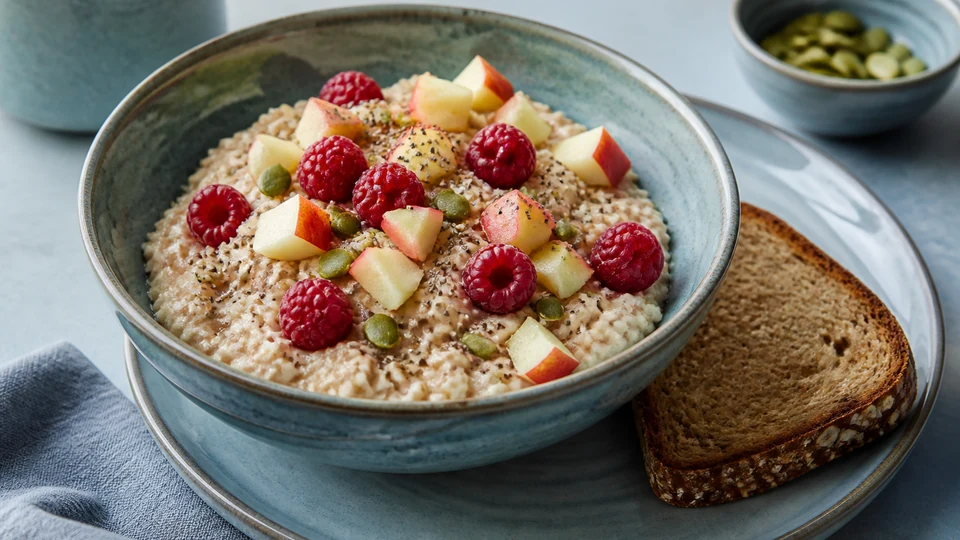
At Pancakes World, a fibre-rich breakfast is easiest to plan by combining foods from different plant groups: a wholegrain base such as oats or wholemeal toast, fruit or vegetables, and an optional pulse, nut, or seed component. Rotate the sources instead of relying on a large dose of one ingredient. Examples include oats with apple and berries, wholegrain toast with beans and tomato, or plain yoghurt with fruit and measured oats. When “fibre-rich” is used as a nutrition claim in Great Britain, it may carry the same consumer meaning as an authorised fibre claim, so verify composition rather than using the phrase decoratively.
For broader context, continue with American Breakfast: Pancakes, Diner Plates and Brunch.
Direct answer for a fibre-rich breakfast
Build the plate in layers: choose oats, wholegrain cereal, or wholemeal bread; add fruit or vegetables; then add beans, nuts, or seeds if suitable. The NHS recommends porridge or higher-fibre breakfast cereals and advises getting fibre from varied foods. Wholegrain starchy foods, fruit, vegetables, pulses, nuts, and seeds contribute different types and amounts.
This page focuses on ingredient selection and rotation. It does not certify a homemade serving as “high fibre.” In UK commercial communication, wording that implies a nutritional benefit may be controlled, and official guidance distinguishes “source of fibre” from “high fibre.” Use current labels or a complete recipe calculation when the phrase will appear on a menu, product, or advertisement.
What the reader needs to know
Variety is the main planning principle
The British Dietetic Association describes fibre through characteristics such as solubility, viscosity, and fermentability and identifies different sources: fruit and oats, wheat bran and nuts, pulses, vegetables, grains, and resistant starch foods. The practical lesson is not to build every breakfast from bran alone.
One day can use oats and berries; another can use wholemeal toast and beans; another can pair yoghurt with fruit and seeds. This variety also prevents a recipe page from implying that one branded cereal is necessary.
Compare foods on the same basis
| Comparison | Useful question | Misleading comparison |
|---|---|---|
| Two cereals | Fibre per 100 g and per realistic serving | Larger bowl versus smaller bowl |
| Two breads | Slice weight and fibre per 100 g | Fibre per slice without slice weight |
| Fresh and dried fruit | Actual serving and total meal | Equal handfuls assumed nutritionally equal |
| Nuts and seeds | Measured quantity and allergen fit | Unmeasured scattering |
| Homemade recipes | Full batch, yield, and portion | One high-fibre ingredient’s value |
Read both the per-100-gram and serving information where available. A product can look stronger per serving simply because its declared serving is larger. For a recipe, use prepared yield and account for every ingredient.
Formal claim language needs care
GOV.UK guidance says nutrition claims that state or imply beneficial nutritional properties must follow the applicable rules. Government material gives conditions for “source of fibre” and “high fibre.” It also warns that wording with the same consumer meaning can fall within those controls.
This is why “fibre-rich” should not be attached to an uncalculated plate in commercial copy. In personal meal planning, it can remain a search phrase, but the article should point readers to evidence rather than invent a threshold.
Practical options and examples
Oat and fruit bowl
Cook porridge or assemble overnight oats from a reliable recipe. Add apple, pear, berries, banana, or suitable canned fruit. NHS guidance specifically recommends porridge and gives fruit-topped examples. Keep dried fruit measured because its serving differs from fresh fruit.
Wholegrain toast plate
Choose bread by label, then add beans, hummus, tomato, mushrooms, or another vegetable preparation. Wholegrain wording and actual fibre are not always identical across products, so compare the nutrition panel.
Yoghurt, oat, and fruit assembly
Use plain yoghurt or an appropriate alternative, then add oats and fruit. This is useful when a cold breakfast is preferred. Keep crunchy elements separate for transport. Do not call the bowl vegan if dairy yoghurt is used.
Savoury pulse breakfast
Serve beans or lentils with vegetables and a wholegrain base. Check canned product salt, sauce, and serving information. Pulses can broaden the source mix, but the meal still needs an actual calculation for a formal claim.
Choosing the right approach
For a familiar breakfast, add fruit to oats. For a savory preference, combine wholegrain toast with pulses and vegetables. For portability, use a jar with yoghurt or alternative, oats, and fruit, with seeds packed separately. For a strict medical diet, use the person’s professional advice; fibre changes are not appropriate in the same way for everyone.
The breakfast hub handles wider menu decisions. Pancake World treats “fibre-rich” as a planning intent and does not certify unpublished meals.
Common mistakes
- Treating “wholegrain” and a fixed fibre number as synonyms.
- Comparing per-serving values from different serving sizes.
- Adding large amounts of bran suddenly.
- Assuming all gluten-free products are fibre-rich.
- Assuming nuts or seeds are appropriate for every allergy or age group.
- Ignoring water and personal tolerance when changing fibre intake.
- Copying an NHS recipe’s fibre figure after modifying it.
- Making disease-treatment or guaranteed digestive claims.
- Calling a dairy breakfast vegan because the grain and fruit are plant-based.
Step-by-step checklist
Map the sources
- Identify the main wholegrain or pulse component.
- Add one fruit or vegetable.
- Add a second source such as seeds, nuts, or another pulse only where suitable.
- Record packaged serving sizes.
- Keep allergens and gluten requirements separate from the fibre question.
Compare labels
- Read fibre per 100 grams.
- Read the declared serving and its weight.
- Compare similar product categories.
- Check ingredients, allergens, sugar, salt, and storage as separate decisions.
- Recheck when packaging changes.
Assemble and record
- Measure the base.
- Measure concentrated additions rather than pouring freely.
- Record actual recipe yield.
- Keep a repeatable combination note.
- Use formal claim wording only with current evidence and applicable compliance review.
Variations or substitutions when relevant
For dairy-free or vegan breakfast, choose a suitable plant product and verify its label. For gluten-free needs, use appropriately labelled oats, bread, cereal, and toppings and follow required preparation controls. These labels do not establish fibre content.
For nut-free meals, use permitted seeds or rely on oats, fruit, vegetables, pulses, and labelled wholegrain products. For a lower-cost option, use value oats, frozen fruit, canned pulses, and seasonal produce while comparing actual serving cost.
For someone increasing fibre, make changes gradually when appropriate and maintain normal fluid intake or follow professional advice. BDA notes that larger amounts of fermentable fibre can cause symptoms for some people with IBS. A general breakfast guide should not override an individual treatment plan.
The contextual pages gluten-free vegan pumpkin pancakes, gluten-free vegan sourdough pancakes, and English breakfast recipe require their own ingredient calculations. Related vegan GF protein pancakes and gluten vegan pancakes should not receive fibre claims from their dietary labels alone.
Explore related Pancakes World guidance on American Pancakes, Maple Syrup, and Maple Syrup Pancakes.
Sources and editorial references
Use a simple grid with rows for oats or cereal, bread or another grain, fruit, vegetables, pulses, and nuts or seeds. Mark the categories present each morning. The grid encourages variety without assigning a medical target or inventing nutrient totals.
At the end of a week, identify repeated reliance on one topping and choose another documented source. Keep portion and label evidence with any formal calculation. This makes the plan auditable while remaining flexible across cultures and budgets.
A pantry audit by category
Start with wholegrain and cereal products. List oats, muesli, breakfast cereal, wholemeal bread, rye bread, oatcakes, or another local staple. For each packaged item, record the serving weight and fibre per 100 grams. Discard assumptions based on colour: a brown-looking loaf is not numerical evidence.
Move to fruit and vegetables. Note which fresh items are ready to eat, which frozen items require cooking or thawing instructions, and which canned items are packed in juice, water, or syrup. Keep dried fruit in a separate line because its serving is concentrated and easy to pour without measuring.
Review pulses next. Canned beans, chickpeas, and lentils can support a savoury breakfast, but sauces and salt vary. A plain pulse and a sweet baked-bean product are not interchangeable. Drain or heat only as the label and recipe direct.
Finally, review nuts and seeds. Record allergy suitability, serving size, and storage. Ground flax, chia, pumpkin seed, sunflower seed, almond, and walnut are different foods; do not use “mixed seeds” as evidence when the actual mix is unknown.
The audit produces a set of verified choices rather than one prescribed menu. It also reveals gaps: a cupboard full of seeds but no wholegrain base may encourage an unbalanced use of toppings.
Match texture to the morning
For a warm soft breakfast, use porridge with stewed or fresh fruit. For crunch, add a measured topping immediately before eating. For a hand-held meal, choose wholemeal toast with a thick pulse spread and sliced vegetable. For a bowl that travels, separate wet fruit from dry cereal until service.
Texture matters because an unpleasant plan is unlikely to be repeated. It is reasonable to prefer smooth porridge over bran cereal or toast over overnight oats. Variety can occur across the week instead of forcing every fibre source into one bowl.
When chewing or swallowing is difficult, ordinary whole seeds, nuts, raw fruit, and coarse cereal may not be appropriate. Use professional advice for texture-modified diets rather than blending a general fibre-rich template without assessment.
Interpret ingredient changes honestly
Replacing apple with berries changes the recipe data. Replacing oats with a gluten-free cereal changes both composition and sourcing. Replacing dairy yoghurt with a plant alternative changes the label and may alter fibre, protein, sugar, and fortification. These can be sensible changes, but they require fresh evidence.
A small flavor addition such as cinnamon may not materially alter fibre, yet it still belongs on the ingredient list. A large addition such as granola, nut butter, or dried fruit changes the serving more substantially. Record it instead of treating toppings as decoration.
For public-facing copy, describe the food components accurately and reserve regulated claim language for an evaluated serving. For private planning, use the records to compare breakfasts consistently without turning the exercise into medical treatment.
- NHS: How to get more fibre into your diet —
https://www.nhs.uk/live-well/eat-well/digestive-health/how-to-get-more-fibre-into-your-diet/— official guidance on breakfast cereal, oats, varied fibre sources, and practical food choices. - NHS: Starchy foods and carbohydrates —
https://www.nhs.uk/live-well/eat-well/food-types/starchy-foods-and-carbohydrates/— wholegrain, potato, oats, fruit, and breakfast examples. - British Dietetic Association: Fibre —
https://www.bda.uk.com/resource/fibre.html— professional explanation of fibre characteristics, food sources, and tolerance considerations. - GOV.UK: Nutrition legislation information sheet —
https://www.gov.uk/government/publications/nutrition-legislation-information-sources/nutrition-legislation-information-sheet--2— official context for nutrition claims that state or imply beneficial properties. - GOV.UK: ACBS policy on nutrition claims —
https://www.gov.uk/government/consultations/oral-nutritional-supplements-acbs-policy/acbs-policy-on-oral-nutritional-supplements— official statement of source-of-fibre and high-fibre conditions and meaning-equivalent wording.
Evidence checked 16 August 2026. Labels and UK claim guidance can change; verify current sources before using commercial nutrition wording.