Fall breakfast ideas
At Pancakes World, build a fall breakfast around one cool-weather cue rather than combining every seasonal flavour at once. Choose apple, pear, squash, oats, warm spice or a hot baked format as the centre; then add one contrasting texture and a simple drink or side. Weekdays suit reheated oats, toast with cooked fruit or a planned egg-and-squash hash, while weekends allow pancakes, a fruit bake or a breakfast casserole. Use complete recipes for quantities and timing, and treat “fall” as an editorial mood—not a nutrition, harvest or historical claim.
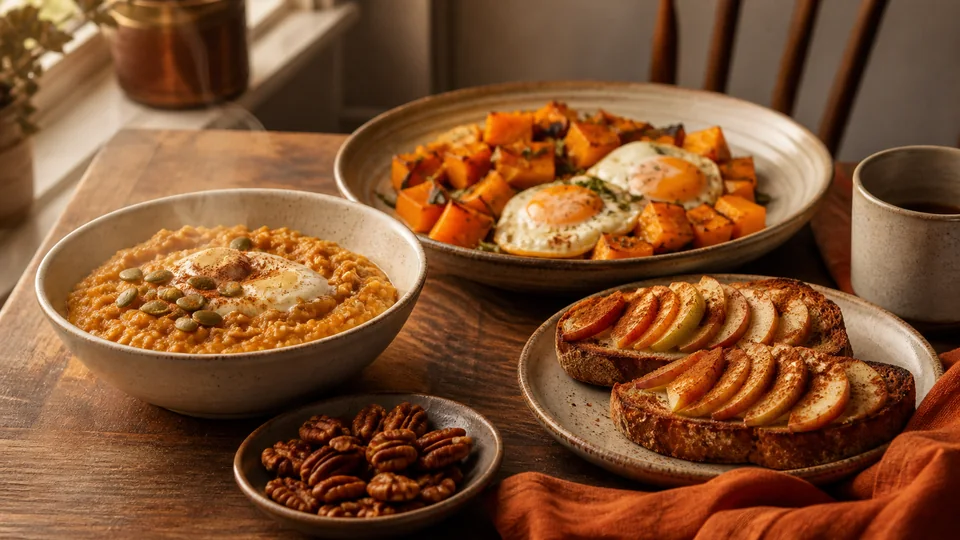
The Breakfast hub has more morning collections. Pancake World is the main library.
| Guide sections |
|---|
| Start with a sensory cue |
| Apple directions |
| Pear directions |
| Squash as a savory centre |
For broader context, continue with American Breakfast: Pancakes, Diner Plates and Brunch.
Start with a sensory cue
Fall breakfast can mean warmth from the oven, fruit cooked until tender, toasted grain, crisp edges, steam from a bowl or the aroma of cinnamon and ginger. Pick one cue before selecting the dish. A clear centre keeps the meal from becoming a crowded mix of pumpkin, apple, maple, nuts and several spice blends.
Seasonal availability varies by place and year. This page does not claim that a named ingredient is locally harvested at a particular time. Shop according to actual produce condition, labels and local information. Frozen and packaged forms can also create a cool-weather breakfast when their directions fit the plan.
Decide how the meal will be served. A bowl protects warmth on a rushed morning; toast preserves contrast; a tray bake can feed several people; pancakes create a last-minute stove schedule. The format is often more important than adding another seasonal ingredient.
Apple directions
Warm apple oats
Cook oats from a complete formula and prepare apple in the form it specifies. Small pieces may soften during cooking, while larger slices can remain distinct. Add spice deliberately and reserve a crisp topping until service.
If apples are cooked in advance, cool and refrigerate them promptly. Reheat the planned portion rather than warming the whole container repeatedly.
Apple toast
Cook sliced or chopped apple until it reaches the texture required by the method. Place it on toast with ricotta, yoghurt, nut or seed butter, or another documented spread. Drain excessive cooking liquid so the bread does not collapse.
Apple pancake topping
Keep the pancake formula and apple topping as separate recipes. Prepare the topping first and hold it safely while pancakes cook. Spoon it onto each plate instead of adding an unmeasured amount to the batter.
Baked apple breakfast
A whole or halved baked apple can carry oats, nuts or another filling through a complete method. Select fruit of similar size for even cooking. The filling, pan and baking time belong together; do not invent quantities from a photograph.
Pear directions
Pears provide a softer, aromatic alternative to apples, but varieties and ripeness differ. A firm pear can be sliced for toast or baked; a ripe pear may suit oats or yoghurt with minimal cooking. Use condition rather than force every pear into the same method.
Pear and yoghurt bowl
Slice washed pear close to service and place it beside plain yoghurt. Add a toasted dry finish or spice. Keep yoghurt refrigerated and do not assemble far ahead if pear liquid would affect texture.
Skillet pear with toast
Cook pear slices in one layer according to a documented method. Toast bread while the fruit finishes, then add a restrained spread. This offers warmth without operating the oven.
Pear baked oatmeal
Use a formula designed for pear's moisture and the chosen oat form. Distribute fruit evenly, check the centre through the recipe's cues and cool leftovers in shallow portions.
Squash as a savory centre
Squash can enter breakfast as roasted cubes, a mash, a pancake ingredient or part of a hash. These forms are not interchangeable. A purée changes batter liquid; roasted pieces add bulk; shredded squash releases moisture.
Squash and potato hash
Cut components according to a complete recipe and add them by cooking time. Previously roasted squash can enter late so it warms without breaking down. Finish with herbs or a prepared sauce.
Squash toast
Spread a documented squash mash on toast and add cheese, seeds or herbs. Keep the topping thick and serve immediately. A sweet version can use spice and fruit; a savory one can use pepper and greens.
Squash and egg skillet
Prepare the squash fully to the state required before adding eggs. Egg dishes should reach 160°F according to FoodSafety.gov. Set plates and garnish before eggs begin.
Squash pancakes
Choose a pancake formula specifically developed for squash purée. Do not add purée to an unrelated batter: it changes moisture, weight and browning. Keep Recipe schema off this page because no project-owned test record exists.
Oats for a cool morning
Oats can become porridge, baked squares, overnight jars or individual cups. Select the form by service. Porridge is flexible for one or two people; a bake can serve a planned group; jars shift work to the previous evening but require refrigeration.
Use one seasonal flavour direction per batch: apple and cinnamon, pear and ginger, squash and spice, or savory mushroom and thyme. Put optional sweeteners and crisp toppings at the table. This preserves choice and texture.
For reheated oats, add enough liquid only as the selected method allows and heat evenly. Stir, check the centre and portion into a clean bowl. Do not leave a large pot at room temperature for grazing.
Warm-spice planning
Cinnamon, ginger, nutmeg, cloves, cardamom and allspice create different aromas. A prepared blend is convenient but must be read from its current label. Some blends contain sugar or other ingredients, and brand names do not guarantee one formula.
Begin with the recipe's amount. Spices cannot be removed after mixing, and several strong spices can obscure fruit. Toasting spices may be part of a credible method, but heating an empty pan of powder without guidance can scorch it quickly.
Spice makes a breakfast taste seasonal; it does not create a medical benefit. Avoid detox, immune-boosting or metabolism claims. Describe aroma and flavour that can be observed.
Weekday idea map
Monday: reheated baked oats
Prepare a documented bake on the prior day, refrigerate within two hours and reheat a portion to 165°F. Keep yoghurt or fruit separate until serving.
Tuesday: apple toast
Use cooked apple prepared and stored safely, toast bread and add one spread. This is a three-component morning with limited cleanup.
Wednesday: savory squash bowl
Reheat cooked grain and squash, add herbs and a labelled sauce. If both components are leftovers, confirm each date.
Thursday: pear yoghurt bowl
Wash and slice pear, spoon chilled yoghurt and add a dry finish. Assemble only what will be eaten.
Friday: egg and vegetable skillet
Use one prepared vegetable and a complete egg method. Keep toast or tortillas simple. Verify 160°F for an egg dish.
The sequence is a logistics example, not a prescribed meal plan. Replace foods according to preference, allergies and individual dietary guidance.
Weekend projects
Pancakes with a cooked-fruit pan
Cook the fruit topping before starting pancakes. Keep the griddle schedule focused and serve in waves. Use a tested pancake formula and do not claim this editorial pairing was tested as one recipe.
Fruit crumble breakfast
Choose a recipe whose fruit, topping, pan and yield are stated. Serve with a chilled accompaniment if desired. “Breakfast” does not change the recipe's nutrition profile.
Breakfast casserole
Build from a complete method that defines bread, potatoes or grain, vegetables, egg and any cheese or meat. Prepare raw components safely, refrigerate advance assembly only if directed and cook egg dishes to 160°F.
Dutch baby with pears
Use a documented batter and oven-safe pan. Prepare pears in the specified form. The dramatic rise is a serving feature; wait for the recipe's doneness cues rather than opening the oven repeatedly.
Braided or rolled breakfast bread
A yeasted bake requires proofing, filling and shaping instructions. Plan it for a morning with sufficient time. Perishable fillings change storage requirements.
Savory fall breakfasts
Fall flavour does not need to be sweet. Roasted root vegetables, mushrooms, squash, warm grains and herbs can form the centre of breakfast.
Mushroom and herb oats
Cook mushrooms until their released moisture is controlled, then place them over savory oats. Add thyme, parsley or pepper. One cheese may finish the bowl, but several garnishes are unnecessary.
Root-vegetable hash
Uniform pieces matter because roots cook at different rates. Use a recipe that sequences them. A very crowded skillet steams rather than browns, so respect batch size.
Squash and bean tortilla
Warm a modest filling of documented squash and beans, then place it in a tortilla with a fresh finish. Keep sauce separate for travel.
Toast with mushrooms and ricotta
Prepare the toast and spread before mushrooms finish. Drain the pan and assemble at once. This format relies on texture more than a seasonal claim.
Warm grain with roasted vegetables
Reheat both components to 165°F when using leftovers. Add an acidic or herbal finish after heating. Label the stored components independently.
Sweet fall breakfasts without unsupported labels
Sweetness can come from fruit, a measured sweetener or a prepared topping. Do not call a dish refined-sugar-free, low-sugar or diabetic-friendly unless the exact evidence supports that defined claim. A recipe using maple syrup or honey still contains an added ingredient that should be recorded.
Serve wet toppings on the side when possible. A diner can choose the amount, and pancakes or waffles retain texture. For a bake, keep glaze separate until the food is cool if the formula requires it.
Avoid “guilt-free” and “cheat day.” Name the actual dish: pear oatmeal, apple pancakes, squash bread or cinnamon toast.
Breakfast for a fall gathering
Choose one oven dish, one cold or room-temperature component and one simple bread or fruit side. A casserole with washed fruit and toast is easier to coordinate than several egg styles. Baked oatmeal with yoghurt and a savory tray offers contrast.
Write the service time and work backward. Identify oven occupancy, cooling or resting, reheating and garnish. Prepare labels and serving utensils before guests arrive.
Use smaller dishes for perishable toppings and replenish with clean replacements. Do not place every refrigerated item on the table at the beginning. Keep allergen information tied to actual recipes and packages.
A fall brunch board
A board can organise, but it should not turn perishable food into decoration left out indefinitely. Use sections for bread, one cheese or spread, washed fruit, a dry crisp component and a small seasonal finish. Put chilled items in smaller bowls that can be replaced.
Cut apples and pears close to service when possible. Use clean utensils and do not disguise deterioration with spice. Label nut, dairy or gluten-containing items and maintain separation appropriate to guests' needs.
Replenish rather than overfill. A compact board is easier to keep tidy and safe.
Using pumpkin carefully
Pumpkin purée in a can, home-prepared squash purée, pumpkin pie filling and fresh pumpkin are different products. Read the can and use the exact form specified. Pie filling may contain additional ingredients; plain purée does not become a complete batter by itself.
In pancakes, muffins or oats, purée contributes moisture and bulk. It cannot be added freely without changing the formula. Choose a recipe developed for it.
Store opened packaged purée according to directions in a clean covered container. Label the date and plan a second use within safe guidance rather than opening another can later.
Fruit selection and preparation
Choose fruit in a condition suited to the method. Firm apple slices hold shape; softer fruit may suit sauce. Pears can move from crisp to very soft, so buy for the planned day rather than assuming one state all week.
FDA advises washing produce under running water and not using soap, detergent or commercial produce wash. Use clean hands, boards and knives. Remove damaged areas as appropriate.
Keep cut fruit refrigerated until use. A bowl on the counter is not storage for a prepared breakfast component. For group service, put out a small quantity and replenish.
Frozen produce as a practical option
Frozen berries, squash or fruit slices can support fall flavours outside a narrow market window. Follow package handling and use the form specified by the recipe. Frozen fruit can release more liquid as it thaws, so it may not substitute for fresh fruit in every batter.
Portion quickly and return the package to the freezer. Do not allow repeated partial thawing. If cooking from frozen is directed, retain that method rather than thawing by habit.
Judge the ingredient by how it works in the selected breakfast, not by a claim that fresh or frozen is universally superior.
A one-hour preparation session
Select two components with defined destinations. Roast squash for a midweek bowl and hash. Cook apple topping for oats and toast. Mix a dry spice jar for one documented bake if its proportions are already established.
Wash sturdy produce, dry it and store appropriately. Leave delicate fruit whole if cutting early would reduce quality. Set oats, bread or tortillas where they can be found.
Cool cooked food promptly in shallow containers and label each with name, date and intended meal. Stop when the plan is complete; extra batch cooking can create waste.
A warm breakfast station
For a household serving at different times, keep components separately managed. Reheat individual oat or casserole portions to 165°F rather than holding a large pot warm without controlled equipment. Keep fruit, yoghurt and toppings refrigerated.
Post simple instructions: portion, reheat, check centre, add chilled finish. Use clean utensils for each component. Replace the lid and return supplies promptly.
This system is more reliable than leaving a buffet on the counter through the morning.
Food-safety boundaries
FoodSafety.gov lists 160°F for egg dishes and 165°F for leftovers and casseroles. Use a food thermometer at the centre or likely cool area. A browned top or steaming edge does not prove the middle temperature.
USDA FSIS advises refrigerating perishable leftovers within two hours, using shallow containers and using most refrigerated leftovers within three to four days. Reheat to 165°F.
Keep raw ingredients separate from ready-to-eat fruit and garnish. Clean the thermometer between foods. When history is unknown, do not taste food to decide whether it is safe.
Packing a fall breakfast
Oat cups, a compact sandwich, chilled yoghurt with fruit packed separately, or a reheatable grain bowl can travel. Match the container to the texture. Wet apple topping belongs in a sealed cup rather than on toast.
Perishable foods need cold holding during transport and refrigeration at the destination. A warm scarf or cool outdoor weather is not temperature control. Pack a utensil and reheating directions where needed.
For a hot thermos meal, use equipment and a filling procedure designed for that purpose, and follow authoritative hot-holding guidance beyond this article.
Presentation cues
Use an appropriately sized bowl, a visible fruit layer and one crisp finish. Warm colours can come naturally from squash, apple skin, toasted oats or spice, but colour does not prove nutritional value.
On a plate, leave the main item identifiable. A pancake under several sauces and garnishes loses the intended contrast. Serve optional syrup, yoghurt or fruit compote separately.
For a shared table, repeat one ingredient across dishes intentionally—apple in oats and as fresh slices, for example—rather than displaying every fall symbol at once.
Troubleshooting seasonal bakes
Fruit creates a wet centre
Check fruit form, cut, amount and whether it was drained or cooked as specified. Do not add extra flour without a supported adjustment.
Spice overwhelms the dish
Return to the documented amount and check whether a blend already contained several spices. Measure rather than shaking directly over the bowl.
Squash batter is dense
Verify that the recipe called for the exact purée form and that liquid and leavening were measured. Do not substitute pie filling or watery homemade purée without guidance.
Oats dry out on reheating
Use the formula's reheating method and permitted liquid adjustment. Cover only if directed and avoid overheating several portions when one is needed.
Hash cooks unevenly
Standardise piece size, sequence ingredients and avoid overcrowding. Previously cooked squash may need only warming while raw roots need longer.
Claims to leave out
Do not call a spice immune-boosting, a squash detoxifying or an oat bowl heart-healthy without the exact evidence and regulated context. Do not promise weight loss, energy or blood-sugar outcomes.
Do not invent a harvest date, regional tradition or historical origin. A fall editorial collection can be useful without claiming what a culture always eats.
Do not publish nutrition numbers from a generic ingredient search. Exact food form, amount, recipe yield and portion are necessary. USDA FoodData Central can support properly matched records, but this adaptable guide has no fixed calculation.
A four-format rotation
Choose one bowl, one toast, one skillet and one bake. Assign each a dominant ingredient and a preparation state. For example: apple oats needing cooked topping; pear toast needing fresh fruit; squash hash needing roasted cubes; fruit bake needing weekend oven time.
Buy shared ingredients where practical. Cinnamon may serve oats and fruit bake; one apple batch can top toast and pancakes. Avoid a separate specialist topping for each idea.
After the rotation, record which format fit the schedule and which component caused waste. Keep useful logistics and change only one weak point.
Frequently asked questions
What makes a breakfast feel like fall?
Warm service, cooked apples or pears, squash, oats, toasted textures and warm spices can create the editorial mood. No single ingredient is required.
Can fall breakfast be savory?
Yes. Mushroom oats, root hash, squash tortillas and warm grain bowls provide savory formats without relying on sweet spice.
Is pumpkin pie spice required?
No. Use the spice profile from the selected recipe. A single spice, herbs or no spice may suit the dish better.
Can I use frozen fruit?
Yes when the complete method supports its form and moisture. Follow package handling and do not assume fresh and frozen are interchangeable in batter.
How long can leftovers stay refrigerated?
USDA FSIS says most refrigerated leftovers are used within three to four days. Refrigerate within two hours, use shallow containers and reheat to 165°F.
Why is there no single recipe here?
The page is a broad seasonal idea collection. Article schema is used because no one project-tested record provides fixed ingredients, instructions, yield and timings.
Create a fall breakfast card
Write the format, dominant seasonal cue, complete recipe source, active-work start, serving time, storage containers and one finish. Add the actual produce form and package identities. For a group, include labels and serving utensils.
Keep the card with the shopping list. It turns a broad seasonal mood into a controlled breakfast without manufacturing a test claim. After service, note only observable changes for next time, such as cutting fruit smaller or packing topping separately.
Three menus with different kinds of warmth
Warm bowl menu
Make oats or another documented grain porridge the centre. Cook apple or pear separately if you want defined fruit pieces, then spoon it onto each bowl. Put one dry topping and a chilled accompaniment on the table. This menu holds its identity through temperature and texture without requiring every component to contain spice.
For staggered serving, refrigerate the cooked components promptly and reheat individual portions to the applicable target. Do not leave the communal pot on a switched-off burner for the entire morning. Keep topping spoons out of the hot food so the supply stays dry.
Oven-warm menu
Choose one bake—fruit oatmeal, egg casserole, breakfast bread or squash pancakes baked in a supported format—and give it the oven. Pair it with washed fruit and a cold drink or yoghurt. Avoid scheduling another dish that needs a conflicting oven temperature or repeated door opening.
Prepare the serving board, thermometer and cooling containers before the bake finishes. Egg casseroles require a 160°F centre; reheated casserole portions require 165°F. Move leftovers into shallow containers within two hours rather than storing the entire hot pan.
Skillet-warm menu
Use a root-vegetable hash, mushroom toast topping or squash-and-bean filling as the main hot job. Warm bread or tortillas after the skillet component is ready if the pan can be safely cleared. Add fresh herbs, washed fruit or a labelled sauce at the table.
This menu suits a small group because service can begin immediately. For a larger table, work in documented batches and keep completed food under appropriate temperature control. Do not crowd the skillet simply to finish everyone at once.
Adapting the mood to warmer climates
A fall editorial theme does not require cold weather. Use pear with chilled yoghurt, apple in overnight oats, squash spread on toast, or warm spice in a room-temperature baked item. The season can appear through flavour and colour while the service temperature fits local conditions.
Avoid claims that the weather creates a specific dietary need. Hydration, medical requirements and individual appetite are outside this article's evidence. Select breakfast based on actual environment and the people eating.
Where local produce differs, substitute through a complete recipe rather than calling an unavailable ingredient essential. A regional market may offer different fruit or squash forms; describe what is actually used and do not assign an invented harvest tradition.
End-of-season freezer and pantry review
List opened oats, spices, frozen fruit and packaged purée before buying more. Check labels, storage directions and dates. Plan one breakfast for each usable remainder and avoid combining them merely to empty packages.
Frozen cooked components need a documented thawing and reheating method. Label identity, preparation date and intended use. A container marked only “fall mix” is not enough to assess ingredients or allergens later.
Keep useful spices for ordinary cooking rather than forcing them into every breakfast. The end of an editorial season does not make shelf-stable food obsolete. A careful inventory protects both accuracy and waste reduction.
Explore related Pancakes World guidance on American Pancakes, Maple Syrup, and Maple Syrup Pancakes.
Sources and editorial references
- U.S. Food and Drug Administration —
https://www.fda.gov/food/buy-store-serve-safe-food/selecting-and-serving-produce-safely - USDA Food Safety and Inspection Service —
https://www.fsis.usda.gov/food-safety/safe-food-handling-and-preparation/food-safety-basics/leftovers-and-food-safety - FoodSafety.gov —
https://www.foodsafety.gov/food-safety-charts/safe-minimum-internal-temperatures - USDA FoodData Central —
https://fdc.nal.usda.gov/