English breakfast recipe
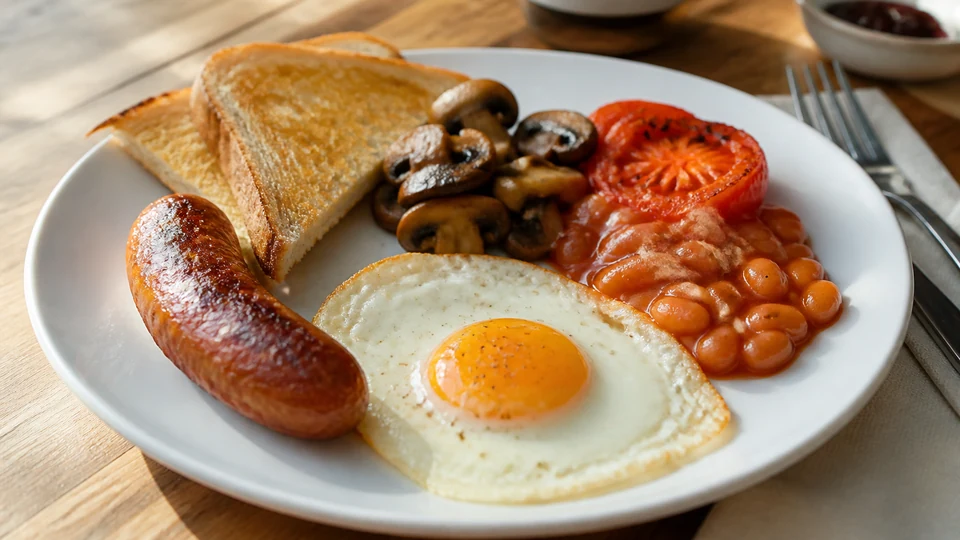
At Pancakes World, an English breakfast is a coordinated plate rather than one fixed formula. A practical version combines eggs, sausages, bacon, tomatoes, mushrooms, baked beans, and toast, with each component cooked by the method that suits it. Start the slow items first, keep the beans at a gentle simmer, cook mushrooms and tomatoes without crowding, and prepare the eggs last. You may omit or replace components instead of forcing every possible item onto the plate. The key decision is timing: write a short sequence before heating the pans so the hot food reaches the table together and safely cooked.
| Guide sections |
|---|
| Direct answer for english breakfast recipe |
| What the reader needs to know |
| Practical options and examples |
| Step-by-step checklist |
For broader context, continue with American Breakfast: Pancakes, Diner Plates and Brunch.
Direct answer for english breakfast recipe
For two plates, choose two eggs, four small sausages, four rashers of bacon, two tomato halves, about 200 grams of mushrooms, one small tin of baked beans, and two to four slices of bread. These are planning quantities, not a declaration of the only authentic combination. Roast or pan-cook the sausages until thoroughly cooked, cook the bacon to the texture you prefer, sauté the mushrooms, brown the tomato cut-side down, warm the beans gently, toast the bread, and fry or scramble the eggs at the end. Serve immediately on warm plates.
This is a home-cooking framework. Ingredient size, appliance performance, and package directions vary, so time alone cannot prove doneness. The UK Food Standards Agency advises that food should be cooked thoroughly and reheated food should be steaming hot throughout. Follow the product directions and applicable food-safety guidance, especially for sausages and leftovers.
The breakfast hub is the parent guide for composing other morning meals. Here the specific task is to make the familiar multi-component English plate without turning it into a cold queue of individually finished foods.
What the reader needs to know
The plate has flexible boundaries
Historic UK describes a traditional English breakfast with eggs, bacon, sausages, fried bread, baked beans, mushrooms, and grilled tomatoes, while also noting regional additions. That provides cultural context, not a legal specification. Contemporary home versions commonly vary by appetite, household, diet, and what is available. Black pudding, hash browns, fried bread, toast, or neither may appear. A smaller plate with well-cooked components is more useful than an overloaded one built to win an authenticity argument.
Think in roles. Eggs supply a last-minute focal component. Sausage and bacon are slower savoury elements. Mushrooms and tomato provide pan-cooked vegetables. Beans supply a hot, sauced component. Toast or fried bread provides crunch and a surface for the egg. Once the roles are visible, substitutions become easier and the schedule becomes manageable.
Timing is the real recipe
Sausages generally require the longest active cooking and deserve the first slot. Beans tolerate gentle holding better than eggs. Mushrooms lose moisture and need room to brown; tomatoes need comparatively little handling. Toast waits poorly because steam softens it. Eggs are the least forgiving and should finish close to service.
Use an oven as a controlled holding space only when appropriate for the food and cookware. A low oven can keep cooked sausages or bacon warm briefly, but it can continue cooking them. Do not park fried eggs there and expect unchanged yolks. Warm plates separately, keep raw and cooked utensils apart, and clean surfaces that contacted raw meat.
One pan or two
Two pans reduce congestion: one handles meat, and the other handles vegetables and eggs after cleaning or with an appropriate sequence. One pan is possible, but it requires wiping or washing between incompatible stages and accepting that rendered fat affects the next component. A sheet-pan approach can simplify sausage, bacon, tomato, and mushroom cooking, while beans and eggs remain on the hob.
The right choice depends on equipment and attention. More pans can shorten the timetable but create more simultaneous decisions. A calm two-pan workflow is usually easier than six burners active at once.
Practical options and examples
A balanced two-person workflow
- Heat the oven if using it for sausages, bacon, or brief holding. Set out two warmable plates.
- Prepare mushrooms and halve tomatoes. Open the beans and place them in a small saucepan; do not heat the closed tin.
- Start sausages using the package directions and the cooking method you selected.
- Add bacon when the remaining sausage time makes the finishes align.
- Warm beans over gentle heat, stirring periodically so the sauce does not catch.
- Sauté mushrooms in a wide layer. Salt near the end if early salting draws more liquid than you want.
- Cook tomato halves cut-side down until browned and warmed through without collapsing.
- Start the toast and cook the eggs only when everything else is nearly ready.
- Check the meat is thoroughly cooked according to authoritative and package guidance.
- Plate promptly, keeping wet beans away from toast if crispness matters.
This schedule is deliberately based on dependencies rather than minute claims. Thick sausages and small chipolatas do not share one universal cooking time. An induction hob and a low-output electric ring do not warm beans at the same rate. Observe the food and use the package instructions.
Choosing the right approach
Choose a classic meat plate when those ingredients suit the diners and you can manage the raw-meat workflow. Choose a vegetarian plate by replacing bacon and sausage with ingredients explicitly sold or prepared as vegetarian and checking cooking instructions. Choose a vegan plate by also replacing eggs and checking bread, spread, beans, and meat alternatives. “Plant-based” wording on one component does not certify the entire plate.
For a lighter workload, select four components: eggs, mushrooms, tomato, and toast, adding beans if desired. For a large group, batch-cook oven-suitable items and offer eggs in one style rather than accepting individual orders. For a gluten-free plate, verify sausages, beans, sauces, bread, and shared preparation surfaces individually; do not infer the status from the absence of toast.
The protein-focused vegan GF protein pancakes route and the wording guide for gluten vegan pancakes solve different dietary searches. They are not substitutions to drop into a frying pan without their own formulas. Likewise, Japanese pancake is a separate dish, not a component of a full English.
Common mistakes
Starting everything together. The egg finishes while the sausage is still cooking. Sequence by longest cook and shortest holding tolerance.
Crowding mushrooms. A tight pile releases steam and struggles to brown. Use a wider surface or cook in batches.
Boiling beans hard. Aggressive heat can catch the sauce and split softened beans. Use a gentle heat and stir.
Using one utensil for raw and cooked meat. Separate or thoroughly clean utensils and surfaces to avoid transferring contamination.
Trusting colour alone. Browning is not a complete safety check for sausage. Follow reliable doneness guidance and product instructions.
Holding toast under a lid. Steam removes the crisp texture. Toast last and keep it uncovered.
Overloading the plate. Too many components create timing failures and waste. Select a coherent set for the people eating.
Calling every variation inauthentic. Regional and household versions vary. Describe what is on the plate instead of making unsupported universal claims.
Step-by-step checklist
Plan
- Confirm dietary requirements and select the components.
- Read sausage, bacon, bean, bread, and alternative-product labels.
- Decide oven, one-pan, or two-pan workflow.
- Write the order: sausage, bacon, beans, vegetables, toast, eggs.
- Set out separate utensils for raw and cooked foods.
Cook
- Start the slowest component first.
- Keep beans at a controlled gentle heat.
- Give mushrooms room to release moisture.
- Cook tomatoes briefly enough to retain their shape.
- Follow product directions and cook meat thoroughly.
- Prepare eggs and toast at the final stage.
- Warm plates without making them dangerously hot to handle.
Serve and store
- Plate immediately and keep crisp items away from wet items where practical.
- Do not leave perishable food standing for extended service.
- Cool leftovers promptly and refrigerate them according to food-safety guidance.
- When reheating appropriate leftovers, make them steaming hot throughout as the FSA advises.
- Reheat only what you plan to eat and assess whether delicate eggs are better cooked fresh.
Variations or substitutions when relevant
Vegetarian or vegan
Use clearly labeled meat alternatives and cook them according to their own directions. A vegan plate can combine tofu scramble, mushrooms, tomatoes, beans, and suitable toast. Check that spreads, sauces, and bread meet the requirement. Use a separate pan or a thoroughly cleaned surface if cross-contact matters to the diner.
Gluten-free
Replace bread with a suitable gluten-free product and verify processed meats, meat alternatives, beans, and sauces. Shared toasters are a common contact point. The gluten-free status of a tomato does not make a plate gluten-free when crumbs or an unsuitable sausage remain elsewhere.
Smaller or larger meals
For a modest breakfast, choose one egg, one savoury main, mushrooms or tomato, and toast. For a crowd, scale components by diner rather than multiplying one pan's load indefinitely. Batch cooking preserves surface space. Put beans in a serving dish and toast in a loose rack instead of sealing either under steam.
Component swaps
Hash browns can replace fried bread as the crisp starch, subject to label and cooking checks. Grilled tomato can replace pan-fried tomato. Poached or scrambled eggs can replace fried eggs. Each swap changes the schedule: scrambled eggs demand last-minute attention, while oven hash browns may need to start alongside sausages.
Serving without a timing collapse
Put the plates close to the cooking area before the eggs start. Divide beans first if they are stable and hot, then add meat and vegetables, leaving a clear space for the egg. Bring toast directly from the toaster rather than preparing it during the sausage stage. If one component falls behind, hold the robust items briefly and delay the eggs; do not sacrifice meat doneness to preserve a planned serving minute.
For more than two diners, write each person's choices before cooking. This prevents a late request for a different egg or an omitted item from disrupting the whole batch. Use a sheet pan or oven-safe tray for components that tolerate batch cooking, but keep their cooking requirements separate. Do not place cooked food back onto a tray that held raw meat unless the tray has been thoroughly cleaned.
Tea, coffee, juice, and condiments can be set out before hot cooking begins. Keep cold beverages away from the raw-food work area. Offer sauces at the table so the cook does not have to customize every plate, and state which plate contains dietary substitutions. The service system is part of the recipe because it protects the short window between a properly cooked egg and a cold breakfast.
Chipotle breakfast offers a different fast-casual decision context, and accidentally vegan pancake mix explains a label-reading question. Neither defines the English breakfast. The useful principle across all three is explicit composition: name the components, verify relevant labels, and match the preparation to the actual dish.
Pancake World presents this recipe as a flexible cooking plan grounded in recognizable components and safe sequencing, not as a claim that one household plate is the only authentic English breakfast.
Explore related Pancakes World guidance on American Pancakes, Maple Syrup, and Maple Syrup Pancakes.
Sources and editorial references
- Cooking Your Food —
https://www.food.gov.uk/safety-hygiene/cooking-your-food - Traditional English Breakfast —
https://www.historic-uk.com/CultureUK/Traditional-English-Breakfast/ - How to Fry an Egg —
https://www.bbcgoodfood.com/howto/guide/how-fry-egg - How to Cook Mushrooms —
https://www.bbcgoodfood.com/howto/guide/how-cook-mushrooms