Elvis breakfast
At Pancakes World, an Elvis breakfast is best presented as a themed meal inspired by foods publicly associated with Elvis Presley, not as a definitive reconstruction of what he ate on a particular morning. The clearest theme uses the widely recognized peanut-butter-and-banana combination, then adds Southern-style breakfast cues such as biscuits, eggs or pancakes only when they fit the gathering. Label every item as “inspired” unless a reliable source supports a narrower historical statement.
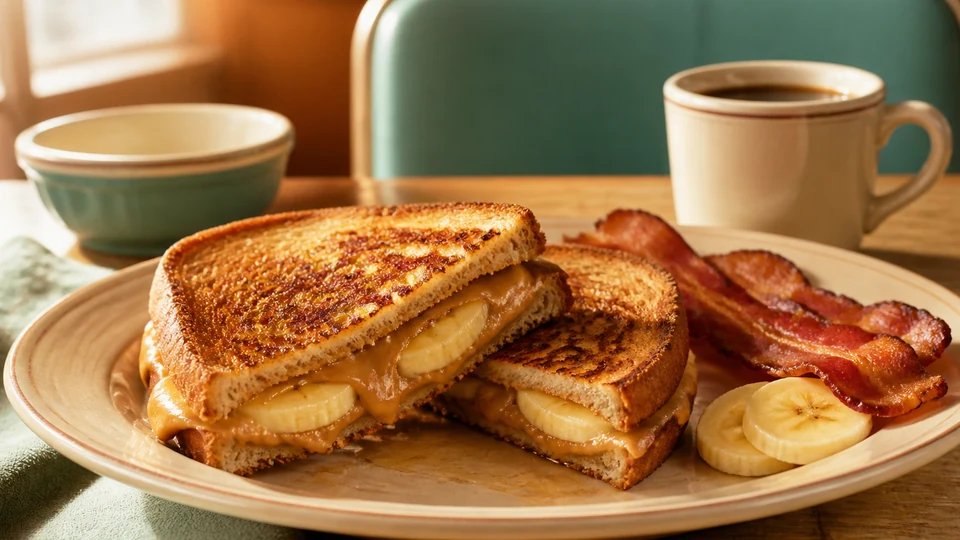
This page is a planning guide, not a tested Elvis recipe or a nutritional recommendation. It avoids claiming private habits from recycled anecdotes. Pancake World provides the main editorial collection for other breakfast ideas.
| Guide sections |
|---|
| Separate the documented association from the party theme |
| Put the peanut butter and banana combination at the centre |
| Choose one format rather than repeating the flavour everywhere |
| Build a small diner-style menu |
For broader context, continue with American Breakfast: Pancakes, Diner Plates and Brunch.
Separate the documented association from the party theme
Elvis's name has been linked to several dishes in popular culture. The peanut butter and banana sandwich is the most recognizable starting point, and Graceland has published food content using that association. Even so, a source describing a favourite combination does not establish a fixed daily breakfast, exact formula or universal serving.
Use three labels on the planning sheet. “Source-supported association” covers a claim that can be tied to a suitable institutional or first-party record. “Elvis-inspired” covers a new menu item using recognizable flavours or visual references. “General Southern breakfast” covers foods chosen for hospitality or menu balance rather than a direct biographical claim.
This distinction improves the guest experience because the menu can be playful without pretending to be a museum exhibit. A banana-topped pancake can be called Elvis-inspired. Plain scrambled eggs need no celebrity claim. A host can mention the theme in one sentence and let the food remain the focus.
Put the peanut butter and banana combination at the centre
The simplest themed plate is toast or a sandwich with peanut butter and sliced banana. Choose a bread that can support the filling, spread the peanut butter to the edges, and use banana slices in one layer so the sandwich does not slide apart. Toasting or grilling changes texture, but a precise cooking method should come from a complete tested recipe rather than an invented instruction here.
For a table, offer small halves or quarters. This lets guests sample the defining flavour without committing to a large, rich sandwich. Serve soon after cutting because banana darkens and bread softens. If advance work is necessary, set out the bread and utensils, then slice the fruit and assemble close to serving.
Allergy management is essential. Peanut is a major allergen, and a seed or other spread is not an automatic safe substitute for every guest. If a different spread is offered, identify it clearly and use separate utensils and preparation surfaces appropriate to the household's needs. Do not retain the Elvis label in a way that obscures what the food contains.
Choose one format rather than repeating the flavour everywhere
The peanut-butter-and-banana idea can appear as toast, small sandwiches, a pancake topping or a bowl garnish. Pick one. Repeating the same dense, sweet combination in every course makes the menu tiring and reduces choice for guests who cannot eat it.
Toast is best for a casual, quick breakfast. Small grilled sandwiches provide a stronger diner-style centrepiece but require batches and immediate service. Pancakes make the theme feel celebratory, yet this package has no route-specific test record for a batter or topping formula, so it does not claim a recipe. A cold bowl with banana and a compatible spread is convenient, but it should be described by its ingredients rather than as an archival dish.
Once the centrepiece is chosen, use neutral sides. Fresh fruit, plain eggs, potatoes or a simple bread basket can give guests alternatives without inventing more celebrity lore. Coffee, tea and water should remain straightforward beverage choices.
Build a small diner-style menu
A compact menu might contain Elvis-inspired sandwich quarters, a pan of scrambled eggs, a fresh-fruit plate and hot drinks. That is enough for a recognizable theme. The eggs bring a savoury option; fruit offers a lighter contrast; drinks help the table function. Nothing requires a six-dish buffet.
For a pancake-centred version, serve an established household pancake recipe and place banana, peanut butter and another clearly identified topping separately. Guests can build the themed combination or choose a plain plate. Calculate allergens and ingredients from the actual batter and toppings. Do not call the pancakes a favourite of Elvis without a source that supports that exact statement.
A brunch version can add biscuits or potatoes because they suit the meal format, but label them as brunch items. Historical accuracy does not improve by attaching Elvis's name to every familiar Southern food. Restraint makes the one supported association more credible.
Give the table a 1950s diner mood without impersonation
Use colour, typography and service pieces rather than costumes or caricature. A black-and-white menu card, red accents, small checked liners and simple glassware can suggest a mid-century diner. Record-shaped place mats or a short playlist can reinforce the music theme, subject to the host's rights and venue rules.
Avoid presenting replica signatures, fabricated quotations or invented menu dates. Do not describe a room as Graceland, use protected branding as if the event were official, or imply endorsement. “Elvis-inspired breakfast” is a descriptive theme; it is not a licensed collaboration.
Name dishes plainly: banana and peanut-butter toast, scrambled eggs, breakfast potatoes and coffee. A subtitle can explain that the central combination is inspired by a food association widely linked with Elvis. Guests should be able to identify the food without decoding jokes.
Plan service around the hot item
Sandwiches and pancakes are best when their exterior texture is fresh. Choose only one item that must be cooked in repeated batches. Everything else should be cold, held safely or finished before guests arrive. If scrambled eggs are the hot item, keep the themed toast as an assemble-at-table station instead of also grilling sandwiches.
Set the table first. Portion spreads into labelled bowls, provide a clean utensil for each, arrange whole or cut fruit as close to service as practical, and keep bread covered until needed. Bring perishable items out according to food-safety guidance rather than leaving the full display at room temperature throughout a long event.
For eight or more guests, smaller centrepiece portions reduce the queue. One person can replenish bread and banana while another monitors the hot pan. Keep an allergen-aware alternative physically separated and visibly labelled. A decorative card does not replace safe preparation practices.
Check colourful food stories before printing them
Celebrity food stories often grow more specific as they are repeated. A later article may add a time of day, a quantity, a restaurant or a dramatic quotation without identifying where that detail came from. Do not combine several secondary retellings and treat the result as one verified account.
For a party menu, the standard can remain simple. Use an institutional Presley source for the basic association, avoid exact frequency or portion claims, and describe the event's own food accurately. A sentence such as “This breakfast takes inspiration from the peanut butter and banana pairing associated with Elvis Presley” says enough.
If a menu card includes a date or quotation, trace it to a primary or authoritative source. Otherwise remove it. The absence of a colourful fact does not weaken the theme. Music, a clear central flavour and hospitable service communicate the idea without fictional biography.
It also helps to distinguish a dish name from a food history. Restaurants may use “Elvis” as shorthand for combinations containing peanut butter, banana and sometimes bacon. That naming convention does not prove one standardized recipe or origin. Describe the actual ingredients in the version being served and do not transfer claims from another business's product.
Offer a peanut-free table without erasing the theme
When a guest cannot have peanuts, the safest event design may be a completely peanut-free breakfast. Banana can remain a visual and flavour cue, while the menu card explains that the table is loosely music- and diner-inspired. Do not substitute another spread unless it is suitable for the particular allergy situation and the preparation environment.
If peanuts remain on the table, provide meaningful separation: closed or clearly bounded containers, dedicated utensils, distinct plates and preparation controls appropriate to the risk. Guests need ingredient information before serving themselves. A small “contains peanuts” label is more useful than a clever dish title.
Other guests may avoid dairy, eggs, gluten or particular meats. Keep the central sandwich station modular so bread, spread and banana are not precombined for everyone. An alternative bread or spread needs its own product and cross-contact review. General online advice cannot certify a shared kitchen.
A fruit plate, safely suitable hot cereal or another verified option can give a guest a complete breakfast experience without a forced imitation sandwich. Inclusion matters more than preserving every visual detail of a theme.
Use an hour-by-hour hosting plan
The day before, verify guest restrictions, choose the one hot item and buy exact products. Prepare menu labels, table pieces and serving utensils. If using a make-ahead pancake or biscuit batch, follow its tested recipe and storage method; this article does not create one. Wash only produce that can be stored appropriately after washing.
About an hour before eating, set dry tableware and make the beverage station. Arrange shelf-stable decor and write ingredient labels. Prepare cold fruit close enough to serving that quality remains acceptable. Keep perishable spreads, dairy products and cooked foods refrigerated until their proper service window.
In the final twenty minutes, start the single hot production task. Toast or grill in manageable batches, or cook the egg dish. Assemble only as many banana sandwiches as guests will take immediately. Replenish small trays instead of exposing the entire quantity.
During service, keep a clean path between the cooking area and table. Replace dropped utensils, watch the hot-item queue, and remove food when safe holding limits require it. Afterward, label usable leftovers promptly and discard items according to official guidance. The theme ends when safety does, not when the last guest leaves.
Try three different event scales
For two people, make one sandwich or toast serving per person, add eggs or fruit and sit down while the food is hot. There is no need for buffet labels unless an allergen question makes them useful. A small playlist and one red napkin can create the mood.
For a family breakfast, place toast, banana and clearly labelled spreads in the centre and cook one shared savoury item. Let adults supervise younger eaters around allergy concerns and hot equipment. Keep portions modest at first because the spread-and-banana combination can be substantial.
For a larger brunch, convert the centrepiece into sample portions and expand the neutral sides rather than producing enormous sandwiches. Use a fruit tray, egg dish, potatoes or an established pancake batch to serve varied appetites. The host can replenish the inspired bites in short runs, preserving texture and reducing waste.
None of these scales establishes an authentic Elvis meal. They show how one documented cultural association can be translated into a usable breakfast format without overstating history.
Keep leftovers separate and identifiable
Unassembled bread, unopened products and whole bananas are easier to reuse than completed sandwiches. That is another reason to replenish in small batches. Once banana meets bread and spread, texture deteriorates and storage choices become less flexible.
Cool and store cooked foods according to the guidance for the exact item. Mark the date and identity. Do not merge leftover eggs, potatoes and sandwich filling into an unnamed container. If reheating is planned, portion the food for one use and follow safe reheating advice.
Decorative food should not be returned to storage after prolonged display. Track time rather than judging only by appearance. When a product's label gives storage directions, those directions remain relevant after the themed packaging has been removed.
Questions about an Elvis-themed breakfast
What food makes the theme recognizable fastest?
Peanut butter and banana are the clearest widely associated pairing. Use them once, in a sandwich, toast or topping station, and describe the dish as inspired. Guests who cannot eat peanuts need a properly managed alternative, not an unverified swap.
Should bacon be included?
It may appear in modern dishes named after Elvis, but do not present it as mandatory or attach a biographical claim without a suitable source. If served, name it plainly and follow normal cooking, holding and dietary considerations.
Can the breakfast be vegetarian?
Yes, at the event-planning level. The central peanut-butter-and-banana idea contains no meat, subject to the exact product choices and individual requirements. Choose vegetarian sides and identify ingredients. This is a menu adaptation, not a historical claim.
Is there an official Elvis breakfast recipe here?
No. There is no project test record for a route-specific recipe, so this page uses Article schema. It offers formats and evidence boundaries. Follow a complete recipe from a reliable source for any exact batter, biscuit or cooking procedure.
How much memorabilia is appropriate?
Use enough to communicate a diner and music mood, then stop. Avoid fake signatures, quotes and official-looking logos. A readable menu, restrained colours and music chosen lawfully are more effective than turning the breakfast table into an impersonation set.
Can this become a birthday brunch?
Yes. Add a celebration cake or established pancake stack, candles used safely and a simple music activity. Keep the Elvis-inspired breakfast language separate from claims of endorsement. The birthday person's preferences should determine the menu more than the theme.
Write a menu that tells the truth at a glance
Put the descriptive food name first and the themed note second. “Peanut-butter and banana toast — Elvis-inspired” is clearer than “The King's secret breakfast.” The first wording tells guests what they may eat and keeps the inspiration in proportion. The second invents secrecy and can hide an allergen behind a joke.
For general sides, omit the name entirely: scrambled eggs, fruit plate, potatoes, coffee and tea. If a dish has been adapted, state the adaptation through ingredients rather than declaring it authentic. A banana pancake made from the household's usual formula is still a banana pancake, even when served at an Elvis-themed table.
Keep menu copy short enough to read while holding a plate. Ingredient or allergen cards can sit next to the relevant dish. If the event requires detailed allergen management, use the venue's established system and knowledgeable staff; a home-printed theme card is not a safety protocol.
Create a breakfast for a music morning, not only a costume party
The same idea works quietly. Choose a short Presley listening session, make the associated sandwich or toast, and pair it with a normal side. Read a reliable biographical note from a library or museum source if guests are interested. This turns breakfast into a cultural prompt without encouraging impersonation.
For children, focus on music, rhythm and simple food assembly. An adult can spread the bread while children place banana pieces, subject to age, allergies and supervision. Do not frame large portions or extravagant eating stories as a challenge. The purpose is to connect food and music, not reward excess.
For older guests or fans, invite people to choose a song or share a memory of hearing it. Avoid claiming that every song, outfit and food item came from the same historical moment. A theme can combine references openly as long as it does not masquerade as a reconstruction.
Control the buffet line
Place plates before food, then neutral savoury items, the inspired centrepiece, fruit and drinks. This order lets guests build a recognizable meal without piling fragile sandwich pieces under heavier food. Put the peanut-containing dish away from the general bread area if the event's allergy plan permits peanuts at all.
Drinks should sit on a separate surface so guests pouring coffee do not block the hot-food queue. Keep cables, kettles and hot carafes away from the reach of children. Provide water without requiring guests to ask.
Use serving tools sized to the portion. Small tongs work for sandwich quarters; a wide spoon suits eggs; a dedicated server protects a pancake stack. Replace a tool if it moves between dishes. During a large event, one person should watch replenishment and another the hot equipment rather than both trying to decorate plates.
Photograph the meal without creating a false record
A photo can document the event's own menu. Caption it as an Elvis-inspired breakfast held on the actual date. Do not write that the image recreates his favourite breakfast unless the entire claim is supportable, and do not place an archival date on a modern image.
Show the ingredient labels when they help readers understand the setup. Avoid using unlicensed promotional photographs, album covers or official marks as table decoration or article media. Rights clearance for the page image is a separate production gate from the editorial accuracy of the text.
The food should remain recognizable in the hero: toast or sandwich, banana, spread and restrained diner cues. A generic portrait-like impersonation would shift attention away from the useful breakfast intent and create additional rights questions.
Send an invitation that sets the right expectation
Call the event an “Elvis-inspired diner breakfast” or “music morning with peanut butter and banana.” This tells guests the theme without implying endorsement or official status. Include the date, meal time and a prompt to share allergies privately.
Do not use an official-looking Graceland logo, album art or celebrity portrait without rights. A simple microphone, record or colour motif can communicate music in original artwork. Rights review for any final media remains a separate package gate.
Mention peanuts in the invitation when they will be central so affected guests can respond before the menu is fixed. If the event becomes peanut-free, update the wording rather than surprising people with a substitution.
Create a breakfast tray for a film or listening session
Use a stable tray with one Elvis-inspired sandwich half or toast, a plain savoury side, fruit, water and the chosen hot drink. Keep the portion compact enough to carry and set down safely. Avoid tall glasses and loose bowls while guests face a screen.
Prepare the hot item last. Put napkins and a small plate under the sandwich so crumbs and soft banana do not reach equipment. If the session lasts, store any later perishable serving under proper control until an intermission.
The tray can include a card naming the food association and the source institution. Keep the note brief; breakfast is not improved by an unsupported biography printed beside every cup.
Plan a school or library cultural morning carefully
For an educational setting, begin with music and reliable biographical context from a library or institutional source. Present the food as a modern inspired activity. Avoid saying the class is eating Elvis's exact breakfast.
Allergy and school food policies determine whether peanut butter is appropriate at all. A seed spread may still be unsuitable for an individual or facility, so the organizer must follow the institution's process. A non-food activity may be the correct choice.
If food is permitted, use clearly labelled small portions and age-appropriate supervision. Do not turn rich sandwiches into an eating contest or connect portion size with fandom.
Choose a playlist without making historical claims
A breakfast playlist can move from energetic early recordings to slower selections, but it does not need to correspond to the food historically. Name it as the host's listening sequence. Use a lawful service and follow venue licensing requirements where applicable.
Keep volume low enough for conversation and ingredient questions. Place speakers away from liquids and serving paths. Avoid continuous video if screens distract from safe food service.
Invite guests to choose a favourite track and explain why. Personal memory is welcome when it is clearly personal, not presented as archival evidence.
Keep themed merchandise off the food surface
Records, books, figurines and memorabilia can decorate a side shelf. Do not place objects that are not food-safe beneath sandwiches or beside wet fruit. Keep valuable items away from syrup, steam and children's reach.
Use washable plates and liners approved for food contact. A printed album sleeve is not a serving mat. If a record-shaped tray is purpose-made for food, follow its instructions; otherwise reproduce the circle motif through a plate or placemat outside the food-contact area.
One display card can explain the inspiration. The table itself should remain usable and uncluttered.
Respond when guests ask what Elvis “really ate”
Give the bounded answer: peanut butter and banana are widely associated with him and appear in official Graceland food material, while this breakfast is a modern themed menu. Do not expand into precise daily habits, quantities or dramatic stories unless the exact claim is supported.
If someone shares a story, enjoy it as conversation and verify it later before publishing. Family anecdotes, restaurant marketing and repeated online lists have different evidentiary weight.
The honest uncertainty is part of the theme. It shows how a recognizable food association can inspire hospitality without becoming fictional biography.
Offer a theme without peanut butter
When peanut cannot be served, shift the centre from the famous flavour pairing to a broader music-and-diner morning. Use banana pancakes from a complete formula, eggs, fruit and drinks, with original record-inspired decor. Describe the adaptation plainly.
Do not select another nut or seed spread merely because it resembles peanut butter. Its suitability depends on the guest, product and kitchen. The safest menu may omit spread entirely.
The event remains recognizable through music, colour and hospitality. Protecting a guest matters more than reproducing one food association.
For a quiet closing moment, serve coffee or tea and invite guests to name the song they will take into the day. Clear peanut-containing plates before shared books or memorabilia return to the table. The theme ends with conversation, not another oversized course.
Explore related Pancakes World guidance on American Pancakes, Maple Syrup, and Maple Syrup Pancakes.
Sources and editorial references
- Graceland, official Elvis Presley home and institutional food features:
https://www.graceland.com/blog/posts/elvis-recipes - Library of Congress, Elvis Presley collection and biographical context:
https://www.loc.gov/item/ihas.200146400/ - U.S. Food and Drug Administration, food allergies and major allergens:
https://www.fda.gov/food/food-labeling-nutrition/food-allergies - FoodSafety.gov, safe food handling and temperature guidance:
https://www.foodsafety.gov/