Egg tortilla breakfast
At Pancakes World, build an egg tortilla breakfast by choosing the format before the filling: roll a burrito, fold a taco or quesadilla, bond a tortilla directly to a thin egg layer, or cook torn tortilla pieces as migas. Use one complete source recipe for quantities and timing. Cook vegetables or potatoes before adding egg, then cook the egg mixture until no liquid remains. Warm the tortilla so it bends, keep wet toppings modest or serve them separately, leave a clear border, fold without overfilling, and eat promptly. For make-ahead burritos, cool the cooked filling safely before wrapping and freeze only according to the source method. Reheat the centre to 165°F (74°C). Never use raw or runny egg as a shortcut.
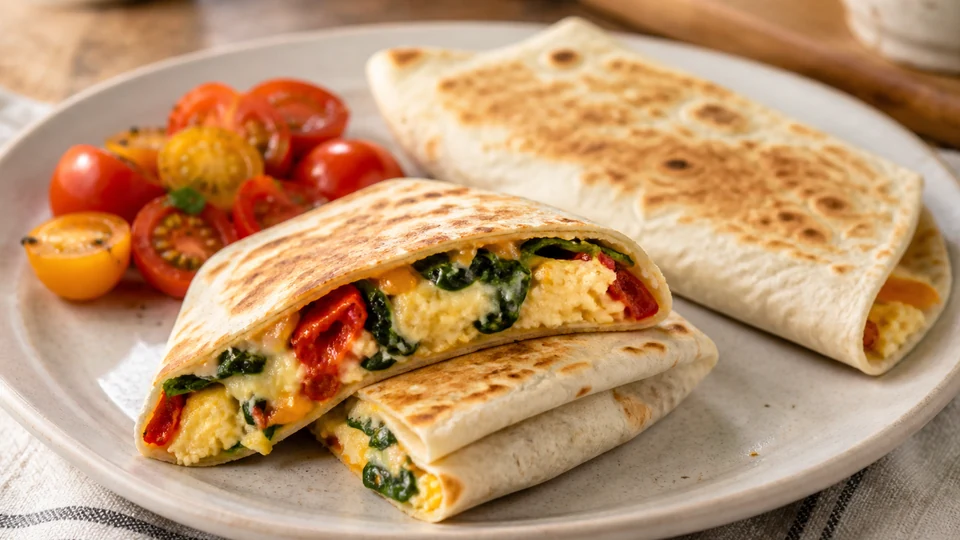
This is a format-selection and execution guide rather than a project-tested formula. The pancake science hub covers related pan and batter behaviour, while Pancake World opens the complete collection.
| Guide sections |
|---|
| Choose one of four egg-and-tortilla formats |
| Match the tortilla to the format |
| Build a filling that can be wrapped |
| Warm the tortilla deliberately |
For broader context, continue with American Breakfast: Pancakes, Diner Plates and Brunch.
Choose one of four egg-and-tortilla formats
“Egg tortilla breakfast” can describe foods with different assembly and moisture requirements. Selecting a format first prevents a filling designed for a plate from becoming an overfilled wrap.
Rolled breakfast burrito
The tortilla surrounds a measured cooked filling and closes at both ends. Iowa State University Extension’s make-ahead breakfast burrito combines cooked potato, onion and pepper with beaten egg, then adds cheese and rolls the mixture in a flour tortilla. The method cooks the egg mixture until no liquid remains before assembly.
Choose this lane when portability, make-ahead preparation or freezing is the main job. A burrito requires a flexible tortilla, a controlled filling volume and a dry-enough interior to stay closed.
Folded taco or quesadilla
The tortilla is folded once around a smaller amount of egg and optional cheese, beans or vegetables. It can be served soft or returned to a pan when the complete recipe calls for a crisp exterior.
Choose this lane for immediate service and a simpler fold. A folded tortilla tolerates less filling than a burrito. Treat salsa, yogurt and juicy tomatoes as measured toppings rather than assuming the tortilla can hold unlimited moisture.
Egg-bonded tortilla
USDA’s hosted Healthy Lunchtime Challenge cookbook documents a technique in which beaten egg cooks in a non-stick pan and a tortilla is placed on the egg while it is still cooking. The pair is turned, finished, filled and rolled.
Choose this lane when you want egg distributed across the whole tortilla rather than piled in the centre. The technique needs a complete formula: pan size, egg amount, tortilla diameter and turn timing must work together. This page does not invent that ratio.
Migas-style skillet
USDA SNAP-Ed publishes a migas recipe in which tortilla pieces brown in a pan, vegetables soften, beaten egg is added and cooked, and cheese finishes the dish. The tortilla is part of the skillet mixture instead of a wrapper.
Choose this lane when a fork-eaten breakfast is acceptable or when intact rolling is not the goal. It solves a different problem from a burrito and should not be described as a portable wrap.
Match the tortilla to the format
A complete recipe should name flour or corn tortilla, diameter and warming method. Those details are functional, not decorative.
Flour tortillas are documented in the Iowa State burrito formula and are commonly flexible enough for a closed roll when warmed as directed. Corn tortillas appear in many taco and skillet contexts, but they are not a universal one-for-one replacement for a large flour wrap. A smaller or more fragile tortilla may require a folded format or several portions rather than one burrito.
Read the current package for:
- tortilla size and count;
- warming instructions;
- use-by or best-quality information;
- wheat, milk, soy or other allergen declarations;
- storage after opening;
- whether the product is intended to be cooked before eating.
Do not select a tortilla only by the phrase “low carb,” “whole grain” or “gluten free.” Those are separate product claims and do not prove that the tortilla will fold, fit the pan or meet every guest requirement.
Build a filling that can be wrapped
Cook dense ingredients first
Potatoes, firm vegetables and raw meat require their own cooking controls before egg sets. The Iowa formula cooks diced potato first, then onion and pepper, and adds beaten egg only after the vegetables reach the stated stage.
That sequence protects the egg from becoming dry while waiting for a dense ingredient to finish. If a recipe contains meat or poultry, use a complete formula and the applicable federal endpoint rather than treating egg doneness as proof that the meat is safe.
Manage water before egg enters
Juicy vegetables, salsa and wet greens can release liquid. Cook or drain them according to the selected recipe. A pan containing visible pooled water will steam the egg mixture and make a rolled filling more likely to leak.
This does not mean every vegetable must be dried completely. It means the final moisture should match the format. A taco eaten immediately can accept a fresh topping that would create ice crystals or a soggy tortilla in a frozen burrito.
Add egg at the correct stage
Beat the measured eggs and add them as the source directs. Stir enough to cook evenly without breaking every component into paste. Iowa State’s method continues until no liquid remains. USDA WIC’s burrito recipe cooks the scrambled egg through before assembly.
FDA guidance recommends using refrigerated eggs with clean, uncracked shells and washing hands, utensils, equipment and work surfaces after contact with raw egg. Keep raw-egg tools away from the warmed tortillas and ready-to-eat toppings.
Season within the formula
Spices, herbs, salsa and cheese affect salt, moisture and allergens. Use the complete recipe’s quantities or label an extra as a variation. Do not add an unlimited amount of sauce to an assembly designed for freezing.
Warm the tortilla deliberately
A cold tortilla can crack during a tight fold. USDA WIC’s breakfast burrito recipe stacks tortillas, wraps them in foil and warms them in the oven before assembly. Other source recipes may use a dry skillet, microwave or griddle.
Follow one method. Do not leave tortillas uncovered in a hot oven until the edges become brittle. Warm only the number that can be filled promptly, and keep the rest covered according to the source.
For a pan-bonded egg tortilla, the tortilla warms as part of the egg method. It must fit the cooked egg layer and pan. A tortilla that overhangs or leaves a wide exposed egg rim signals an equipment or size mismatch.
Portion and fold without leakage
Burrito fold
Place the measured filling slightly below the tortilla centre, leaving a clear perimeter. Fold the lower edge over the filling, bring both sides inward, and roll firmly toward the remaining edge. Put the seam down while the wrap settles.
The Iowa State formula specifies a measured egg mixture and cheese amount per tortilla. Those controls are stronger than “fill generously.” Use its complete quantities if following that recipe.
If the tortilla will not close:
- remove filling rather than stretching until it tears;
- confirm the tortilla diameter matches the source;
- keep wet toppings for service;
- dice large filling pieces smaller only when the recipe allows;
- warm the next tortilla correctly.
Folded tortilla
Cover only one half, keep the hinge area clear, and fold. If the complete method returns it to a pan, use heat low enough to warm the centre without burning the exterior.
Egg-bonded roll
Cook the egg layer and tortilla together according to the source, turn as one unit, then place fillings in the specified line. Do not attempt the turn with a pan or tortilla size the formula does not support.
Migas service
The tortilla is torn and cooked in the skillet before egg. Its endpoint is fully cooked egg distributed through browned tortilla and vegetables, not a rollable sheet.
Control the first portion
Use one portion as an execution audit.
Check:
- Egg: no visible liquid or raw centre remains.
- Tortilla: warm and flexible, not wet or brittle.
- Filling: evenly distributed and not pooling liquid.
- Load: the wrapper closes without splitting.
- Seam: it stays down without being held.
- Service: hot filling does not sit for an open-ended cooling period.
This is a batch check, not proof that Pancake World tested the recipe.
Diagnose common failures
The burrito becomes soggy
Audit vegetable moisture, salsa, tomato, yogurt and the temperature of the filling at assembly. For immediate eating, some fresh moisture may be desirable. For freezing, follow the source formula and do not add wet extras that it does not include.
The tortilla cracks
Verify size, storage and warming. A dry tortilla may have been overheated or left exposed. A small corn tortilla may fit a taco format better than a closed burrito.
Egg leaks from the seam
The filling may contain visible liquid, the portion may be too large, or the side folds may be shallow. Return to the measured source portion. Do not rely on extra cheese to glue an overfilled wrap.
The exterior burns before the centre is hot
For a crisped wrap, lower heat and make sure the filling was already cooked or reheated as required. Browning the tortilla is not a safe method for bringing a frozen centre to temperature by guesswork.
Potatoes remain firm while egg is dry
The sequence was wrong or the potato size differed. Cook dense ingredients to the source stage before adding egg. Do not keep overcooking the finished egg to repair undercooked vegetables.
The egg-bonded tortilla separates
Check pan diameter, egg amount, tortilla size and the moment the tortilla is placed. This technique depends on contact while the egg is setting. Use the complete USDA-hosted formula rather than improvising a larger version.
Make-ahead and freezer decisions
Not every egg tortilla breakfast belongs in a freezer.
Iowa State Extension explicitly supports freezing its assembled burritos. The method wraps each burrito tightly, freezes them in a single layer on a sheet, then transfers the frozen packages to a freezer bag. Its microwave reheating method is tied to that formula.
USDA WIC also provides wrap, freeze and reheat instructions for its breakfast burrito and specifies reheating to 165°F. That recipe includes fresh tomato, avocado and yogurt, which demonstrates why a reader should follow the named formula rather than infer that every fresh component has identical thawed texture.
For any make-ahead plan:
- Cook the filling completely.
- Avoid leaving it at room temperature while assembling a large batch.
- Divide or cool cooked filling promptly under federal guidance.
- Use clean wrappers and label the package with identity and date.
- Follow the source’s wrapping and freezing sequence.
- Remove foil and plastic exactly as required before microwaving.
- Reheat the centre to 165°F (74°C).
- Do not partially reheat several times.
FoodSafety.gov advises refrigerating perishables within two hours, or one hour when the ambient temperature is above 90°F (32°C). For refrigerator leftovers, FDA egg guidance gives three to four days for cooked egg dishes; use a shorter time if the complete recipe or another filling requires it.
Allergen and guest controls
Egg is a major allergen. Flour tortillas commonly contain wheat and may contain other declared ingredients. Cheese or yogurt introduces milk. Packaged plant products, sauces and seasonings can introduce soy, sesame, peanuts or tree nuts.
Read each current label and its “Contains” statement. Keep verified ingredients and the ingredient record available. Use clean hands and equipment, and prevent a spatula, brush or topping spoon from moving allergens between preparations.
An egg-free tortilla breakfast requires another complete formula because egg is the central structure in this page’s four formats. A gluten-free tortilla choice also requires product and cross-contact verification. This guide does not declare any option universally allergen-safe.
Plan the assembly order for one cook
An egg tortilla breakfast can fail even when every component is cooked correctly if all tasks reach the pan at once. Write a short service sequence before heating anything.
Immediate burrito service
Prepare toppings and labels first. Cook dense vegetables, then the egg filling. Warm tortillas only as the filling nears completion. Place the hot filling in a controlled assembly area, portion, roll and serve. Keep salsa, yogurt, avocado and other moist additions separate when the source does not place them inside.
This sequence prevents warmed tortillas from drying while the potatoes finish and prevents cooked egg from waiting while cold toppings are chopped. It is an editorial service plan, not a replacement for the recipe’s temperatures or times.
Folded batch service
Cook the egg filling, hold it only by a documented short service method, then warm and fill a few tortillas at a time. If the recipe crisps the folded tortilla, keep the filling portion small enough that the centre heats before the exterior over-browns.
Use a clean tray for finished portions. Do not return a cooked tortilla to the plate that held raw egg utensils. A separate spatula for the finished food keeps the raw and ready-to-eat workflow legible.
Egg-bonded one-pan service
Measure egg and select the matching tortilla before the pan is hot. Place fillings within reach, but keep them out of the raw-egg zone. Cook and turn one egg-tortilla unit, move it to a clean surface, add the measured filling and roll. Wipe or reset the pan only as the full source method allows before repeating.
This lane is naturally sequential. Trying to operate several pans without a tested batch plan can make turn timing inconsistent. For a larger group, a complete burrito formula may be easier to control than multiplying the bonded technique.
Migas service
Prepare tortilla pieces and measured vegetables before cracking eggs. Brown or soften components in their specified order, then add beaten egg and cook it completely. Serve promptly from the skillet or move the food to a clean serving dish. Migas avoid folding but still require an exact source yield so the pan is not overcrowded.
Compare formats by the decision that matters
Choose a burrito when a closed portable package and documented make-ahead option matter most. Choose a folded tortilla when immediate service and a smaller filling are acceptable. Choose an egg-bonded tortilla when an even egg layer is the intended method and the pan and tortilla match. Choose migas when the tortilla should become a cooked ingredient rather than a wrapper.
Do not select only by appearance. A photograph cannot prove that the filling is dry enough to freeze, that the tortilla diameter matches the portion, or that the egg reached a safe endpoint. The complete source, current ingredient labels and the batch’s observable behaviour provide those controls.
For a mixed group, one base filling can be divided only when the complete recipe allows it and every branch remains identifiable. Put wet toppings and allergens in clearly separated vessels with dedicated utensils. Record which tortilla type belongs to which guest requirement instead of relying on colour or memory.
Frequently asked questions
What can I make with eggs and tortillas for breakfast?
Choose a rolled burrito, folded taco or quesadilla, egg-bonded tortilla, or migas. Use a complete source formula because each format needs a different portion, moisture level and assembly.
Should I cook the egg before adding it to the tortilla?
For burritos and most folded formats, yes: cook the egg mixture fully before assembly. In the egg-bonded technique, the tortilla is placed on egg while it cooks, but the complete method still finishes the egg before serving.
How do I keep a breakfast burrito from getting soggy?
Cook watery vegetables appropriately, finish the egg until no liquid remains, control wet toppings and use the measured filling. For a freezer burrito, follow a source-tested ingredient list and wrapping method.
Which tortilla is best?
Use the exact type and diameter named by the recipe. A large flexible flour tortilla supports a closed burrito; a smaller corn tortilla may be better for tacos or migas. There is no universal substitute.
Can I put a tortilla directly on cooking egg?
Yes, that technique appears in a USDA-hosted recipe collection. Use its complete proportions, pan size and timing. Do not assume any egg amount and tortilla diameter will bond and turn cleanly.
Can breakfast burritos be frozen?
Yes when the complete formula supports it. Iowa State Extension and USDA WIC both publish specific freezer methods. Their instructions do not guarantee the same quality for an altered filling.
How hot should a reheated burrito be?
165°F (74°C) in the centre. Measure the coldest area and allow the microwave standing step required by the selected method.
How long do cooked egg leftovers keep?
FDA guidance gives three to four refrigerated days for cooked egg dishes. The shortest limit required by another ingredient or source recipe controls.
Is an egg tortilla breakfast healthy?
This page makes no health claim. Nutrition depends on exact egg, tortilla, cheese, beans, vegetables, fats, sauces, yield and serving size. USDA FoodData Central can support values only when those inputs are specified.
Final format checklist
Before accepting the plan, confirm:
- one format is named: burrito, folded, egg-bonded or migas;
- one complete source supplies all quantities and timing;
- tortilla type and diameter match the method;
- dense fillings cook before egg;
- visible moisture is controlled;
- egg cooks fully and raw-egg tools stay separate;
- tortilla warming matches the source;
- filling is measured and the wrapper closes;
- wet toppings fit immediate or make-ahead service;
- freezing is used only with documented instructions;
- refrigeration and 165°F reheating controls are recorded;
- all current allergen labels are checked;
- no invented yield, nutrition, guarantee or project test is claimed.
Explore related Pancakes World guidance on American Pancakes, Maple Syrup, and Maple Syrup Pancakes.
Sources and editorial references
- Iowa State University Extension and Outreach —
https://spendsmart.extension.iastate.edu/recipe/make-ahead-breakfast-burritos/ - USDA WIC Works Resource System —
https://wicworks.fns.usda.gov/es/node/2103 - USDA MyPlate Healthy Lunchtime Challenge cookbook —
https://www.myplate.gov/sites/default/files/2020-12/WHCookbook_071014.pdf - USDA SNAP-Ed Migas recipe —
https://snaped.fns.usda.gov/resources/nutrition-education-materials/recipes/migas - U.S. Food and Drug Administration egg safety guidance —
https://www.fda.gov/food/buy-store-serve-safe-food/what-you-need-know-about-egg-safety - FoodSafety.gov safe minimum internal temperatures —
https://www.foodsafety.gov/food-safety-charts/safe-minimum-internal-temperatures - FoodSafety.gov people-at-risk and leftover guidance —
https://www.foodsafety.gov/people-at-risk - U.S. Food and Drug Administration food-allergen guidance —
https://www.fda.gov/food/nutrition-food-labeling-and-critical-foods/food-allergies - USDA Agricultural Research Service FoodData Central —
https://fdc.nal.usda.gov/