Easy savory breakfast ideas
At Pancakes World, the easiest savory breakfasts minimise active decisions: choose one carrier, one prepared topping or filling, and one fresh or crisp finish. Toast, tortillas, cooked grains, potatoes and leftovers can carry eggs, beans, cheese or vegetables without becoming elaborate. Select by minutes of active work, number of pans and what is already safely stored—not by unsupported health labels. Use a complete recipe whenever quantities or cooking are needed, stage garnishes first, and reserve egg cooking or reheating for the final step.
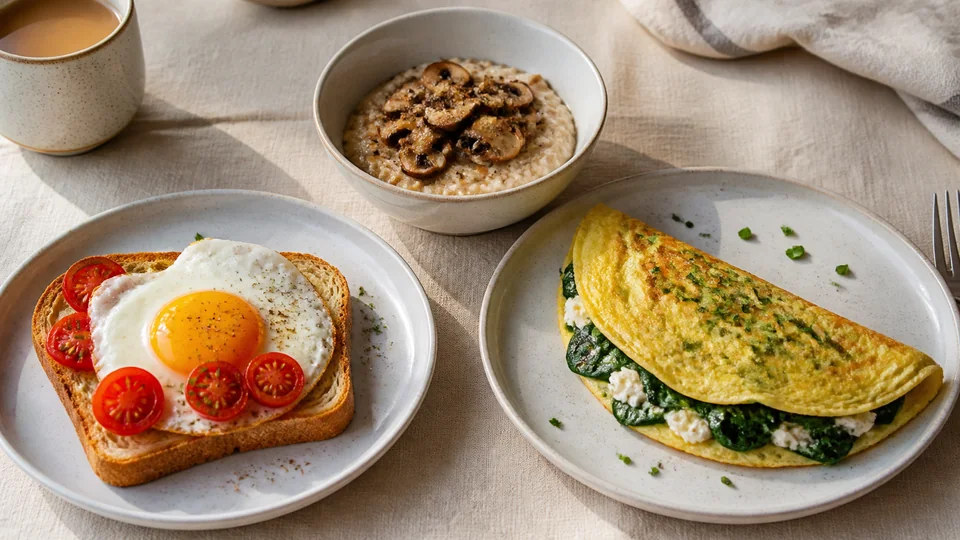
Explore more formats in the Breakfast hub. Pancake World is the editorial home.
| Guide sections |
|---|
| Define “easy” for the morning you actually have |
| The carrier-plus-centre-plus-finish method |
| Zero-pan ideas |
| Toast directions that remain simple |
For broader context, continue with American Breakfast: Pancakes, Diner Plates and Brunch.
Define “easy” for the morning you actually have
Easy can mean no stove, one pan, less than five minutes of active preparation, a meal assembled from leftovers, or food that travels. Those are not interchangeable. A baked casserole may require little attention but a long wait; toast may be quick but needs last-minute assembly; a breakfast wrap can travel but requires safe cold holding.
Write the limiting factor first. If time is tight, use ingredients already cooked. If dishes are the problem, pick one skillet or a cold assembly. If concentration is limited, avoid a formula with several simultaneous finishes. If the meal must travel, reject anything that leaks or needs immediate plating.
Then choose a flavour direction. Savory can mean herbs, toasted bread, vegetables, cheese, beans, eggs, potatoes, spices or a sauce. It does not require meat, and it does not establish a nutrient profile. Keep the direction specific enough that the shopping list remains short.
The carrier-plus-centre-plus-finish method
A carrier makes the meal easy to eat: toast, tortilla, pita, cooked grain, potato, rice cake or a bowl. The centre supplies the main cooked or assembled component. The finish adds contrast through herbs, sliced produce, pickles, seeds or sauce.
One item can perform two roles. Beans may be the centre and spread; roasted potatoes can be carrier and centre. The model is not a dietary formula. It is an editing tool that prevents a breakfast from growing into seven unrelated toppings.
Ask whether each addition changes flavour, texture or handling. If two ingredients do the same job, choose one. Fewer open packages and fewer cutting tasks often make the breakfast genuinely easier.
Zero-pan ideas
Cottage cheese, tomato and toast
Spoon chilled cottage cheese beside toast and add washed, cut tomato with pepper or herbs. Keep the tomato off the toast until eating if crispness matters. Read the cheese and bread labels for any individual allergen or ingredient requirement.
This is an assembly pattern, not a quantified recipe or nutrition claim. Use the amount appropriate to the diner and do not infer values from the photograph of someone else's plate.
Bean spread and crisp vegetables
Use a documented bean spread on toast, crispbread or a tortilla, then add cucumber, radish or another prepared vegetable. Drain the produce so the base remains manageable. A packaged spread should retain its label; a homemade one needs its own complete recipe and storage instructions.
Cheese, fruit and crackers
Savory breakfast can include a fresh fruit contrast. Pair a cheese selected for the diner with plain crackers and one washed fruit. Arrange components separately rather than stacking them early. This works when the goal is no cooking, but perishable cheese still requires refrigeration.
Leftover roasted vegetables at room temperature?
Do not make room-temperature holding the plan. Safely refrigerated vegetables can be eaten cold when appropriate or reheated to the relevant target. Take out only the portion being served and return the supply to refrigeration.
Toast directions that remain simple
Mashed beans and herbs
Warm or cold beans prepared through a documented method can be roughly mashed and spread. Add herbs, a squeeze of citrus or a small spoon of sauce. Keep the consistency thick enough that it does not run off the toast.
Ricotta and sautéed greens
Cook one green in a skillet, season it and place it over ricotta-topped toast. Let excess moisture evaporate before assembly. The same pan can toast seeds if the source provides that step, but a second garnish is optional.
Avocado and a separately cooked egg
Prepare the toast and avocado before starting the egg. That order prevents a finished egg from waiting while bread toasts. Use a complete egg method and meet the relevant safety guidance; do not rely on a universal visual cue.
Tomato and cheese under the broiler
Use cookware rated for the broiler, keep the food at the specified distance and watch continuously. Tomato moisture can soften bread, so use a restrained layer. The cheese and bread dictate allergen information from their current labels.
Mushroom toast
Cook sliced mushrooms in a single layer where possible, allowing released moisture to leave before they meet the bread. Finish with herbs rather than adding several sauces. Follow a documented method for heat and quantities.
Tortilla and wrap ideas
Egg and vegetable fold
Cook one quick vegetable, add egg according to the recipe, and fold the result into a warmed tortilla. Avoid an overfilled roll. Put salsa in a separate container if the wrap will travel.
Beans, cheese and a crisp finish
Spread beans thinly, add cheese if used and heat through by the selected method. Add cabbage, radish or herbs after heating. A crisp finish gives contrast without a second cooked filling.
Leftover potato breakfast taco
Reheat safely stored potato pieces to 165°F, warm the tortilla and add one fresh finish. Keep the taco small enough to fold. Unknown leftovers should not be rescued by extra sauce or reheating.
Hummus and vegetable roll
Use a labelled or documented hummus, a dry tortilla and vegetables cut into narrow pieces. Place wet ingredients near the centre and roll just before eating. Keep chilled during transport.
One-skillet breakfast paths
Greens with eggs
Cook the greens first until excess moisture is controlled, then create spaces for eggs or add a beaten mixture according to a complete formula. Set the table before eggs enter. Egg dishes should reach 160°F.
Potato and onion hash
Use evenly cut potato and a pan large enough for the intended batch. Previously cooked potatoes reduce the morning schedule, but they must have been cooled and stored safely. Add onion at the stage appropriate to piece size and heat.
Chickpea and tomato skillet
Drain or prepare chickpeas as the source directs, heat them with tomato and a selected spice profile, and finish with herbs. Keep the mixture spoonable rather than flooding the pan with several liquids. Serve with bread or in a bowl.
Savory oats
Cook oats with a documented liquid amount, then finish with sautéed vegetables, cheese, egg or herbs. Choose one main finish. Do not use a sweet porridge ratio without checking whether the savory additions alter consistency.
Rice and egg pan
Reheat a safely stored rice portion to 165°F and add egg through a documented fried-rice or skillet method. Cold rice needs a known storage history. A hot pan cannot make an unknown container safe.
Microwave-assisted ideas
The microwave can reheat a planned component while toast or fresh produce is assembled. Use microwave-safe cookware and package or recipe directions. Stir foods that heat unevenly, allow stated standing time and verify the relevant temperature.
A mug egg requires a formula written for the vessel and appliance. Do not fill a sealed container or assume every mug is microwave-safe. Egg dishes still need to reach 160°F.
Steam-in-bag vegetables or a packaged grain can shorten preparation, but read serving information, ingredients and handling instructions. Convenience does not make the label irrelevant.
Ideas built from deliberately stored leftovers
Roasted vegetables with toast
Reheat a portion and place it beside or over toast. Add a fresh herb or chilled spread after heating. Keep the rest refrigerated.
Cooked grain with beans
Warm grain and beans together only if their storage histories are known and the method heats them evenly. Finish with salsa, herbs or a crisp vegetable. Reheat leftovers to 165°F.
Casserole slice with fresh garnish
A documented breakfast bake can be portioned, refrigerated and reheated. Pair it with washed produce rather than creating another cooked side. Check the centre temperature.
Dinner protein in a breakfast sandwich
Use safely stored cooked protein in a modest filling with bread and one condiment. Reheat to 165°F. Keep the sandwich compact and label it accurately rather than suggesting that serving time changes its properties.
Eggs without a complicated plate
Eggs become difficult when every style is combined with several simultaneous sides. Choose one method and make the accompaniment ready first. Toast can wait briefly; a cut garnish can remain chilled; an egg should be the last active task.
For scrambled eggs, prepare additions before eggs enter the pan. For a fried egg, warm the carrier and portion sauce first. For a boiled egg, follow a complete cooking and cooling method and refrigerate promptly.
FoodSafety.gov gives 160°F for egg dishes. Specific whole-egg preparations may have authoritative handling guidance beyond this article; use a complete source. Never claim that a runny-looking or firm-looking egg is safe based only on appearance.
Savory bowls
Warm grain, vegetable and sauce
Choose one cooked grain, one vegetable preparation and one measured sauce. Arrange them so texture remains distinct. If both grain and vegetable are leftovers, confirm dates independently.
Beans, avocado and tortilla pieces
Heat the beans, prepare avocado with clean tools and warm tortilla pieces. Add a single acidic or herbal finish. Avoid letting the cold produce sit over a steaming bowl before service.
Yoghurt with cucumber and herbs
Plain yoghurt can form a savory bowl with drained cucumber, herbs and toast or flatbread. Keep it refrigerated until eating. If using spice blends, read labels for salt, allergens and other ingredients relevant to the diner.
Oats with mushrooms
Cook oats according to their form. Sauté mushrooms separately if needed for moisture control, then combine at service. A spoonful of cheese or herbs can finish the bowl; both are not mandatory.
Make-ahead components, not entire assemblies
Prepare one neutral component that can serve two breakfasts. Cooked beans can become toast spread and taco filling. Roasted vegetables can join eggs and a grain bowl. A labelled sauce can finish potatoes and a sandwich.
Keep carriers separate so they retain texture. Do not assemble toast, wraps or crackers hours before eating unless the documented method accounts for moisture. Portion dry garnishes into small covered containers.
Write the intended uses on the storage label. “Roasted peppers—toast Tuesday, eggs Wednesday” is more actionable than an anonymous box. The plan remains subject to safe storage limits.
A five-minute decision tree
If no cooking is possible, choose chilled spread plus carrier plus washed produce. If a toaster is available, prepare the topping while bread browns. If one burner is available, decide between eggs, hash or a warm bowl; do not start all three. If only a microwave is available, reheat one documented component and add a cold finish.
If leftovers exist, check identity and date before selecting them. If the history is unclear, choose a shelf-stable fallback. If perishable food must travel, verify cold holding before assembling.
The decision tree protects time by rejecting unsuitable ideas early. It does not identify a “healthiest” breakfast.
Flavor maps that avoid a crowded cupboard
Herb and lemon
Use one leafy herb, lemon zest or juice and pepper on eggs, beans or toast. Wash herbs and citrus under running water. Keep the combination bright by adding it after the hot stage.
Tomato and warm spice
Pair prepared tomato with cumin, paprika or another defined spice in a skillet or bean bowl. Use a named blend only after checking its label. Do not describe the flavour as belonging to a culture without evidence.
Mushroom and thyme
Control mushroom moisture in the pan, then add thyme near the finish. Serve over toast, oats or potatoes. The same flavor map can support different carriers without becoming one universal recipe.
Cheese and pepper
A modest cheese portion and black pepper can finish eggs, toast or a grain bowl. Select cheese by actual label and melting behaviour. More varieties do not automatically improve the meal.
Pickle and mustard
A small amount can sharpen a sandwich or potato bowl. Read labels for serving information, ingredients and allergens. Drain pickles before placing them on bread.
Produce preparation for speed
FDA recommends washing produce under running water rather than using soap, detergent or commercial produce wash. Use clean hands, boards and knives, and separate ready-to-eat foods from raw animal products.
Prepare sturdy vegetables in a quantity that will be used safely. Dry them before storage to manage moisture. Keep delicate herbs wrapped or contained appropriately and wash at a useful point for their quality.
Frozen vegetables can shorten chopping. Follow package directions and remove only the amount needed. Do not repeatedly thaw and refreeze the bag during portioning.
Reading labels when breakfast is assembled
An assembled meal can contain several packaged foods. FDA explains that serving size and servings per container provide the basis for declared nutrients. The bread serving, cheese serving and sauce serving are separate; do not assume the pictured sandwich equals one serving of each.
Read ingredient statements and allergens for the actual products. A familiar product line may include different formulations. Keep packaging until food is prepared and labelled.
This page publishes no nutrition totals. Exact amounts and forms would be required, and adaptable ideas have no single yield.
Food-safety timeline
Refrigerate perishable leftovers within two hours. USDA FSIS recommends shallow containers and says most refrigerated leftovers are used within three to four days. Date every batch.
Reheat leftovers and casseroles to 165°F. Stir dense bowls and check the centre. Egg dishes should reach 160°F. Wash the thermometer probe between foods.
At a shared table, put out smaller chilled portions and replace with clean dishes. Do not top an older bowl with fresh food. Use separate utensils for each item.
Packing a savory breakfast
Choose a structure that stays contained: a modest wrap, divided snack box, firm toast components packed separately, or a sealed bowl. Wet sauce belongs in its own cup. Pack a utensil for anything likely to loosen.
Perishable eggs, dairy, cooked grains and fillings need cold control. Use an appropriate insulated system and refrigerate on arrival. A commute does not pause the safety clock.
Label unfamiliar fillings. At a group breakfast, identify allergens based on actual products and preparation, not on a generic recipe name.
Easy breakfast for a group
Select one hot centre and two simple sides. A skillet hash with bread and washed fruit is easier than individual eggs, pancakes and multiple sauces. A reheated casserole can be paired with chilled garnish and toast.
Set out plates, utensils and labels before heating. Serve in manageable batches. Keep replacement food safely hot or cold rather than piling everything onto the table at once.
If guests have different needs, offer components separately. Do not promise that a shared kitchen is allergen-free unless controls support it.
What makes an idea difficult by accident
Too many finishes
Three sauces, two herbs and several crunchy toppings create shopping, washing and storage. Pick the contrast that matters most.
Starting all components together
Read the sequence. Long-cooking potatoes start before eggs; toast finishes near service; chilled garnish stays refrigerated.
Choosing unknown leftovers
A container without a name or date is not an easy shortcut. Use a documented ingredient instead.
Mistaking packaged for instant
A grain pouch, frozen vegetable or bread may still require heating, standing time or refrigeration. Read directions before the morning.
Calling a nutrition target “easy”
Low-carb, high-protein and similar labels require exact definitions and calculations. This article organises savory food by kitchen effort, not nutrient claims.
A two-breakfast prep session
Choose a component with two destinations. Roast a tray of vegetables through a complete recipe. Cool part promptly for a later grain bowl, and reserve another labelled portion for eggs. Prepare an herb finish separately.
Alternatively, cook beans, use one portion as toast spread and refrigerate another for tacos. Keep tortillas and bread dry and sealed. Wash produce for the first meal and leave delicate items whole for the second if quality benefits.
Stop after two planned uses. Excess advance cooking can create more leftovers than it solves.
Frequently asked questions
Does savory mean no sugar?
Not necessarily. Savory describes the flavour direction, not a regulated nutrient threshold. Packaged foods and sauces should be read from their actual labels.
What is the fastest option?
A cold assembly using safely stored ingredients may have the least active work. The fastest choice depends on what is already prepared, available equipment and required storage.
Can dinner leftovers become breakfast?
Yes when their identity and storage history are known. Refrigerate within two hours, use most leftovers within three to four days and reheat to 165°F.
Do savory breakfasts need eggs?
No. Beans, vegetables, grains, cheese, spreads, toast and tortillas offer many egg-free formats. Verify actual ingredients for the diner's requirements.
Can I meal-prep toast?
Prepare toppings ahead when safe, but toast close to service for texture. Pack wet components separately if travelling.
Why is Article schema used?
This is an idea and planning guide, not one tested recipe with fixed ingredients, instructions, yield and timings.
Build a personal shortlist
Pick one zero-pan meal, one toast, one tortilla, one skillet and one leftover format. Write the required starting state beside each: cooked beans, washed produce, labelled rice or chilled spread. Cross out any idea that demands ingredients you rarely finish.
Review the shortlist after two weeks. Keep formats that fit the morning and revise the preparation bottleneck of those that did not. The goal is a small reliable repertoire, not an ever-expanding list of savory possibilities.
Four equipment-specific mini menus
Toaster only
Set out bread, one chilled spread and a washed vegetable. Toast the bread, spread it while warm and add the vegetable immediately before eating. If a second texture is wanted, use a dry seed or crisp garnish already in the cupboard. This menu works because the topping needs no separate cooking; it does not work if the spread has been left unrefrigerated or the produce still needs lengthy preparation.
One small skillet
Choose either a quick egg dish or a reheated hash, not both. For eggs, cook one prepared vegetable first, lower or adjust the heat as the complete method directs and add egg last. For hash, use cooked potato and one aromatic, then reheat the potato to 165°F. Warm a tortilla in the cleaned or cleared pan only if the sequence keeps the main component safe.
Microwave and kettle
Reheat a labelled grain or leftover portion in microwave-safe cookware, stirring and checking the centre. Use hot water for a savory oat formula or a hot drink, following the product directions. Finish the bowl with chilled herbs, a measured sauce or washed produce. The kettle should never be used to cook an ingredient inside unless the appliance is explicitly designed for it.
No kitchen at the destination
Pack a divided cold breakfast with a carrier, a chilled filling and crisp produce. Keep wet components sealed separately and use adequate cold control. A cheese-and-cracker box, bean-spread wrap assembled close to eating, or yoghurt-cucumber bowl can fit when the actual products and transport plan are suitable. Add a utensil and napkin rather than expecting the package lid to serve every purpose.
Ingredient rescue without improvising safety
An easy breakfast can prevent waste when the ingredient is still suitable and its history is known. Wilted herbs can flavour a cooked egg or grain bowl after damaged parts are removed and the herbs are washed. A heel of bread can be toasted and topped. A small portion of roasted vegetables can join a tortilla after reheating.
Rescue is not permission to disguise spoilage. Do not blend, spice or fry food with an unknown date, unusual odour or questionable handling. Do not combine an old portion with a new batch in one storage container. When in doubt about safety, discard it.
Plan the rescue before bedtime. Put the named component at the front of the refrigerator with a written destination. In the morning, inspect the label and follow the intended method rather than opening every container and creating a larger decision.
Keeping flavors distinct through the week
Repetition becomes tiring when every meal uses the same sauce, even if the carrier changes. Rotate the finish rather than rebuilding the centre. Beans can pair with herbs on toast, crisp cabbage in a tortilla and tomato in a grain bowl. Roasted vegetables can take pepper with eggs and mustard in a sandwich.
Store finishes separately and use small amounts. A labelled sauce should not become the default answer to under-seasoned food. Taste the hot component as its recipe allows, then decide whether acidity, herbs or texture is missing.
Keep one day intentionally plain. Toast with eggs, a bean bowl with herbs or potatoes with pepper can reset the palate and reduce opened packages. Ease comes from repeatable structure with small, useful changes.
A closing check before leaving the kitchen
Return perishable containers to refrigeration, date any new leftovers and wash tools that touched raw egg or other raw ingredients. Let hot cookware cool in a safe location away from handles and children. Pack only the portion intended for the day.
Look at tomorrow's shortlist and move one safe component into view. That small action is more valuable than preparing a complex assembly that may soften overnight. A savory breakfast system succeeds when it reduces friction while preserving accurate labels, known storage and a meal people actually want to eat.
Keep one clean container ready for tomorrow's selected component so the plan does not depend on finding storage after cooking. Label it before filling, cool food through the documented method, and leave the carrier dry until breakfast.
Explore related Pancakes World guidance on American Pancakes, Maple Syrup, and Maple Syrup Pancakes.
Sources and editorial references
- FoodSafety.gov —
https://www.foodsafety.gov/food-safety-charts/safe-minimum-internal-temperatures - USDA Food Safety and Inspection Service —
https://www.fsis.usda.gov/food-safety/safe-food-handling-and-preparation/food-safety-basics/leftovers-and-food-safety - U.S. Food and Drug Administration —
https://www.fda.gov/food/buy-store-serve-safe-food/selecting-and-serving-produce-safely - U.S. Food and Drug Administration —
https://www.fda.gov/food/nutrition-facts-label/how-understand-and-use-nutrition-facts-label