Easy high calorie breakfast
At Pancakes World, an easy high-calorie breakfast starts with a familiar base and adds one or two clearly measured, energy-dense components. Toast with a spread and fruit, oats finished with seeds and yogurt, or a reheated rice-and-egg bowl can all be simple. The useful distinction is that “easy” describes the work required, while “high calorie” depends on the actual ingredients and servings.
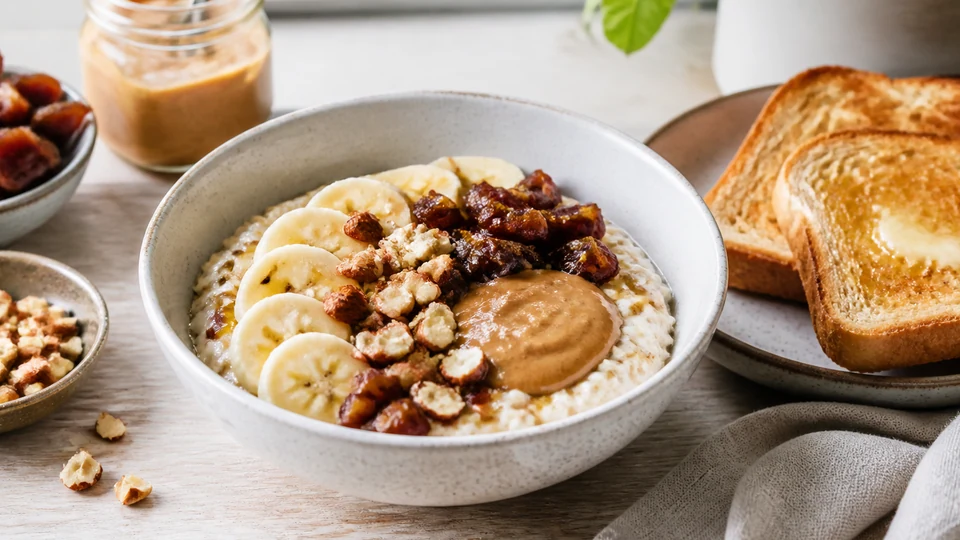
This guide does not set an intake target or promise weight change. Use a personal target supplied through appropriate guidance, calculate the complete meal from current labels or suitable composition records, and adjust portions to appetite and the wider day. Pancake World is the main editorial collection for readers who want to explore other breakfast formats.
| Guide sections |
|---|
| Begin with a breakfast you already make |
| Toast assemblies require almost no new technique |
| Turn a bowl of oats into a complete planned meal |
| Assemble a yogurt or cultured-product bowl |
For broader context, continue with American Breakfast: Pancakes, Diner Plates and Brunch.
Begin with a breakfast you already make
The least complicated route is usually an existing breakfast with a deliberate addition. If you already eat toast, keep the toast and choose a spread, topping or side that raises the meal to the intended amount. If you make oats, do not abandon the bowl for a ten-ingredient recipe; measure the oats, liquid and additions you actually use. If yesterday's cooked rice is a normal part of the household, reheat it safely and build a savoury bowl.
Starting from a known meal gives you a realistic preparation time. It also exposes where the extra work enters. Washing fruit is different from blending a drink, frying three components and washing a blender. The best “easy” option is the one whose preparation, eating and cleanup fit the morning, not the one with the shortest social-media caption.
Write down the complete serving once. Include cooking fat, milk, spread, sweetener, sauce and drinks. Small additions can materially change a calculation, but this article does not assign universal values to them. Read the package for the product on hand, or use an authoritative composition record that matches the food and preparation state.
Toast assemblies require almost no new technique
Toast offers a fast base and keeps portions visible. A spread can be applied with a measuring spoon or by weight when precision matters. Add sliced banana, berries, a cooked egg, cheese or another suitable topping according to the eater's preferences and restrictions. A side of yogurt or a labelled drink can raise the total without making the toast impossible to hold.
Texture is the main practical problem. Wet fruit and soft spreads can make toast collapse if assembled too early. Toast the bread fully, allow steam to escape briefly, then add the spread just before eating. For a packed version, keep moist topping in a separate container. Two moderate slices are often easier to manage than one tower that sheds its ingredients.
Bread, spreads and dairy or plant-based alternatives vary. A named category is not a calorie number. Compare the intended serving on the current label, especially when moving between regular, reduced-fat, sweetened or unsweetened products. If an allergy matters, check the product and kitchen rather than treating a generic substitution as safe.
Turn a bowl of oats into a complete planned meal
Oats are easy when the method is stable. Choose a bowl large enough to prevent boil-over, measure the dry oats and liquid, and use the cooking directions for that product. After cooking, add components such as yogurt, fruit, nuts, seeds or a spread in amounts that can be reconstructed. Keep crunchy ingredients until the end so they remain distinct.
A thick bowl can become difficult to finish. More liquid changes volume and texture, while a measured dense topping can add energy without doubling the oats. The right balance is personal, so begin with a manageable base and change one component at a time. Do not interpret a large photographed bowl as an instruction.
Overnight oats move work away from the morning, but they are still perishable when made with ingredients that require refrigeration. Mix them in a clean container, refrigerate promptly, and follow suitable storage guidance. Add fresh or crunchy components at breakfast. A jar is convenient only if it is wide enough to stir and eat from comfortably.
Assemble a yogurt or cultured-product bowl
A cold bowl can be ready in a few minutes: spoon in a known serving of yogurt or an appropriate alternative, add granola or another cereal, then include fruit and a measured seed, nut or spread component if suitable. Put the dry topping on immediately before eating. The contrast between cool, creamy and crisp makes a short ingredient list feel complete.
The label matters here because plain, flavoured, strained, dairy and plant-based products differ. Granola portions also become difficult to estimate when poured directly from a large bag. Measure into the bowl or portion several servings in advance. This is not about pursuing perfect arithmetic; it is about avoiding a confident total built from invisible guesses.
If breakfast travels, pack the wet and dry parts separately and keep the perishable component cold. An insulated container does not automatically create safe refrigeration. Use an appropriate cold source and observe official time and temperature guidance.
Use a reheated savoury bowl
Leftover rice, potatoes or another cooked starch can become a fast breakfast when it was cooled, stored and reheated safely. Add a cooked egg, beans, tofu, cheese, leftover meat or vegetables according to the planned meal. Finish with a measured sauce or cooking fat rather than an unrecorded pour.
Keep the assembly short. Reheat the base, add one substantial component and one flavour contrast. A bowl with five separately fried toppings is no longer the easy option. Frozen vegetables can reduce chopping, and a prepared component from dinner can reduce morning cooking, but each product or leftover still needs a known identity and safe storage history.
When using a microwave, spread food in a shallow layer when possible, cover as appropriate and stir or rotate it so the centre does not remain cold. Follow the appliance and food guidance relevant to the meal. If the storage history is uncertain, do not use calorie planning as a reason to keep the leftover.
Keep pancakes easy by using an established batch
Pancakes can fit an easy breakfast when a complete tested household formula already exists and some are stored for later. This article does not provide or claim a tested recipe. Calculate from the actual formula, number of pancakes produced, portion served and toppings used. A generic pancake estimate cannot account for different sizes, batters and cooking fat.
Reheat only the number needed and keep toppings simple: one measured spread, fruit, yogurt or another side can be easier than several syrups and garnishes. Freeze portions separated so they can be removed without thawing the whole batch. Label the package and follow appropriate cooling, freezing and reheating guidance.
If no reliable batch record exists, use a breakfast with a current package label instead of inventing precision. Ease includes being able to explain what is on the plate.
Choose additions by the work they create
Some additions are genuinely instant. A spooned spread, a handful measured from a package, a slice of cheese, a banana or a carton with a readable label changes the meal without another pan. Others only sound simple. A smoothie can require peeling, measuring, blending, decanting and cleaning. Homemade granola needs an earlier production session. A cooked egg takes little active work but still needs a pan, heat control and washing up.
Sort additions into three household categories: open and serve, brief assembly, and cooking required. On the busiest mornings, choose from the first category. When five minutes are available, add one brief assembly. Save cooking for a base that is worth the pan. This prevents an “easy” list from quietly becoming a collection of mini-recipes.
The categories are household-specific. A person with a dishwasher and counter blender may consider a drink easy; someone leaving a sleeping shared apartment may not. Frozen pancakes may be easy if they were already made and labelled, yet impossible when the freezer is empty. Define convenience from the real kitchen.
Use drinks when solid volume is the obstacle
A drink can accompany breakfast when a larger solid portion is unappealing. Milk, a suitable alternative, yogurt drinks and blended beverages differ substantially, so calculate the exact ingredients and serving. Coffee or tea additions belong in the same count. Do not call a drink high calorie simply because it looks creamy.
Keep a blended breakfast short: one liquid, one fruit or grain component, and one measured dense addition may be enough. More ingredients make the result harder to reproduce and can create a volume larger than intended. Blend to a drinkable texture and consume or store it under appropriate food-safety conditions. This guide does not assert that liquids produce the same appetite response as solid meals for every person.
If the drink is supplemental, serve it in a known glass rather than sipping indefinitely from a blender jug. If it replaces part of the plate, record which part. The practical aim is to know whether the planned breakfast was consumed, not to hide ingredients behind an opaque cup.
Prepare a five-minute morning lane
The night before, place shelf-stable ingredients together and choose the serving dishes. In the refrigerator, group the cold items on one shelf without leaving perishables at room temperature. Decide which single appliance will be used. A toaster lane might be: start toast, portion yogurt, slice fruit, spread toast, eat. A microwave lane might be: reheat a prepared bowl, stir, add a cold topping, eat.
Avoid scheduling two appliances whose timing conflicts. Oats boiling over while toast burns is not convenient. If the breakfast requires both, prepare one component earlier or choose a cold side. Keep a cloth and the necessary utensil nearby so cleanup happens during the final minute rather than becoming a reason to skip the plan tomorrow.
An exit option matters. If the alarm was missed, take the labelled cold bowl and a packed dry side, or choose a sealed backup whose serving fits the plan. The backup should not depend on a café carrying a particular item. Restock it after use.
Build three repeatable shopping combinations
For a toast week, buy bread, one spread, one fruit and one cold side that the household will actually use. For a bowl week, buy oats or cereal, a liquid, one dense topping and one contrast. For a savoury week, plan a safely stored cooked base, one substantial addition and one sauce or seasoning. These are shopping structures, not mandatory menus.
Choose package sizes that match realistic use. A bargain tub is not convenient if it spoils before the household finishes it. Conversely, individual packets may reduce measuring but create more packaging and may differ in composition. Compare the products rather than assuming one format is always better.
Keep the list short enough to see substitutions. If the intended yogurt is unavailable, decide whether the replacement changes the meal calculation. If the chosen bread is sold out, read the new label. If a seed spread replaces a nut spread for preference or safety, verify its serving and allergen statements. The ingredient role can remain stable while the numbers change.
Make breakfast easier for a small morning appetite
Do not solve limited appetite by constructing a taller plate. Reduce the bulk of the base and use a measured addition that fits the person's plan and tolerances. Divide breakfast into two scheduled parts when that is more manageable: toast before leaving and a refrigerated bowl later, for example. Both parts still belong to the complete calculation.
Temperature can help the eating experience. A very hot, thick bowl may take longer than a warm toast plus a cool side. A large icy drink may be uncomfortable to finish quickly. Adjust serving temperature and texture for preference, without turning that observation into a physiological promise.
Persistent poor appetite, unplanned weight change, digestive symptoms or difficulty meeting needs deserves appropriate professional attention. This page offers meal organization, not diagnosis. “Easy” should reduce kitchen friction, not pressure someone to ignore discomfort.
Avoid the shortcuts that create bad information
Do not estimate a spread by the apparent thickness on toast. Do not copy a calorie total from a photograph. Do not reuse the label from a product that has been replaced. Do not describe a meal as tested because it was drafted. When no project test record exists for a recipe, Article schema is the accurate fallback.
Another shortcut is counting only the dense addition. The bread, oats, milk, fruit, cooking fat and drink remain part of breakfast. The opposite error is also common: relying on a large base while adding so much volume that the meal is regularly unfinished. The served and eaten portion is the useful unit.
Finally, do not confuse convenience with nutritional suitability. A fast breakfast may or may not fit an individual's health, allergy, cultural or performance needs. The eater's context sets the boundary. This guide helps make the ingredients, portions and workload visible inside that boundary.
A simple rotation for different kinds of mornings
On a normal weekday, use the warm or cold bowl that takes one appliance or none. On a commute day, use toast eaten at home plus a properly chilled packed side. On a very early day, take the overnight bowl and a dry addition stored separately. On a slower morning, reheat pancakes or a savoury base and add a freshly cooked component.
Rotation prevents one missing ingredient from cancelling breakfast. It also keeps shopping coherent because the same fruit, yogurt, bread or spread may appear in more than one format. Limit the rotation to meals that have actually fitted the household schedule. A folder of twenty saved ideas is not the same as three reliable breakfasts.
After a week, remove the option that created the most leftovers or cleanup. Keep the one that was easiest to finish, and repair the one that failed for a clear reason. Perhaps the granola became soft in transit, the toast needed a separate topping container, or the savoury bowl was too large for the office microwave. These are solvable design details, not evidence for a universal meal rule.
Questions that come up on busy mornings
Does an easy breakfast have to be sweet?
No. A reheated potato, rice or grain bowl with one cooked or prepared addition can be just as direct as toast or oats. Savoury leftovers are useful only when their identity and storage are known. Seasoning and sauce should be included in the serving record when a numerical total matters.
Is a large handful an adequate measurement?
It is a loose kitchen description, not a dependable numerical serving. Hands differ, and pieces settle differently. Use the label's household measure or a kitchen scale when the amount materially affects the calculation. After repeating the same breakfast, pre-portioned containers can make the morning faster.
Must the breakfast include a supplement?
No. This guide does not require powders, bars or specialized products. Ordinary foods can be assembled in many ways. A supplement belongs only in an individual's appropriate plan, and its current label and instructions still apply.
What if the meal is easy to make but slow to eat?
Change the format. Split it into two planned servings, reduce an excessively bulky component, or use a suitable drink alongside a smaller plate. Do not simply add more ingredients. The practical test is whether the breakfast fits the available eating time without creating pressure or waste.
How can two people share the same breakfast plan?
Share the base and keep additions separate. One pot of oats can be divided before each person's measured toppings are added; one toast setup can offer different spreads and sides. This reduces cooking while preserving individual portions, preferences and allergy controls. Never assume one person's target applies to the other.
Is batch cooking always easier?
Only when the household uses the batch and can cool, label, store and reheat it appropriately. A freezer full of unidentified muffins or pancakes is not a convenience system. Start with a modest amount, note the date and portion, and expand only if the routine works.
What is the quickest way to raise the total?
There is no universal ingredient answer. Add one measured component that suits the eater and requires little work, then recalculate the complete meal. That may be a spread, cold side, drink or topping. The exact choice depends on product information, tolerances and the personal plan.
One final convenience check is the ordinary washing-up test. Count the tools left after eating, not only the minutes before the first bite. If a breakfast repeatedly leaves a blender, pan, board, scale and several containers, reserve it for a slower day. The everyday option should return the kitchen to working order quickly.
Keep a dry cloth, food-storage label and the correct container within reach. Store leftovers promptly when safe to do so, close packages, and put the backup serving back on the shopping list. These small closing actions are what make tomorrow's “easy” breakfast genuinely available.
Create an emergency pantry breakfast
Keep one grain or bread base, one sealed dense addition and one fruit or shelf-stable contrast that the household actually eats. Examples might include oats with a labelled seed spread and dried or fresh fruit, or crispbread with a suitable spread and a packaged side. Product labels determine the calculation.
The emergency breakfast should require one bowl and no special appliance beyond safe hot water or a microwave if available. Replace items before expiry and after use. Do not let the backup become a collection of powders purchased for hypothetical mornings.
When a perishable component is normally included, maintain a second truly shelf-stable route for power loss or travel. Suitability depends on the individual; this article does not name a universal complete meal.
Work within a small shared kitchen
Choose a breakfast that uses one section of counter and one appliance. Toast with a cold side or microwave oats creates less conflict than occupying the hob, oven and blender while housemates prepare to leave.
Store the scoop, bowl and dry ingredients together in a labelled box. Keep personal allergen-sensitive ingredients protected according to household controls. Wipe the counter and remove crumbs immediately, especially when another person has a medical restriction.
If noise matters, skip the blender early in the morning and use a stirred drink or solid components. Convenience includes the household relationship, not only the cook's minutes.
Scale one base for two different breakfasts
Prepare a neutral pot of oats, rice or another suitable base, then divide it before additions. One person can add fruit and spread; another can choose eggs, beans or savoury seasoning. The shared cooking step saves work without assuming identical targets.
Toast can work the same way. Put different measured toppings on separate plates. A yogurt-style bowl can share fruit while each person chooses the appropriate base product. Never divide by eye when an individual's exact serving matters.
This approach is useful for couples or families with different appetites. It prevents a special diet from forcing everyone into one formula and keeps substitutions visible.
Use the freezer as a menu, not an archive
Freeze only foods whose complete recipes and handling methods support it: documented muffins, pancakes, bread or cooked components may qualify. Separate individual portions, label them clearly and keep a short inventory on the freezer door.
Plan one freezer breakfast each week so stock rotates. Remove the next portion under an appropriate thawing or reheating method. A bag without a date, formula or identity is not an easy breakfast; it is an uncertainty.
Keep toppings outside the frozen package when they damage texture. Fresh fruit, cultured products, avocado or wet sauce can be added after reheating.
Reduce washing-up through order of use
Measure dry components into the serving bowl first. Use one spoon for dry ingredients before it touches a spread or yogurt. Put fruit on the board after bread is sliced if allergen controls permit, then wash once. This is ordinary sequence planning, not a recipe shortcut.
Line up containers in the order they will be returned to storage. Close each after measuring. A breakfast is less likely to be repeated when the counter remains covered with open bags.
For a blended drink, rinse or soak the vessel promptly according to appliance instructions. Do not let the promise of later cleanup turn an apparently fast breakfast into dried residue at dinner.
Make a five-day convenience map
Assign formats rather than exact recipes: toast Monday, bowl Tuesday, savoury leftover Wednesday, cold packed breakfast Thursday and freezer serving Friday. Shop for overlapping ingredients and retain one backup.
The map prevents decision fatigue while allowing changes. If a leftover is unavailable Wednesday, use the backup and move the savoury bowl to another day. If fruit ripens faster than expected, bring the bowl forward.
At the end of the week, note which format left waste or dishes. Remove one failure and keep the reliable formats. Ease is learned from the household's week, not from a generic list.
Use convenience products transparently
Pre-cooked grains, frozen waffles, prepared oatmeal cups, bread, granola and bottled drinks can shorten the morning. Their advantage is a label and predictable preparation, not automatic nutritional superiority. Check serving size, additions, allergens and storage directions.
Combine one convenience base with fresh or household ingredients rather than opening five packages. A prepared grain pouch can become a savoury bowl; a documented frozen pancake can take fruit and a measured spread. Keep the product's instructions intact.
If a formula or package changes, recalculate the breakfast. Convenience becomes false precision when an old number is carried forward solely because the box looks familiar.
Keep a pencil or phone note with the exact breakfast, but do not let tracking add more work than preparation. Once a repeatable portion is established, reuse the record until an ingredient or serving changes.
Explore related Pancakes World guidance on American Pancakes, Maple Syrup, and Maple Syrup Pancakes.
Sources and editorial references
- USDA FoodData Central, food identity and composition records:
https://fdc.nal.usda.gov/ - U.S. Food and Drug Administration, using the Nutrition Facts label:
https://www.fda.gov/food/nutrition-facts-label/how-understand-and-use-nutrition-facts-label - FoodSafety.gov, safe storage and temperature charts:
https://www.foodsafety.gov/food-safety-charts