Easter brunch suggestions
At Pancakes World, choose an Easter brunch by your tightest constraint. With under 30 minutes, serve bought hot cross buns, fruit, yoghurt and thoroughly cooked eggs. With one free oven but little hob space, choose a frittata or savoury tart plus salad. With no oven, make pancakes or a cold bread-and-spread table. For mixed diets, use a simple shared fruit-and-vegetable base and prepare complete, labelled alternatives separately. For a limited budget, select one centrepiece and reuse ingredients across one fresh side rather than buying many small toppings. Check published recipe yields, ingredient labels, refrigerator space and the final cooking window before adding any extra dish.
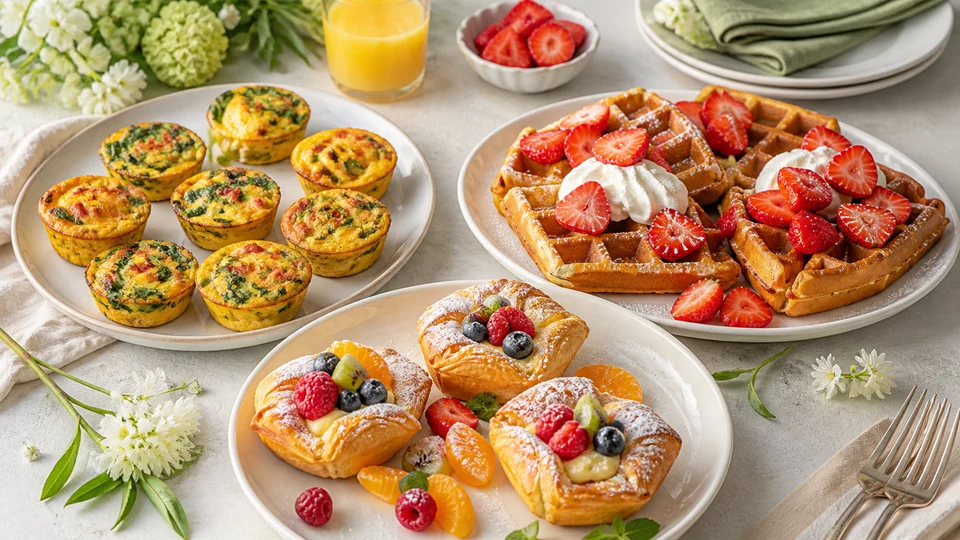
These are constraint-based suggestions, not claims that one Easter menu suits every household. Explore the brunch hub for other structures and Pancake World for the broader collection.
For broader context, continue with American Breakfast: Pancakes, Diner Plates and Brunch.
Direct answer: start with the limiting factor
| Your tightest constraint | Start here | Avoid |
|---|---|---|
| Less than 30 minutes | Bought buns, fruit, yoghurt and one cooked egg option | Homemade enriched dough or several pan dishes |
| One oven | One frittata, tart or breakfast bake plus cold sides | A second bake at another temperature |
| No oven | Pancakes, toast board, porridge or cold grazing table | Recipes needing reheating without equipment |
| Small budget | One egg, bean or pancake centrepiece with seasonal produce | Many specialty toppings and duplicate breads |
| Mixed dietary needs | Modular table with separately prepared complete alternatives | One shared board presented as cross-contact-free |
| Children and adults | Familiar base with optional toppings | Hard decorations, ambiguous sauces and unsupervised hot drinks |
| Staggered arrivals | Tart, frittata or cold components with valid holding guidance | Poached eggs and one large waiting pancake stack |
Use only one row as the first filter. After selecting it, check allergens and safe service. Trying to solve every constraint with a larger menu usually increases cost, waste and kitchen conflict.
If you have 15 to 30 minutes
Choose mostly assembled foods and one hot action. Bought hot cross buns with fruit, yoghurt and scrambled or boiled eggs can form a brunch without a second pastry. Another option is toast, a bean spread, tomatoes and fruit.
The time claim comes from your actual packages and complete recipe, not from this list. Read heating instructions before shopping. If a bun needs only warming, do not add French-toast soaking and frying unless the schedule allows it.
Keep fruit whole where practical and cut only what will be served. Put yoghurt into a small chilled bowl at the end. Retain packages so milk, wheat, egg, sesame, soya and nuts can be identified.
If you have one hour
One hour can support a complete pancake recipe, a simple egg dish, or a bought pastry table with prepared sides. It does not automatically support all three.
Good Food’s Easter breakfast collection lists recipes with individual preparation, cooking and difficulty information. Filter by the available window, then open the complete recipe and account for preheating, cooling, washing up and serving.
A workable structure is pancakes, citrus, yoghurt and one savoury vegetable side. Another is baked eggs, toast and fruit. Select one active process and stage everything else first.
If you want to prepare the day before
Choose only recipes that explicitly permit advance preparation. A tart or bake may be suitable, while another egg dish may require immediate cooking. A recipe title is not storage guidance.
Prepare dry pancake ingredients separately if the formula permits, wash serving pieces, label allergens and make refrigerator space. Keep wet batter only according to the chosen recipe. Do not assume chemical raising or whipped egg structure will behave unchanged overnight.
On Easter morning, finish one hot dish, dress salad and bring chilled food out last. Advance work should shorten the final sequence, not create a refrigerator full of uncertain half-finished mixtures.
If the oven is unavailable
Choose a hob, toaster or cold-table plan.
- Pancakes with fruit and yoghurt use the hob.
- Porridge with fruit and seeds uses one saucepan.
- Toast, cheese, tomatoes and fruit use a toaster and cold assembly.
- Bagels with spreads and vegetables need no oven but require chilled storage.
Do not select three hob dishes because the oven is unavailable. One pan still has one cooking rate. For a group, pancakes can become a bottleneck; choose a complete formula with valid holding directions or let guests eat in small batches.
If the hob is unavailable
Use one oven bake with cold sides. A vegetable frittata, savoury tart or breakfast bake can be the centrepiece. Pair it with fruit, salad and bread that does not need pan work.
Confirm the baking vessel, oven temperature and recipe yield. A deeper improvised dish can remain undercooked in the centre. Follow the source’s doneness method rather than relying only on a browned top.
If the budget is tight
Budget control means reducing categories, not asserting a universal cheapest ingredient. Prices vary by shop, date and location.
Choose one substantial centrepiece from ingredients the household already uses. Eggs, beans, porridge or pancakes may be candidates after checking current local prices and dietary needs. Use one fruit or vegetable in more than one place only after allocating enough: oranges can become a platter and provide zest for a source recipe, for example.
Avoid individual novelty drinks, several cheeses, multiple cured meats and a large topping bar. Buy one bread format. Keep the finish simple when hot cross buns already provide sweetness.
Make a list by exact recipe quantities and package sizes. Compare unit prices in the shop rather than relying on an old online claim. A sealed backup bread is more useful than a second perishable centrepiece.
If guests have mixed diets
Start with components many guests can share: whole fruit, simply cooked vegetables and clearly labelled drinks. Then provide complete alternatives, not partial removals.
For a vegan guest, choose a tested plant-based centrepiece and verify bread, spread and milk-alternative labels. For gluten avoidance, ordinary wheat, spelt and wholemeal pancakes are unsuitable. For allergies, layout alone cannot guarantee separation.
The FSA’s allergen guidance is aimed at businesses but reinforces the importance of accurate ingredient information. At home, retain packages, prepare the required alternative before shared flour or nuts spread, cover it and use separate utensils.
Do not write “allergy-friendly” on a communal dish when manufacturing and kitchen cross-contact are unknown.
If children are joining
Use a familiar base such as small pancakes, toast, eggs or fruit, then keep toppings optional. An adult must choose age-appropriate sizes and supervise hot food and drinks.
Avoid hard toothpicks, loose nonfood decorations and whole hard foods that are unsuitable for a young child. Keep syrup in a controlled container and allergens clearly separated. An Easter theme can come from plates, napkins or fruit colours rather than hiding sweets inside every food.
Children should not manage the allergen plan. Prepare a necessary separate plate before the shared table opens.
If guests arrive at different times
Choose food that can be divided into service waves. A tart or frittata may work only if its complete recipe gives suitable holding or reheating directions. Cold fruit, yoghurt and spreads should stay in several covered refrigerated containers.
Serve the first small batch and record its time. Replace the dish for the next wave rather than adding new food to remnants. Avoid poached eggs, hollandaise and pancakes waiting indefinitely.
The FSA’s event food guidance says chilled food should be out for the shortest possible time and gives a four-hour outer limit under its conditions. Four hours is not a recommended display period.
If you want an Easter cue without a sweet-heavy table
Use one recognisable element: plain hot cross buns, spring vegetables, citrus, eggs or one small Easter bake. The Good Food Easter brunch guide documents many richer ideas, but a useful menu need not combine them.
Pair buns with savoury eggs and fruit rather than another custard bread bake. Pair a chocolate pancake with plain yoghurt and fruit rather than several confectionery toppings. These are balance and workload decisions, not health promises.
If you want savoury only
Choose a vegetable frittata, shakshuka, tart, savoury pancakes or a bean-and-toast table from a complete recipe. Add salad, tomatoes, mushrooms or fruit for contrast. Fruit can belong on a savoury-led table without becoming dessert.
Check whether cured meat, cheese, smoked fish and bought sauces duplicate salt and richness. Offer condiments separately. If eggs are the centrepiece, do not add a second egg-heavy bake simply because it is brunch.
If you want a mostly sweet brunch
Choose one cooked base and two restrained accompaniments. Pancakes with fruit and yoghurt or hot-cross-bun French toast with citrus can be coherent. Avoid pancakes, waffles, French toast, muffins and cake together unless the meal is intentionally a tasting event with controlled portions.
Raw pancake or French-toast batter must not be tasted. The FSA’s flour safety guidance advises thorough cooking, sealed flour storage, handwashing and cleaning of flour-contact surfaces.
Substitution rules that prevent recipe drift
Substitute by selecting another complete recipe, not by building a formula from fragments.
- For egg-free pancakes, choose an egg-free recipe; do not simply omit egg.
- For gluten-free baking, use a tested gluten-free formula and verified ingredients.
- For dairy-free service, replace the complete dairy-dependent recipe or use its tested variation.
- For fewer guests, select a source with a suitable yield rather than altering pan depth casually.
- For a lower-effort meal, remove a dish before replacing every ingredient with a convenience product.
Record any approved source substitution. If the first batch matters for guests, do not make several untested changes at once.
Quick decision sequence
For a very small kitchen, add one final rule: every serving dish must have a storage location before cooking starts. If a platter cannot fit in the fridge and cannot be held safely hot, replace it with a smaller dish. Keep the kettle and drinks away from the only preparation surface, and choose a centrepiece that uses one vessel from preparation through service.
- Write the serving time and guest count.
- Circle the tightest constraint: time, appliance, money, diet or staggered arrival.
- Choose one centrepiece compatible with it.
- Add one starch only if the centrepiece does not supply it.
- Add one fresh component.
- Add a sweet finish only when the table still needs one.
- Verify yields, labels, vessels and storage.
- Remove any dish that creates a second last-minute cooking process.
The right Easter brunch suggestion is the one that survives these checks. It fits the actual kitchen and guests, uses complete sourced recipes, and leaves enough control to serve food safely.
Explore related Pancakes World guidance on American Pancakes, Maple Syrup, and Maple Syrup Pancakes.
Sources and editorial references
- Good Food: Easter breakfast recipes —
https://www.bbcgoodfood.com/recipes/collection/easter-breakfast-recipes - Good Food: Easter brunch recipes —
https://www.bbcgoodfood.com/howto/guide/our-most-indulgent-easter-brunch-recipes - Food Standards Agency: providing food at community and charity events —
https://www.food.gov.uk/safety-hygiene/providing-food-at-community-and-charity-events - Food Standards Agency: allergen guidance —
https://www.food.gov.uk/business-guidance/allergen-guidance-for-food-businesses - Food Standards Agency: handling flour and flour products safely —
https://www.food.gov.uk/safety-hygiene/handling-flour-and-flour-products-safely