Easter brunch meal
At Pancakes World, a complete Easter brunch meal needs five parts: one savoury centrepiece, one bread or potato dish, one fresh vegetable or fruit side, one modest sweet finish, and drinks. A practical menu is a vegetable frittata, warmed hot cross buns, citrus salad, a small Simnel-inspired bake, and tea or coffee. For a later meal, use a savoury tart, dressed spring vegetables, bread and berries. Choose recipes whose published yields cover the guests, then scale whole batches rather than improvising ingredient ratios. Keep only one dish in the oven during the final cooking window and refrigerate dairy, egg, fish and cut fruit until service.
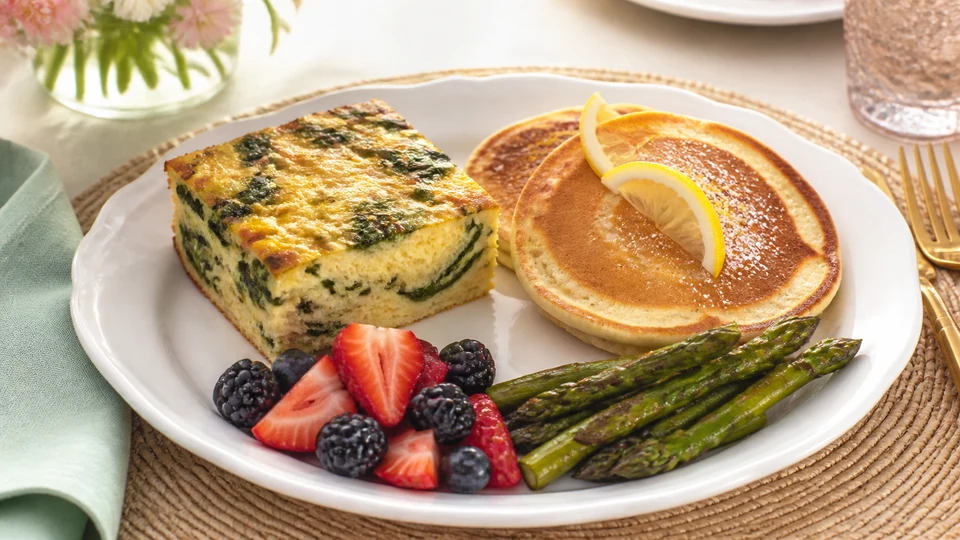
This page assembles whole meals; it does not claim one menu is traditional for every household. Visit the brunch hub for other formats, and Pancake World for the wider collection.
For broader context, continue with American Breakfast: Pancakes, Diner Plates and Brunch.
Direct answer: use a five-part meal
| Meal part | Purpose | Limit |
|---|---|---|
| Savoury centrepiece | Gives the table its main shared dish | Choose one, not two egg mains |
| Bread or starch | Carries the meal and absorbs sauces | One bun, pancake, toast or potato path |
| Fresh side | Adds contrast and colour | Keep dressings and dairy separate |
| Sweet finish | Marks the occasion | Small when bread is already sweet |
| Drinks | Supports the gathering | Place away from the cooking line |
The meal is complete when every part has a job and the kitchen can deliver it. It is not incomplete because it lacks bacon, chocolate eggs or several pastries.
Menu 1: classic shared-table meal
Centrepiece: vegetable frittata from a complete recipe.
Starch: hot cross buns, bought or made from one published formula.
Fresh side: citrus and berry platter.
Finish: a small slice of Simnel-style cake or another selected Easter bake.
Drinks: tea, coffee and water.
This meal suits a group that can eat egg and wants a single oven centrepiece. The frittata should be sized through the recipe’s stated yield and the baking vessel it specifies. Do not double a deep egg mixture in the same dish and assume the centre will cook on schedule.
Serve buns simply rather than converting them into another egg custard. Fruit keeps the table fresh, while one small cake provides the finish. If the buns are highly decorated or filled, omit the cake.
Execution order:
- Prepare only source-approved frittata components in advance.
- Wash and chill fruit.
- Bake the frittata according to its complete method.
- Warm buns when the centrepiece is nearly ready.
- Bring fruit from the fridge immediately before eating.
Menu 2: spring tart meal
Centrepiece: asparagus, leek or vegetable tart.
Starch: the tart pastry itself; add bread only if the recipe yield is light for the group.
Fresh side: leaves, peas or asparagus with dressing served separately.
Finish: berries with yoghurt or a plant-based alternative chosen by label.
Drinks: tea, coffee and sparkling water.
This menu avoids duplicating starch. A substantial pastry tart already fills the bread role, so rolls are optional. Select one complete tart recipe and preserve its pastry-to-filling ratio, tin dimensions, cooling and service instructions.
Dress leaves at the last moment. Keep yoghurt chilled and offer it in a small bowl that can be replaced. If a dairy-free alternative is needed, use a separate labelled container and spoon; plant-based does not mean free from all allergens.
This is a useful make-ahead path only when the tart recipe explicitly permits advance baking or assembly. “Tart” does not itself guarantee safe room-temperature holding.
Menu 3: pancake-centred meal
Centrepiece and starch: spelt, wholemeal or plain pancakes from one complete formula.
Savoury side: cooked mushrooms and tomatoes or thoroughly cooked eggs.
Fresh side: rhubarb, citrus or berries.
Finish: unnecessary unless portions are small; yoghurt can serve as topping.
Drinks: tea, coffee and water.
Good Food’s Easter brunch guide documents spelt pancakes with rhubarb, orange, almonds and crème fraîche. That is one coherent option. Follow the linked formula rather than lifting its toppings onto an unrelated batter and guessing the result.
For a savoury-and-sweet table, make one neutral pancake formula only. Put mushrooms, fruit, yoghurt and sauce into separate dishes. Almonds, wheat, milk and egg require clear identification depending on the chosen formula.
The host must accept active hob work. If guests exceed the realistic pan capacity, choose a baked centrepiece instead of holding a large stack without source directions.
Menu 4: low-cook grazing meal
Centrepiece: cheese and a bean spread, or smoked fish with an appropriate alternative.
Starch: sliced bread or bagels.
Fresh side: cucumber, tomatoes and whole or cut fruit.
Finish: bought buns or a small packaged bake.
Drinks: tea, coffee and water.
This meal reduces cooking but increases cold-storage responsibility. Cheese, fish, spreads and cut produce must stay refrigerated until service. Use small bowls and platters, retaining backups in the fridge.
Smoked fish is not appropriate for every guest. Ask about dietary and medical requirements in advance and follow authoritative guidance rather than making an individual health decision. A bean spread may contain sesame; bread may contain wheat, sesame, soya or milk.
Keep the sweet finish packaged until needed if brunch timing is uncertain. Retain labels for every bought component.
Scale through recipe yields
Menu 5: plant-led warm meal
Centrepiece: a complete bean-and-vegetable bake or tofu dish from a tested source.
Starch: toast, flatbread or roast potatoes.
Fresh side: citrus, cucumber and herbs.
Finish: fruit with a verified plant-based yoghurt.
Drinks: tea, coffee and water with labelled milk alternatives.
This is the clearest path when the whole table wants a plant-led meal, but it is not automatically suitable for every restriction. Tofu and many alternatives contain soya; hummus commonly contains sesame; breads can contain wheat; plant-based yoghurt may use nuts or soya. Verify packages rather than relying on the word “vegan.”
Choose one centrepiece that supplies more than roasted vegetables alone. Follow its full recipe, including tofu pressing, bean draining, seasoning, cooking and storage directions. Keep the starch plain enough to accompany it, and use fruit as the finish rather than adding a second substantial bake.
If only one guest needs this menu, prepare a complete separate portion before shared egg, milk or flour work begins. Use clean utensils and a covered, labelled container. Do not place the alternative in the centre of a shared platter and assume that visual separation controls contact.
Taking the meal to another home
Transport changes the plan. Choose dishes with explicit travel, cooling and reheating instructions, and confirm that the destination has refrigerator and oven space. Carry cold food in suitable chilled containers and hot food using equipment designed to maintain safe temperature; a covered decorative basket is not temperature control.
Pack dressings, yoghurt, fish and cut fruit separately. Bring the original ingredient labels or a clear ingredient record. At arrival, refrigerate cold components immediately and agree who controls the oven. If travel time or storage is uncertain, take a shelf-stable bread, whole fruit and a dish cooked at the destination instead of transporting a fragile egg meal.
Avoid invented “grams per person” rules. Appetite changes with time of day, age, other planned meals and whether the brunch is a buffet or seated plate.
Create a yield sheet:
| Component | Published yield | Guests who can eat it | Whole batches needed | Backup plan |
|---|---|---|---|---|
| Centrepiece | From selected recipe | Confirmed count | Round up to complete batch | Extra bread or salad |
| Bread or pancakes | Recipe or pack | Confirmed count | Complete packs/batches | Keep reserve sealed |
| Fresh side | Source or pack | Most guests | Prepare in two portions | Keep second chilled |
| Sweet finish | Recipe or pack | Optional | Fewer than a full second main | Retain uncut reserve |
If a recipe serves six and eight guests will eat it, do not automatically double it in the same vessel. Make two source-sized batches if the equipment permits, choose a recipe designed for the group, or supplement with a substantial side.
For children or guests with restrictions, count their verified alternatives separately. Do not assume they will eat the generic backup.
Consolidate the shopping list
Write ingredients by storage zone rather than by recipe.
Refrigerated: eggs, milk, yoghurt, cheese, fish, cooked meat and chilled alternatives.
Produce: fruit, salad leaves, herbs, mushrooms, tomatoes and citrus.
Bakery and dry goods: flour, raising agents, bread, buns, tea and coffee.
Labels to verify: sauces, spreads, granola, chocolate, nuts, seeds and substitutes.
Mark each ingredient with the menu component using it. Shared citrus can serve fruit salad and pancake topping, but allocate the total before prep. One ingredient serving two roles reduces waste only when enough remains for both.
Do not buy a “just in case” second centrepiece. Keep a sealed bread product, whole fruit or another safe, easy backup instead.
One oven, one final window
Make a cooking chart with columns for appliance, vessel, start, finish and service temperature. If the tart and sweet bake need different oven temperatures at the same time, prepare one earlier only when its recipe supplies valid storage and reheating instructions.
During the last 20 minutes:
- one person monitors the centrepiece;
- one person prepares drinks or fresh sides;
- bread warms only if the oven permits;
- chilled food remains refrigerated;
- serving dishes and utensils are already placed.
If every component needs attention, remove one. A complete four-part food menu is better than six poorly controlled dishes.
Allergen and dietary map
Common brunch ingredients include cereals containing gluten, egg, milk, nuts, sesame, soya and fish. The FSA’s allergen guidance addresses food businesses, but accurate ingredient records and clear communication are also useful at home.
Retain packages, label dishes and assign separate utensils. Prepare a required alternative before flour, crumbs or nuts spread. A vegetarian tart may contain egg and milk; vegan bread may contain sesame or soya; spelt is wheat and is not gluten-free.
For a serious allergy or coeliac disease, a communal buffet may not provide adequate separation. Follow the guest’s requirements and use verified products or a separately prepared plate.
Safe service and leftovers
The FSA’s event food guidance says chilled food should remain out for the shortest possible time and provides a four-hour outer limit under its conditions. Treat that as a maximum, not a meal target. Put out small quantities and replenish with a clean chilled dish rather than adding food to exposed remnants.
Follow use-by dates. Track when dairy, egg, fish, meat and cut fruit leave refrigeration. For hot food, use the complete recipe and the FSA’s cooking guidance; colour alone is not a reliable endpoint for a deep egg dish.
Only save food whose time and temperature history is known. Divide suitable leftovers into covered containers and refrigerate promptly according to official guidance. Do not rely on smell to rescue a platter that exceeded its safe limit.
Final meal test
Before committing, confirm:
- The menu has one centrepiece, one starch, one fresh side and at most one sweet finish.
- Every recipe has a verified yield and vessel.
- Whole batches cover the guests without uncontrolled scaling.
- Only one dish needs the oven during the final window.
- Chilled storage and small replacement dishes are available.
- Ingredient labels and separate utensils are ready.
- A dietary alternative is a complete plate, not a garnish.
- The later Easter meal, if any, still has its ingredients and appliance time.
That is a complete Easter brunch meal: coherent enough to shop as one plan, practical enough to cook in one kitchen, and clear enough for guests to serve safely.
Explore related Pancakes World guidance on American Pancakes, Maple Syrup, and Maple Syrup Pancakes.
Sources and editorial references
- Good Food: Easter breakfast recipes —
https://www.bbcgoodfood.com/recipes/collection/easter-breakfast-recipes - Good Food: Easter brunch recipes —
https://www.bbcgoodfood.com/howto/guide/our-most-indulgent-easter-brunch-recipes - Food Standards Agency: providing food at community and charity events —
https://www.food.gov.uk/safety-hygiene/providing-food-at-community-and-charity-events - Food Standards Agency: cooking your food —
https://www.food.gov.uk/safety-hygiene/cooking-your-food - Food Standards Agency: allergen guidance —
https://www.food.gov.uk/business-guidance/allergen-guidance-for-food-businesses