Easter brunch dishes
At Pancakes World, a useful Easter brunch table needs four roles, not a long list of competing showpieces: choose one hot savoury centrepiece, one bread or pancake dish, one fresh counterpoint, and one optional sweet finish. Practical combinations include a vegetable frittata with hot cross buns, fruit salad and a small cake; baked eggs with spelt pancakes, citrus and yoghurt; or a savoury tart with roasted tomatoes, a green salad and hot-cross-bun French toast. Pick dishes that share ingredients but not the same oven minute. Keep one element simple and cold so the host is not frying, baking and poaching for every guest at once.
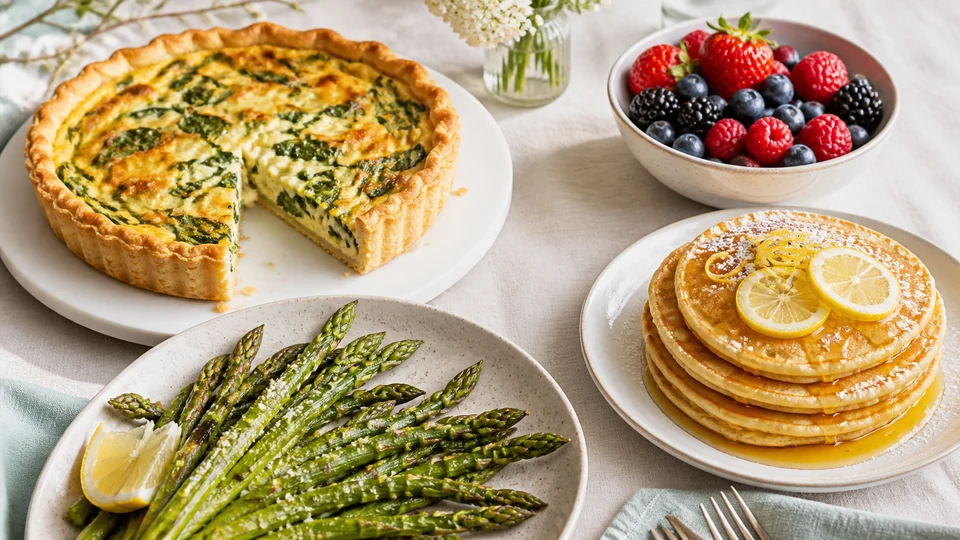
This guide is a catalogue of dish types and the job each performs. It does not claim that one brunch is universal Easter tradition. For broader planning, visit the brunch hub; Pancake World connects the full food collection.
For broader context, continue with American Breakfast: Pancakes, Diner Plates and Brunch.
Direct answer: build the table by dish role
Start with one item from each of the first three rows. Add the final row only if the meal needs a dessert-like ending.
| Role | Strong dish choices | Why the role matters | Main service pressure |
|---|---|---|---|
| Hot savoury centrepiece | Vegetable frittata, baked eggs, shakshuka, savoury tart | Gives the table a substantial shared focus | Oven space and safe hot service |
| Bread or griddle dish | Hot cross buns, spelt pancakes, savoury pancakes, toast | Carries toppings and gives familiar brunch structure | Toaster, pan or same-day baking |
| Fresh counterpoint | Citrus salad, berries, tomato salad, dressed leaves | Adds temperature, colour and acidity without another heavy cook | Chilled storage and last-minute dressing |
| Optional sweet finish | Croissant bake, Simnel-inspired bake, French-toast dippers, small chocolate pancakes | Marks the occasion without requiring every dish to be sweet | Sugar balance, allergens and extra oven or hob work |
The table does not improve simply because more categories are doubled. Two egg centrepieces, three sweet bakes and a pancake station create repetition and service conflict. Choose contrast: soft with crisp, rich with fresh, hot with cool, and cooked-to-order with ready-to-serve.
1. Vegetable frittata or baked omelette
A frittata is a practical shared centrepiece because it can combine eggs with vegetables and can be cut into portions. Select a complete recipe whose pan size and serving count match the group. Do not assume that a deeper dish will cook in the same time as a shallow one.
Good combinations include spinach with herbs, leek with cheese, or roasted pepper with spring onion. These are flavour directions, not a substitute for a tested formula. Cook watery vegetables as the recipe directs so they do not release uncontrolled liquid into the egg base.
Use this dish when:
- most guests can eat egg;
- the oven can be reserved for one centrepiece;
- portions need to be carried to the table together;
- a vegetarian centrepiece would simplify the menu.
Avoid making it the sole main dish if an egg allergy or vegan requirement is present. A token side salad is not an equivalent replacement; plan a complete alternative with its own protein and starch according to the guest’s needs.
2. Baked eggs or shakshuka
Baked eggs and shakshuka place eggs in a sauce or vegetable base. Good Food’s Easter brunch guide documents both a full-English-style shakshuka and a green shakshuka among its ideas. Those are distinct recipes, not interchangeable templates.
Choose this family when bread will be served for dipping and the dish can go directly from cooking vessel to table. Check the recipe’s serving size: adding extra eggs to the same pan can change how quickly the centre cooks. If guests need thoroughly cooked eggs, select a method and endpoint that provide that result rather than assuming every soft-yolk presentation is suitable.
This centrepiece pairs well with plain toast, a crisp salad and fruit. It pairs less well with another saucy egg dish because the table loses contrast.
3. Savoury tart, quiche or galette
A savoury tart moves much of the labour away from the final minutes. It can be served warm or at the temperature specified by its recipe, cut cleanly and accompanied by fresh vegetables. Check the pastry, filling and chilling instructions before deciding it is “make-ahead.” Recipes containing egg, cheese or cooked meat still need controlled storage.
Select one clear flavour direction:
- leek and mature cheese;
- asparagus and herbs;
- roasted tomato and soft cheese;
- mushroom and thyme;
- spring greens with a suitable savoury custard.
The exact ingredients and amounts must come from a complete recipe. Do not combine the pastry from one source, the custard ratio from another and a deeper tin from a third without expecting the bake to change.
4. Savoury pancakes or flatbreads
Pancakes do not have to lead to a sweet stack. A plain or herb pancake can carry mushrooms, greens, smoked fish, soft cheese or roasted vegetables. A flatbread can serve the same structural role beside eggs in sauce.
Use a griddle dish when the oven is committed to another item. The cost is active pan time. For more than a few guests, either cook from a formula that includes safe holding directions or make one larger format rather than promising individual pancakes simultaneously.
Keep toppings modular. Put fish, dairy, nuts and dressings in clearly separate dishes with separate utensils. This makes preference-based assembly easier, although it does not create an allergen-free environment.
5. Spelt pancakes with spring fruit
The Good Food Easter guide lists spelt pancakes with rhubarb, orange zest, toasted almonds and crème fraîche as one documented seasonal option. It combines a grain-based pancake with tart fruit, creamy dairy and nuts.
That combination works as either the bread role or the sweet finish, but it should not count as both while another rich bake occupies the table. Almonds, wheat-related spelt and dairy need explicit attention. Spelt is wheat and is not a gluten-free choice.
For a mixed group, serve the fruit and crème fraîche separately and provide a genuinely appropriate alternative formula where needed. Do not remove one allergen from the topping and then describe the whole pancake as suitable without checking its batter.
6. Hot cross buns: bought, baked or transformed
Hot cross buns give the table a recognisable Easter cue without requiring a claim that every household serves them at brunch. They can be offered simply toasted, used as the bread beside fruit and yoghurt, or turned into a more elaborate dish.
The choice is operational:
- Bought and toasted: lowest preparation load, but still check ingredients and use-by or best-before information.
- Home-baked from a complete formula: highest advance workload and proving time; useful only when baking is part of the occasion.
- French-toast style: adds egg, milk, pan time and a need to cook the soaked bread through.
- Bread-and-butter-style bake: becomes a rich custard dish and occupies the oven.
Good Food publishes hot cross bun French-toast dippers using egg-soaked bun pieces and chilled yoghurt-filled chocolate eggs. Treat that as one complete two-serving design. Scaling it for a crowd requires checking pan capacity, chilling space and the source method; it is not automatically a simple buffet item.
7. Croissant or bread pudding bake
A croissant bake or bread pudding can be assembled around bread, custard and fruit or flavourings. It gives the table a soft, rich dish that can often be portioned in the baking vessel. Because it contains a wet egg-and-dairy mixture, it is not a room-temperature loaf just because bread is visible on top.
Choose this family when the oven is free and the rest of the menu is light. Pair it with citrus, berries or a simple fruit salad rather than another custard-heavy sweet. Verify whether the selected recipe permits assembly in advance, how it must be chilled and when it should be baked.
8. Roast potatoes, tomatoes or mushrooms
A savoury brunch often needs a side that is not another bread. Small roast potatoes provide crisp starch; tomatoes supply acidity and moisture; mushrooms add a savoury vegetable component. Each can support eggs, tart or pancakes.
Avoid cooking all three through unrelated methods at the last minute. A sheet-pan side is useful when it shares a suitable oven setting with the centrepiece, but only if both dishes retain their required cooking conditions. If the temperatures or timings conflict, cook one item earlier according to a source that gives safe reheating instructions or choose a cold side instead.
Season after considering the rest of the table. Smoked fish, cheese, cured meat and bought sauces can already contribute salt. Taste the cooked vegetable rather than salting automatically.
9. Citrus, berry or apple salad
A fruit dish is not filler. It provides a cool, bright counterpoint and can be prepared without consuming the hob during service. Choose fruit that can be cut safely in the available time and stored as directed.
Possible structures include:
- orange and grapefruit segments with mint;
- berries with sliced apple and a separate yoghurt bowl;
- pears with lemon and toasted seeds served separately;
- a simple mixed-fruit platter with no added dressing.
Keep cut fruit chilled until service. Do not leave a dairy-dressed fruit bowl beside a sunny window for the length of the gathering. Serve yoghurt, cream and nut toppings in smaller chilled bowls so they can be replenished rather than exposed all at once.
10. Green salad or spring vegetable plate
A dressed leaf salad, asparagus plate or peas with herbs can reset the palate between rich dishes. Dress leaves just before serving so they stay crisp. If the meal already includes a wet shakshuka and fruit salad, use a drier vegetable format rather than adding another bowl of liquid.
For a composed plate, keep cheese, nuts and egg garnishes optional and clearly identified. A plain vegetable base is not automatically safe for everyone if it was prepared on shared equipment or dressed with an allergenic ingredient.
11. Yoghurt, granola and fruit bowls
This low-cook dish is useful for staggered arrivals or children who may not want the savoury centrepiece. It also introduces several possible allergens: milk in yoghurt, gluten-containing cereals in granola, and nuts or sesame in many mixes.
Use individual components rather than a preassembled bowl for a group. Guests can choose their own quantities, while the host can keep most yoghurt refrigerated and put out a smaller amount at a time. Retain original packages or photograph ingredient labels for reference before decanting.
12. A small celebration bake
Simnel-inspired buns, a small loaf cake or chocolate pancakes can serve as the sweet finish. Good Food’s Easter breakfast collection documents a wide range of Easter bakes and breakfast dishes. Use the collection to select a complete recipe, not as evidence that every item belongs on the same table.
One sweet finish is usually enough when hot cross buns or a croissant bake already appear. If children will have an egg hunt or other sweets later, a fruit-led brunch finish may fit the full day better. That is a planning choice, not a nutrition prescription.
Three dish combinations that avoid repetition
Combination A: oven-centred and mostly savoury
- vegetable frittata;
- hot cross buns warmed near service;
- tomato and leaf salad;
- citrus platter.
Here the frittata uses the oven and supplies the central protein-rich dish. Buns are the bread, vegetables supply freshness, and fruit closes the meal. There is no second egg dish competing for attention.
Combination B: hob-centred with a spring pancake
- spelt pancakes from a complete source formula;
- rhubarb or another source-approved fruit topping;
- yoghurt and toasted almonds served separately;
- a simple mushroom and tomato side.
Here the pancake is the central starch and the table can move between sweet and savoury. The host must accept active griddle work or use the source’s holding method.
Combination C: shared savoury pan plus easy cold sides
- shakshuka or baked eggs;
- plain toast;
- berry and apple platter;
- a small bought or prepared-ahead Easter bake.
The shared pan supplies heat; everything else can be staged. This is appropriate when the oven or hob cannot support several simultaneous finishes.
Choose dishes by equipment, not only by appetite
Write every hot dish beside its appliance before committing:
| Equipment | Dish using it | Start or finish pressure | Conflict response |
|---|---|---|---|
| Oven | Frittata, tart or croissant bake | Usually needs a protected final window | Choose only one oven centrepiece |
| Hob | Pancakes, mushrooms or shakshuka | Requires active attention | Move fruit and bread preparation earlier |
| Toaster or grill | Buns and toast | Can become a bottleneck in small batches | Warm one bread, not three kinds |
| Fridge | Yoghurt, cut fruit, filled tart | Space is needed before service | Use shallow covered containers and small refill bowls |
A menu with twelve attractive recipes can be physically impossible in one domestic kitchen. Reduce the list until every dish has a place, vessel and service moment.
Allergens and dietary choices
The Food Standards Agency’s allergen guidance identifies regulated allergen groups that commonly appear across brunch, including cereals containing gluten, egg, milk, nuts, sesame and soya. Its legal guidance is aimed at food businesses, but the ingredient discipline is valuable at home: retain labels, identify every component and do not make broad “free-from” promises when cross-contact is uncontrolled.
Useful host practices include:
- ask guests about requirements before finalising dishes;
- keep ingredient packages until the meal is over;
- label sauces, granola, breads and bakes separately;
- provide separate serving utensils;
- prepare a required alternative before flour dust, nuts or shared crumbs spread;
- never assume vegan food is automatically free from milk, egg or other allergen cross-contact.
When the consequence of a mistake is serious, the guest’s own guidance and verified packaged options take priority over improvisation.
Safe buffet service
The FSA’s community and charity event guidance advises keeping food out of the fridge for the shortest possible time. It gives chilled buffet food an outer limit of four hours outside refrigeration, after which it must be discarded or returned to the fridge under the guidance’s conditions. Treat four hours as a maximum boundary, not a target brunch duration.
Put out small quantities of yoghurt, smoked fish, egg dishes, cream-filled items and cut fruit, then replenish from the fridge. Track when each batch left chilled storage. Do not top up an old bowl with a fresh one because the time becomes impossible to follow.
For hot dishes, follow the selected recipe and packet directions and the FSA’s general cooking guidance. A browned top does not prove that the centre of a deep egg bake is ready. Use the doneness method in the complete formula.
Final dish checklist
Before shopping, confirm:
- One dish is the clear hot savoury centrepiece.
- Only one bread, pancake or pastry requires last-minute heat.
- At least one fresh dish can wait chilled without occupying the hob.
- The sweet finish does not duplicate buns, custard and chocolate already on the table.
- Every recipe has a serving count and an identified vessel.
- Oven temperatures and cooking windows do not collide.
- Ingredient labels and allergen information will remain available.
- Chilled dishes can be served in small, timed batches.
- No source recipe has been altered through casual cross-recipe substitution.
- One item can be removed if the preparation window shrinks.
The strongest Easter brunch dish list is not the longest. It gives every plate a distinct role and leaves enough kitchen capacity to cook, hold and serve it safely.
Explore related Pancakes World guidance on American Pancakes, Maple Syrup, and Maple Syrup Pancakes.
Sources and editorial references
- Good Food: Easter breakfast recipes —
https://www.bbcgoodfood.com/recipes/collection/easter-breakfast-recipes - Good Food: Easter brunch recipes —
https://www.bbcgoodfood.com/howto/guide/our-most-indulgent-easter-brunch-recipes - Good Food: hot cross bun French-toast dippers —
https://www.bbcgoodfood.com/recipes/hot-cross-bun-french-toast-dippers - Food Standards Agency: providing food at community and charity events —
https://www.food.gov.uk/safety-hygiene/providing-food-at-community-and-charity-events - Food Standards Agency: allergen guidance —
https://www.food.gov.uk/business-guidance/allergen-guidance-for-food-businesses - Food Standards Agency: cooking your food —
https://www.food.gov.uk/safety-hygiene/cooking-your-food