Easiest brunch recipes
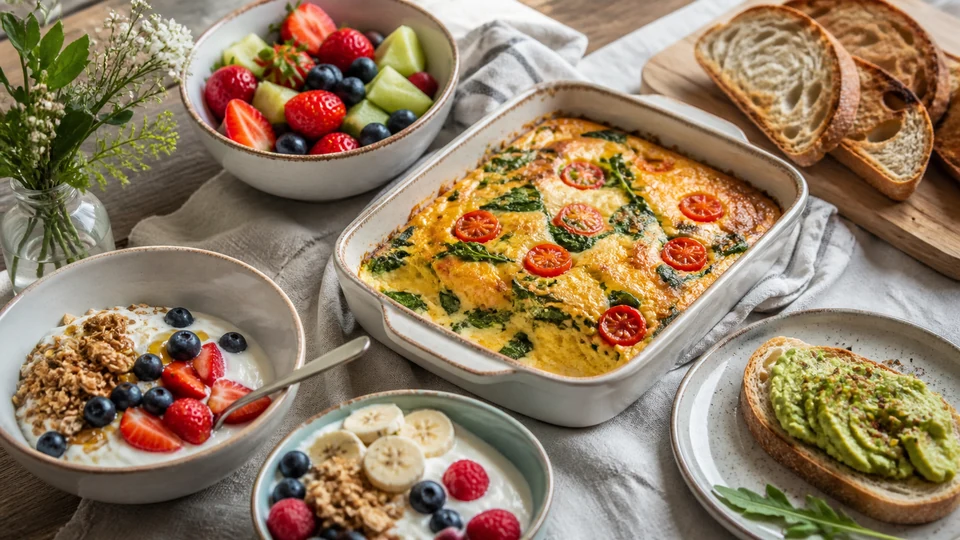
At Pancakes World, the easiest brunch recipes minimize active cooking while guests are present. Pick one complete bake, such as a frittata, baked oatmeal, or overnight French toast, and pair it with fruit, yogurt, or a toast board. A recipe is genuinely easy only when its pan fits, its ingredients are available, and its holding instructions suit the serving time. Avoid a menu of pancakes, poached eggs, and fried potatoes unless several cooks are available. Complete preparation the day before where the source permits, refrigerate safely, and reserve the final half hour for one hot dish and simple assembly.
The brunch hub covers more formats, while Pancake World provides the route back to the wider collection.
| Guide sections |
|---|
| What “easiest” means here |
| Low-attention centerpiece formats |
| Truly no-cook and assembly options |
| Eight low-friction menu patterns |
For broader context, continue with American Breakfast: Pancakes, Diner Plates and Brunch.
What “easiest” means here
Easy is not a claim that one recipe is universally foolproof. It is a match between a complete recipe and the host’s constraints. This guide ranks recipe formats by active attention, transfers, equipment conflicts, and service tolerance. It does not provide untested ingredient quantities.
Score a candidate from one to five on these questions:
- How many minutes need active attention?
- How many pans and bowls must be washed?
- Does the dish tolerate a short service delay?
- Can allowed preparation happen the day before?
- Does it compete for the oven or stovetop?
A recipe with three ingredients may still be difficult if each portion must be cooked to order. A longer ingredient list can be easier when everything goes into one pan and the source provides a clear make-ahead path.
Low-attention centerpiece formats
Frittata or egg bake
One pan can supply defined portions. Select a formula that states pan size, yield, and doneness. Vegetable substitutions alter water content; cheese and meat change salt, allergens, and cooking requirements. Use a complete variant rather than treating additions as automatic.
FoodSafety.gov lists 160°F for egg dishes. Measure the center. If the recipe permits overnight assembly, keep the dish refrigerated in the specified vessel and bake according to its directions.
Baked oatmeal
Baked oatmeal can be mixed and served from one dish, but recipes vary in eggs, milk, fruit, nuts, and sweetness. Choose the exact formula that fits the group. Do not describe it as high-protein, low-sugar, or otherwise nutritionally superior without a supported calculation.
If fruit or dairy is included, follow the recipe’s cooling and storage instructions. Cut portions after the structure has set as directed.
Overnight French toast
This format shifts assembly earlier, but it requires refrigerator space and thorough cooking. Use a source written for overnight soaking. Do not place ordinary assembled French toast in the refrigerator overnight and assume the same pan depth and timing apply.
Egg-based casseroles reach 160°F. Check the center and more than one place if the pan is large.
One-pan breakfast potatoes with a separate cold main
Potatoes can be the only hot item when yogurt, cheese, smoked fish, beans, or another safely chilled food supplies the main role. Follow a complete potato method, use an even cut, and avoid crowding.
This path is simple only when no second dish needs the oven at a different setting.
Truly no-cook and assembly options
Yogurt parfait station
Put yogurt, fruit, and crunchy toppings in separate labeled containers. Keep yogurt and cut fruit cold. Nuts, seeds, granola, and flavored products require full label checks.
For the lowest work, offer two toppings rather than a large bar. Use small replacement bowls and dedicated spoons.
Toast board
Choose one or two breads and a small set of spreads. Slice bread before service, but toast in manageable batches. Keep butter, cream cheese, fish, and other perishable toppings under temperature control.
Separate nut or seed spreads and use dedicated utensils. A board covered in shared crumbs cannot support an allergen-free claim.
Fruit platter
Wash fruit before cutting and use clean equipment. Combine whole fruit with a modest amount of cut fruit so not every item requires refrigeration and last-minute work. Keep backup cut fruit covered and cold.
Purchased bread plus one homemade element
There is no requirement to cook every item. A purchased loaf, scone, or pastry with retained labels can support one homemade bake. Check whether filled pastries require refrigeration.
Eight low-friction menu patterns
Each pattern needs complete recipes for cooked items.
1. Frittata, toast, and fruit
One hot pan, one toaster task, one cold dish. Set the table and fruit before the frittata enters its final cooking window.
2. Baked oatmeal, yogurt, and berries
The bake is the only hot component. Keep yogurt refrigerated and put out a small bowl close to service.
3. Overnight French toast and citrus salad
Assembly moves to the day before where the source allows. The cold fruit provides contrast without another appliance.
4. Toast board, boiled eggs, and whole fruit
Use a complete egg method and current storage guidance. Retain bread and spread labels. This pattern favors assembly over repeated pan work.
5. One-pan potatoes, bean salad, and bread
The oven handles potatoes while the salad stays cold. Verify that the bean recipe and bread meet dietary labels before describing the menu.
6. Muffins, yogurt, and fruit
Bake muffins earlier under their storage guidance. Choose plain yogurt or a clearly labeled alternative and two toppings.
7. Egg bake, green salad, and purchased pastry
One hot main plus two supporting foods. Keep dressing and pastry labels available.
8. Baked oatmeal and a small savory board
Pair the soft sweet-leaning bake with cheese, beans, vegetables, or another complete savory option. Avoid turning the board into a dozen-item shopping project.
The one-hot-dish rule
For a solo host, select one dish that must be hot at the stated serving time. Everything else should be safely cold, room-temperature by design, or completed earlier under a source-supported path.
This rule removes conflicts. Pancakes, poached eggs, waffles, and fried potatoes all demand final attention. Any one can be manageable; all four together are not an “easy” menu.
If a second hot food is necessary, choose one with a verified holding or reheating method and put it earlier on the schedule. Do not assume an idle oven or countertop appliance maintains safe temperature.
A minimal-work schedule
Two days before
Choose recipes, confirm yields, check allergies, and verify pan and refrigerator space. Buy ingredients and retain packaging.
The day before
Complete only authorized make-ahead steps. Bake stable goods, assemble an overnight dish only when the recipe calls for it, wash whole fruit, prepare labels, and set out clean serving pieces.
One hour before
Clear work surfaces. Start the one hot dish. Chill cold foods. Slice bread and prepare a clean toaster area. Put drinks on a separate surface.
Fifteen minutes before
Verify the hot dish, set out a small fruit or yogurt portion, and start toast only if it will be eaten promptly. Leave backup cold foods refrigerated.
After service
Make a clear storage decision. Label leftovers and use FoodSafety.gov’s category-specific chart. Reheat leftovers to 165°F.
Food safety without extra complexity
Simple menus still need safe controls. Keep eggs, dairy, cut fruit, cooked grains, and meats refrigerated. Separate raw egg and meat utensils from bread, fruit, and serving pieces.
FoodSafety.gov lists 160°F for egg dishes, category-specific values for meats and poultry, and 165°F for leftovers. Apply the endpoint that matches the food. A browned casserole top does not prove the center is done.
Put out small chilled portions and replace them with clean bowls. Do not top up food that has already been exposed. When a recipe lacks a make-ahead or holding method, treat that omission as a reason to choose another recipe rather than inventing one.
Easy cleanup is part of recipe selection
Count vessels before committing. A blender sauce, griddle, roasting tray, and topping bar can turn a simple-looking dish into a complex cleanup.
Line a pan only when the recipe and vessel permit. Use one cutting board for ready-to-eat produce and separate equipment for raw animal foods. Put a small waste bowl near prep to keep the work surface clear.
Choose serving vessels that can receive the finished food directly. A bake served from its dish uses fewer transfers than individual plating.
Allergens and substitutions
Common brunch recipes contain egg, milk, wheat, soy, sesame, peanuts, and tree nuts. Oats, granola, meat alternatives, breads, and spreads require labels.
An “easy swap” can change structure. Plant milk, egg replacer, gluten-free flour, and reduced-fat dairy do not behave identically in every bake. Select a complete alternative recipe instead of promising a one-for-one replacement.
Prepare a verified alternative first with clean equipment, cover it, and keep it away from shared crumbs and utensils. Do not claim a shared kitchen is allergen-free.
Troubleshooting the menu, not just the food
The selected recipes need three oven temperatures
Keep one bake. Replace another hot dish with fruit or salad and buy the bread. “Easy” must include schedule compatibility.
The overnight dish does not fit the refrigerator
Do not leave it out. Choose a smaller vessel supported by a different complete recipe or select a morning-assembled bake.
Guests are late
Follow the source’s holding method. If none exists, keep cold sides refrigerated and serve the hot item in a safe initial window rather than degrading it for the schedule.
The yogurt bar has too many bowls
Reduce it to fruit plus one crunchy topping. More choices add labels, spoons, refrigeration, and cleanup.
A substitute changes the batter
Stop and choose a complete recipe designed for that ingredient. Do not repair structure through untested flour or liquid additions.
Portions look insufficient
Check combined yields. Add whole fruit, unopened bread, or another simple reserve rather than doubling a hot formula at the last minute.
Frequently asked questions
What is the single easiest brunch format?
A one-pan bake with fruit and bread is often low in active work, but only when the pan, refrigerator, ingredients, and service time fit. No format is universally easiest.
Are pancakes an easy brunch recipe?
They can be for a small group. For a crowd, repeated batches and holding reduce ease. Use a complete batch method and do not add other made-to-order foods.
Can I use store-bought items?
Yes. Retain labels and follow storage directions. A purchased bread or pastry can free capacity for one homemade centerpiece.
Can everything be prepared the night before?
Only when each selected source permits it. Table setup and labels can move earlier; food needs explicit cooling and storage guidance.
Are these tested Pancake World recipes?
No. This is a constraint-based selector. Quantities, yields, timing, and storage remain with the complete source recipe.
Final ease audit
- One dish owns the final hot window.
- Every cooked item has a complete source.
- Pan, yield, and appliance needs fit the kitchen.
- Make-ahead steps are explicitly permitted.
- Cold food has refrigerator space.
- No unverified ingredient swap changes structure.
- Safety endpoints match the actual food.
- Toppings and labels are intentionally limited.
- The menu can be served from clean vessels with few transfers.
- A simple reserve covers uncertain attendance.
The easiest brunch is the plan with the fewest fragile moments. One complete bake, contrasting cold sides, and a disciplined schedule usually create more ease than a collection of individually simple but competing recipes.
Explore related Pancakes World guidance on American Pancakes, Maple Syrup, and Maple Syrup Pancakes.
Sources and editorial references
- FoodSafety.gov, “Safe Minimum Internal Temperatures” —
https://www.foodsafety.gov/food-safety-charts/safe-minimum-internal-temperatures - FoodSafety.gov, “Cold Food Storage Chart” —
https://www.foodsafety.gov/food-safety-charts/cold-food-storage-charts - Good Food, “Brunch recipes” —
https://www.bbcgoodfood.com/recipes/collection/brunch-recipes - Food Network Kitchen, “Brunch Recipes” —
https://www.foodnetwork.com/recipes/photos/brunch-recipes