Dutch oven breakfast
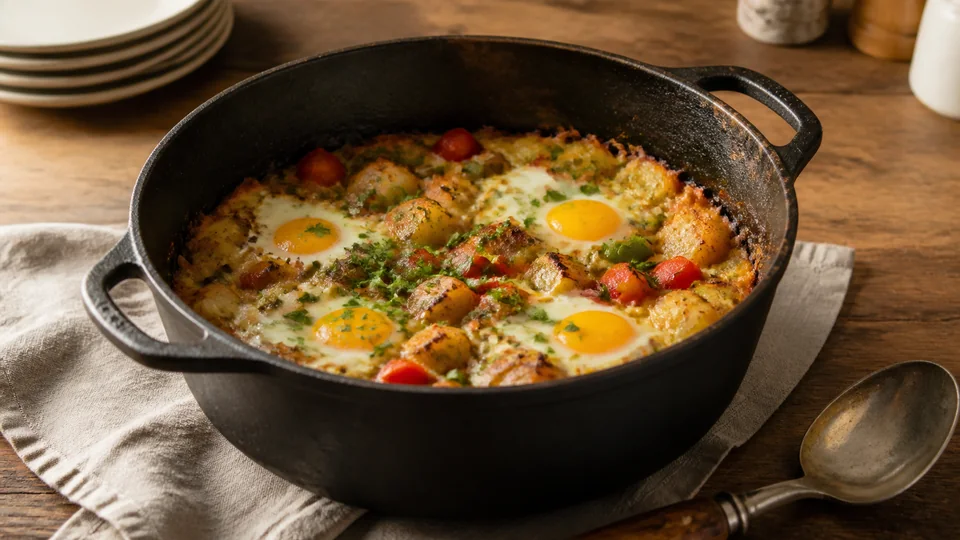
At Pancakes World, a Dutch oven breakfast works when the pot, heat source and recipe are selected as one system. Choose whether you are cooking on a home stove, in an oven or over an approved outdoor setup; then use a complete method written for that environment. Layer ingredients by how long they need, protect quick-cooking eggs from the longest heat, and keep the lid routine intentional. A heavy covered pot can make a hash, casserole, bread, fruit bake or one-pot assembly, but it does not give every dish the same timing.
See the Breakfast hub for other cooking formats. Pancake World is the site index.
| Guide sections |
|---|
| The pot is only one part of the method |
| Breakfast format: a layered potato hash |
| Breakfast format: an egg casserole |
| Breakfast format: bread or rolls |
For broader context, continue with American Breakfast: Pancakes, Diner Plates and Brunch.
The pot is only one part of the method
“Dutch oven” describes a family of heavy pots, not a single capacity or heat behaviour. Enamelled indoor cookware, bare cast iron and outdoor camp ovens can differ in shape, lid design and intended heat source. Use the manufacturer's directions and a recipe compatible with the actual vessel. Do not put indoor cookware into a fire or onto coals unless it is explicitly designed for that use.
Capacity matters because depth affects heating and evaporation. A breakfast casserole spread across a wide pot behaves differently from the same ingredients crowded into a smaller one. Keep the vessel size specified by the chosen formula. If capacity is not stated, find a source that supplies enough detail rather than guessing from a photograph.
The lid retains heat and moisture. Repeatedly lifting it changes the cooking environment, but never use that fact as a reason to skip required safety checks. Plan when ingredients enter and when temperature will be checked so openings are purposeful.
Explore related Pancakes World guidance on American Pancakes, Maple Syrup, and Maple Syrup Pancakes.
Sources and editorial references
Home oven
An oven gives heat around the pot and suits casseroles, baked egg dishes, breads and fruit bakes designed for covered or partly covered cooking. Check that the pot, lid knob and handles are rated for the selected oven temperature. Arrange the rack before preheating so a heavy hot vessel does not need to be moved awkwardly.
A formula may begin on the stove and finish in the oven. Clear the route between them, use dry oven protection and remember that every metal part becomes hot. Turn handles away from the edge while the pot is on the stove.
Home stovetop
Stovetop cooking concentrates heat at the base. It can suit a hash, beans, porridge or braised breakfast mixture. Use a burner that fits the base and moderate heat as the complete method directs. Heavy cookware responds slowly, so repeated large heat adjustments can lead to scorching after the cook thinks the burner was corrected.
Scrape and stir with utensils appropriate to the pot surface. Enamel can be damaged by rough treatment, and bare cast iron has its own care requirements. Follow the manufacturer's cleaning and seasoning guidance.
Outdoor cooking
Outdoor Dutch oven cooking adds fuel, weather, stable placement, fire rules and carbon-monoxide safety to the recipe. Use only an authorised outdoor area and equipment designed for that heat source. Never burn charcoal or operate combustion equipment in a tent, vehicle, cabin or other enclosed space.
This article does not prescribe coal counts, flame settings or universal timing. Those variables depend on equipment, fuel, wind, ambient conditions and the recipe. Use an outdoor-specific source and comply with local fire restrictions. Have the tools to move the lid and pot without putting hands near coals.
Breakfast format: a layered potato hash
A hash is practical when ingredients are added according to their readiness. Potatoes or other firm vegetables usually own the longest stage; already-cooked additions enter later; eggs, if used, belong near the finish. A complete recipe should state cut size, fat, stirring, lid use and how eggs are incorporated.
Start with uniform pieces so the pot does not contain burnt small fragments and hard large chunks. Avoid filling so deeply that food steams when the intended result depends on surface contact. If the recipe calls for batches, respect them rather than forcing everything into one layer.
Fresh garnish waits outside the pot. Herbs, sliced green onions or washed tomatoes can be prepared with clean tools and kept chilled until the hot food is ready. Their role is contrast, not extra cook time.
Breakfast format: an egg casserole
A Dutch oven casserole can combine a prepared base, vegetables, bread or potatoes and an egg mixture. The important word is prepared: ingredients requiring separate safe cooking must reach the state specified before assembly. Raw meat should not be buried under eggs in an improvised method.
Distribute solid ingredients evenly before adding the binder. A deep pocket of filling can create uneven portions and complicate temperature checks. Keep the rim clean so residue does not bake into the lid seal or produce smoke.
FoodSafety.gov lists 160°F for egg dishes. Check the centre and any other likely cool area with a food thermometer. Surface browning and a set-looking edge do not establish the centre temperature.
Breakfast format: bread or rolls
A covered pot can create a humid baking environment for a formula specifically designed for it. Breakfast bread, rolls or a pull-apart bake require their own dough, proofing, vessel and heat instructions. Do not pour a generic batter into a hot pot or use a paper liner at an unsupported temperature.
Preheating an empty vessel can be part of some bread methods and inappropriate for other cookware. Follow both recipe and manufacturer. Prepare a safe landing place before removing a hot lid, and keep steam away from face and hands.
If the bread contains a perishable filling, storage follows that filling rather than the bread's outward appearance. Cool and refrigerate according to the complete method.
Breakfast format: beans with toppings
Beans can be heated and seasoned in the pot, then served with tortillas, toast or eggs prepared separately. The Dutch oven is useful when even gentle heat and a lid help maintain moisture. The source should distinguish dry beans, previously cooked beans and canned beans; their starting processes are not interchangeable.
Reserve delicate toppings for the table. A large pot does not require a large garnish collection. One fresh, acidic or crisp finish can make the bowl easier to serve while keeping ingredients identifiable.
Do not infer nutrition values from the word beans. Exact variety, form, liquid, additions and portion are required for calculation; none is published here.
Breakfast format: fruit bake
A warm apple, pear or berry bake can be served with oats, bread or a documented topping. Fruit type, cut and ripeness affect moisture, while the topping determines whether the dish behaves like a crumble, cobbler or cake. Select one complete formula and preserve its definitions.
Wash fruit under running water. FDA advises not to use soap, detergent or commercial produce wash. Cut with clean utensils and keep prepared fruit appropriately stored until assembly.
A sweet fruit dish is not made nutritionally equivalent to raw fruit by its name. Likewise, using fruit does not support a health claim. Describe the breakfast as prepared and leave calculation to exact records.
Breakfast format: porridge for a group
A broad heavy pot can cook oats, grits or another grain when the recipe matches the grain and heat source. Stirring access matters. A lid may reduce evaporation but can also allow foaming, so use the method's position and attention schedule.
Prepare toppings separately and label them. Keep dry toppings dry until service; refrigerate perishable milk, yoghurt or cut fruit. Let diners finish their bowl rather than adding every option to the communal pot.
If porridge thickens while waiting, adjust only as the source allows and record additional liquid. Avoid a last-minute correction that silently doubles part of the formula.
Build the ingredient timeline backwards
Write the desired serving time at the bottom of a page. Above it, list the final temperature check, resting period, last ingredient addition, main covered cook, initial browning and preparation. Assign each step a location and tool. This reveals conflicts before the pot is hot.
For an egg-topped hash, the potatoes may need the first active stage, while eggs enter after the base is ready. For casserole, components may be cooked and cooled before assembly. For bread, proofing and preheating determine the morning start. The Dutch oven should not be expected to erase those separate schedules.
Add buffer for moving and serving a heavy vessel. A pot full of hot food is not a serving bowl unless the table surface is protected and diners can reach it safely. Often it is better to portion in the kitchen.
Mise en place for one-pot cooking
One-pot does not mean one-step. Prepare ingredients in separate bowls according to when they enter. Keep raw foods and ready-to-eat garnishes apart. Place a clean utensil beside each bowl and clear the counter around the heat source.
Measure seasonings before starting. A heavy lid makes it inconvenient to search while food cooks unattended. Keep a trivet, lid lifter or oven protection, thermometer and serving utensil within reach but away from flame.
For outdoor work, protect ingredients from dirt, insects and temperature abuse. A cooler and closed containers are part of the kitchen. Do not set utensils on the ground or use the same tongs for raw and cooked food.
Layering without inventing a formula
Layer by cooking requirement rather than visual effect. A firm ingredient needing direct base heat may enter first. A cooked filling may need only warming. Egg or batter might bind the final assembly. Cheese or a fresh finish may enter near the end if the recipe specifies it.
Do not assume every layer insulates the one below. Dense loading can slow heat reaching the centre while the base continues browning. Maintain the stated batch depth and vessel capacity.
If a substitution changes water content, cooking state or piece size, it changes more than flavour. Use an explicitly supported variation or select another recipe. An outdoor breakfast is a poor place to discover that an improvised frozen ingredient releases excess water.
Managing the lid
Set the lid on a heat-safe surface with the hot side controlled and the handle stable. Outdoors, ash or debris on the lid must not fall into food. Use the equipment intended for lifting and keep others clear.
Open away from the face so steam escapes safely. Decide before opening whether you will stir, add an ingredient or take a temperature. Complete the task efficiently without rushing.
Condensation can drip from the lid. A recipe may use that moisture or require venting. Do not prop the lid with an unsafe object. Follow the documented position.
Heat control at home
Preheat only as directed. An empty enamelled pot or a dry cast-iron vessel may have specific manufacturer limits. Add fat and ingredients in the recipe's order. If browning stops because the pot is crowded, do not compensate with maximum heat; work in batches if the formula allows.
When moving from stove to oven, turn off the burner and confirm the route is clear. Use two secure grips. The pot remains hot long after cooking, so leave protection on handles or mark the area visibly.
Residual heat continues cooking. A formula's rest can be part of the finish, but do not rely on carryover to reach a food-safety target unless the authoritative method explicitly accounts for it.
Outdoor heat and weather boundaries
Check fire permissions immediately before the trip because restrictions can change. Establish a stable, noncombustible cooking surface where required. Keep extinguishing equipment appropriate to the setup and fully extinguish fuel according to local rules.
Wind can move sparks and strip heat; rain can make surfaces unstable and equipment slippery. Do not shield combustion with an enclosure that traps carbon monoxide. If conditions do not support safe cooking, use a different approved method.
Keep children and pets outside a marked hot zone. Pot handles, lids, tools and spent fuel remain hazards after the meal. The cook should control placement from ignition through final cooling.
Temperature checks that fit the pot
Insert a clean food thermometer into the thickest or central area without touching the pot. For a casserole, check more than one location if fill is uneven. For an egg dish, the relevant safe minimum is 160°F. Reheated leftovers and casseroles should reach 165°F.
Clean the probe between foods. Outdoors, bring safe water or suitable cleaning supplies rather than wiping the thermometer on a cloth used for raw ingredients.
Time is not a substitute for temperature where a safety target applies. A windy camp setup and a calibrated home oven cannot share a universal schedule.
Serving from a heavy pot
Place the pot on a rated trivet or heatproof surface. Keep the handle from projecting into a walkway. Use a long enough serving utensil that hands do not contact the rim, and replace the lid deliberately rather than balancing it on an edge.
For buffet service, put out a manageable amount and monitor time. A hot pot cooling on the table is not controlled hot holding. Smaller serving dishes can be replenished while the rest remains safely managed.
Offer toppings in separate small bowls. Replace bowls rather than pouring new garnish over an older portion that has stood out.
Cooling and leftovers
USDA FSIS says perishable leftovers should be refrigerated within two hours. Large, deep masses cool slowly, so transfer food into shallow containers rather than placing the full Dutch oven in the refrigerator. Divide the batch and leave space for cold air circulation.
Label containers with name and date. Most refrigerated leftovers should be used within three to four days. Reheat to 165°F and check the centre. Reheat only what will be served instead of repeatedly warming the whole supply.
Do not cool food outdoors by leaving it exposed. Ambient cold, snow or a shaded campsite is not a controlled refrigerator and can introduce contamination.
Cleaning and pot care
Let the pot reach a safe handling temperature, then follow its manufacturer's instructions. Enamel, seasoned cast iron and other surfaces have different acceptable tools and cleaners. Do not pour cold water into extremely hot cookware if thermal shock is a concern for that vessel.
Remove food residue, dry as required and maintain seasoning where applicable. Store with airflow if the manufacturer recommends it. Inspect handles, lid and surface before the next use.
Outdoor cookware must be separated from fuel ash and transported without contaminating food equipment. Pack cleaning tools independently from serving utensils.
Troubleshooting the breakfast
The base scorches before the centre is ready
Review heat intensity, vessel size, batch depth and whether the formula needed stirring or an oven finish. Do not scrape burnt material through the dish. Move unburnt food only if safe and appropriate, then choose a better-matched method next time.
Potatoes remain firm
Check piece size, crowding and when acidic or wet ingredients entered. Continue only within the documented method and verify other perishable ingredients are not being held unsafely.
Eggs set unevenly
The fill may be deeper in one area or heat may be concentrated. Use thermometer readings at likely cool points. For another batch, level the base and distribute the egg mixture more consistently.
Bread sticks
Confirm vessel preparation and cooling instructions. Do not force a knife against enamel. A parchment sling or coating is appropriate only if the source and cookware temperature rating permit it.
The outdoor pot loses heat
Do not improvise an enclosed combustion setup. Reassess fuel and weather using the outdoor-specific method, and abandon the cook if safe control cannot be restored.
Menu combinations that keep the pot focused
Let the Dutch oven own one central task. Pair hash with washed fruit and toast; serve casserole with a cold garnish; put bread beside yoghurt; offer fruit bake with a labelled chilled accompaniment. The side should not require a second complex schedule.
When the pot contains a rich or heavily sauced preparation, a simple fresh component can create contrast. When it contains porridge, dry and chilled toppings let diners choose texture. These are serving preferences, not nutrition prescriptions.
Avoid claiming that cast iron enriches food by a predictable amount or that outdoor cooking produces a health benefit. No evidence plan supports those statements.
Frequently asked questions
Can any Dutch oven go on a campfire?
No. Use cookware specifically rated by its manufacturer for the selected outdoor heat source. Enamelled indoor pots and their knobs may have different restrictions.
Can breakfast be assembled the night before?
Only when the complete recipe provides an advance method and ingredients are refrigerated safely. Do not leave a loaded pot at room temperature. Consider whether the cold heavy vessel is intended to meet a hot heat source.
Is a Dutch oven breakfast always a casserole?
No. Hash, porridge, beans, bread, fruit bake and other formats are possible when a compatible recipe is used.
How do I know an egg bake is done?
Use a food thermometer at the centre and other likely cool locations. Egg dishes should reach 160°F. Surface colour is not enough.
Can the pot hold breakfast warm for hours?
Do not assume residual heat is controlled holding. Use authoritative hot-holding guidance and suitable equipment, or serve and refrigerate leftovers within the required period.
Why is there no coal chart here?
Fuel, pot, weather and method differ, and universal counts would be unsafe. Use the instructions for the specific outdoor equipment and recipe.
A field card for the cook
Record pot material and capacity, approved heat source, recipe source, maximum fill, ingredient entry order, lid events, safety temperatures, serving time and cooling containers. For outdoor cooking, add current fire permission, weather check, fuel tools and extinguishing plan.
That card separates the repeatable kitchen decisions from improvisation. It does not turn the meal into a Pancake World test. Article schema remains appropriate because no single project-owned recipe record supports fixed quantities, yield and timing.
- FoodSafety.gov —
https://www.foodsafety.gov/food-safety-charts/safe-minimum-internal-temperatures - USDA Food Safety and Inspection Service —
https://www.fsis.usda.gov/food-safety/safe-food-handling-and-preparation/food-safety-basics/leftovers-and-food-safety - U.S. Food and Drug Administration —
https://www.fda.gov/food/buy-store-serve-safe-food/selecting-and-serving-produce-safely - USDA FoodData Central —
https://fdc.nal.usda.gov/